RegisterFind a stay
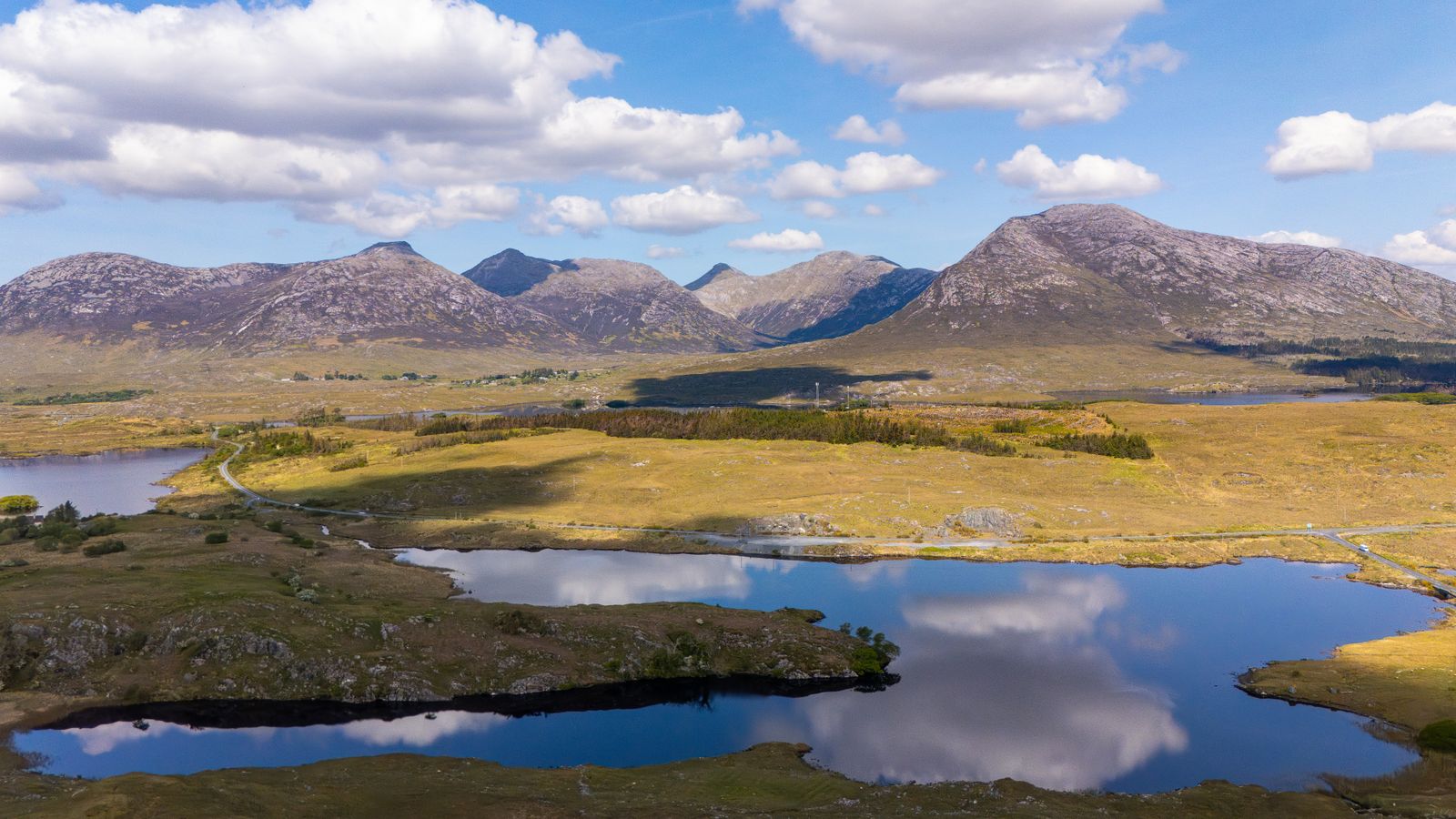
Connemara mountains reflected in a still lake

Conamara · County Galway

Connemara,bogandmountain.

The far west of County Galway: lakes, blanket bog and the Twelve Bens, running down to a coast of small harbours and white beaches.

Connemara, County Galway
County
Galway
From Dublin Airport
250 km, straight line
Main town
Clifden
Irish name
Conamara
Known for
Walking, coast, Irish

Connemara has no official border. It is the name for the western end of County Galway, beyond Lough Corrib, where the land breaks up into lakes and bog and the mountains come down close to the sea.

The landscape

Much of the interior is blanket bog, scattered with small lakes. Above it rise the Twelve Bens, a range of quartzite peaks, with the Maumturk Mountains to the east. Near the coast, stone walls divide small fields.

Killary Harbour, on the border with County Mayo, is a long, narrow inlet often described as a fjord. Mussel rafts line its sheltered water.

Walking in the national park

Connemara National Park covers mountain, bog, heath and woodland beside the village of Letterfrack. Its visitor centre is the start of a set of marked trails.

The best known climbs Diamond Hill, with a lower loop for a shorter walk and an upper loop to the summit. The upper path is steep in places and open to the weather.

Conditions on the hills change quickly. Check the park's page from the National Parks and Wildlife Service before setting out.

Kylemore Abbey

Kylemore was built as a private castle in the nineteenth century and later became home to a community of Benedictine nuns. It stands on the shore of a lake below a wooded mountainside.

Visits are ticketed and include the Victorian walled garden, a walk away from the house along the lake.
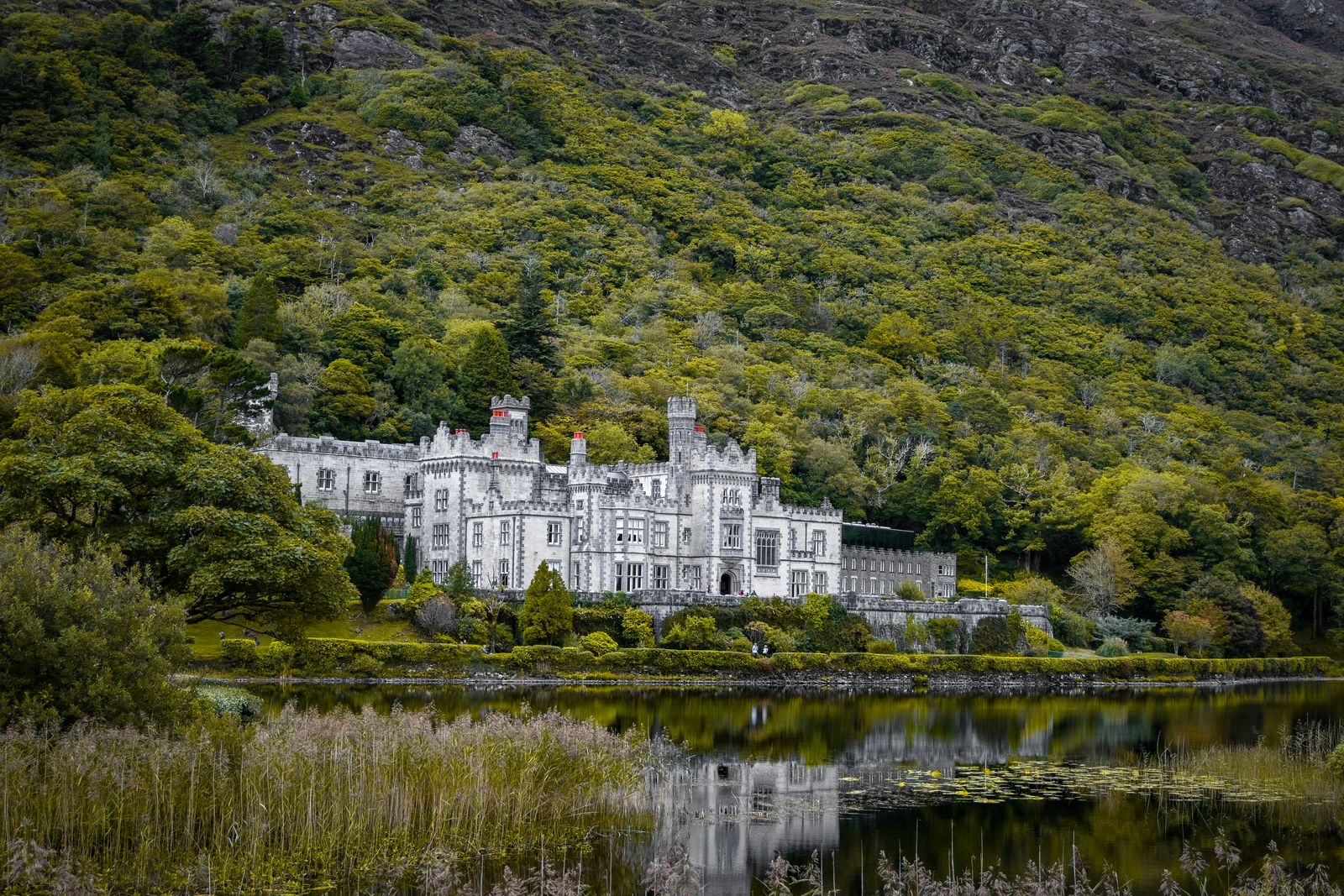
Kylemore Abbey reflected in its lake
Kylemore Abbey, Connemara

Clifden and the Sky Road

Clifden is the largest town in Connemara and the usual base, with hotels, pubs and restaurants around two main streets. The Sky Road leaves the town to the west and loops along the cliffs above Clifden Bay.

South of the town, Derrigimlagh bog holds the spot where Alcock and Brown landed after the first non-stop transatlantic flight in 1919, beside the remains of Marconi's wireless station. A looped path crosses the bog.
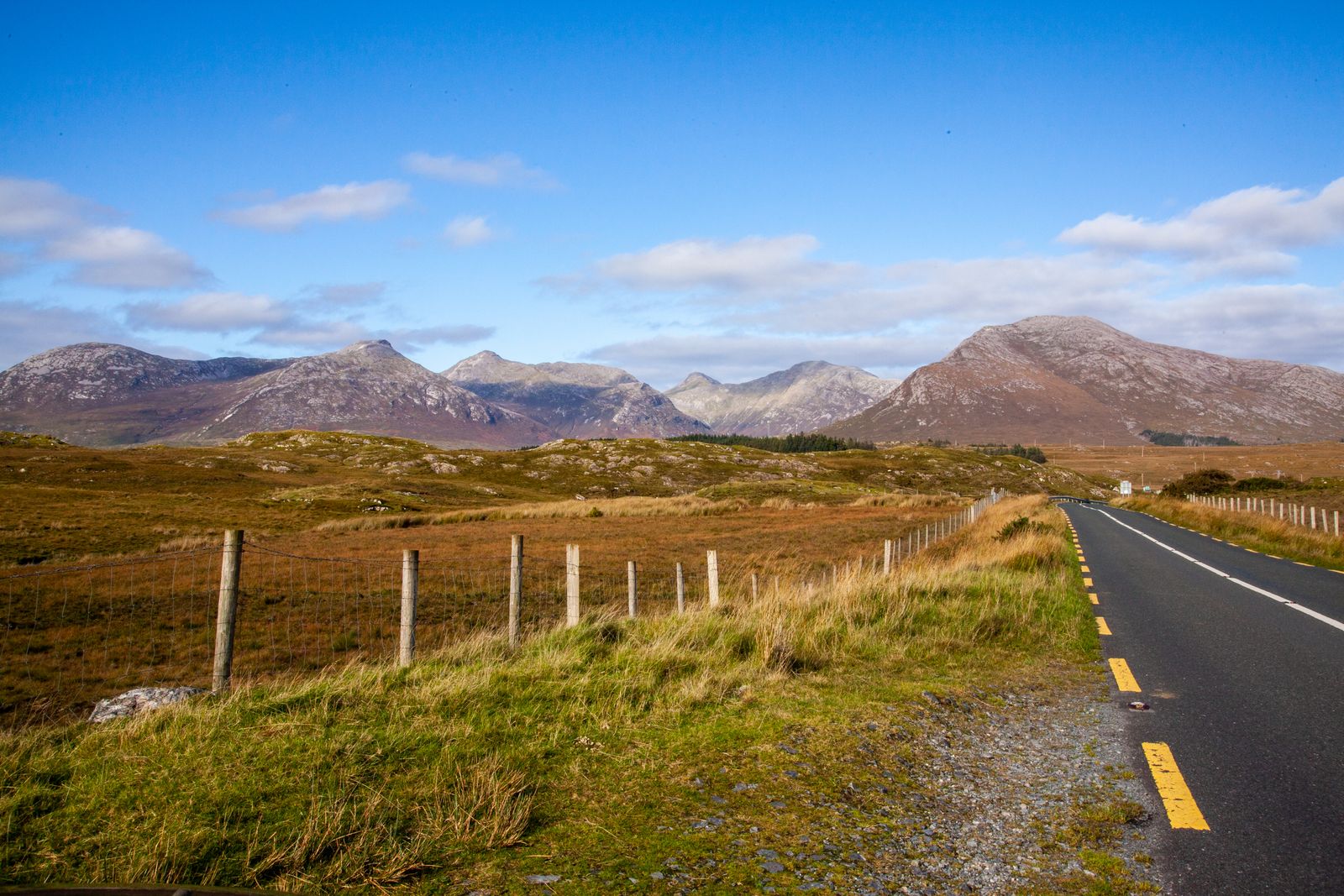
A rural road towards the mountains of Connemara
The road west through Connemara

Irish-speaking Connemara

Parts of Connemara, mostly along the south coast towards Galway city, are Gaeltacht: areas where Irish is the community language. Road signs there are in Irish only.

The Connemara pony, a hardy native breed, is still bred across the region, and Clifden holds a pony show every August.

Getting there

Galway city is the gateway. Buses run from Galway to Clifden, and the road west follows the N59 through Oughterard. There is no railway west of Galway.

Ferries to the Aran Islands leave from Rossaveal on the south Connemara coast. Check the operator for the current timetable.
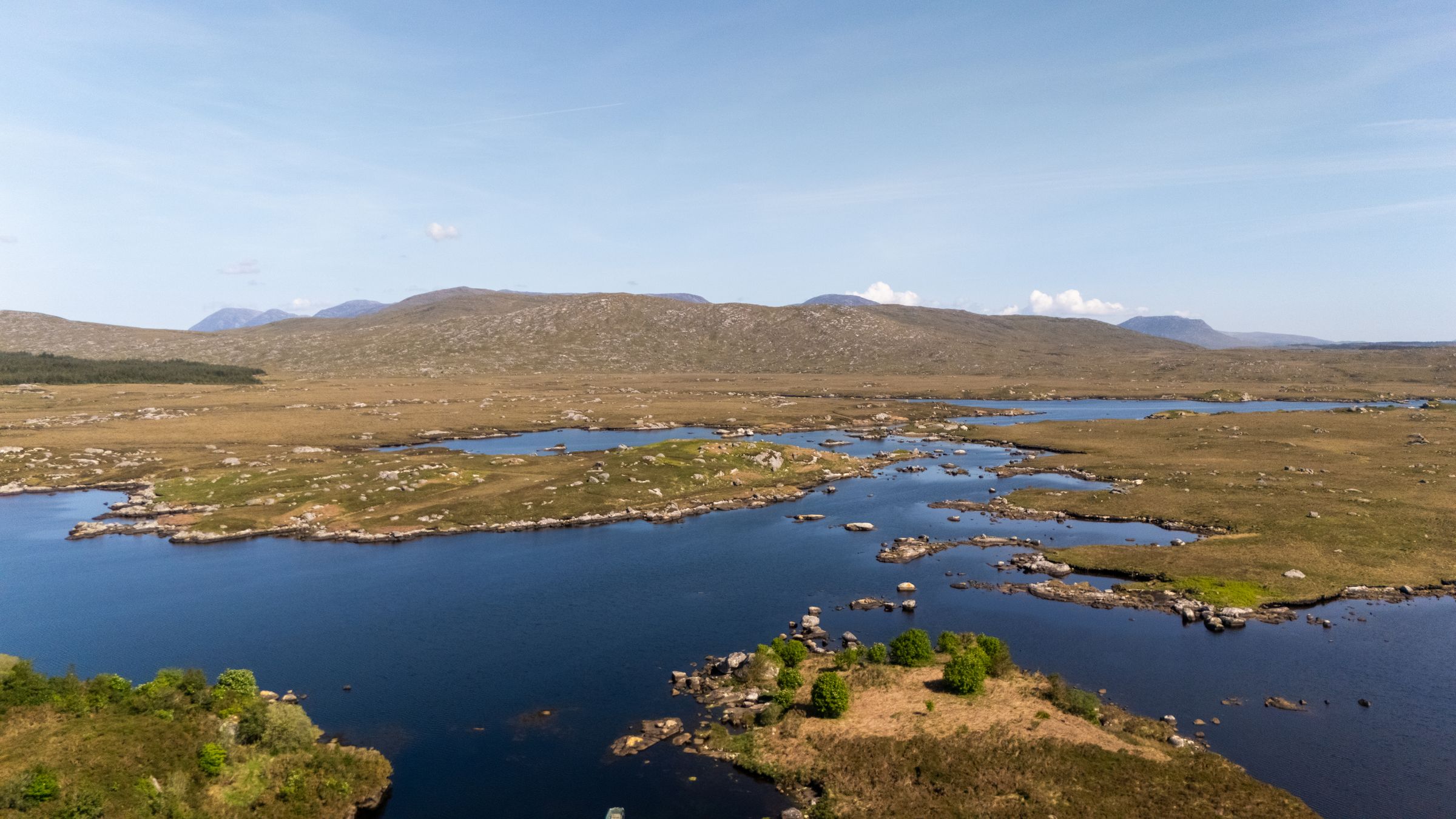
Aerial view of lakes and hills in Connemara

Rain on the bog by morning, the Twelve Bens clear by afternoon.

Connemara, County Galway

Eolas · Good to knowBefore you go west.

01

A car helps

Buses link the main villages, but many walks and beaches are off the bus routes.

02

Signs in Irish

In the Gaeltacht, place names on road signs are in Irish only. An offline map helps.

03

Dress in layers

Showers move through quickly in the west. A waterproof is worth carrying in every season.

04

Midges in summer

Still, damp evenings near water bring out midges. Repellent helps.

Ceisteanna · QuestionsAsked often.

How many nights should I spend in Connemara? +

Three or four nights from a base in Clifden or Letterfrack covers the national park, Kylemore and the Sky Road without rushing.

Can I visit Connemara as a day trip from Galway? +

Yes. Coach tours run from Galway city, though the time on the road leaves less time for walking.

Is Connemara on the Wild Atlantic Way? +

Yes. The route follows the Connemara coast from Galway Bay round to Killary Harbour.

What are the Twelve Bens and can I walk them? +

The Twelve Bens are a range of quartzite peaks rising above the blanket bog of inland Connemara. Marked trails in Connemara National Park give access to the hills, including the climb of Diamond Hill. Conditions change quickly, so check the National Parks and Wildlife Service page before setting out.

What is there to see at Derrigimlagh bog near Clifden? +

Derrigimlagh bog holds the spot where Alcock and Brown landed after the first non-stop transatlantic flight in 1919, beside the remains of Marconi's wireless station. A looped path crosses the bog, and the ground is wet underfoot in most weather.

Is Killary Harbour a fjord? +

Killary Harbour, on the border with County Mayo, is a long, narrow inlet often described as a fjord. Mussel rafts line its sheltered water. The road along its northern shore gives views across to the Mayo side, and the weather can close in quickly.

Where do ferries to the Aran Islands leave from in Connemara? +

Ferries to the Aran Islands leave from Rossaveal on the south Connemara coast. Sailings depend on weather and season, so check the operator for the current timetable before travelling. The harbour is reached by road from Galway city and from the villages along the coast.

Will I see Irish road signs in Connemara? +

Parts of Connemara, mostly along the south coast towards Galway city, are Gaeltacht areas where Irish is the community language. Road signs there are in Irish only. An offline map helps, and place names on signs may differ from those on English-language maps.

What is the Connemara pony and where can I see one? +

The Connemara pony is a hardy native breed still bred across the region. Clifden holds a pony show every August. Ponies graze on common land and in fields across the bogs and hills, so keep a distance and do not feed them.

Keep exploring.

Lóistín · Where to stayWhere to stay in Connemara.501 stays in the Connemara region, each with its own page: photos, location and guest reviews.
Hotels in Connemara

Check before you go: Connemara National Park (National Parks and Wildlife Service), Kylemore Abbey, Bus Éireann, Aran Island Ferries.