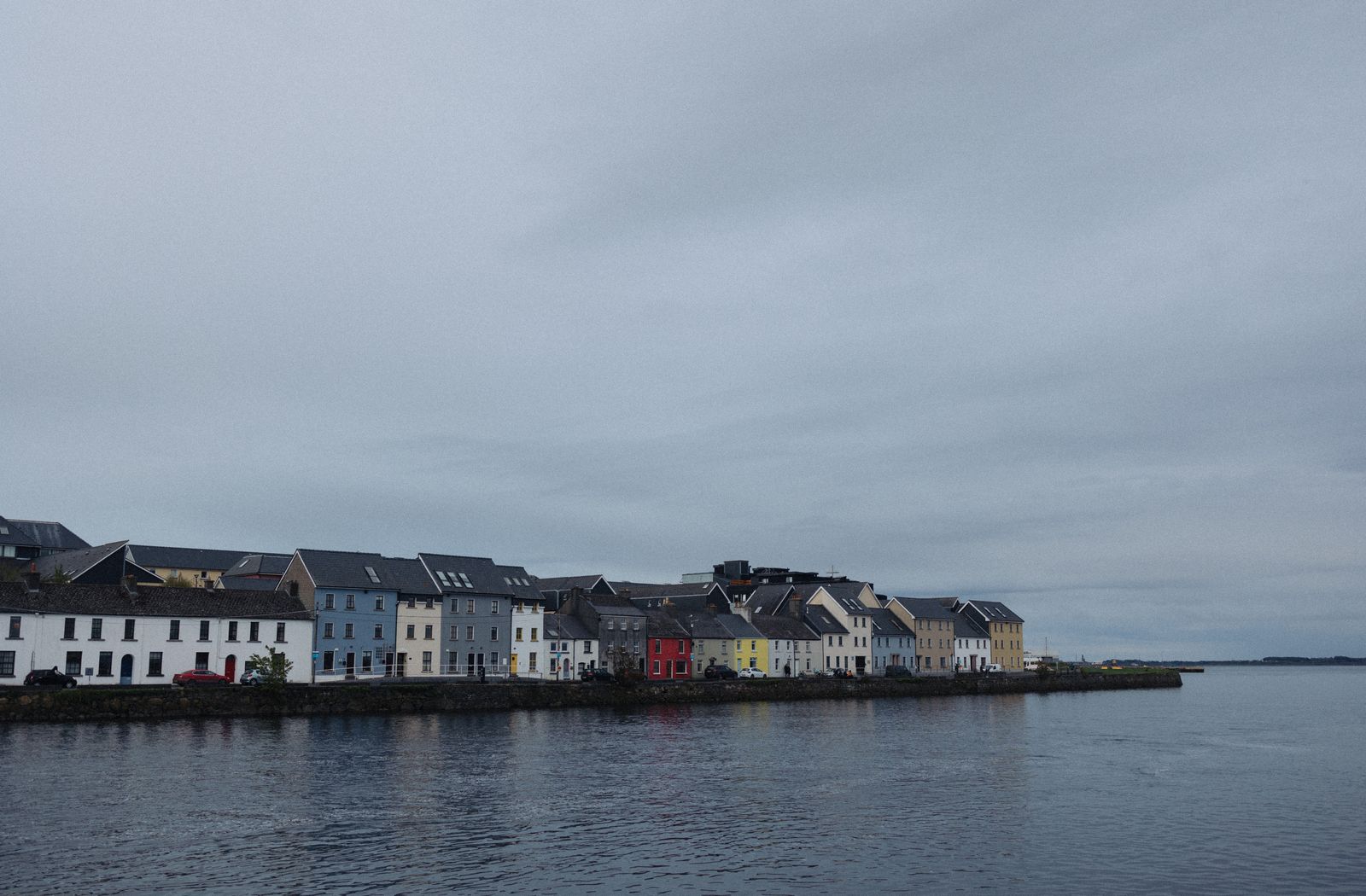
Galway city sits where the River Corrib runs into Galway Bay, on the west coast of Ireland. It is small enough to cross on foot and busy enough to hold a reader for several days, with a medieval core, a working harbour and day trips out along the coast.
How the city fits together
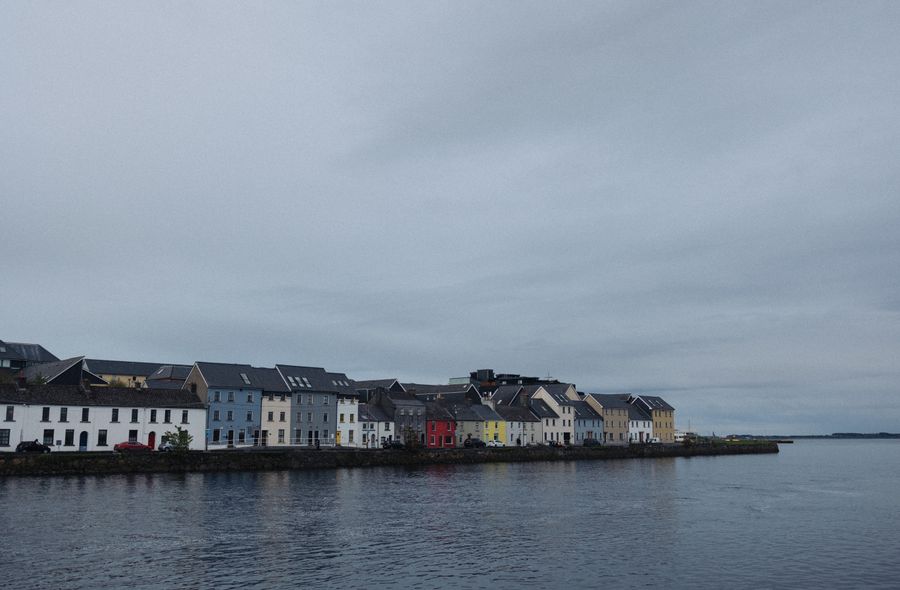
Galway is built around a few clear pieces. The old centre sits on the east bank of the Corrib, a grid of narrow streets between Eyre Square and the river. South of the centre, the Claddagh was a fishing village before it was absorbed into the city, and its low houses face the bay.
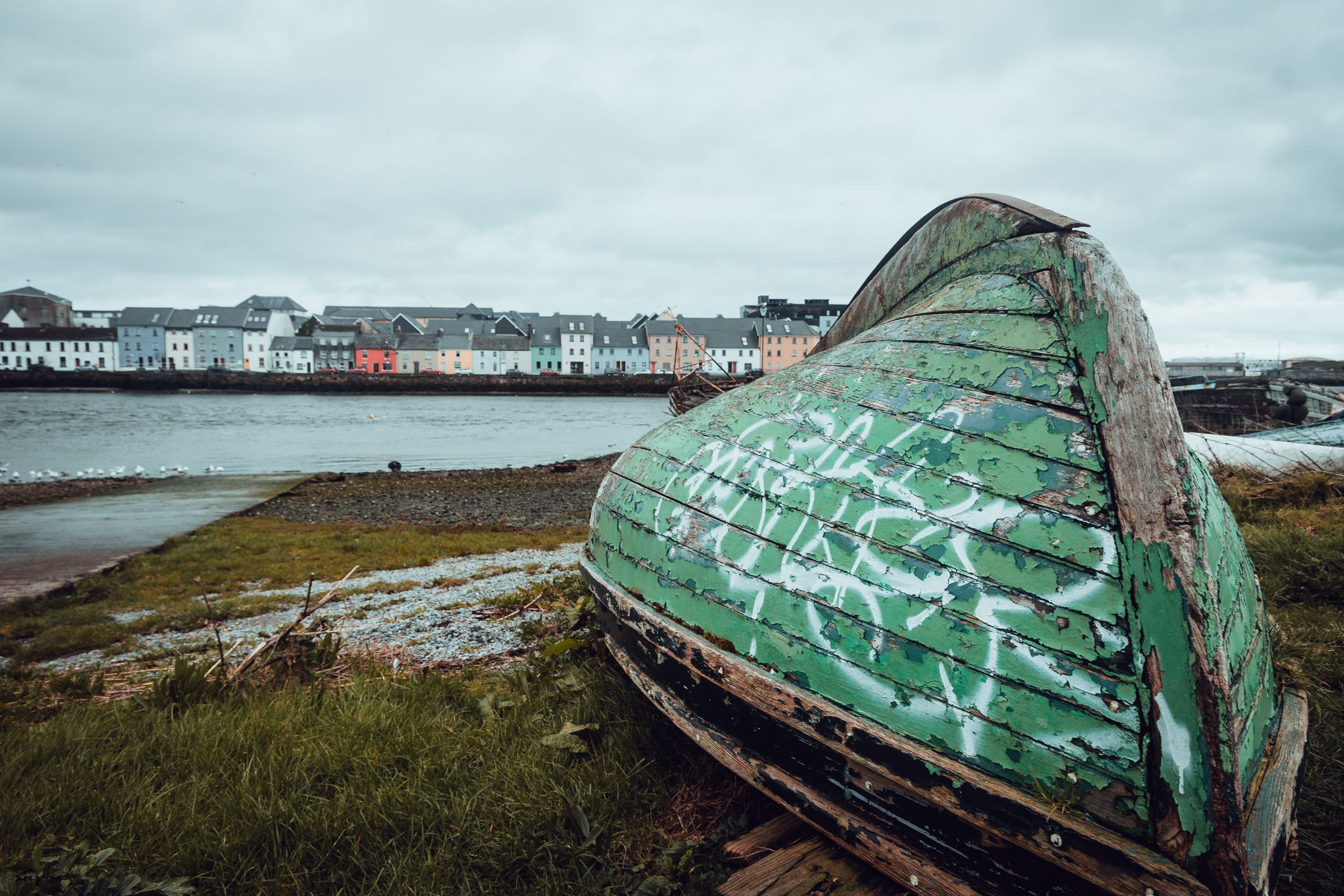
The Long Walk runs along the river towards the harbour, where the Claddagh basin holds a small fleet of traditional boats. Across the water, the suburb of Salthill follows the coast eastwards, with a long promenade and a sandy beach. Most of what a visitor wants lies within a walk of Eyre Square.
The city is the county town of County Galway and the main gateway to Connemara and the Aran Islands. It is also a university city, which keeps the streets busy through the academic year and gives the centre a young, mixed population.
The Latin Quarter
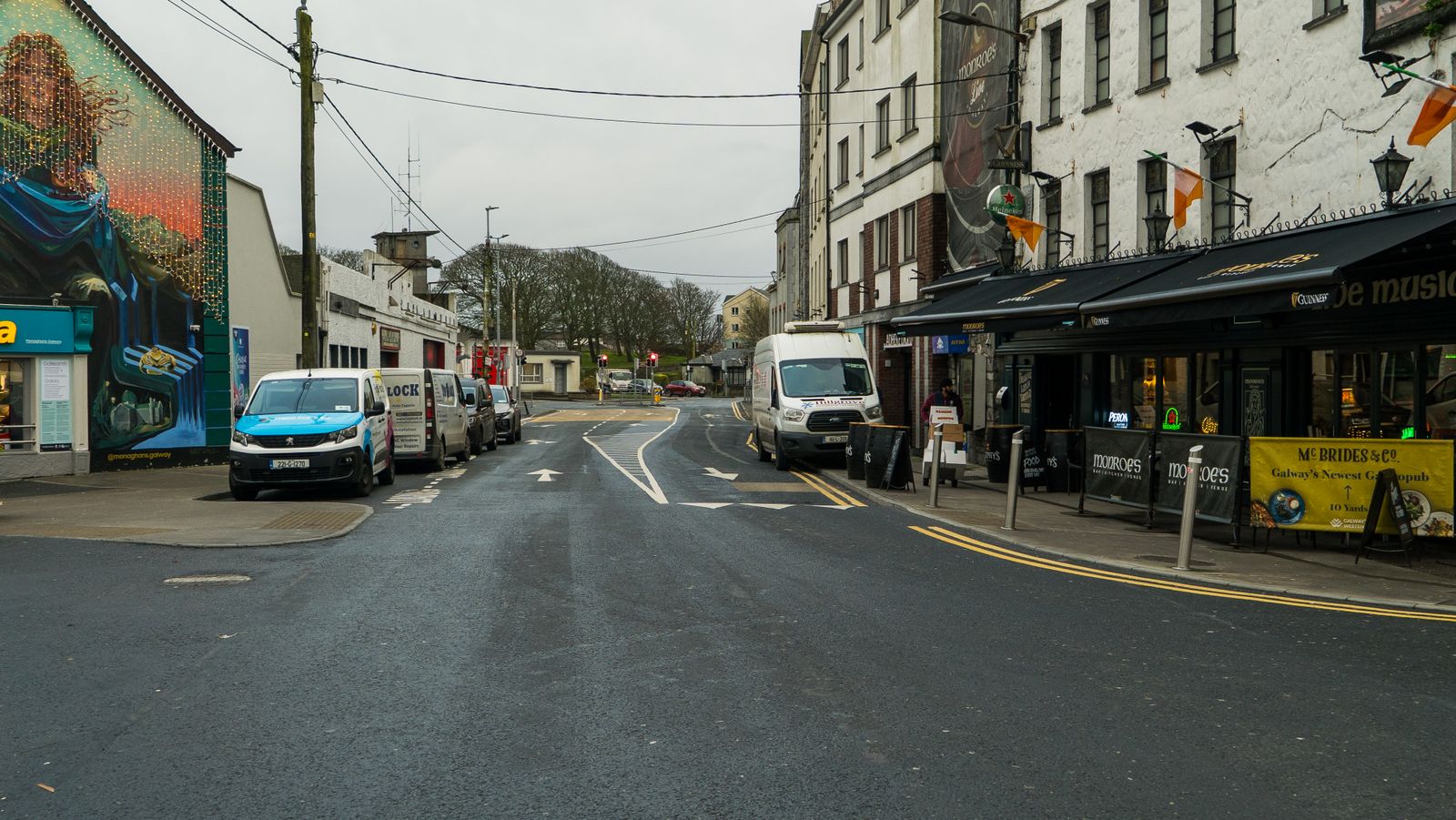
The Latin Quarter is the name for the streets south of the river crossing, around Quay Street, Kirwan's Lane and the lanes off them. This is the oldest part of the city, with medieval walls and fragments of the old town still visible in the buildings.
The area is known for street music. Buskers play in the open through the day and into the evening, and the pubs along the lanes hold traditional sessions. The atmosphere is lively and crowded in summer, quieter but still active out of season.
Lynch's Castle, a stone townhouse on Shop Street, is one of the few surviving medieval merchant houses in the city. St Nicholas' Collegiate Church, just off the main street, is a large medieval church still in use and free to enter.
Street music and sessions are informal and change with the season. Check with the city's tourist office for what is running during your visit.
The river and the bay
The River Corrib is short and fast, running from Lough Corrib down through the city to the sea. Salmon come up the river, and the bridges over it give good views of the water and the old quays. The Salmon Weir Bridge is a well known spot for watching the river.
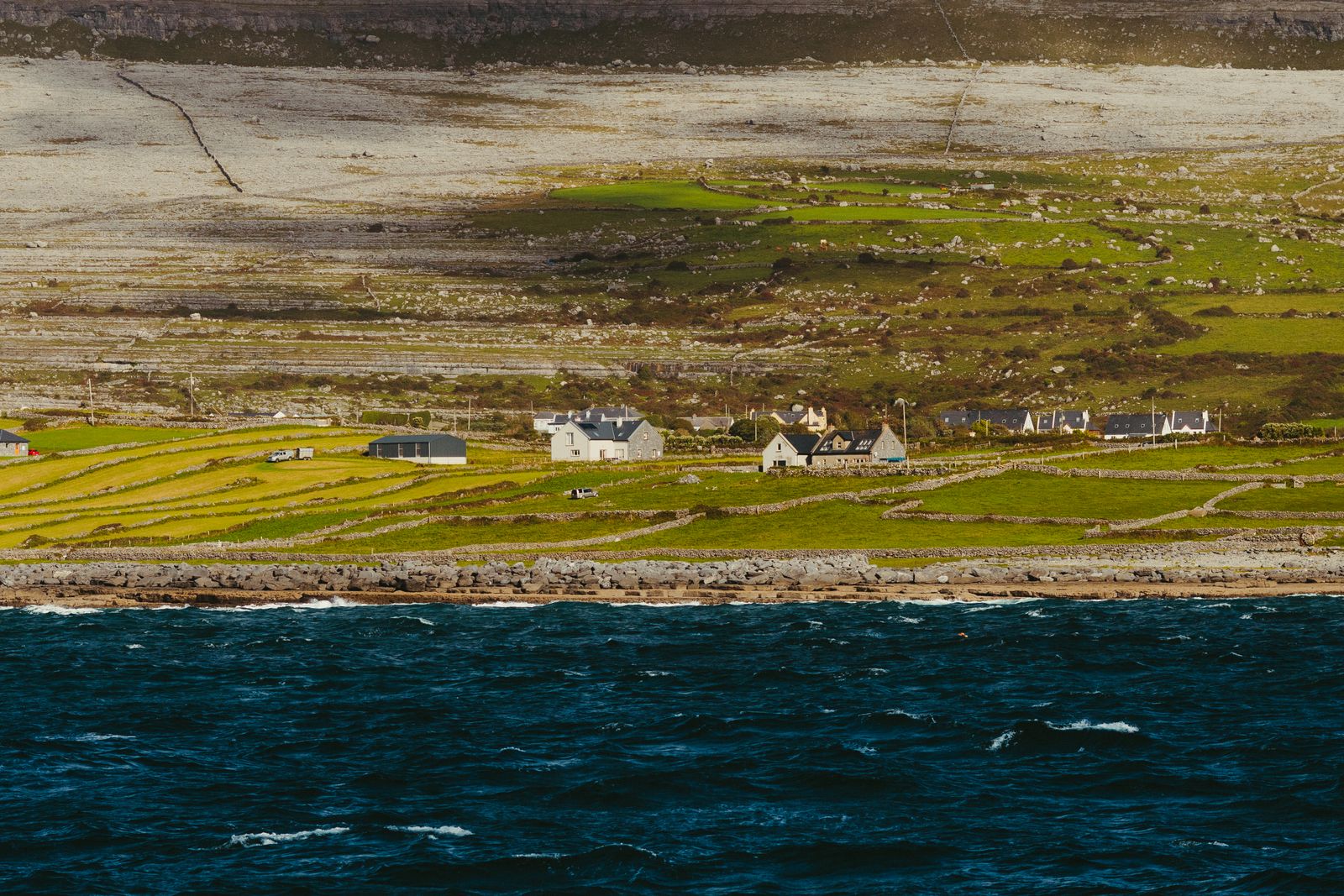
Galway Bay opens west of the city. The promenade at Salthill runs along the coast for a good stretch, with views across the bay to the Burren hills in County Clare on a clear day. The beach at Salthill is sandy and backed by the promenade.
The Claddagh basin and the Long Walk are worth a walk in the evening, when the light falls across the water and the boats are tied up. The area is free to walk and open at all hours.
Boats to the Aran Islands
Galway city is one of the departure points for the Aran Islands, the three rocky islands out in Galway Bay. Ferries run from the city docks to Inishmore, the largest of the islands, and the crossing takes a little over an hour depending on the boat and the weather.
Sailings are seasonal and depend on conditions, so check the operator's timetable before planning a day. Foot passengers are the usual traffic on this route, and the islands are best explored on foot or by bicycle once you land.
The islands are Gaeltacht areas, where Irish is the community language, and road signs there are in Irish only. Inishmore has a visitor centre and a cliff fort, Dun Aonghasa, cared for by the Office of Public Works.
Crossings can be cancelled in rough weather. Check the sailing with the ferry operator and the forecast from Met Éireann before setting out.
Choosing a base
Galway city suits a reader who wants streets, music and restaurants within walking distance, with day trips out by bus or car. The centre has the most choice of places to stay, and the railway and bus stations are both close to Eyre Square.
Salthill, a short bus or walk west of the centre, is quieter and faces the sea. It suits a reader who wants the promenade and the beach on the doorstep, with the city still within easy reach.
For exploring Connemara, the town of Clifden further west makes a good base, and Oughterard on the road to Connemara is closer to the city. For the Burren and the Cliffs of Moher, the villages of County Clare across the bay are an alternative, reached by road around the head of the bay.
Getting there and around
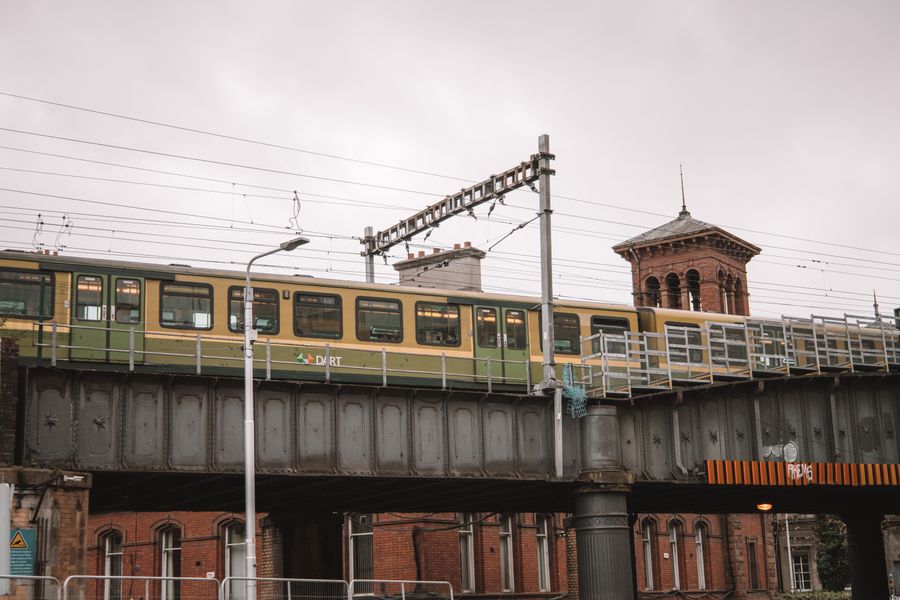
Galway is served by bus and rail. Iarnród Éireann runs trains from Dublin to Galway, and the Enterprise links Dublin and Belfast. Bus Éireann and private operators run coaches from Dublin and other cities to Galway's bus station by Eyre Square.
The nearest airport is Ireland West (Knock), with Shannon and Dublin further away. Transport for Ireland has a journey planner for buses and trains across the country. Timetables change, so check with the operator before travelling.
Within the city, most of the centre is walkable. Local city buses run from Eyre Square to Salthill and the suburbs. Traffic drives on the left, and parking in the centre is limited.
Timetables change with the season. Check the current schedule with Iarnród Éireann or Bus Éireann before booking.
Day trips from the city
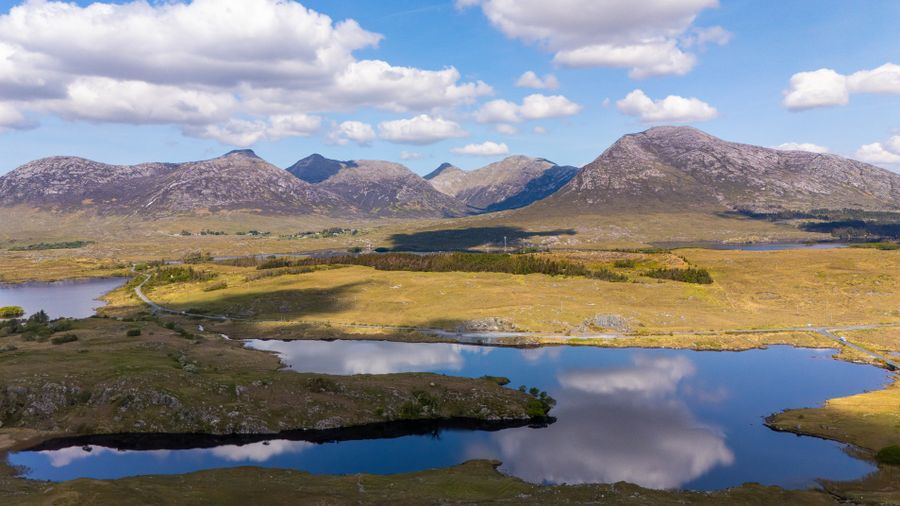
The city makes a good base for the coast and countryside of County Galway. The Connemara coast and the Twelve Bens lie west along the N59, and the village of Spiddal, with its craft shops and Irish-speaking community, is a short drive west along the bay.
South of the city, the Burren in County Clare is reached by road around the head of the bay. The Cliffs of Moher are further along that coast, and the dolmen at Poulnabrone stands in the Burren limestone.
The Wild Atlantic Way runs through the city, following the coast from Galway Bay west into Connemara. A car helps for these trips, though coach tours run from the city to Connemara and the Cliffs of Moher.
Practical notes
The city has a temperate oceanic climate, with mild winters and cool summers. Rain is possible in every month, and the west coast is wetter than the east. Daylight in Dublin runs from about 17 hours around the June solstice to about 7.5 hours in late December.
Ireland is not in the Schengen area. Entry rules depend on the passport, so check the Irish Immigration Service for the Republic before travelling. Plugs are the three-pin type G. The emergency number is 112 or 999.
The city centre is compact and busy, and the streets around the Latin Quarter fill up in the evening. Book places to stay ahead in summer, and expect crowds around the races in late July and during the arts festival.