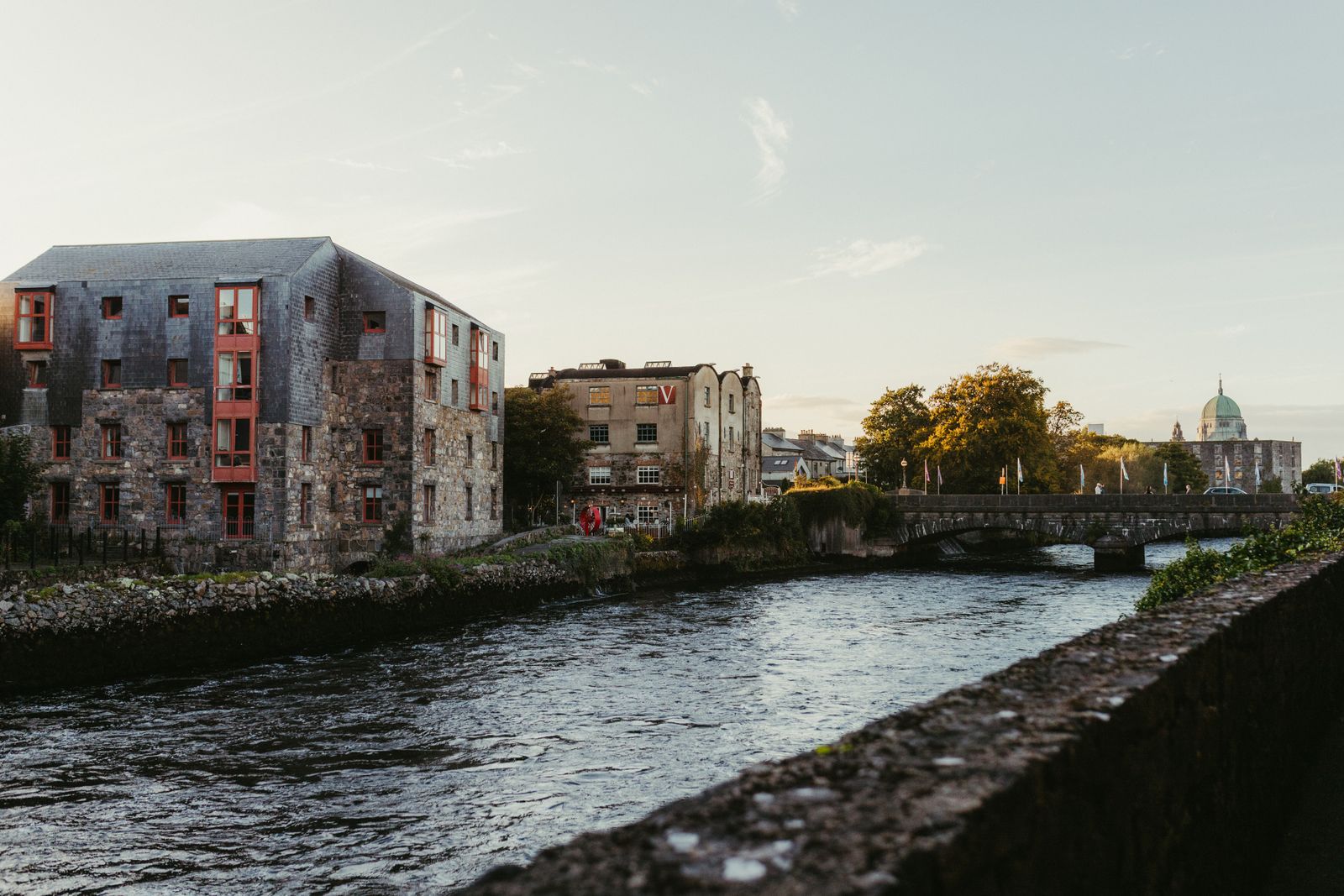
The Latin Quarter is the old heart of Galway city, on the west bank of the Corrib where it runs into the sea. Its lanes link Shop Street to the Spanish Arch, and much of it is pedestrianised.
The streets
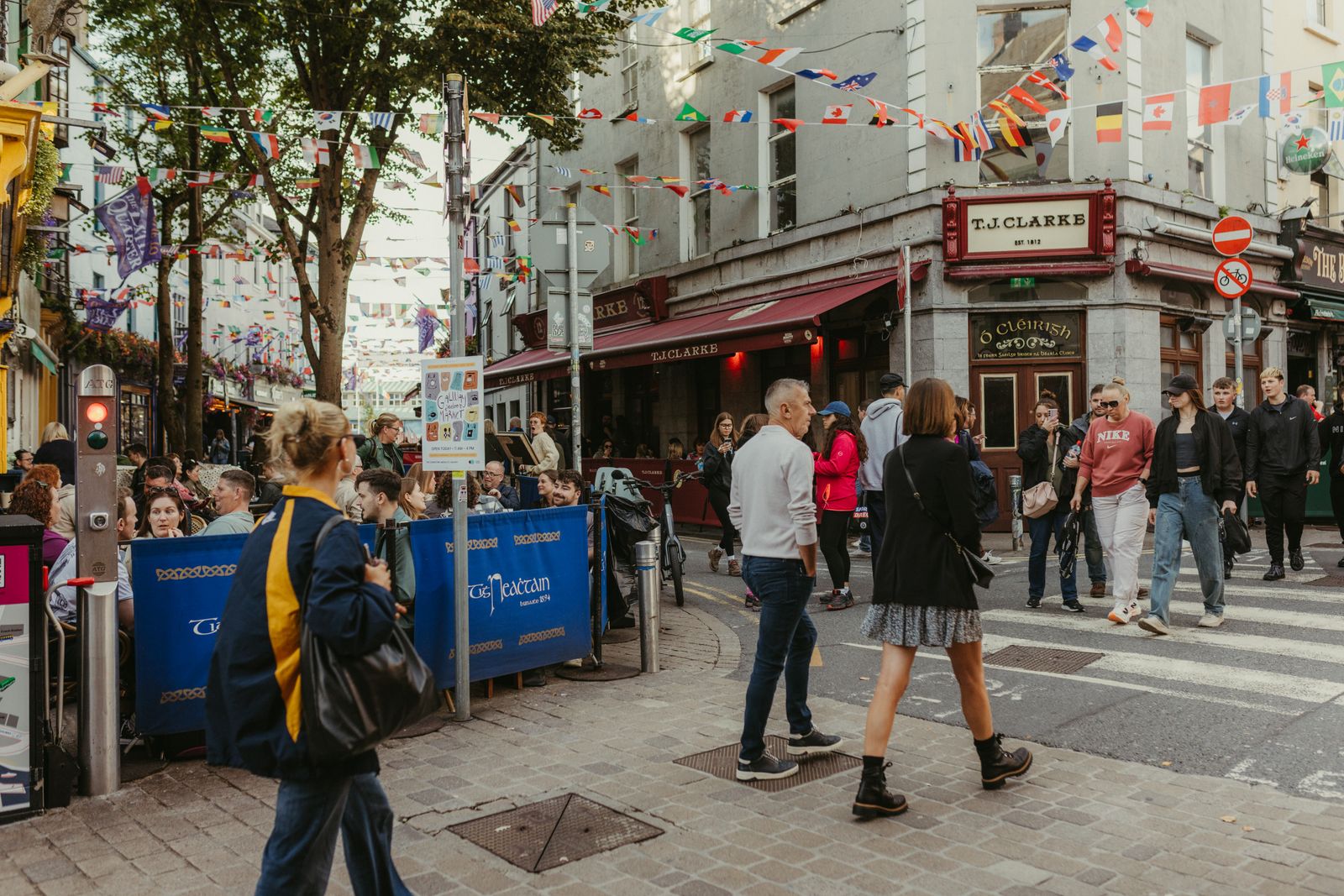
The Latin Quarter takes in Shop Street, High Street, Quay Street, Cross Street and the lanes running between them. Shop Street and High Street are pedestrianised for most of the day, and the surface is flat and easy to walk. The buildings are a mix of medieval stone, Georgian brick and later shopfronts, many with carved details above the ground floor.
The name is a modern one, used to draw together these streets for visitors. Historically this was simply the commercial centre of the town, close to the river and the quays. The street pattern still follows the medieval layout, with narrow lanes opening off the main streets.
Walking the whole area takes an hour or so at an easy pace. Allow longer if you stop for music, coffee or a look at the buildings. The streets are busiest in the afternoon and early evening, and quieter in the morning.
Street music
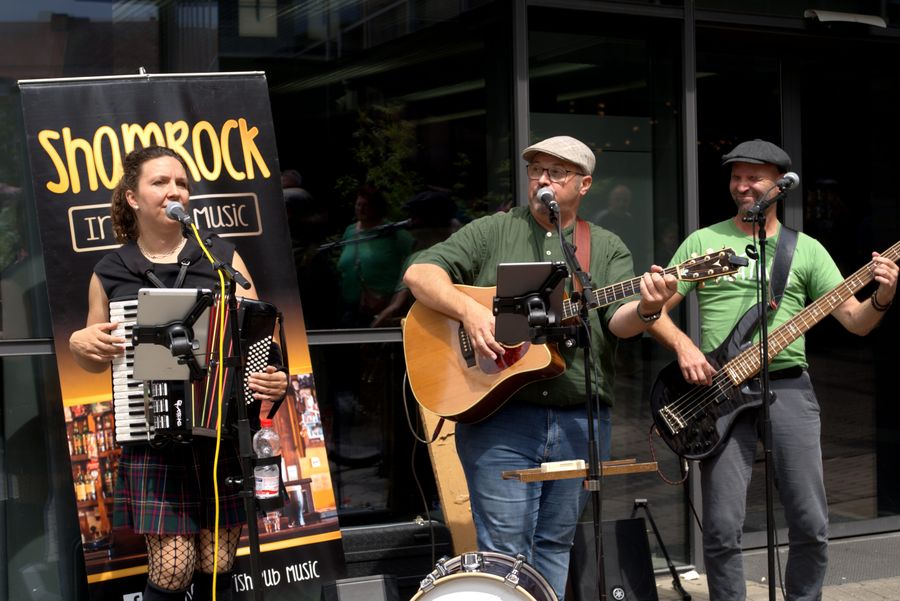
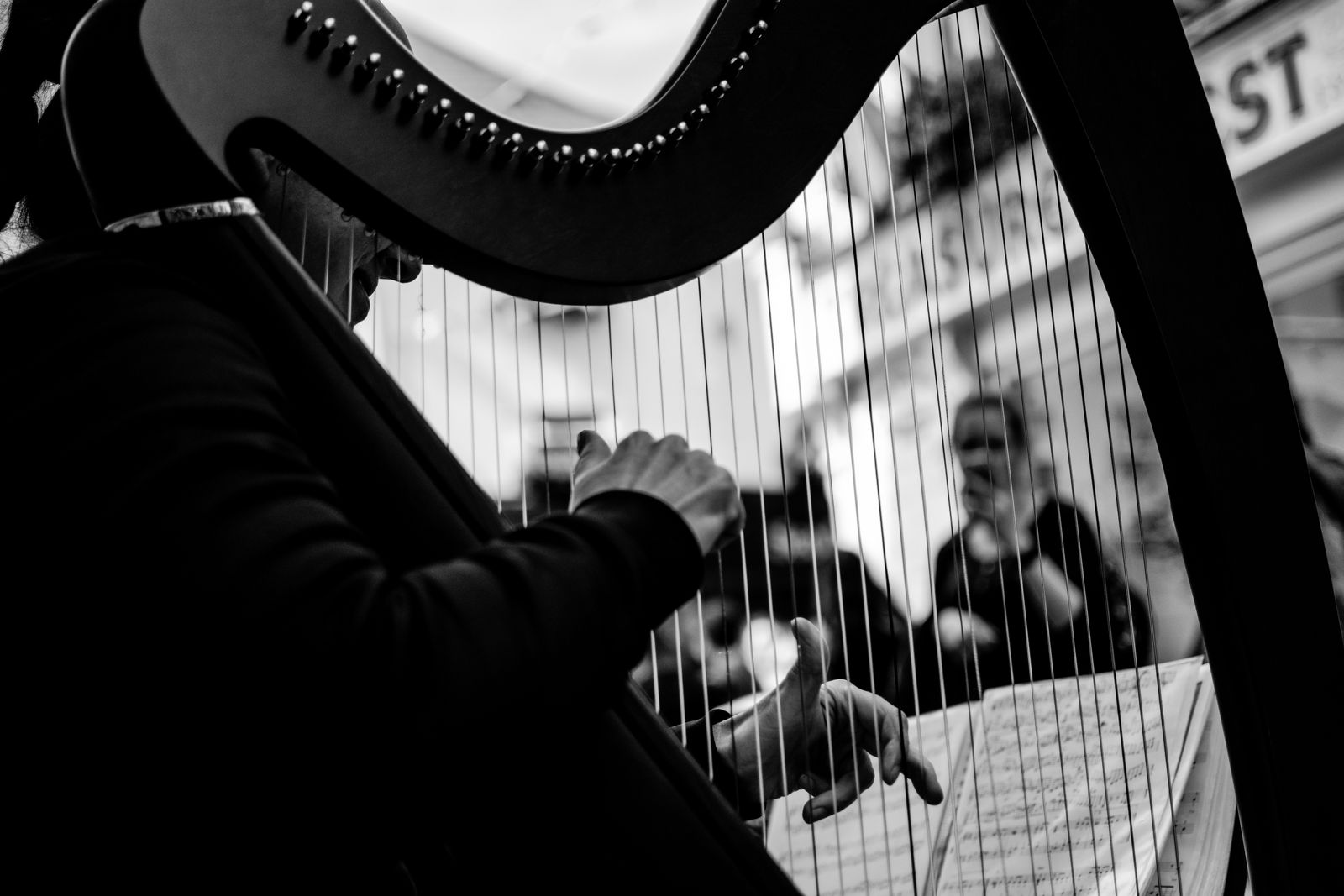
Buskers play on Shop Street and the surrounding corners through the day and into the evening. The style is mostly traditional Irish music, with fiddles, tin whistles, banjos and guitars, along with some folk and rock. Performers are usually amplified, and the sound carries along the street.
The busking tradition in Galway is long-standing, and the city has rules on when and where amplified performance is allowed. These can change, so check with Galway City Council if you want to perform rather than listen.
For listeners, the simplest approach is to walk the street and stop where the music suits. There is no schedule and no ticketing. Weekend afternoons and summer evenings tend to be the liveliest.
Buskers move on and rules change. Check with Galway City Council if you plan to perform on the street.
Pubs and sessions
The Latin Quarter holds a dense cluster of small pubs, several of them known for traditional music sessions. A session is an informal gathering of musicians playing together, often in a corner of the bar, with no stage and no set list. Some are led by regular players, others are open to visiting musicians.
Sessions usually start in the evening and can run late. They are not ticketed, though a drink or two is the custom. Not every pub with music has a session every night, and the pattern changes with the season.
If you want to join in, ask the players between tunes rather than mid-set. Many sessions welcome visiting musicians, but the etiquette varies. The blog on how a trad session works covers the basics.
The Spanish Arch
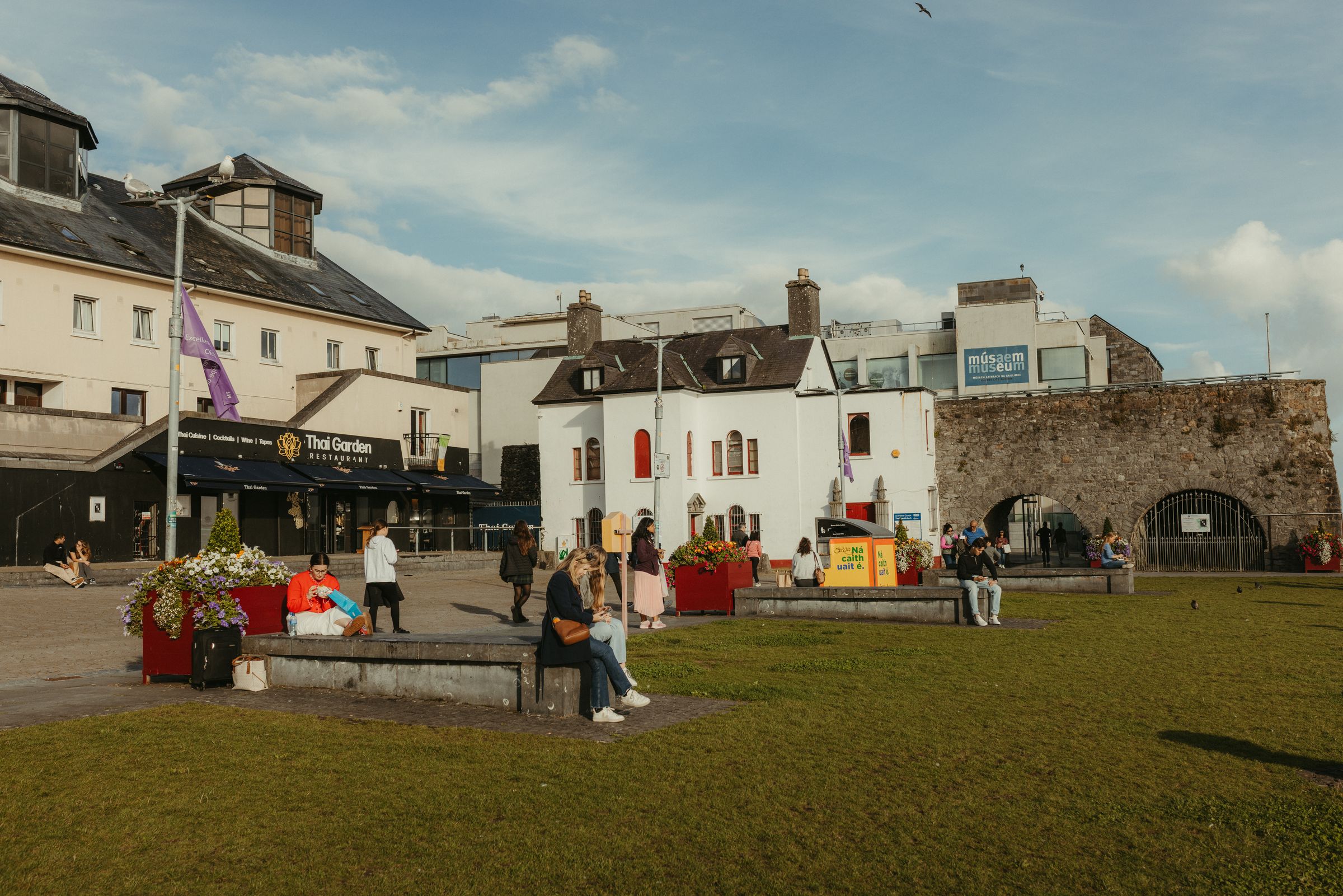
The Spanish Arch stands on the left bank of the Corrib, near the point where the river meets the sea. It is a surviving section of the town walls, built in the sixteenth century to protect the quays. The name is later, and probably refers to trade with Spain.
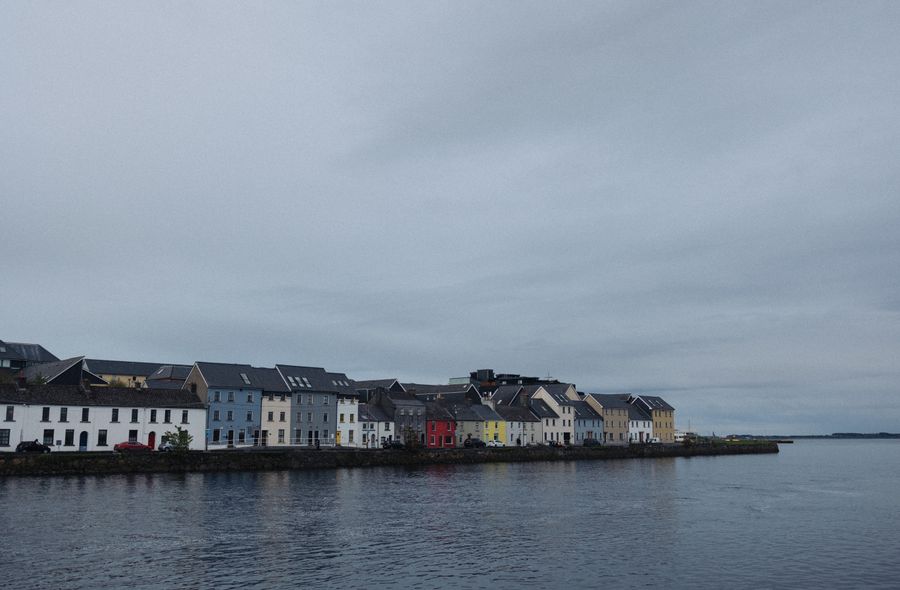
The arch is free to walk through and around, and it is a short walk from Quay Street. Beside it, the Long Walk runs along the river towards the Claddagh, with views across to the opposite bank.
The area around the arch is open and exposed. On a wet or windy day it is worth having a coat, as there is little shelter between the arch and the river.
Along the river
The Corrib runs through the city in a series of channels and races before reaching the sea. The Latin Quarter sits on the west bank, and the riverside walk from the Spanish Arch towards the Claddagh is flat and short. Swans and gulls are common on the water.
The Claddagh was a fishing village before it was absorbed into the city, and the area still has a distinct feel. The Claddagh ring, with its crown and hands, takes its name from here.
Bridges cross the river at several points, linking the Latin Quarter to the east bank and to the cathedral. The walk between them is easy and takes in most of the central sights.
Where to base yourself
Galway city is the obvious base for the Latin Quarter, which sits in the middle of it. Staying within walking distance of Shop Street means the streets, the river and the cathedral are all reachable on foot. The city is compact, and most central places are a short walk apart.
Salthill, a seaside suburb to the west, is a short bus or drive from the centre and has a promenade along the bay. Oranmore, to the east, is a village with its own centre and a rail stop. Both work as quieter bases with easy access to the city.
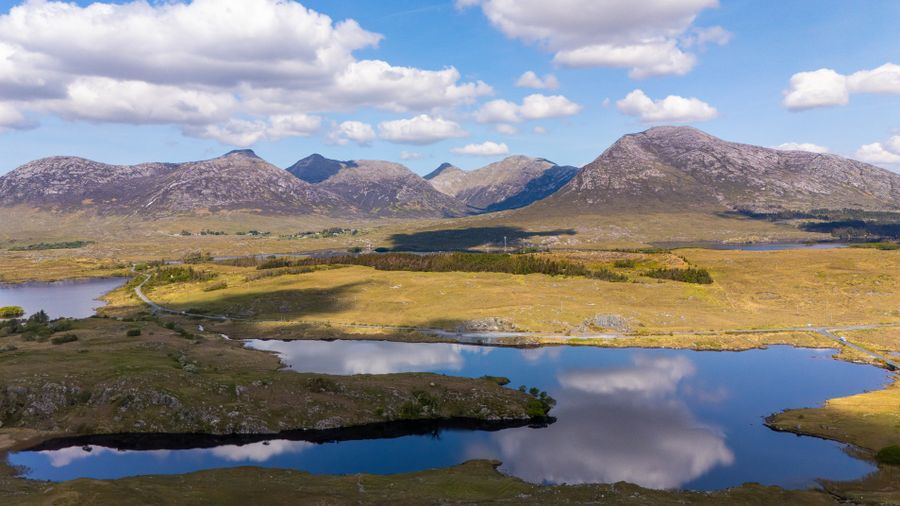
Further out, Connemara to the west and the Burren to the south are within driving distance for day trips. Buses and trains from Galway city serve the wider county and beyond. Timetables change, so check with the operator.
Practical notes
The Latin Quarter is within easy walking distance of the city's main bus and rail stations. Buses and trains run from Galway to Dublin and other towns, and the journey planner from Transport for Ireland covers the whole network. Timetables change, so check with the operator before travelling.
Parking in the centre is limited and often charged. If you drive, it is easier to park outside the core and walk in. Traffic drives on the left, and the streets in the quarter are mostly one-way or pedestrianised.
Rain is possible in any month, and the west of Ireland is wetter than the east. A waterproof layer is worth carrying. Daylight runs from about 17 hours around the June solstice to about 7.5 hours in late December.