Ireland has no right to roam for vehicles, and sleeping in a car park or at the roadside is generally not permitted unless the landowner agrees. Local authorities police it variably, but the trend since 2022 has been tighter: Waterford, Kerry and Clare have all brought in bylaws restricting overnight parking in coastal car parks that campervans once used freely. In practice this means you should plan each night around a registered campsite or a private pub or farm stop that has explicitly said yes. Fines on the spot are a real possibility, and being moved on at 11pm on the N70 outside Cahersiveen is nobody's idea of a holiday.
The legal picture, plainly
A useful working rule: if there is no sign saying otherwise and no house within sight, you may still be asked to move. The safest sources are the campsites themselves, the Ireland Camping and Caravanning directory, and the pub-stop networks that farmers and publicans operate along the Wild Atlantic Way. Booking ahead matters most in July and August, when coastal sites from Clifden to Dingle fill weeks out. Outside those months, and especially in May, June and September, you can often decide on the day.
Coastal bases that work
Along the west coast, the reliable pattern is to use a serviced site every second or third night and treat the rest as short hops. Clifden and Renvyle in Connemara give you access to the Sky Road and Kylemore Abbey, while Westport on Clew Bay has several sites within a ten-minute drive of the town and the Greenway. Further south, Dingle's sites sit about 2km from the harbour, and Cahersiveen and Waterville break up the Ring of Kerry nicely. Expect pitch fees in the region of 25 to 40 euros for two adults with a hook-up in high season; these vary by site and season, so confirm when booking.
The south and southeast are easier. Cork's coastline around Clonakilty, Courtmacsherry and Youghal has a good spread of family-run sites, and the Copper Coast in Waterford is compact enough to tour in a day. The Wicklow Mountains are less accommodating: the military road has no legal overnighting and the Sally Gap car parks are day-use only, so base yourself in Laragh or Glendalough and drive the passes empty. If I were planning a two-week west-coast loop, I would fix three nights in advance — Clifden, Dingle and Westport — and leave the rest loose.
Cities are where the van gets awkward
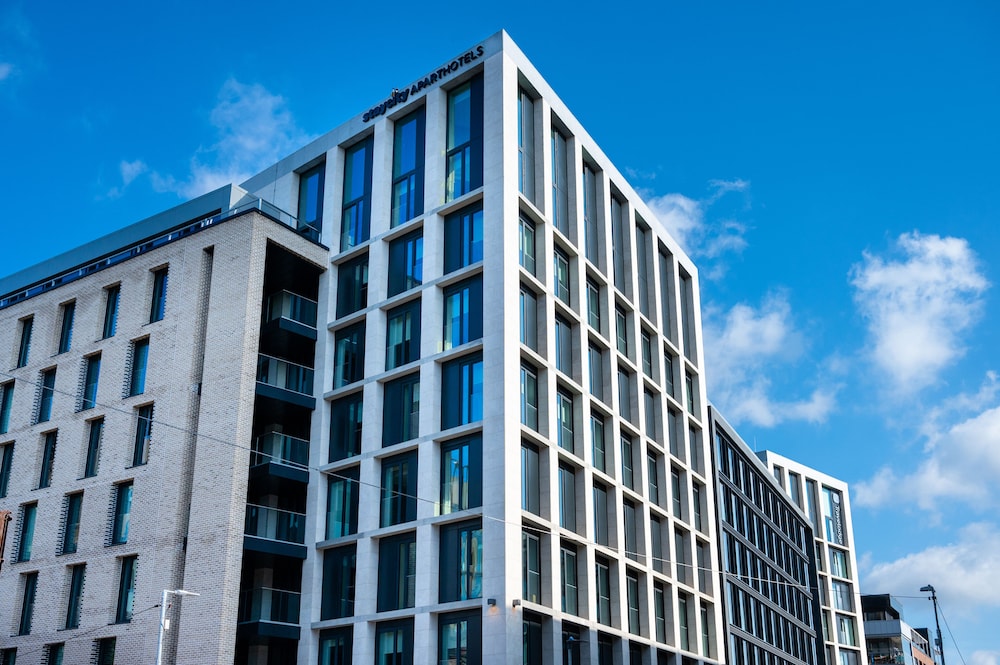
Dublin is the honest sticking point. There is no campsite within the city; the nearest proper sites are at Camac Valley near Clondalkin, about 12km out, and at Rathfarnham on the southside. From Camac Valley, the Luas Red Line at Red Cow is roughly a 15-minute walk or a short bus ride, and a taxi from Heuston Station back to the site costs a modest amount late at night. Driving a 6m van into the centre to hunt for parking around Temple Bar or the Liberties is a false economy: multi-storeys have height barriers and on-street spaces are tight and time-limited.
Galway is friendlier. A site at Salthill puts you a 25-minute walk along the promenade to the Latin Quarter, and there is a Park and Ride at Ballybrit for race days and busy weekends. Killarney has several sites within 2km of the town, which is one of the best bases in Ireland because you can leave the van parked and walk to Ross Castle, the national park gates and the pubs on Plunkett Street. Belfast and the Causeway Coast are a different jurisdiction, so check UK rules separately if you cross the border. For most travellers, I would book one or two hotel nights in Dublin at the start or end of the trip and keep the van for the countryside.
Ferries, timing and what to skip
Arriving by ferry, Rosslare from Pembroke or Fishguard is the calmest entry for a van; Dublin Port from Holyhead is faster but dumps you into city traffic. Cherbourg to Rosslare is the long option and worth it if you are coming from France. Drive times are longer than the map suggests: Dublin to Galway is about 2 hours 30 minutes on the M6, Galway to Clifden around 1 hour 20 minutes on the N59, and Killarney to Dingle about an hour. Build in 20 percent more time than the app says, because the secondary roads in Connemara and west Kerry are narrow and slow.
Best months are May, June and September: the light is long, the sites are quieter and the weather is about as good as it gets. Skip the Wild Atlantic Way's most famous viewpoints at midday in August — the Cliffs of Moher car park and the Connor Pass get congested — and go early or late instead. Skip trying to circle the entire coast in a week; the Mizen and Beara peninsulas reward a slower pace. Book your first and last nights, plus any city stop, before you leave home; that is where the anxiety sits, and a confirmed hotel room in Dublin or Galway removes it.