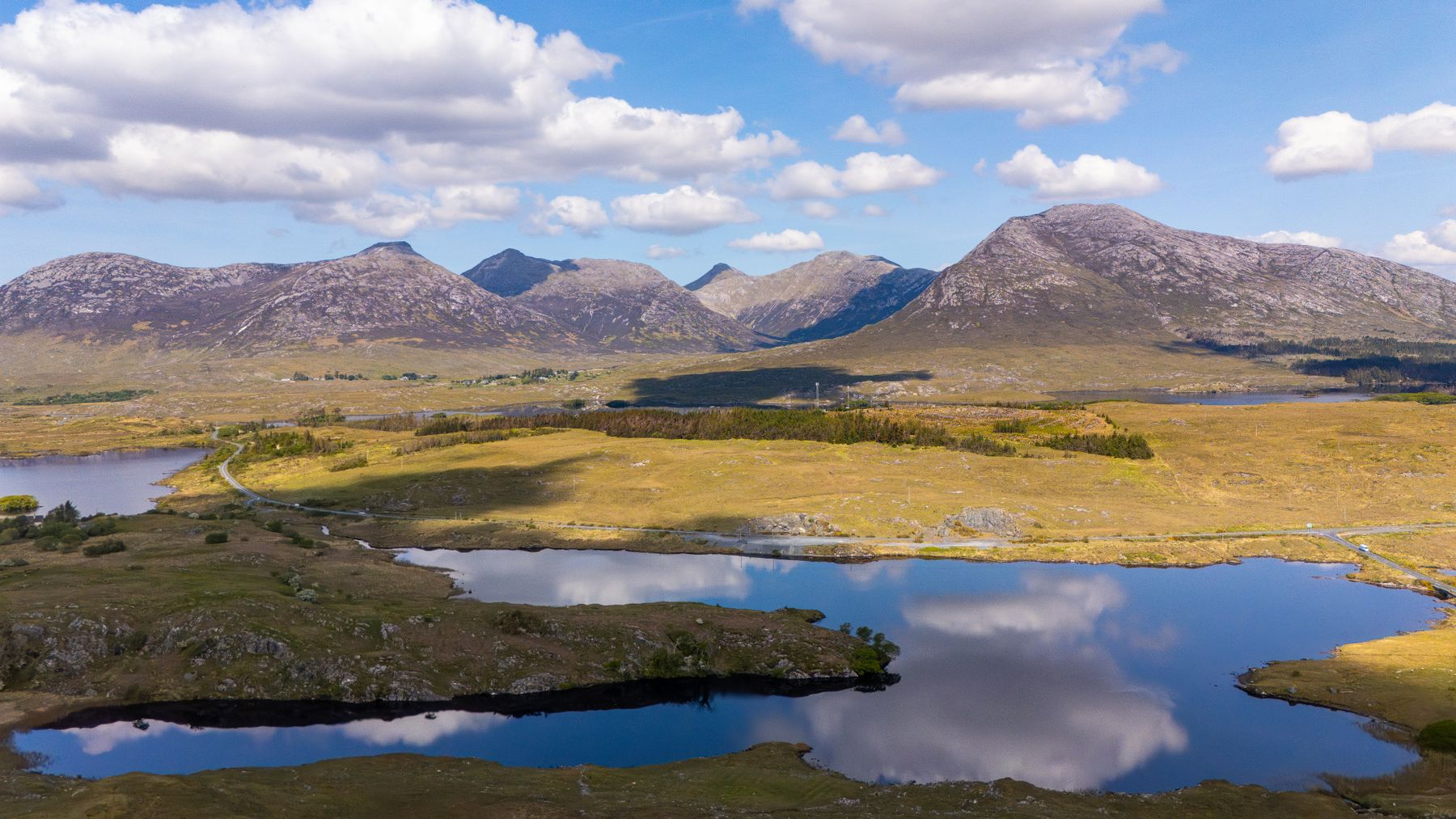
County Donegal is the heart of Ireland's handwoven tweed tradition, and the small mills and weavers' cottages around Ardara and Kilcar are the reason to come. Ardara holds a handful of working hand-weaving operations where you can watch a loom in action, often for free or for the price of a coffee, and the village's wool shops sell blankets and caps woven within a few miles. Drive times are longer than they look on the map: Ardara to Kilcar is about 25 minutes on narrow R-roads, and Donegal town to Ardara around 40 minutes. Come between May and September for full opening hours; many workshops run reduced winter timetables and close on Sundays year-round.
Donegal: Where the Tweed Actually Comes From
Base yourself in Donegal town or Ardara rather than trying to day-trip from Sligo or Letterkenny, which adds an hour each way. Ardara has a small choice of guesthouses and pubs with rooms; Donegal town gives you more hotel stock, a castle, and better roads for reaching Slieve League and the Glencolmcille area. Book two nights minimum — the peninsula roads are slow, and a single day leaves no room for a loom demonstration plus the coastal drive. Midges are real near bogland in July and August; bring repellent if you plan to walk between sites.
Mayo and Galway: Foxford, Cong and the Connemara Weavers
Foxford, on the River Moy about 20 minutes south of Ballina, is home to a woollen mill with a visitor centre and cafe that has been running since the 1890s; the tour covers carding, spinning and looming, and the shop sells blankets that cost from around €60 for a small throw up to several hundred for a full-size bed blanket. From there, Cong is 35 minutes east, and the Connemara coast around Cleggan and Letterfrack has small weaving studios, many open by appointment only. The N59 through Connemara is scenic but slow — allow 90 minutes from Galway city to Clifden.
I would book Galway city as the base for this leg: it has the widest hotel range in the west, rail links to Dublin and Limerick, and you can reach Foxford in about 90 minutes, Connemara in an hour, and the Aran Islands ferry at Rossaveal in 45 minutes. Inis Oírr and Inis Mór have small knitting and craft outlets near the piers, though sailings cancel in wind — check conditions the morning you go. Avoid trying to combine Foxford and Connemara in one day; the driving alone eats five hours.
The Southeast: Kilkenny, Carlow and Avoca
The southeast is the easiest textile leg for anyone flying into Dublin. Avoca's original mill at Avoca, County Wicklow, sits about 80 minutes south of the city and runs weaving demonstrations alongside its famous shop and cafe; Kilkenny city, 40 minutes further, has craft shops and a design-and-crafts trail through the medieval streets. Carlow and Kilkenny both have working wool and felt studios that take small groups, and the area is compact enough to see two or three in a day. Best months are May, June and September — August brings crowds to Wicklow and prices rise accordingly.
Stay in Kilkenny city for two nights rather than Wicklow: hotels are cheaper outside Dublin's orbit, parking is easier, and you are within an hour of most of the southeast's workshops. From Kilkenny you can reach Avoca in just over an hour, Carlow in 25 minutes, and Waterford's craft quarter in 45. Dublin-based day tours exist but leave at 8am and return in traffic; a two-night Kilkenny stay is better value and far less rushed. Skip the big shopping-centre outlets — the small studio sales are where the real work is.
Kerry and Cork: Blarney Woollen Mills and West Cork Weavers
Blarney Woollen Mills, 15 minutes from Cork city, is the largest textile retail stop in the south and the obvious first port of call if you are flying into Cork Airport — it is 20 minutes from the terminal and open seven days. Further west, small weavers and felters work around Kenmare, Bantry and Skibbereen, mostly by appointment, and the Beara and Sheep's Head peninsulas have studios that welcome walk-in visitors in summer. Killarney to Kenmare is 40 minutes on the N71; Kenmare to Bantry another 45 through the Caha Pass, which is beautiful but not a road to hurry on.
For this leg I would book Cork city for one night and Kenmare for two. Cork gives you the airport, restaurants and the Blarney trip without a car-heavy start, while Kenmare is the best-placed base for West Cork and the Killarney lakes, with a good spread of small hotels and guesthouses. Visit between April and October; several West Cork studios close entirely from November to March. What to skip: the heavily touristed woollen shops in Killarney town centre — the same goods appear in Kenmare and Skibbereen with smaller crowds and more chance of meeting the maker.