Ireland's farmhouse cheese revival is younger than most visitors expect, dating largely to the 1970s and 1980s when a handful of dairy farmers started making cheese on their own land rather than sending all their milk to creameries. On a board you are most likely to meet a handful of styles: a soft, bloomy-rinded cow's milk cheese; a semi-hard tomme-style wheel; a sharp aged cheddar, often from the Cork or Waterford hinterland; and a blue, frequently made with sheep's or goat's milk. Ask the person serving which cheeses are raw milk and how old they are, because ripeness tells you more than the name does.
Reading an Irish Cheese Board
Verdicts worth knowing: young, milky cheeses peak in spring and early summer when pasture is at its best, while aged wheels hold up year-round. If a board offers you a plate of small, uniform cubes, you are in the wrong place. Good counters cut to order and let a cheese come to room temperature before plating. A soft cheese served fridge-cold tastes of almost nothing. This is the single most common mistake in hotel and pub carvery boards, and it is easy to sidestep by asking for a few minutes' grace before the plate arrives.
What Irish Charcuterie Actually Means
Charcuterie is a newer story here. Pork has long been central to Irish food, but the tradition leaned towards bacon, ham and black and white pudding rather than air-dried hams. A genuine Irish cured-meat platter today will lean on air-dried beef from grass-fed cattle, a dry-cured bacon or coppa-style pork, and perhaps a smoked duck or a venison salami from a small producer. Black pudding appears on some boards, sliced thin and pan-seared rather than eaten cold — ask, because a cold slice of pudding is a poor introduction.
Two things distinguish a serious platter: the curing and the bread. Look for meat that is sliced to order and glossy rather than pre-portioned and sweating under cling film. Alongside it, expect a brown soda bread or a sourdough from a local bakery, good butter, and something sharp to cut the fat — a chutney, pickled onion or a few cornichons. If a bar lists a platter as an afterthought beneath a burger menu, order the burger. The dedicated cheese-and-charcuterie counters in Dublin's city centre and Cork's English Market are worth planning a morning around.
Where to Eat and Buy: Dublin, Cork, Galway
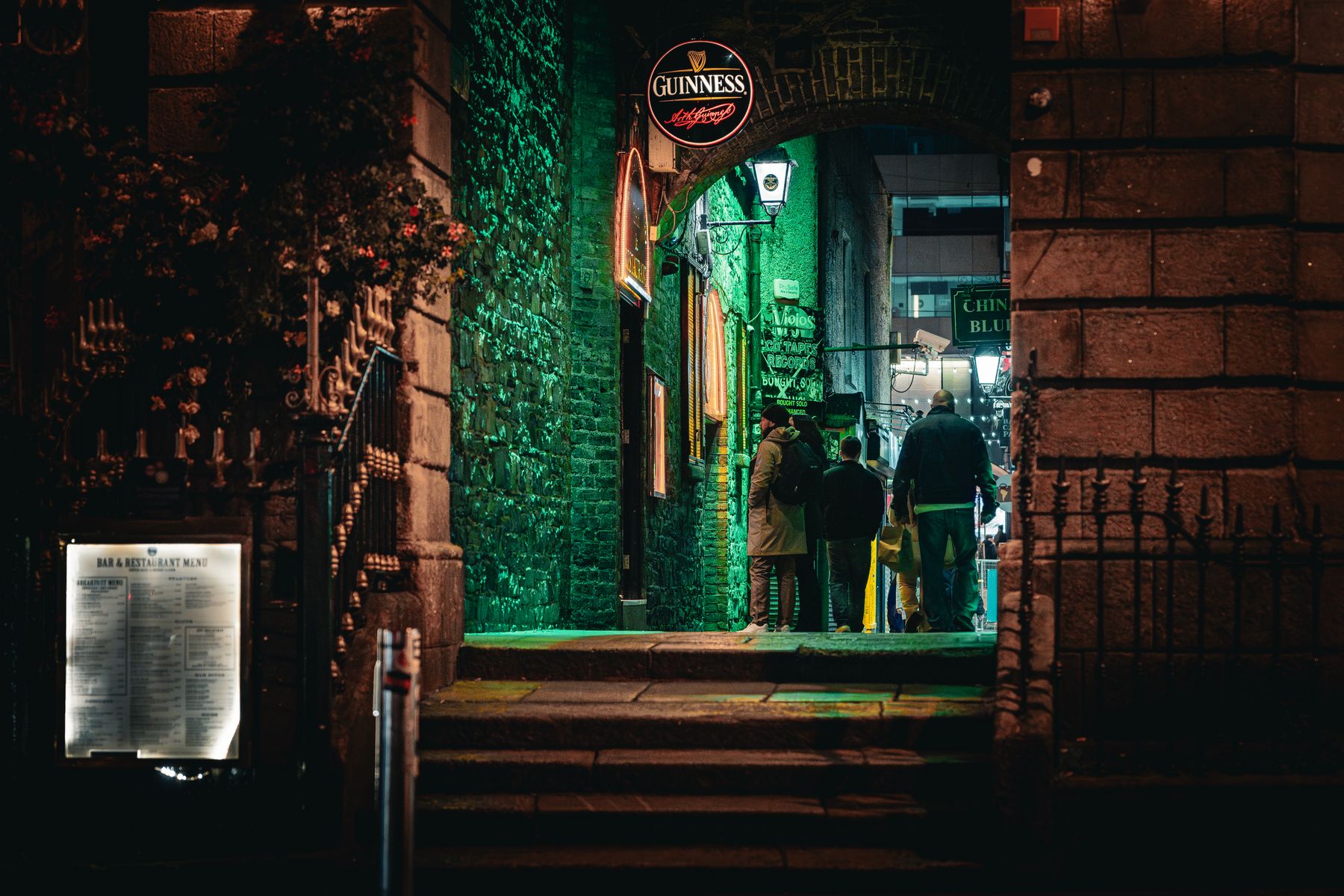
In Dublin, the concentration of good counters sits in the Georgian south city and around the weekends' markets rather than on Temple Bar, where you will pay a premium for the postcode. A hotel near St Stephen's Green or off Grafton Street puts you ten to fifteen minutes on foot from the main food halls and delis, and gets you back to a room without a taxi. The weekend markets around the Liberties and the old fruit-and-vegetable market quarter are the best single stop for a traveller who wants to assemble a picnic rather than sit down.
Cork is the cheese county, and the English Market on Princes Street is the anchor for both buying and eating. Stay in the city centre within a short walk of Patrick Street and you can reach the market, the butter museum and the riverside in one morning. Galway rewards a different approach: its Saturday market by St Nicholas's Church is the place to graze, and the shopfront delis along the Latin Quarter are useful for cheese to take home. Between Cork and Galway, the drive via Limerick takes about two and a half hours, so a two-centre trip is realistic.
Practicalities: Seasons, Kitchens and Taking Food Home
Cheese is a living product, so timing your trip helps. Spring and early summer bring the soft, fresh styles; autumn is the sweet spot for a well-stocked board, since aged wheels from the previous year's milk are at their peak and the tourist crowds have thinned. Many small producers close their farm gates to visitors outside a narrow window in summer, so if you want to visit a farm rather than a shop, check before you build a day around it. In Dublin and Cork, most deli counters open around nine or ten and shut by six, with shorter Saturday hours and often no Sunday trade.
For the flight home, hard and semi-hard cheeses travel far better than soft ones, and vacuum-packed portions beat a cling-filmed wedge every time. Cured meats are generally fine in checked baggage but check your airline's rules on food, and never pack raw-milk soft cheese for a long journey. Within Ireland, bring a cool bag if you are driving; a car parked in July heat will undo a morning's shopping. If you are basing yourself in one city for a few nights, ask the hotel to store a purchase in their fridge, which most will do gladly.