The Shannon estuary holds a group of bottlenose dolphins that stays through the year rather than passing through. They feed in the channel and around the mouth of the river, and on a calm day they can be seen from headlands and quays on the Clare side without a boat.
Why the estuary
An estuary is where a river meets the sea, and the Shannon estuary is a wide, sheltered funnel between County Clare on the north side and County Kerry and County Limerick on the south. Fresh water from the river mixes with salt water from the Atlantic, and the result is a rich, shallow, sheltered habitat.
Bottlenose dolphins favour places like this. There is food in quantity, the water is calmer than the open Atlantic, and there is room to move with the tide. The group here is one of the better studied in Europe, with individual animals recognised by the shape and markings of their dorsal fins.
The dolphins are not confined to one spot. They move with the tide and the fish, so a sighting at one headland in the morning does not guarantee one there in the afternoon. Patience and a calm day matter more than any particular viewpoint.

Watching from the shore
The two best known shore viewpoints are on the Clare side. Loop Head, at the end of the peninsula west of Kilrush, looks out over the mouth of the estuary and the open Atlantic beyond. Kilrush has a marina and a quay on the estuary itself, with views across the water.
From a headland, look for a dark fin breaking the surface, then a back, then often a tail fluke as the animal dives. Dolphins often travel in small groups. Gannets diving from a height, or terns working the surface, can point to fish, and fish can mean dolphins.
Binoculars help a great deal. So does patience: give any one viewpoint an hour before moving on. Early morning and late afternoon often bring calmer water, which makes fins easier to pick out against the surface.
Sightings vary with tide and weather. The Irish Whale and Dolphin Group records sightings and can advise on recent activity; check its website before travelling.

Boats and the rules
Boat trips run from the Clare shore in season, and some skippers work under a wildlife watching code. The dolphins are protected, and boats are expected to keep a distance, avoid sudden changes of speed and never chase or encircle a group. If a boat operator cannot say how they follow the code, that is a reason to think twice.
From the water the animals can be seen at closer range, but the shore has its own advantages: no timetable, no charge, and the freedom to stay as long as you like. Many visitors see dolphins from land and never take a boat at all.
Whatever the method, the welfare of the animals comes first. A dolphin that changes direction to avoid a boat, or that is surrounded by several vessels, is under pressure. Responsible watching means leaving them room.
Rules for approaching whales and dolphins are set out by the National Parks and Wildlife Service. Check its guidance before booking any boat trip.
What you are watching
Bottlenose dolphins are the largest of the common dolphins found around Ireland, and the ones in the Shannon are among the best known. Adults are grey, darker above and paler below, with a blunt snout and a curved dorsal fin. They surface to breathe every minute or so when travelling.
They feed on fish, and in the estuary that means salmon, trout and other species moving with the tide. Dolphins often work as a group, herding fish against a bank or into a channel. Feeding birds above the water are a useful clue to where this is happening.
Calves are born in the group and stay close to their mothers for a long time. A small dolphin swimming tightly beside a larger one is a calf, not a small adult. Sightings of calves are a sign that the group is doing well.
Report any sighting, alive or stranded, to the Irish Whale and Dolphin Group. Its recording scheme is the main source of data on Irish cetaceans.
Where to base yourself
Kilrush is the nearest town to the estuary viewpoints and the obvious base for a day or two. It has a marina, a small heritage centre and a market square, and the roads west to Loop Head and north to the Burren are straightforward.
Ennis, the county town of Clare, is a larger base about half an hour inland, with more choice of accommodation and good bus and rail connections. Shannon Airport is close by for arrivals, and the airport guide covers onward travel.
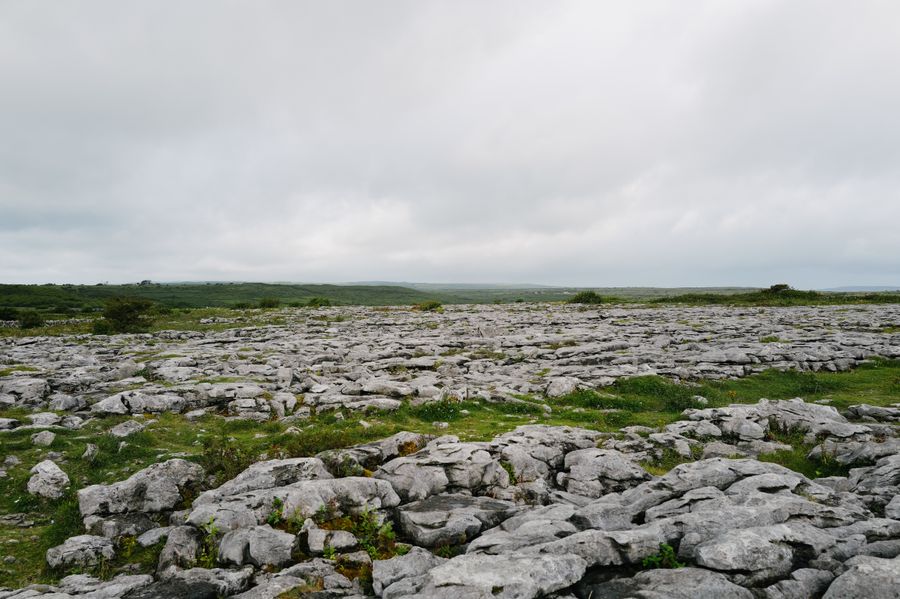
Further north, Doolin and the Burren make a good second base. Doolin has the cliffs and the coast, and the Burren has limestone pavement, wildflowers and archaeology. From either, the estuary is a day trip rather than a short walk.
Bus services in rural Clare are limited and timetables change. Check Transport for Ireland and TFI Local Link before relying on public transport to reach Loop Head.
Weather and season
The dolphins are present all year, so there is no single season for seeing them. What changes is the weather. Summer brings longer days and more visitors, and winter brings shorter daylight but fewer people on the headlands.
Calm, dry days are best for spotting fins. Wind pushes up chop, which hides the surface, and rain reduces visibility. A settled spell of high pressure in any month gives the clearest water and the easiest watching.
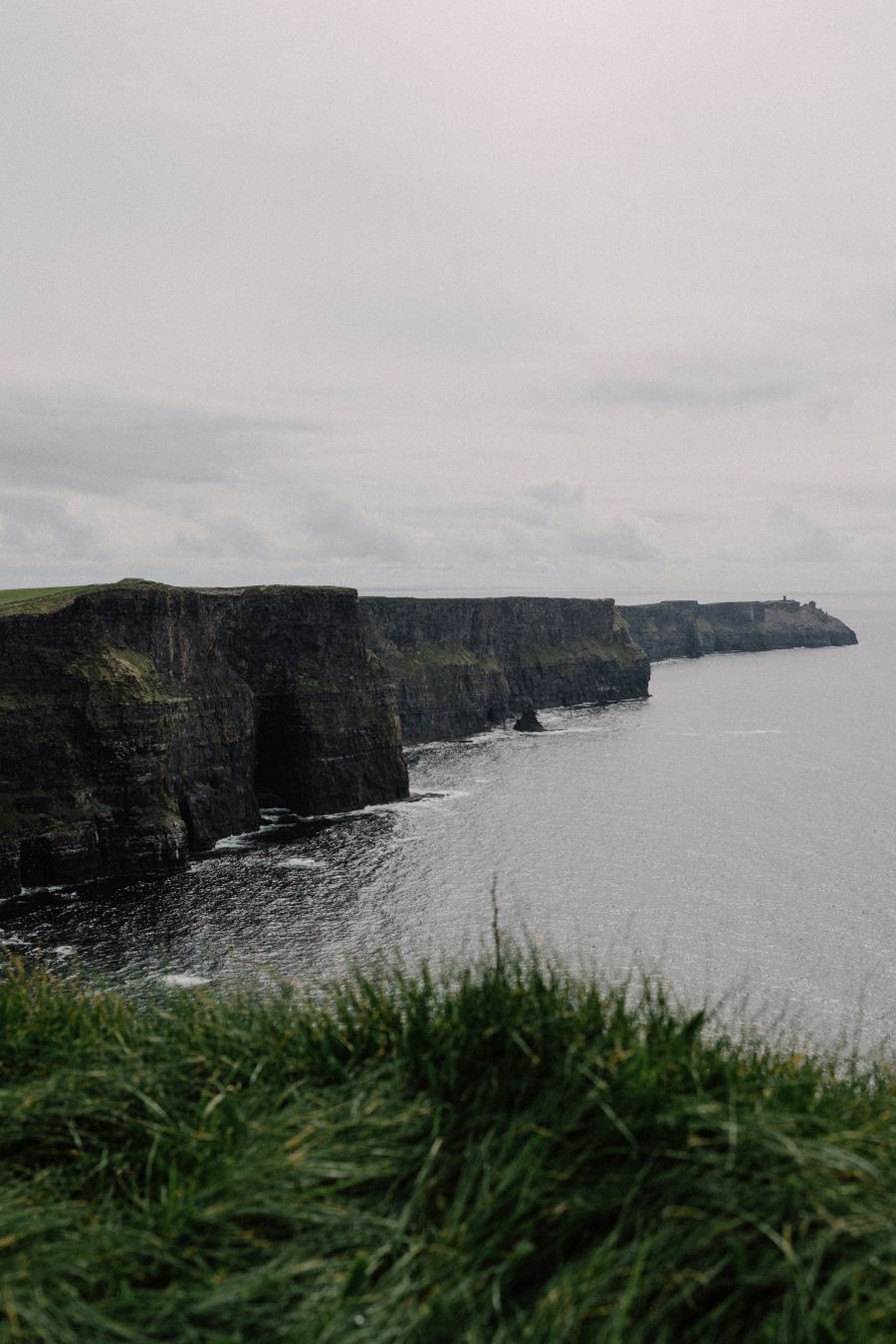
The west Clare coast is exposed. Bring waterproofs and warm layers even in summer, and take care on cliff edges at Loop Head, where the ground can be soft and the drop is long. Stay back from the edge and keep children close.
Met Éireann publishes the inshore waters forecast for the Shannon estuary. Check it before setting out for a headland.
Nearby on the same day
Loop Head itself is worth the drive for the cliffs and the lighthouse, with views north to the Cliffs of Moher and south across the mouth of the Shannon. The road out from Kilrush passes through small villages and open farmland.
Scattery Island, in the estuary off Kilrush, has a round tower and monastic ruins, and is reached by boat in season. The Burren and the Cliffs of Moher lie to the north, and the ferry across the Shannon connects with County Kerry to the south.
A day combining the estuary, Loop Head and a stop in Kilrush is easily filled. Add the cliffs or the Burren and it becomes a full day out, so plan the driving and leave time to stand and watch the water.