In Ireland the word farmhouse is used loosely. It can mean a working dairy or sheep farm where the family lets three or four rooms and cooks breakfast, or a purpose-built guesthouse that simply carries the name. The genuine version is usually a family home on 40 to 200 acres, registered with Fáilte Ireland and inspected for basics such as fire safety and breakfast standards. Rooms are rarely more than six. Expect a shared sitting room, a kettle, and a host who will tell you exactly which road to avoid.
What an Irish farmhouse is, and what it is not
What it is not is a hotel. There is generally no lift, no night porter and no room service. Check-in is a conversation, usually between 4pm and 7pm, and you should confirm it by phone or email a few days ahead. If you are arriving off a late flight into Dublin or Shannon, say so before booking. Many hosts will leave a key, but not all, and a 9pm arrival after a day driving from Rosslare is a poor way to start.
Rooms, breakfast and the daily rhythm
Bedrooms are comfortable but plain: often a double and two singles, good bedding, a wardrobe, a small desk. En-suites are standard in registered farmhouses, though some older properties have a private bathroom across a landing, so read the room description carefully. Water pressure in converted outbuildings can be modest. Bring slippers if you are fussy about stone floors, and a sleep mask in June, when daylight in Connemara lasts until nearly 11pm and many rural rooms have light curtains rather than blackout.
Breakfast is the centrepiece and is included in the room rate. Expect a cooked Irish breakfast, porridge, soda bread, scones and often the host's own eggs, honey or smoked salmon. Service is normally one sitting between 8am and 9.30am, not a rolling buffet, which matters if you plan an early ferry from Rossaveal or a dawn start on the Wicklow Way. Tell your host the night before if you need to eat at 7am. Dietary requests are usually met if you mention them at the time of booking rather than at the table.
Where to base yourself, and how to get around
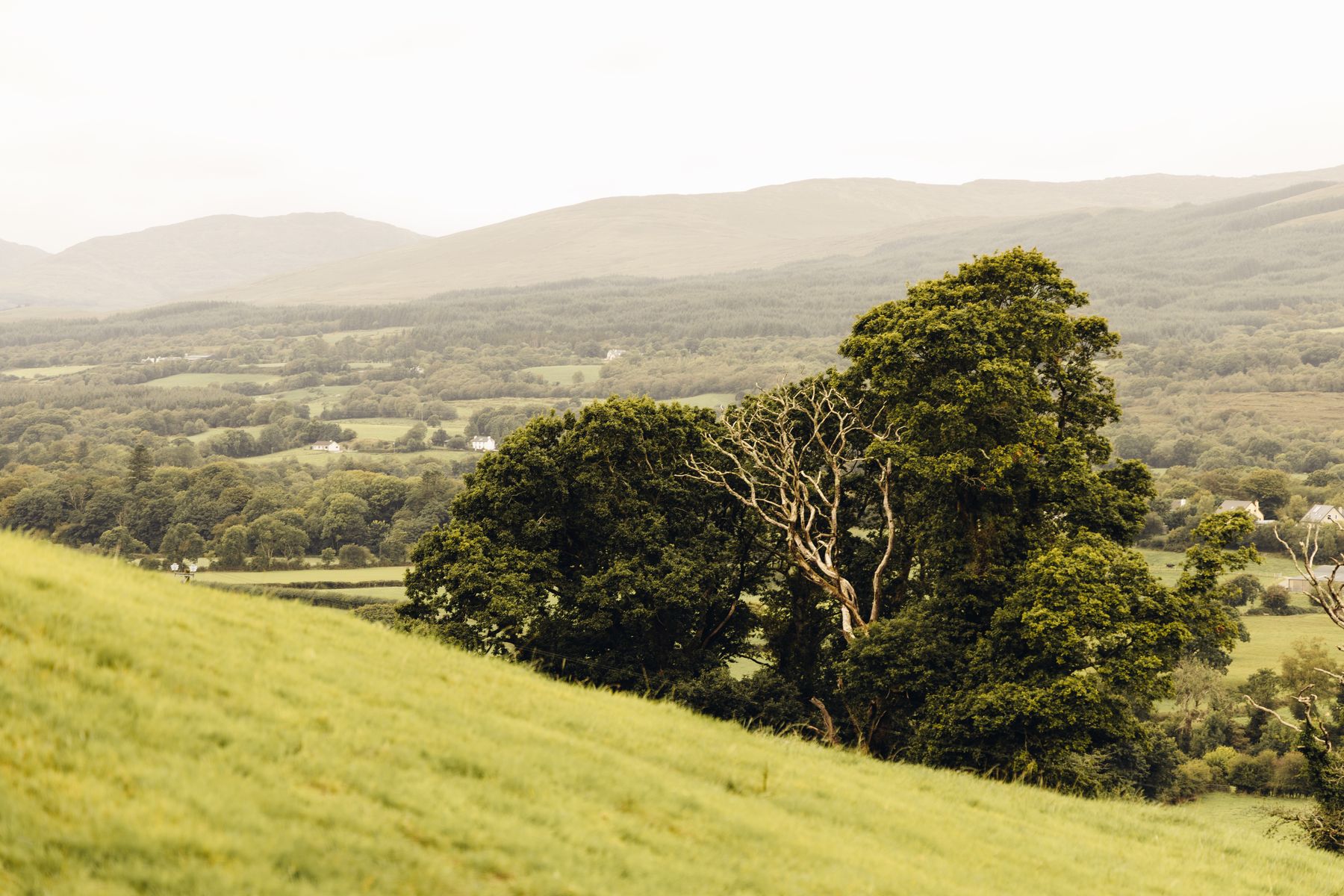
The strongest farmhouse clusters are where farming and tourism overlap. In County Clare, the lanes around Ennistymon, Kilfenora and Corofin put you 20 to 30 minutes from the Cliffs of Moher and a short drive from Lahinch. In County Kerry, the Iveragh Peninsula between Killorglin and Cahersiveen offers working farms within reach of the Ring of Kerry, though allow 90 minutes to Kenmare on those roads. In County Wicklow, the area around Ashford and Rathdrum sits 45 minutes from Dublin and close to Glendalough, which makes it a sensible first or last night.
A car is effectively essential. Rural farmhouses are often 3 to 8km down narrow lanes from the nearest village, and rural public transport is thin outside the main corridors. The exception is the east, where you can combine a Dart or Irish Rail journey with a short taxi. If you are relying on buses, base yourself in Westport, Dingle or Kilkenny and book a town-centre hotel instead. Budget roughly 60 to 120 euros a night for a farmhouse double in high season, with the same room 15 to 25 percent cheaper in April, May and October. Peak demand runs from late June to the end of August, when the Wild Atlantic Way brings heavy traffic to Clare and Kerry; book two to three months ahead for those months.
Practicalities that catch people out
Payment is usually by card, but a surprising number of rural hosts still prefer cash or accept it only as a backup, and mobile signal on the Atlantic coast can be patchy. Carry some euros. Wi-Fi exists almost everywhere now, but it is often a single router in the hall and will not stream reliably in a bedroom at the far end of the house; download maps and bookings before you arrive. Farm animals mean mud, gates that must be closed and the occasional early tractor, so leave wellington boots by the door rather than walking them into the hall.
A few things to know before you book. Farmhouses are not the right choice for late-night arrivals, guests who need a lift, or anyone who wants a bar and restaurant downstairs; for those, a town hotel in Galway, Killarney or Sligo will serve you better. They are excellent value for families, walkers and anyone who wants to talk to people who actually live there. Book a minimum of two nights; one night barely covers the drive in and out. In my view the sweet spot is a Clare farmhouse in late May or September, when the hedges are in flower, the cliffs are quieter and the rates have not yet peaked.