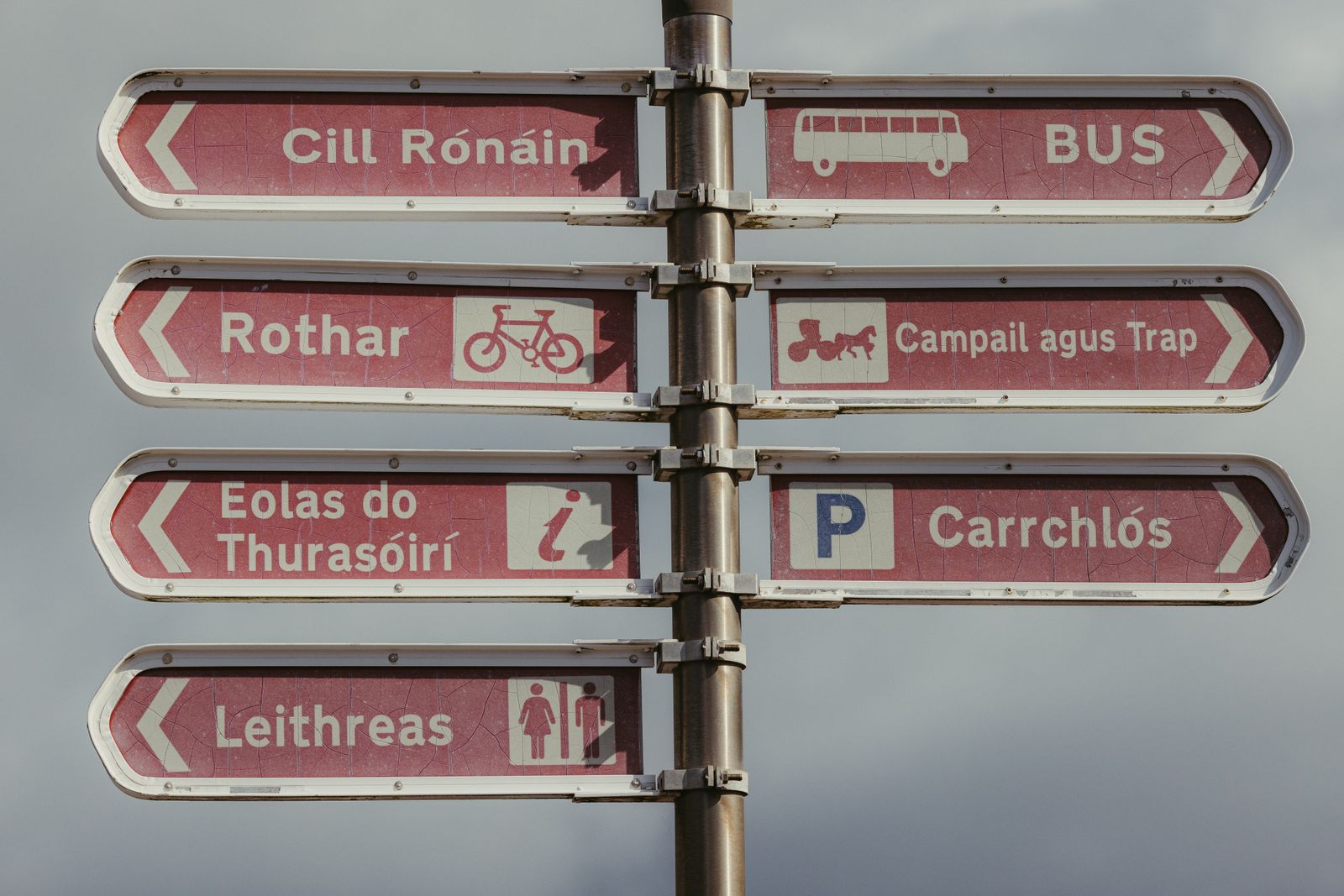
Irish is an official language of the Republic and is taught in schools across the island. In a set of districts known collectively as the Gaeltacht, it is still the everyday language of the community. Those districts lie mostly along the western seaboard, with a few pockets inland and in the south.
What the Gaeltacht is
The Gaeltacht is the name given to districts where Irish is the community language, or where a substantial share of the population speaks it daily. The districts are defined by official designation rather than by a single boundary, and they are spread across several counties rather than gathered in one region.
The main Gaeltacht areas lie in County Donegal, County Mayo, County Galway (including Connemara and the Aran Islands), County Kerry (including the Dingle Peninsula), County Cork, County Waterford at Ring, and County Meath. Each has its own character, landscape and dialect.
Designation matters in practical ways. Road signs in these districts are in Irish only, without the English form. Placenames on maps and in addresses may appear in Irish alone, so it helps to know the Irish version of the town you are heading for before you set out.
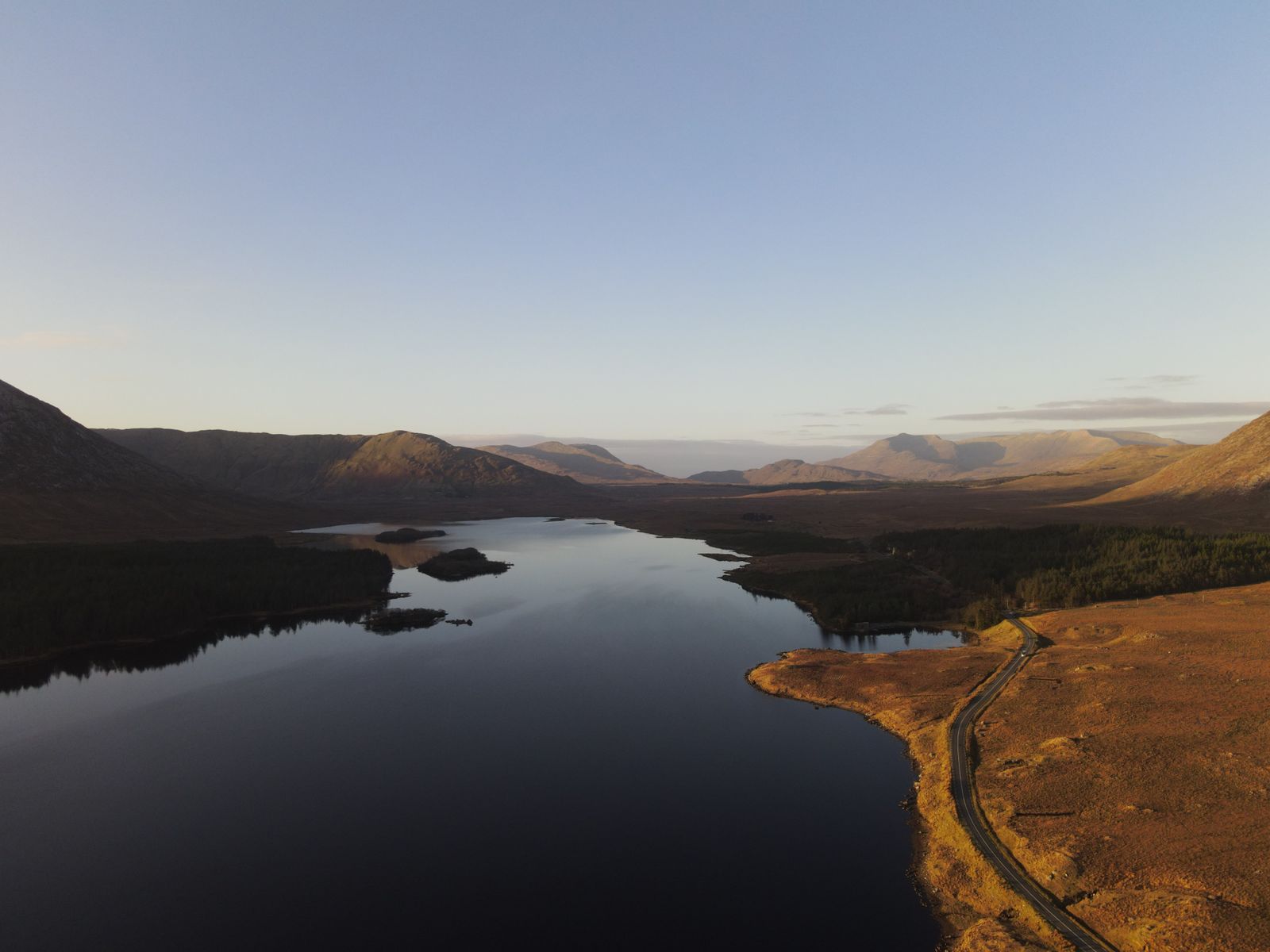
Connemara, County Galway
Connemara holds a large Gaeltacht district, stretching west from the edge of Galway city towards Clifden and the coast. Irish is heard in shops, at the school gate and in everyday conversation, particularly in the western parishes. The district includes the Aran Islands offshore to the south.
Clifden is the main town of the region and a practical base for exploring it, with connections onward to the coast and the islands. Galway city, further east, makes a larger base with more services and a shorter run out to the eastern Gaeltacht parishes.
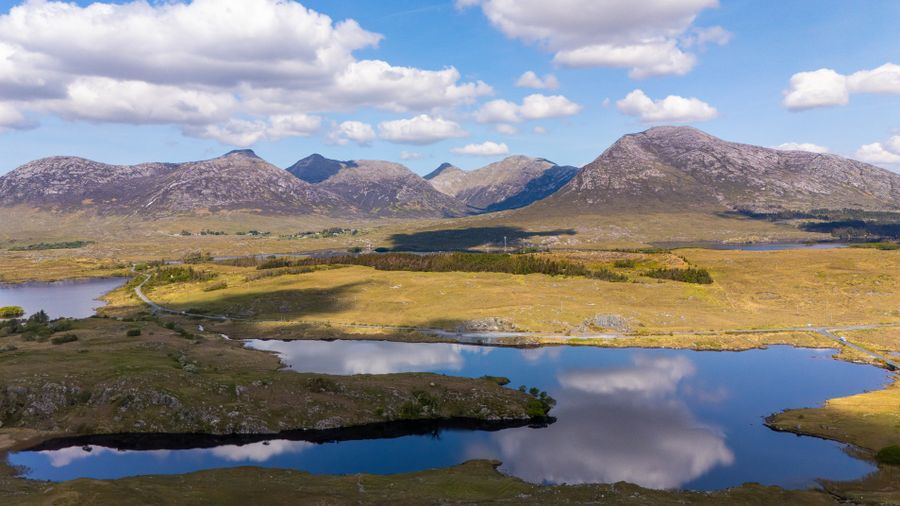
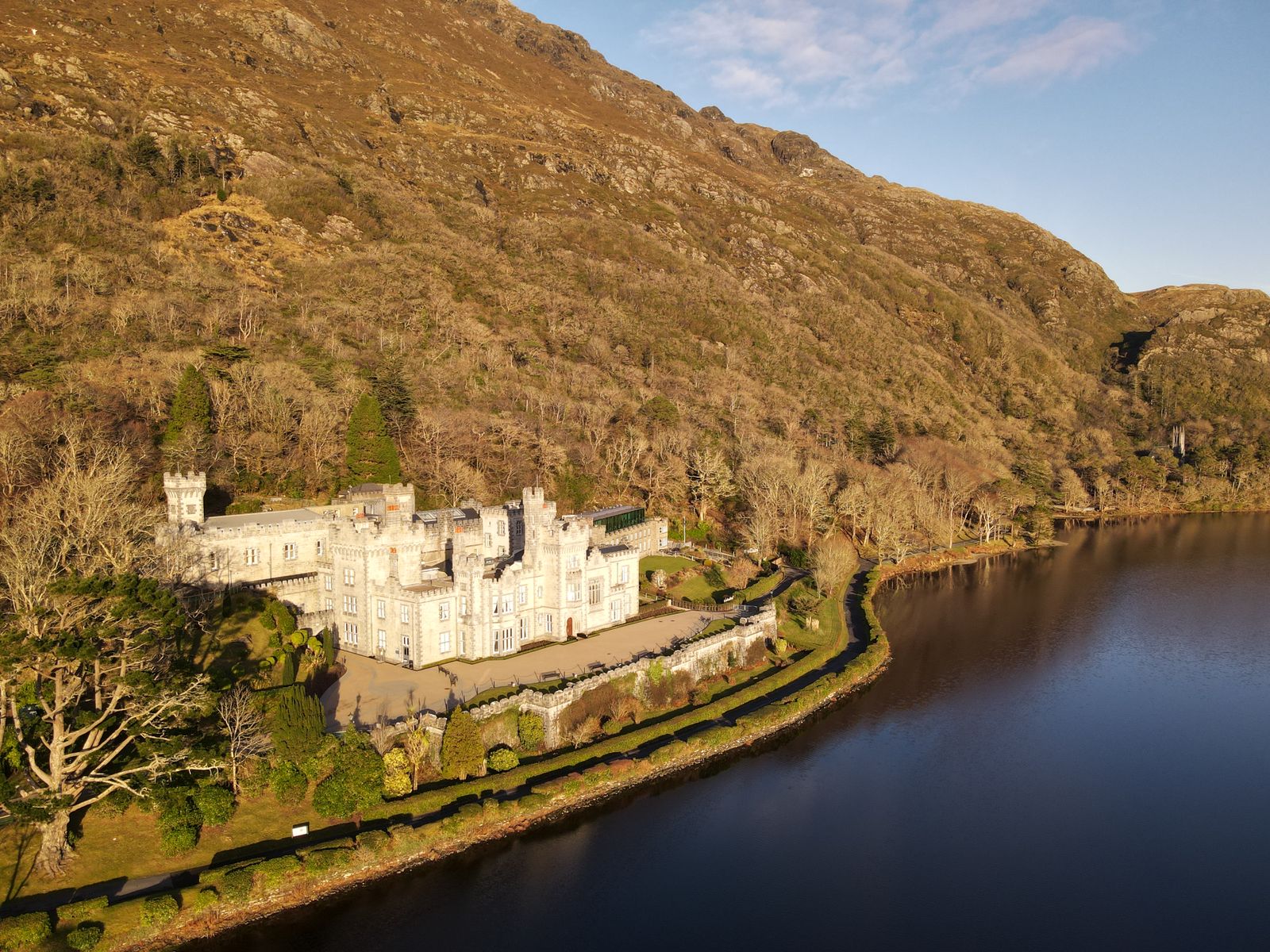
The landscape is bog, lake and mountain, with the Twelve Bens rising inland and the coast broken into inlets and small harbours. Kylemore Abbey and Connemara National Park are both within the district, and the villages west of Clifden are where Irish is most consistently heard.
Check the Irish form of a placename before setting a satnav in Connemara, as signs are in Irish only. Transport for Ireland has a journey planner for buses.
Donegal, the north west
The Donegal Gaeltacht covers three separate districts in the west and north of the county: Gweedore, the Rosses and Cloughaneely, and the district around Glencolmcille in the south west. Together they form a substantial Irish-speaking area.
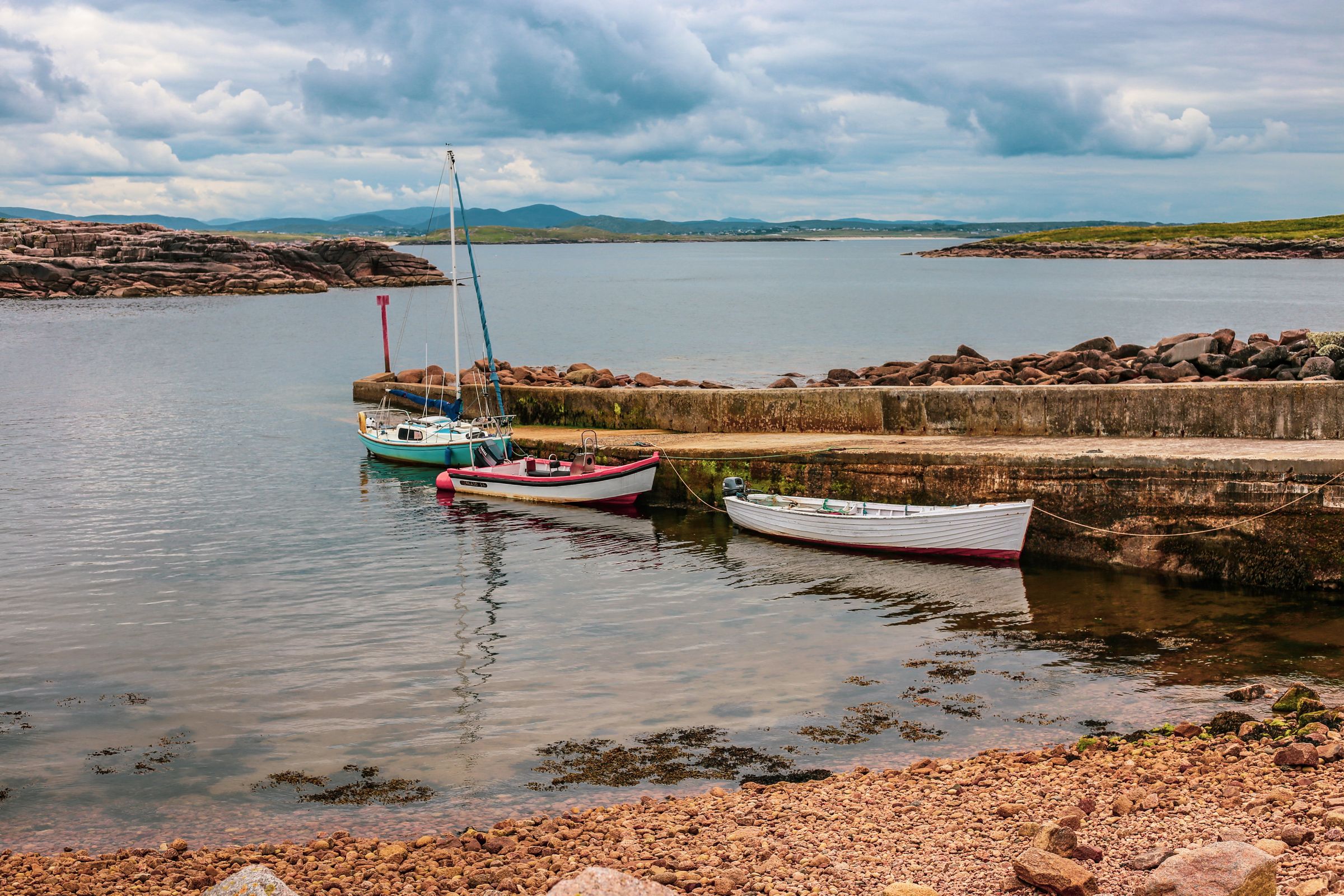
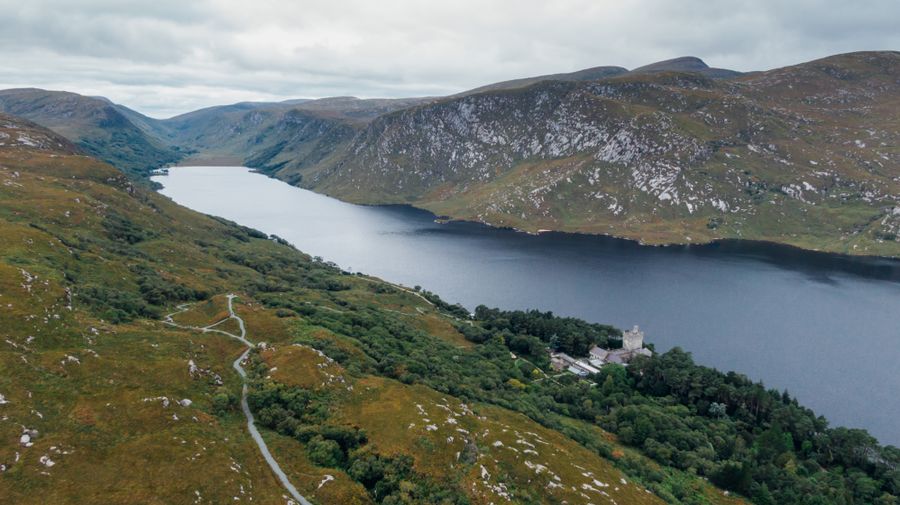
Gweedore and the Rosses sit in a landscape of granite hills, small lakes and a ragged coastline facing the Atlantic. Glencolmcille lies further south, below the cliffs of Sliabh Liag, in quieter country. Letterkenny is the largest town in the county and a service base for the north.
This is the part of the country where Irish is most consistently heard as a first language. The dialect here differs noticeably from the Irish of Connemara or Kerry, in sound and in vocabulary, which is part of the point of travelling between the districts.
Sliabh Liag and Glenveagh National Park both sit within reach of the Donegal Gaeltacht. Check opening arrangements with the Office of Public Works or the National Parks and Wildlife Service.
Mayo, Kerry and the south
In County Mayo the Gaeltacht lies in the west, around Belmullet and the Mullet peninsula, and on Achill Island. Westport is the nearest large town and a useful base, though the Irish-speaking districts are further west again along the coast.
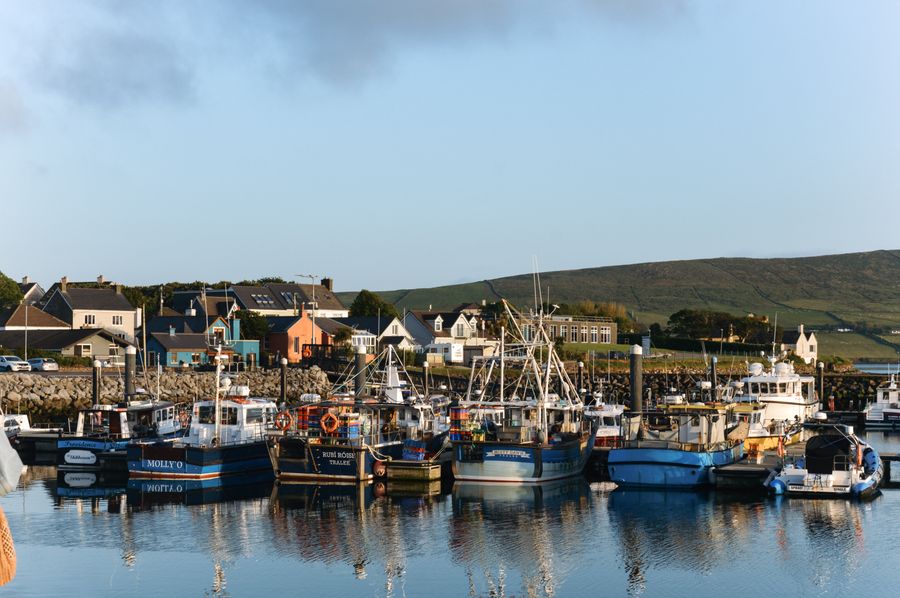
County Kerry has two Gaeltacht districts: Corca Dhuibhne on the Dingle Peninsula, and Uíbh Ráthach on the Iveragh Peninsula around Ballinskelligs and Waterville. Dingle is the main town of the first, and Killarney is a base for the second.
In the south, the Gaeltacht of Ring in County Waterford sits on a peninsula between Dungarvan and the coast, and the Muskerry district lies west of Cork city. Both are small compared with the western districts but hold their own language and traditions.
Hearing the language
Irish is not a performance put on for visitors. In the strongest districts it is simply the language people use among themselves, and the best way to hear it is to be present in ordinary places: a shop, a post office, a football pitch, a community hall.
Conversation in a pub or cafe may switch to English when a visitor joins, out of politeness rather than reluctance. Listening rather than prompting is the better approach. A few words of greeting in Irish are usually welcomed, however badly pronounced.
Radio and television carry Irish-language programming, and the language is visible on signage, in school names and on official documents. Summer colleges bring students to the Gaeltacht for immersion courses, which changes the atmosphere of some towns in the holiday season.
BirdWatch Ireland and the National Parks and Wildlife Service run events at some coastal and upland sites. Check locally for Irish-language walks and talks.
Practical points
The Gaeltacht lies entirely within the Republic of Ireland, so the currency is the euro and distances are in kilometres. Northern Ireland is part of the United Kingdom and uses pounds sterling; Irish is spoken there too, but there is no designated Gaeltacht north of the border.
Driving is on the left throughout the island. In the Gaeltacht, road signs are in Irish only, which can slow navigation. A map that shows both forms of each placename is useful, and so is knowing the Irish name of your destination before setting out.
Public transport in these districts is thin. Bus Éireann and TFI Local Link serve many rural areas, but services are limited and timetables change, so check with the operator before relying on a particular route. A car gives far more freedom in the western districts.
Visiting with care
The Gaeltacht is a living community, not a heritage display. People live and work there, and the language is part of daily life rather than a visitor attraction. Behaving as you would in any small community goes a long way.
Learning a few phrases before a visit is worthwhile: a greeting, a thank you, a goodbye. Attempts are generally received warmly. Correcting or testing local speakers is not, and treating the language as a curiosity to be performed on request is unwelcome.
If you want to study the language, there are organised courses and summer colleges in several districts, and Irish is taught at universities in the Republic and in Northern Ireland. For a short visit, listening and a little reading about the districts will serve well.