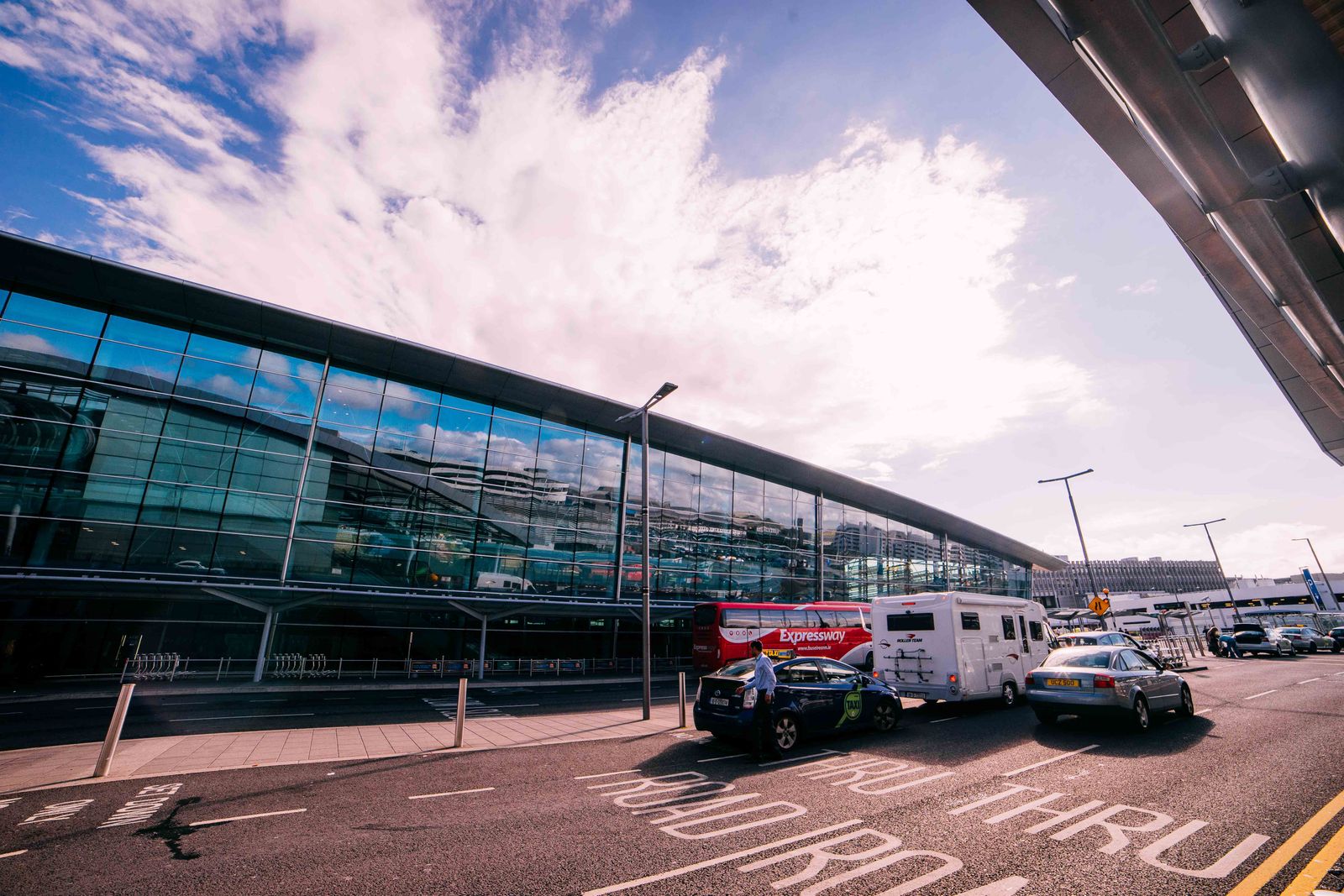
Dublin Airport sits north of the city, and the run into the centre is short by the standards of most capitals. Coaches and buses do the trip, with taxis alongside. From the city, the rail and coach networks open up the rest of the island, so the airport is often a first stop rather than a destination.
Arriving at the airport
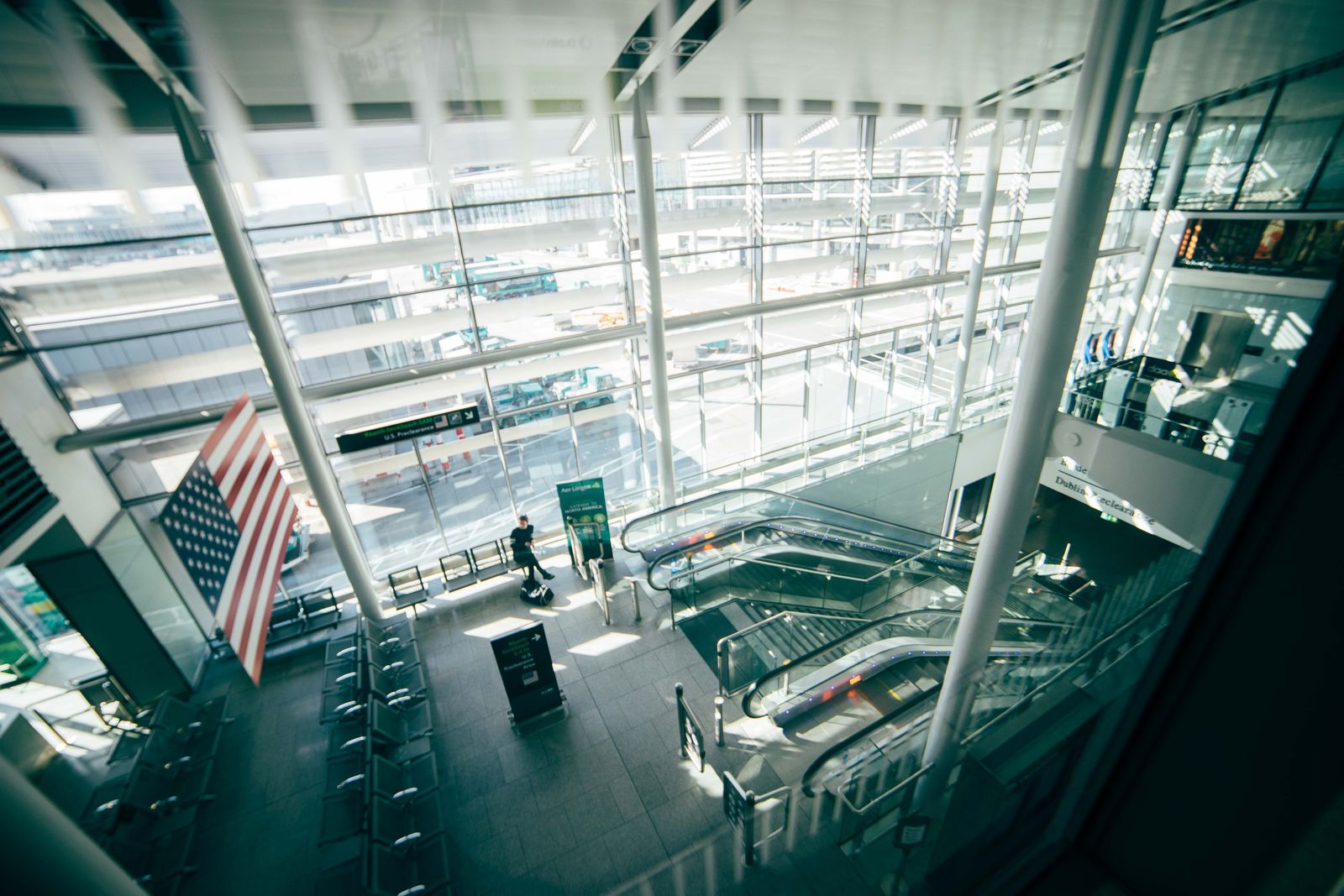
Dublin Airport has two terminals, with the main arrivals halls on the ground level and signs in Irish and English throughout. Passport control depends on your nationality: Ireland is not in the Schengen area, so check the Irish Immigration Service for the rules that apply to your passport before travelling.
Baggage reclaim feeds into the public arrivals halls, where the transport desks and the exits to the forecourts are found. Both terminals have car hire desks and information points, and staff can point you to the right stop. The airport is well signposted for buses, taxis and the short-stay car parks.
The airport sits roughly north of the city centre, close to the M1 and the M50 ring road. That position matters for onward travel: coaches heading north to Belfast and Donegal, and south and west to the rest of the country, call at the airport as well as the city, so some journeys skip the centre entirely.
Coaches into the city
Several coach and bus services link the airport with Dublin city centre, running through the day and into the night. Journey times depend on traffic, which is heaviest in the morning and evening peaks, so allow more time when a flight or a train connection matters. Stops are signposted outside each terminal.
Aircoach and Dublin Express are among the private coach operators on the airport run, and Dublin Bus runs its own services. Fares and timetables vary between operators, so check each one's own website before travelling. Tickets can usually be bought online, at the airport or from the driver, depending on the service.
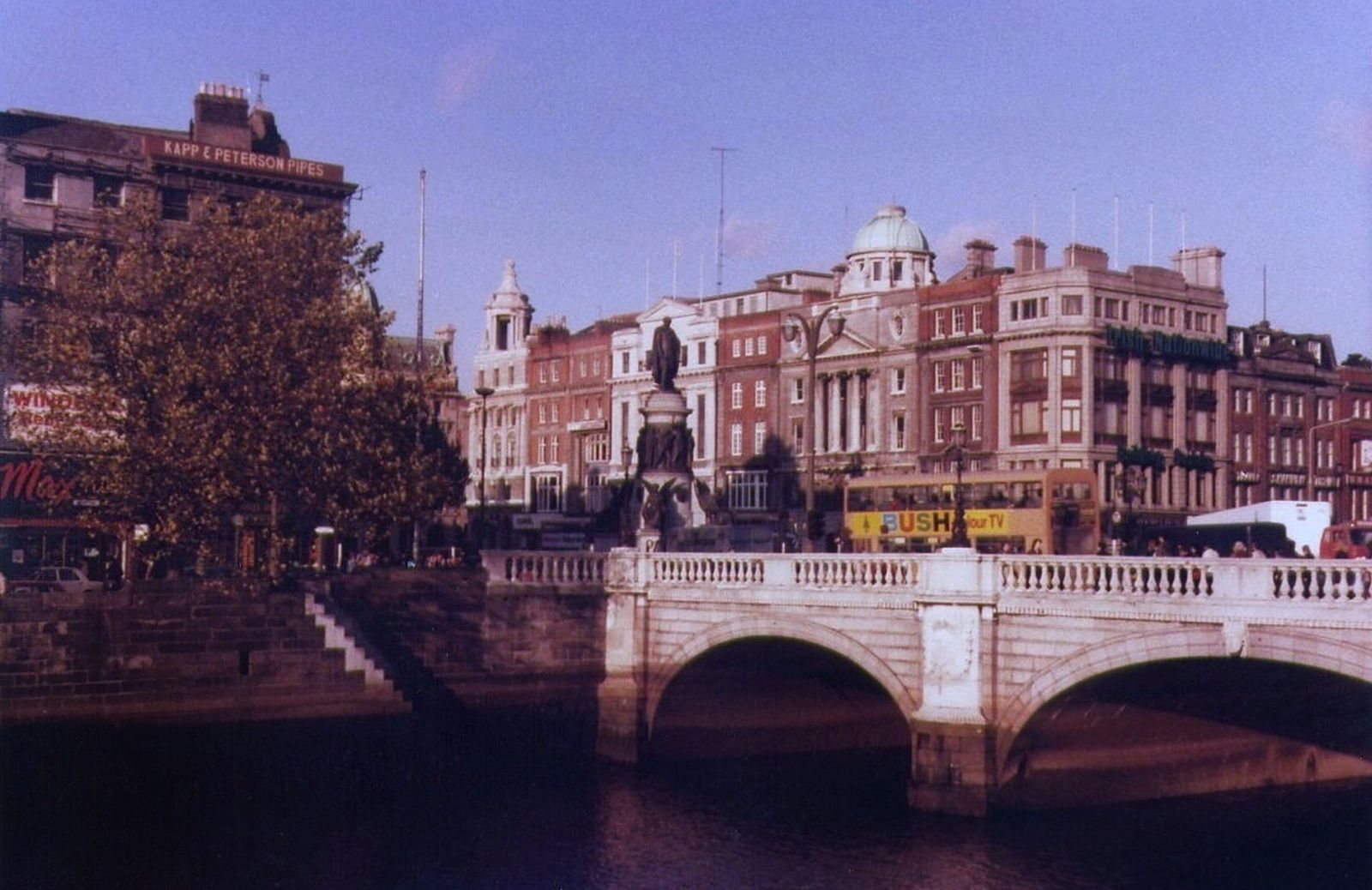
Most city-bound coaches set down around the north side of the centre, near O'Connell Street and the bus stations, which puts you within walking distance of much of the city. Some continue to other parts of Dublin. Ask which stop suits your accommodation before boarding, as the routes differ.
Timetables and stops change, so check the Transport for Ireland journey planner and the individual operator before you travel.
Buses, taxis and trams
Dublin Bus runs routes between the airport and the city, and these are the cheapest option for the run in. They stop more often than the coaches and take longer, so they suit travellers with time to spare. A Leap Card, the city's travel card, can be used on Dublin Bus services and is worth buying if you plan to stay a few days.
Taxis wait at ranks outside both terminals. The run into the centre is metered, and the fare depends on traffic and the destination. For groups or travellers with heavy bags, a taxi can be simpler than a bus, though it costs more. Ride-hailing apps also operate in the city.
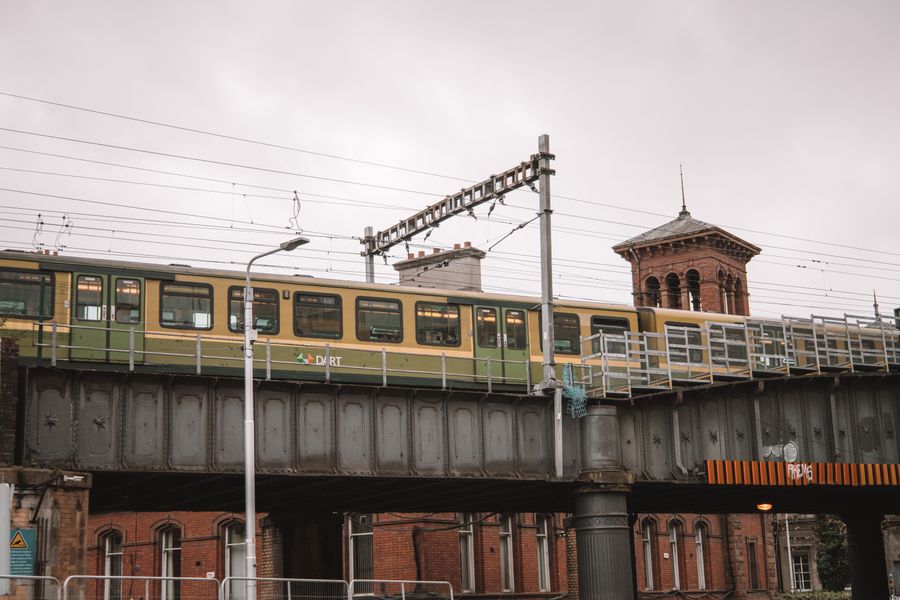
The Luas tram and the DART coastal railway do not reach the airport itself. Both are reached from the city centre, so the usual pattern is a coach or bus into town and then a tram or train onward. The DART runs along the coast north to Howth and Malahide and south to Bray and Greystones.
Trains from the city
Iarnród Éireann runs the national rail network from two main Dublin stations. Heuston serves the south and west: Cork, Limerick, Galway, Westport, Killarney, Tralee and Waterford. Connolly serves Sligo, the southeast coast and Belfast, the last on the Enterprise, run jointly with NI Railways.
Reaching either station from the airport means a coach or bus into the centre and then a tram, a local train or a walk. Allow time between arriving and catching a train, especially at busy periods. Booking intercity seats ahead is sensible on popular routes, particularly at weekends and around public holidays.
The rail network does not cover the whole island. Large areas of the west, the northwest and the peninsulas have no railway at all, and coaches fill the gaps. Planning a route that mixes train and coach, rather than relying on rail alone, usually works better.
Check Iarnród Éireann and Bus Éireann timetables close to your travel date, as services change with the season.
Coaches across the island
Bus Éireann and private operators run coaches from Dublin to towns across the Republic, including many without a railway station. Expressway services cover the larger routes, and TFI Local Link buses serve rural areas, some running only on certain days. The main city coach station is Busáras, near Connolly station.
Coaches to Northern Ireland leave from the city too, and the cross-border route to Belfast is well served. Northern Ireland is part of the United Kingdom, so pounds sterling and miles apply there, and timetables are run by Translink rather than the Republic's operators. There are no routine checks on the road crossing.
For travellers heading west or south, coaches can be quicker than trains to some destinations, and they often stop at the airport before reaching the city. That means a journey can begin at the airport itself, without going into Dublin first. Compare the options before committing to a route.
Choosing a base
Dublin city is the obvious first base, with the airport close by and the rail and coach stations in the centre. From there, day trips reach the Wicklow Mountains, the Boyne Valley and the coast. Staying a night or two in the city before heading west or south is a common pattern, and it avoids a rushed connection on arrival day.
Beyond Dublin, the towns with good transport links make practical bases. Galway, Cork, Kilkenny, Waterford and Killarney all have rail or coach connections and a range of accommodation. Westport and Sligo serve the west and northwest. Each has its own character, and the choice depends on what you want to see.
For a first trip, basing in two or three places rather than moving every night saves time and stress. The rail and coach network rewards this: a base in Galway covers Connemara and the Burren, while a base in Killarney covers the Ring of Kerry and the Dingle Peninsula. The booking search on this page is set to the Dublin region.
Practical points
Traffic drives on the left everywhere on the island, which matters if you collect a hire car at the airport. Plugs are the three-pin type G on both sides of the border. The emergency number is 112 or 999 throughout. Mobile coverage is good in towns and patchier in the hills and along remote coasts.
The climate is temperate and rain is possible in any month, so a waterproof layer is worth carrying whatever the season. Daylight runs from about 17 hours around the June solstice to about 7.5 hours in late December, which affects how much you can fit into an evening. The west is wetter than the east.
If your plans involve the west coast, Shannon Airport serves that side of the country and may suit better than Dublin for Galway, Clare and Kerry. Belfast has two airports for Northern Ireland. Comparing arrival airports against your first base can save a long onward journey.