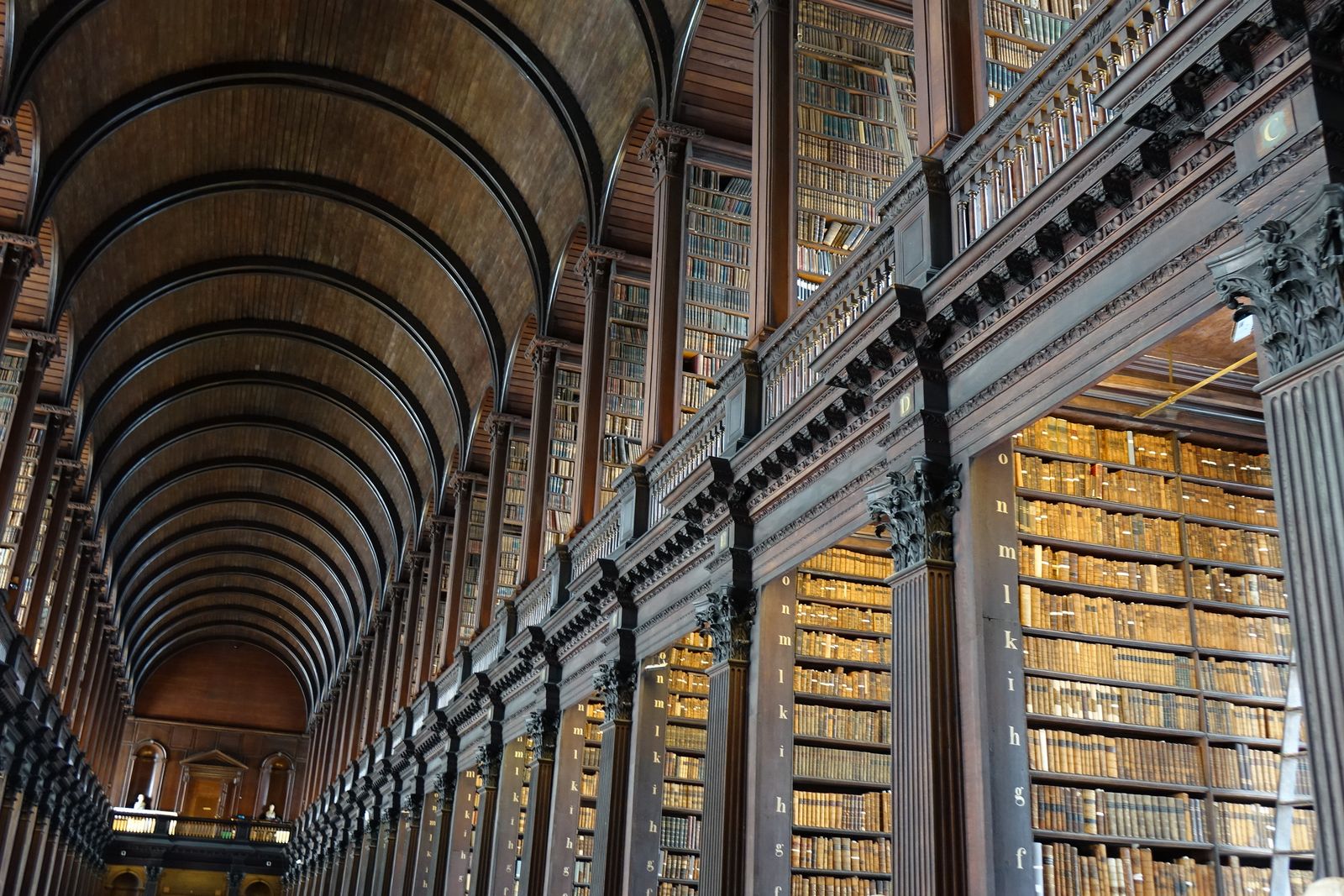
The Book of Kells is an illuminated manuscript of the four Gospels, made by monks around the ninth century and held at Trinity College Dublin. It sits in the library beside the Long Room, a timber hall of old books that most visitors come to see as well.
The manuscript
The Book of Kells holds the four Gospels in Latin, written on vellum and decorated with dense interlaced patterns, animals and human figures. It was made by monks, probably on Iona and later at Kells in County Meath, around the ninth century. The volume is one of the great works of early medieval book art.
The book has been at Trinity College since the seventeenth century. Two volumes are usually on display, one open at a decorated page and one at a page of text, and the pages are turned at intervals through the year to limit light damage.
The display is in a darkened room with the book in a case. Labels explain the decoration and the making of the manuscript, and the exhibition sets the book among other early Irish manuscripts. Expect to queue to see it at busy times, and to move along steadily once you reach the case.
Opening hours and display arrangements change; check the Trinity College Dublin website for the day of your visit before travelling.
The Long Room
The Long Room is the main chamber of the old library, a long hall with a high timber roof, galleries on both sides and busts of scholars along the aisle. It holds around 200,000 of the library's older books, shelved in bays that run the length of the room.
The room was built in the early eighteenth century and later enlarged to hold more shelving. The dark oak, the barrel roof and the rows of volumes give it the look most visitors have seen in photographs before arriving. Light comes in from windows along one side.
One of the library's treasures, an early harp associated with Brian Boru, is displayed in the room. Access to the Long Room is included with the Book of Kells ticket, and the route through the building is one way, with staff directing visitors at each stage.
Booking and timing
Entry is ticketed, and tickets are sold for timed slots. Booking ahead online is the usual way to secure a place, particularly in summer, at weekends and around public holidays, when slots fill quickly. The ticket covers both the manuscript display and the Long Room.
The exhibition is a popular stop on city itineraries, and coach groups arrive through the morning. Early slots and late slots tend to be quieter than the middle of the day. Around the middle of summer the city is at its busiest.
Allow around an hour for the book and the Long Room together, more if the exhibition holds your attention. The route through the building is signposted, and there is no need to rush. Groups and school parties pass through in bursts.
Tickets and times are set by Trinity College Dublin; check its official visitor website for current arrangements.
Getting there
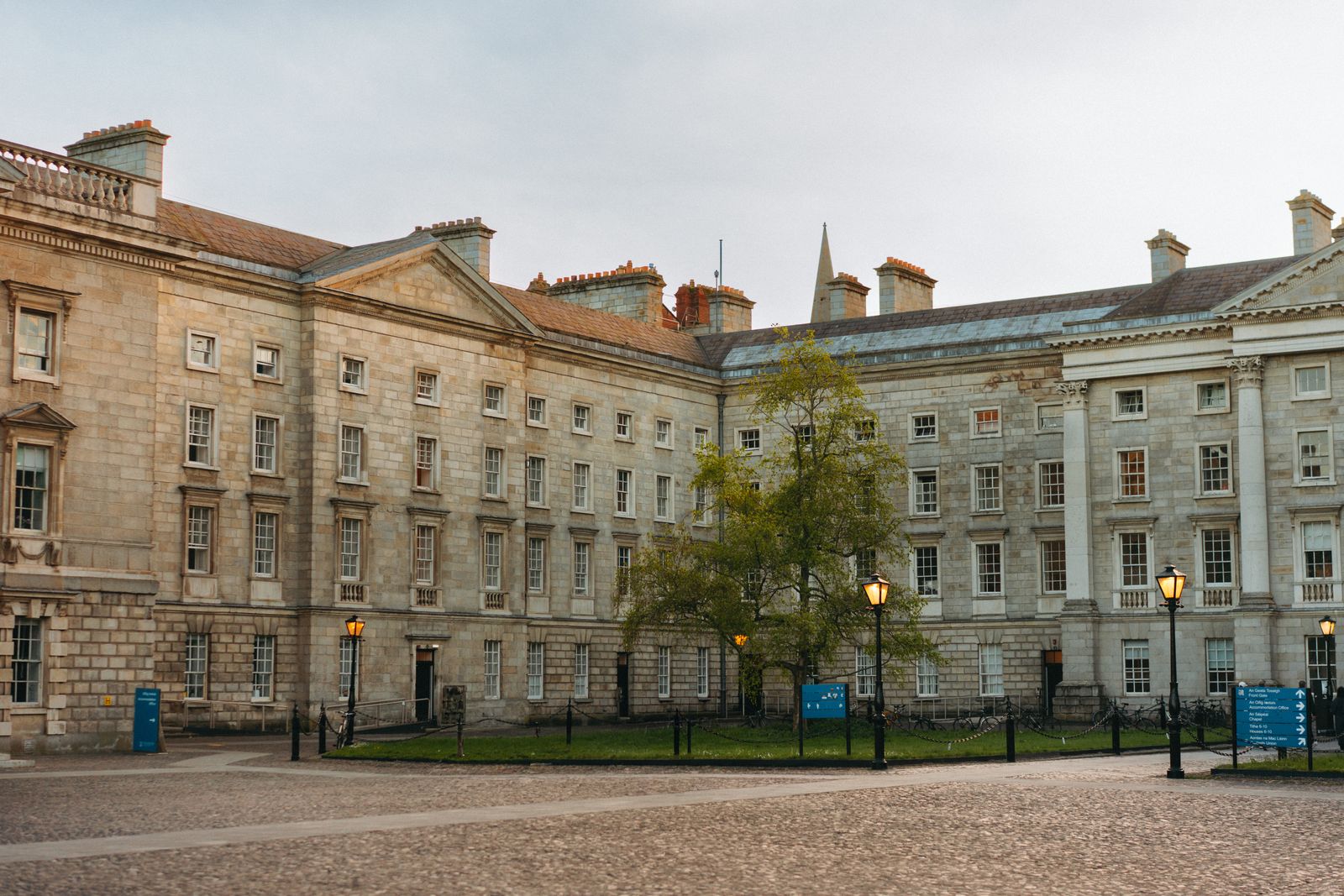
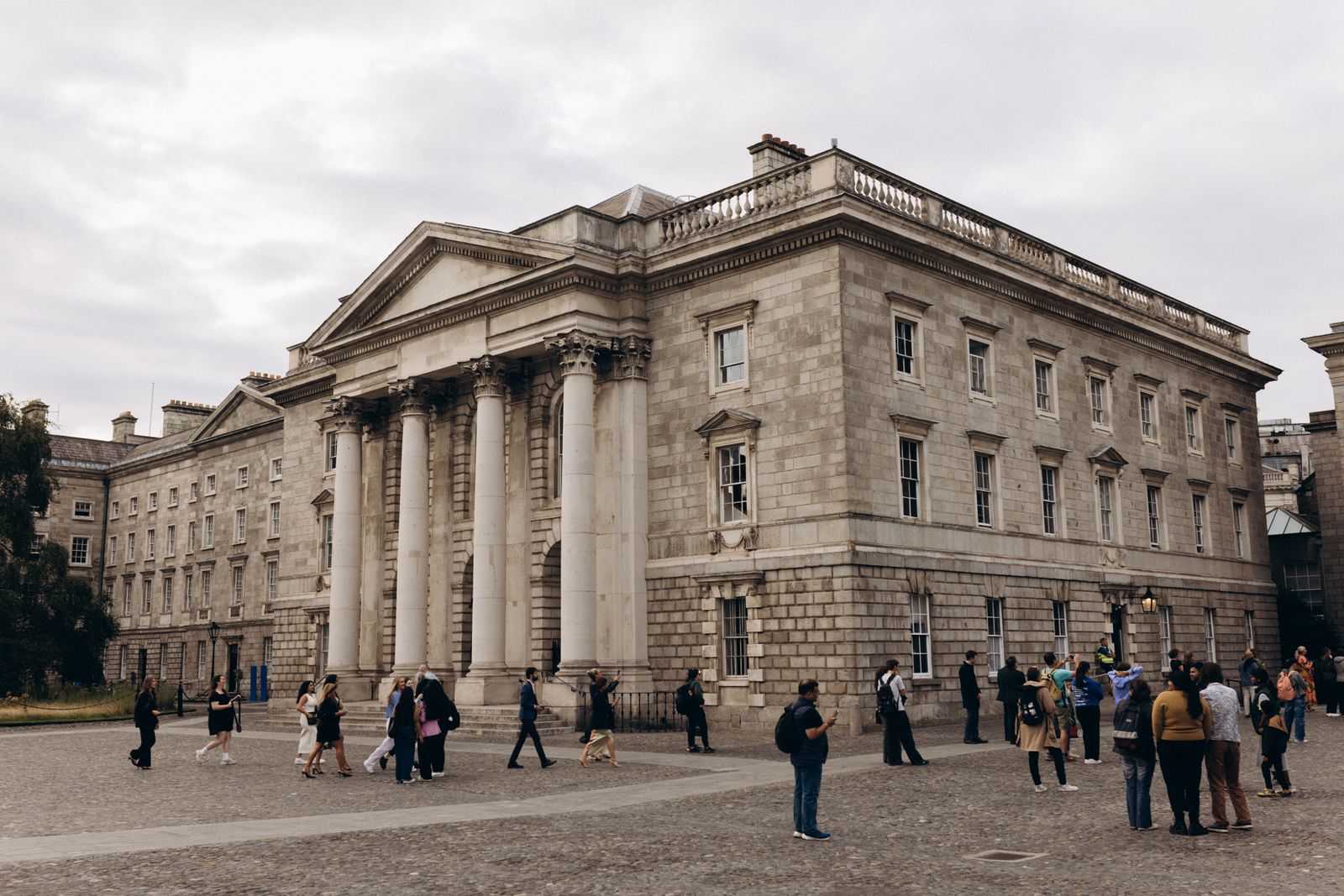
Trinity College sits on College Green in the centre of Dublin, with the main gate on the west front facing the street. The Luas tram lines stop at College Green and Trinity, and Dublin Bus routes serve the surrounding streets. The campus is walled and entered through gates.
Pearse and Tara Street DART stations are a short walk away, and Connolly and Heuston stations are within reach by tram or on foot. Transport for Ireland has a journey planner covering buses, trams and trains. Timetables change, so check with the operator.
Driving into the centre is slow and parking is limited. Most visitors arrive on foot, by tram or by bus, and the campus is easy to reach from anywhere in the city centre. From the airport, coaches and buses run into the centre through the day.
Around Trinity
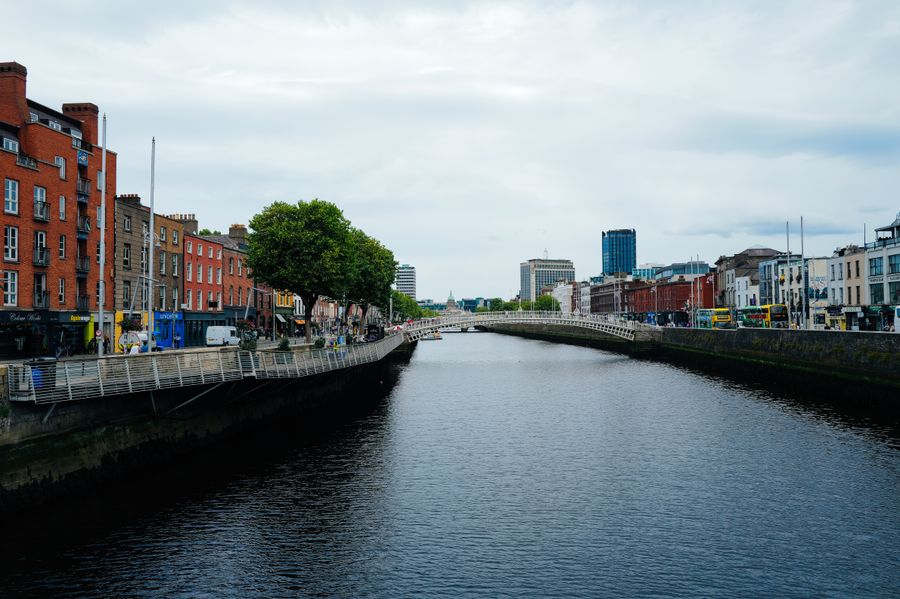
The campus itself is worth a walk, with cobbled squares, the campanile and the chapel. The streets around College Green lead to Dublin Castle, the two cathedrals and the shops of Grafton Street. The river is a few minutes west of the gate.
The National Museum of Ireland on Kildare Street and the National Gallery of Ireland on Merrion Square are both a short walk away, and both are free to enter. The museum holds the Ardagh Chalice and other metalwork of the same early period.
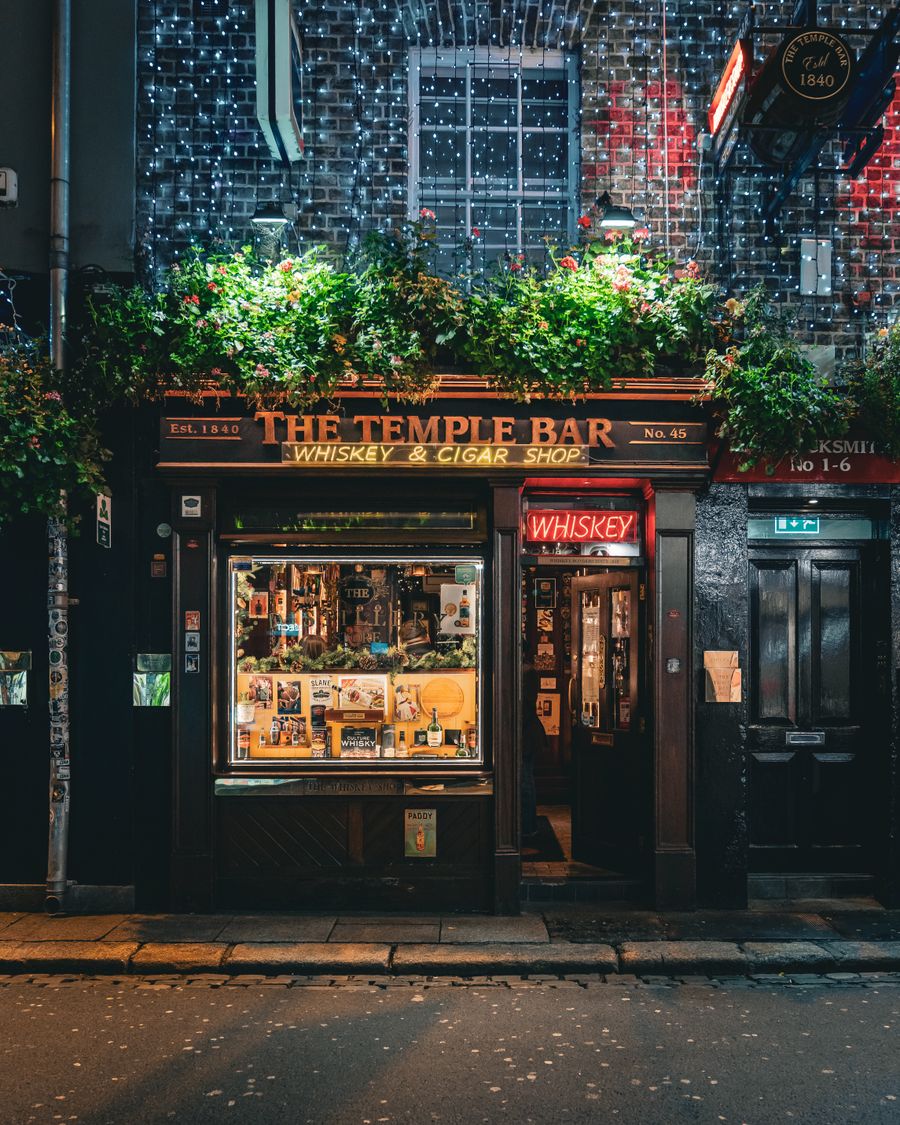
Dame Street and Temple Bar lie just west of the college, and the streets north of the river are within walking distance over the bridges. A morning at the book and an afternoon in the museums makes a full day without any transport. Rain is possible in any month, so keep an indoor option in reserve.
The book in context
The Book of Kells belongs to a group of illuminated manuscripts made in Irish and Scottish monasteries. The Book of Durrow and the Lindisfarne Gospels are related works, and the style spread across early medieval Europe. The library holds other manuscripts of the same tradition.
The decoration mixes Christian imagery with interlace and animal forms that draw on earlier traditions. Spirals, knots and stylised creatures fill the margins and the opening letters of the Gospels. The portrait pages and carpet pages are among the most closely studied parts of the book.
Other early Christian sites on the island show the world the manuscript came from. Monasterboice and Clonmacnoise hold high crosses and church ruins, and the Museum of Archaeology on Kildare Street displays reliquaries and shrines of the same era. Day trips from Dublin reach several of these sites.
Where to base yourself
Dublin city centre is the obvious base, with the college, the museums and the river within walking distance. Places to stay cluster around Grafton Street, Merrion Square and the streets north of the river. Booking ahead helps in summer and at weekends.
The suburbs along the DART line, such as Dún Laoghaire, Howth and Malahide, offer quieter places to stay with a coastal train into the centre. The journey is short and the service runs through the day. Howth also has a cliff path for a half day out.
For a wider trip, Kilkenny and Waterford are within a couple of hours by train or road, and the Wicklow Mountains are south of the city. A car helps for Wicklow, though buses reach Glendalough and Enniskerry. The Boyne Valley and its passage tombs lie north of the city.
Visitors coming from the airport can take a coach or bus into the centre, or drive and park outside the core. The airport is north of the city and the run in takes around half an hour outside peak times. Transport for Ireland has a journey planner for the whole route.
Practical points
The display room is dark and quiet, and photography rules are set by the library and posted at the entrance. Bags may be checked at the door. The building is old and the route includes stairs in places, so ask staff about step-free access if it matters to you.
The campus is a working university, and parts of it close to the public at times. The library and exhibition follow term dates and occasional closures, so check before travelling. The surrounding streets are busy with students during the academic year.
Emergency numbers are 112 or 999. Plugs are the three-pin type G. The Republic uses the euro and kilometres, and Dublin is served by Dublin Bus, the Luas trams and the DART coastal trains. Timetables change, so check with the operator on the day.