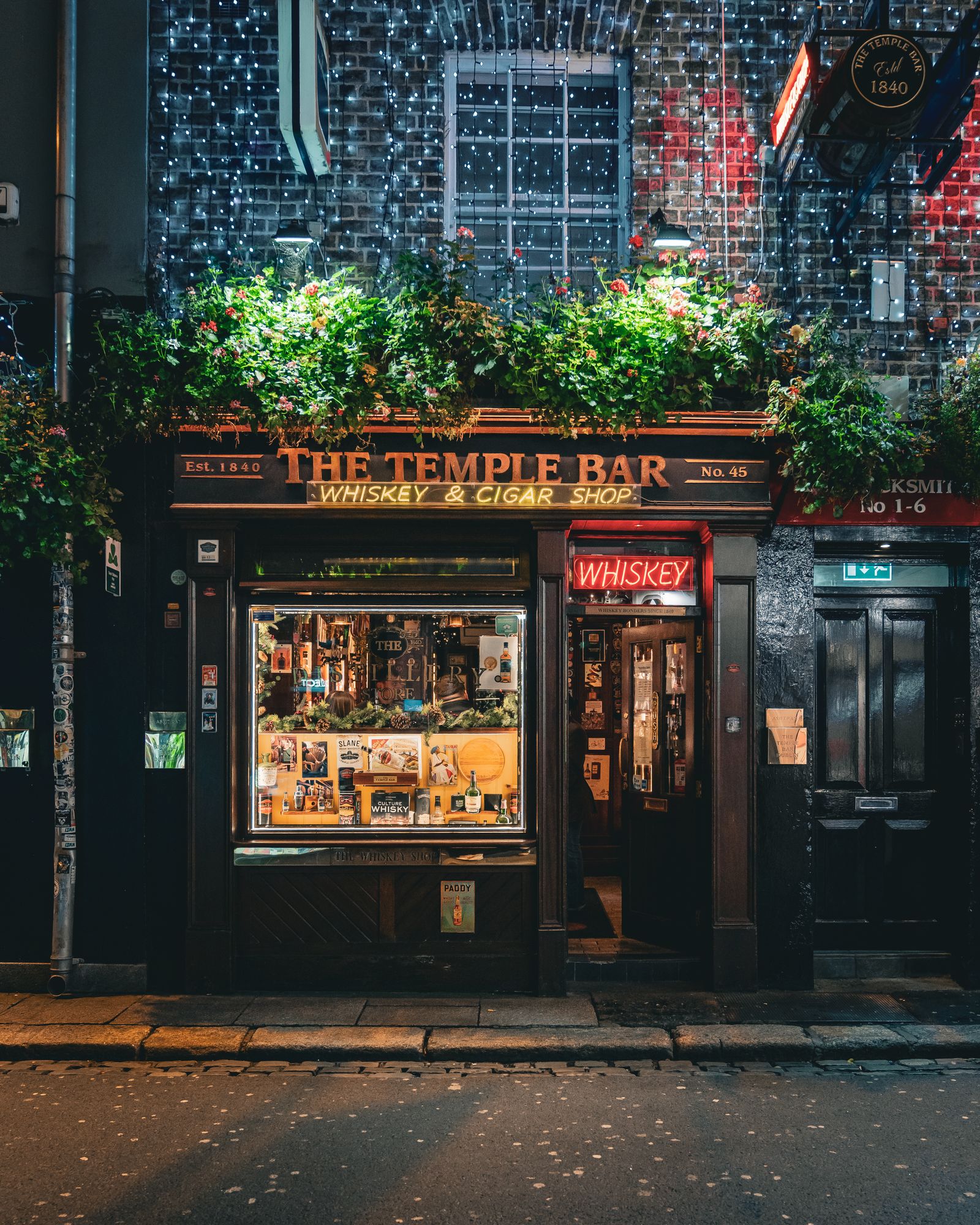
Temple Bar is a small quarter in central Dublin, on the south bank of the Liffey between Dame Street and the river. Its narrow cobbled streets hold pubs, galleries and cultural venues, and live music runs most nights of the week.
The quarter itself
Temple Bar is not a single street but a triangle of lanes bounded roughly by Dame Street to the south, the Liffey to the north and Fishamble Street to the west. The surface is cobbled in places and traffic is restricted, so most of it is walked. The name is old, and the area has been built over many times.
The streets are short and easy to wander. Meetinghouse Lane, Crown Alley and Temple Lane South run between the two main thoroughfares, and each has its own character. Some lanes are narrow enough that two people pass with care.
The quarter sits within Dublin's medieval and Georgian street pattern, though most of the buildings standing today are later. It is a working part of the city as well as a visitor area, with offices, flats and studios above the ground floors.
Music and pubs
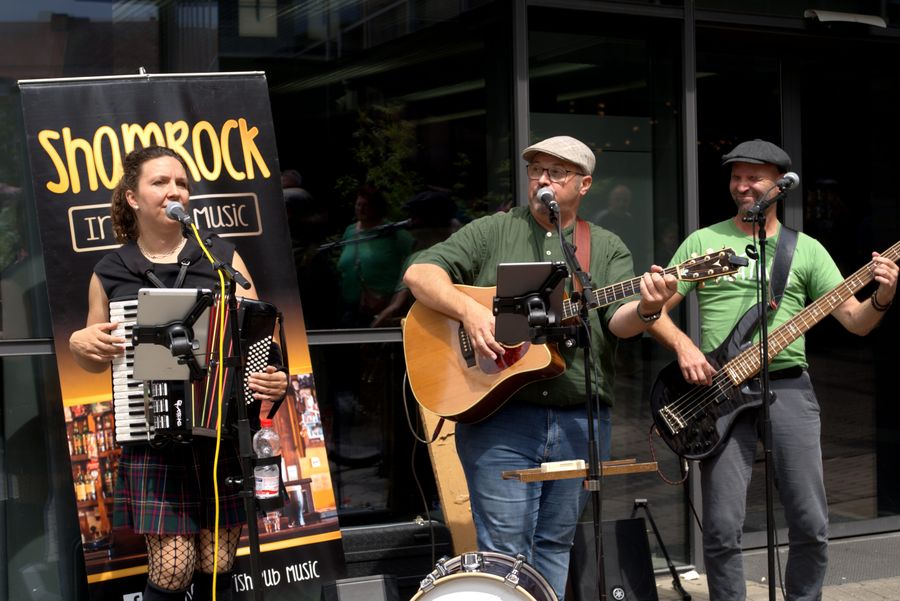
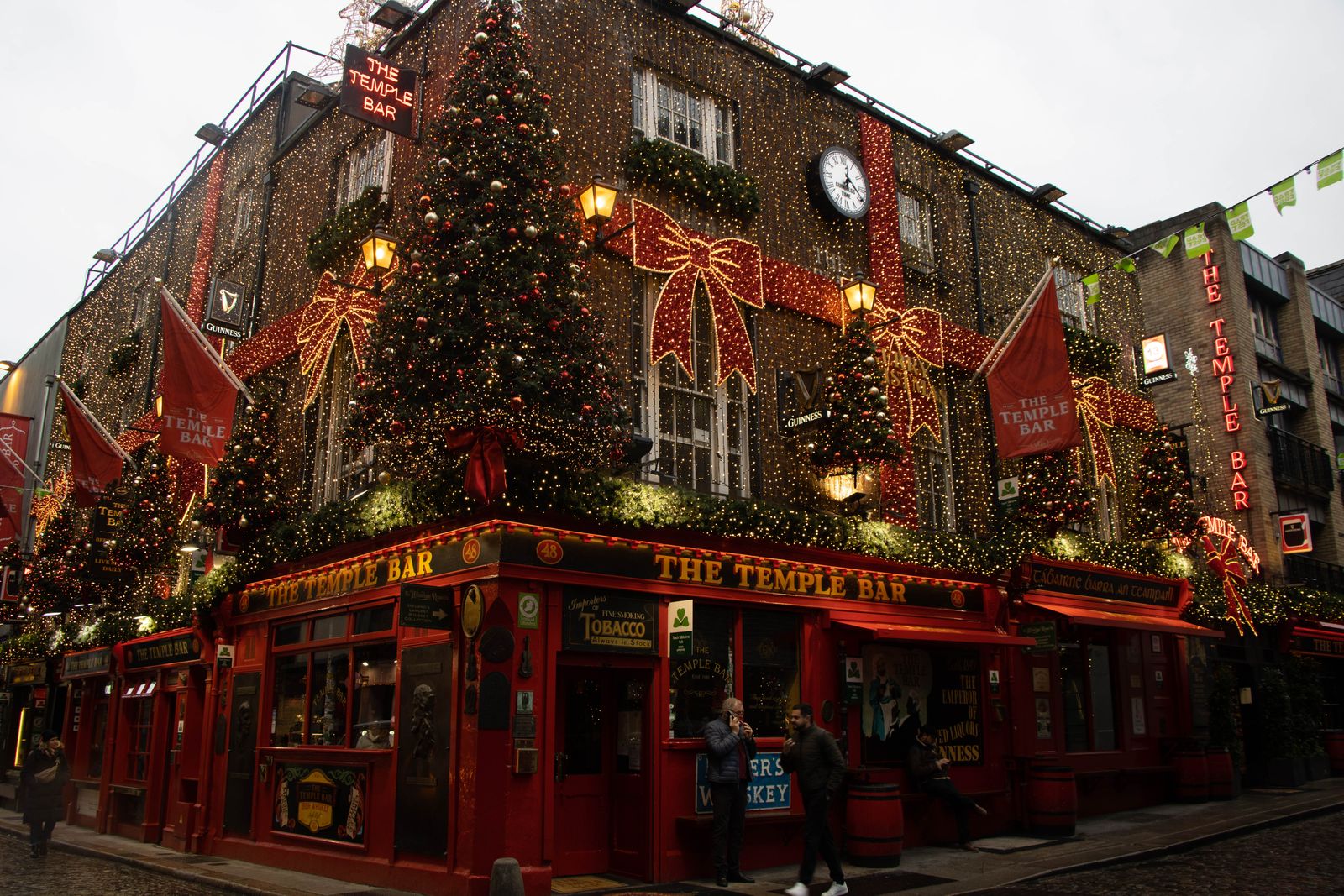
Live music is the main draw in the evenings. Many pubs in the quarter host sessions or bands, usually starting in the early evening and running late. Styles range from traditional Irish music to cover bands, and some venues charge at the door while others do not.
A traditional session is informal: musicians sit together and play tunes, often joined by others who turn up with an instrument. The blog on this site explains how a session works if the format is new to you.
The quarter is busiest at weekends and around public holidays. Weeknights are quieter and easier for finding a seat. Pubs have their own opening hours, which can change, so check locally or on the day.
Venues set their own door policies and hours. Check with each venue on the night, or ask at a tourist information office.
Cultural venues
The Gallery of Photography and the Irish Photography Archive sit in the quarter, showing changing exhibitions of photographic work. Meeting House Square is an open square used for markets and outdoor screenings in season.
The Ark is a cultural centre for children, with theatre, exhibitions and workshops, housed in a restored building on Eustace Street. Nearby, the Project Arts Centre programmes theatre, dance and visual art through the year.
Smock Alley Theatre occupies a restored eighteenth-century theatre building on Exchange Street Lower, with a programme of plays and events. The design and performance venue in the same area also hosts concerts and talks.
A little history
The quarter takes its name from the Temple family, whose lands lay here in the seventeenth century. It developed as a mixed district of merchants, craftsmen and small industry close to the river and the old city walls.
In the eighteenth century the area held a theatre and a crowded publishing trade. Smock Alley was one of Dublin's main theatres at the time. Later the district went into long decline and was earmarked for demolition and redevelopment.
From the 1990s the quarter was revived as a cultural and entertainment district, with public money spent on paving, squares and venues. That revival is why the streets look as they do today, and why the area is so busy in the evenings.
For the wider story of the city, the official tourism office for Dublin can point to walking routes and heritage sites nearby.
Getting there
Temple Bar is a short walk from most of central Dublin. Trinity College, Dublin Castle and Christ Church Cathedral are all within about fifteen minutes on foot. The Liffey boardwalk runs along the north edge of the quarter.
Luas trams stop nearby on the north and south sides of the river, and Dublin Bus routes cross the city centre. DART coastal trains connect to Connolly and Tara Street stations, both a short walk away. Transport for Ireland has a journey planner for the whole network.
Driving into the centre is best avoided. The streets in the quarter are restricted and parking is limited. If arriving by car, park outside the centre and continue by tram, bus or on foot.
Timetables and route changes are handled by the operators. Check Transport for Ireland, Luas or Dublin Bus before travelling.
Where to base yourself
Temple Bar itself has places to stay, but it is noisy at night and the streets are busy. Many visitors prefer to stay a little outside the quarter and walk in. The streets around Grafton Street, south of Trinity College, are central and quieter.
North of the river, the area around O'Connell Street and Parnell Square is well served by buses and trams and within walking distance of the quarter. The streets around St Stephen's Green and Merrion Square suit those who want Georgian architecture and calm evenings.
Further out, the coastal towns north and south of the city, such as Howth and Dún Laoghaire, work well as bases for a longer stay with easy DART access to the centre. The guide on where to base yourself on a first trip covers the wider choice.
Practical points
The quarter is on the south bank of the Liffey and is compact enough to cross on foot in a few minutes. Pavements are narrow and cobbles uneven, so sturdy shoes help. The area is busy at night and pickpocketing can happen in crowds.
Prices in the quarter are generally higher than in other parts of the city, and some venues have a minimum spend or a door charge. It is worth walking a few streets away for food and drink if budget matters.
Emergency numbers are 112 or 999. Plugs are the three-pin type G. The Republic of Ireland uses the euro and kilometres, and entry rules depend on the passport, so check the Irish Immigration Service before travelling.
Check the Irish Immigration Service for entry rules and Met Éireann for the forecast before a visit.
Nearby sights
Dublin Castle stands a few minutes to the south west, with its state rooms and the Chester Beatty collection in the grounds. Christ Church Cathedral and St Patrick's Cathedral are both within a short walk of the quarter.
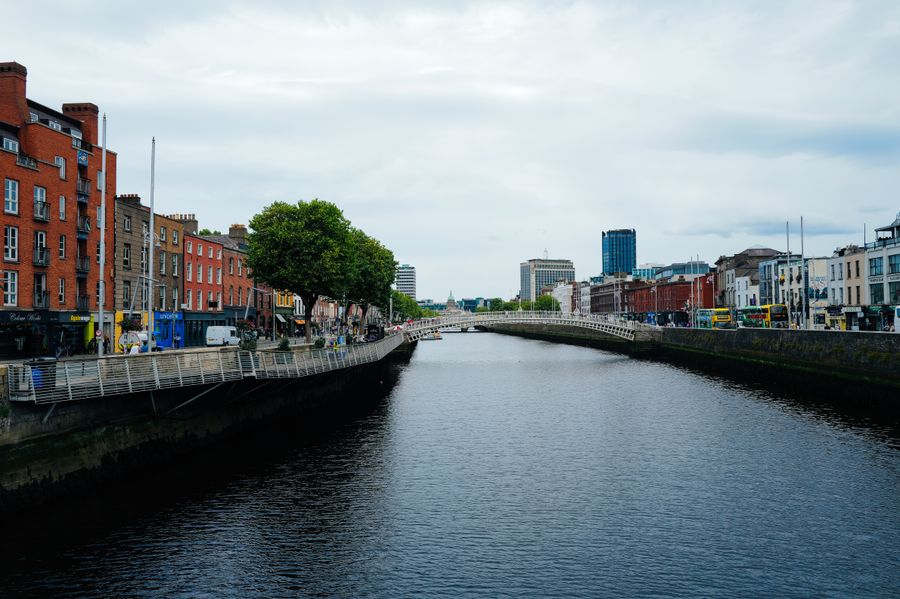
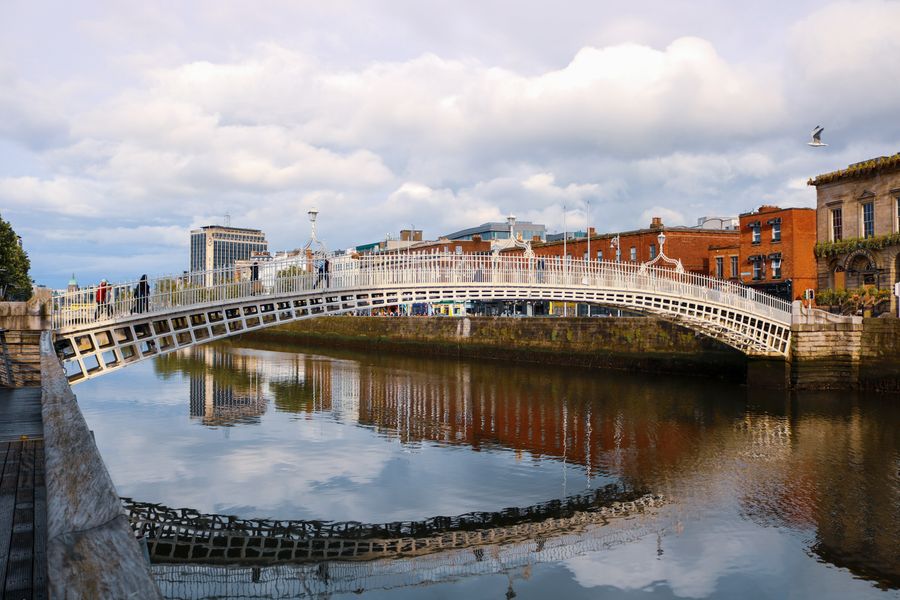
Trinity College, with the Book of Kells and the Long Room library, lies east across College Green. The Ha'penny Bridge crosses the Liffey just north west of the quarter and is one of the city's best known crossings.
The doors of Georgian Dublin are a short walk south around Merrion Square and Fitzwilliam Square. The blog on this site covers them if the architecture is the reason for the visit.