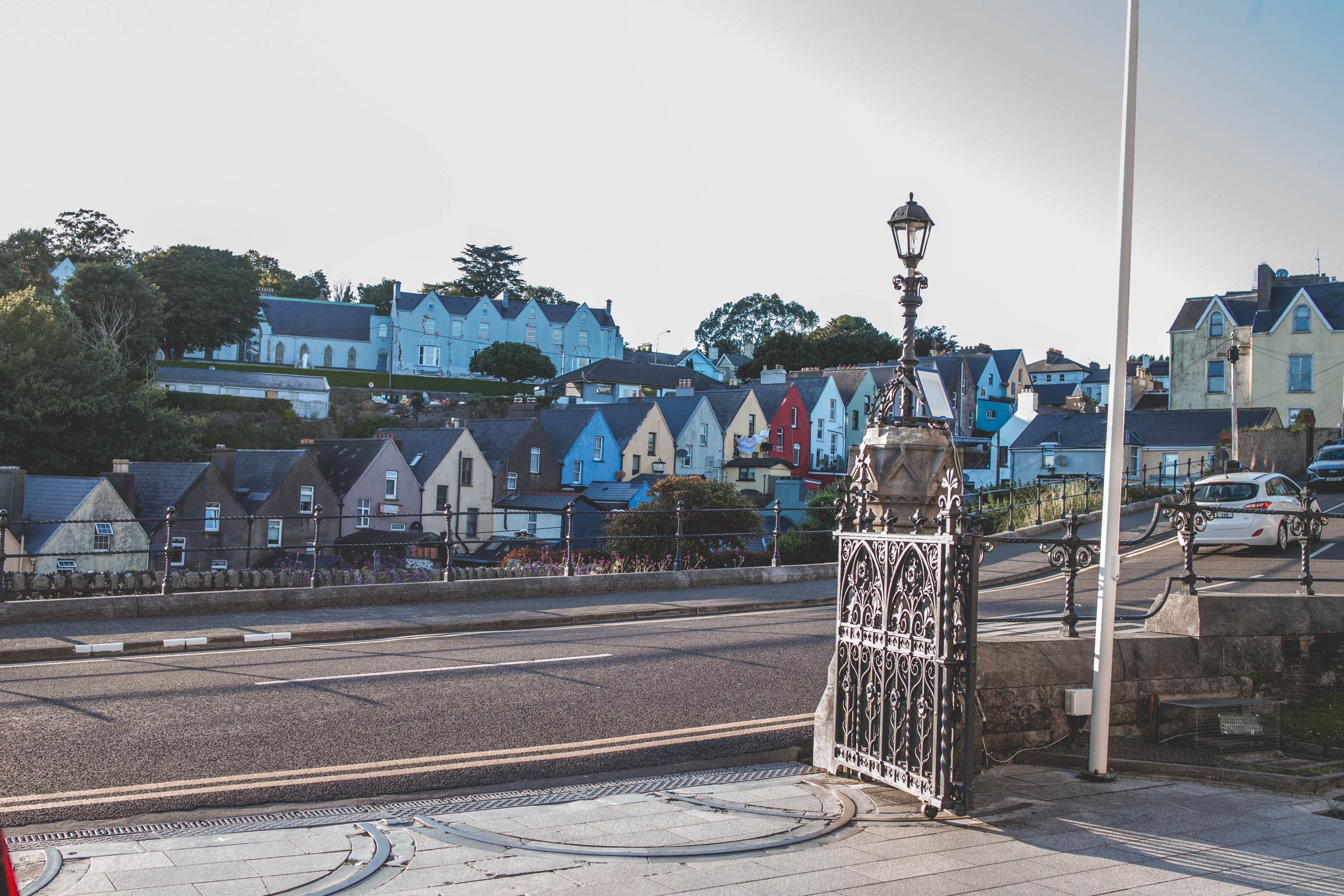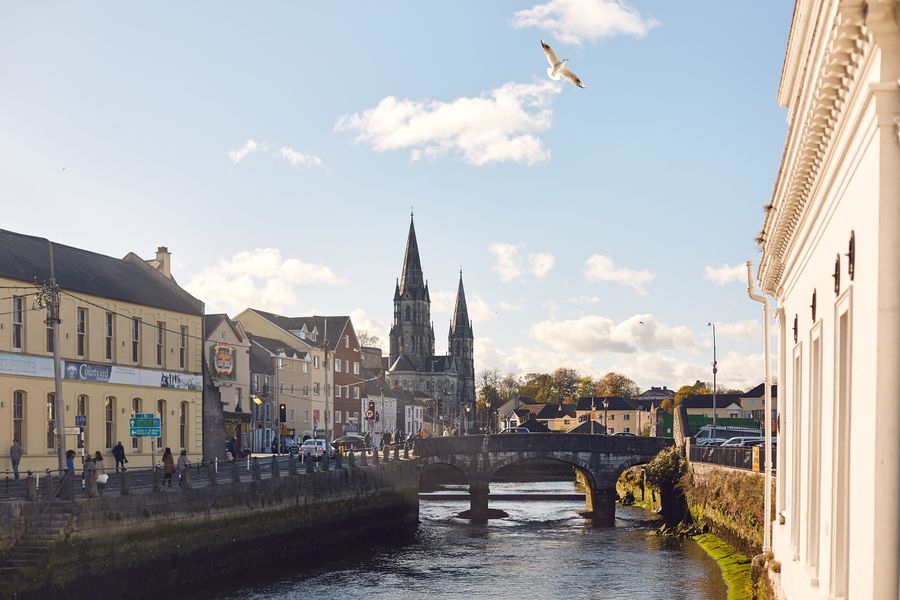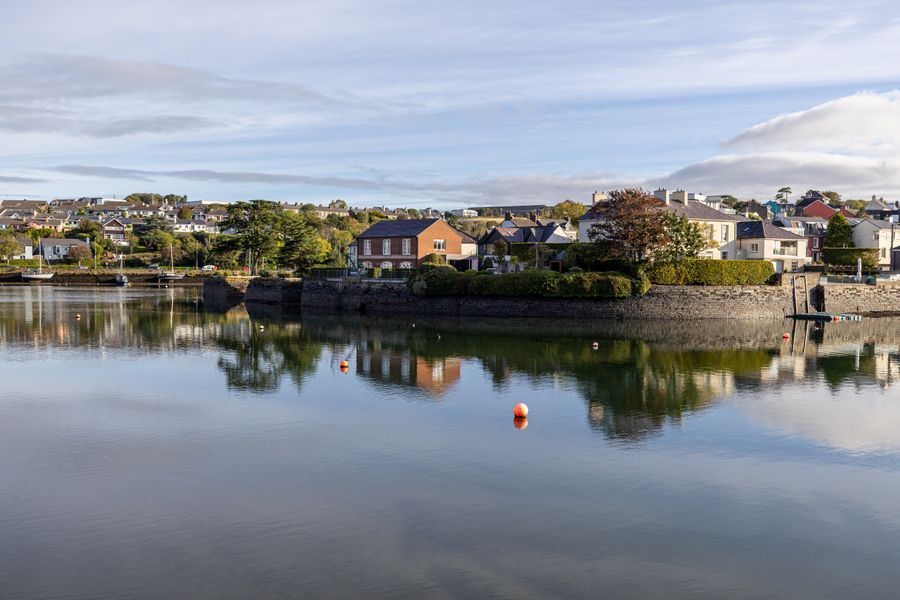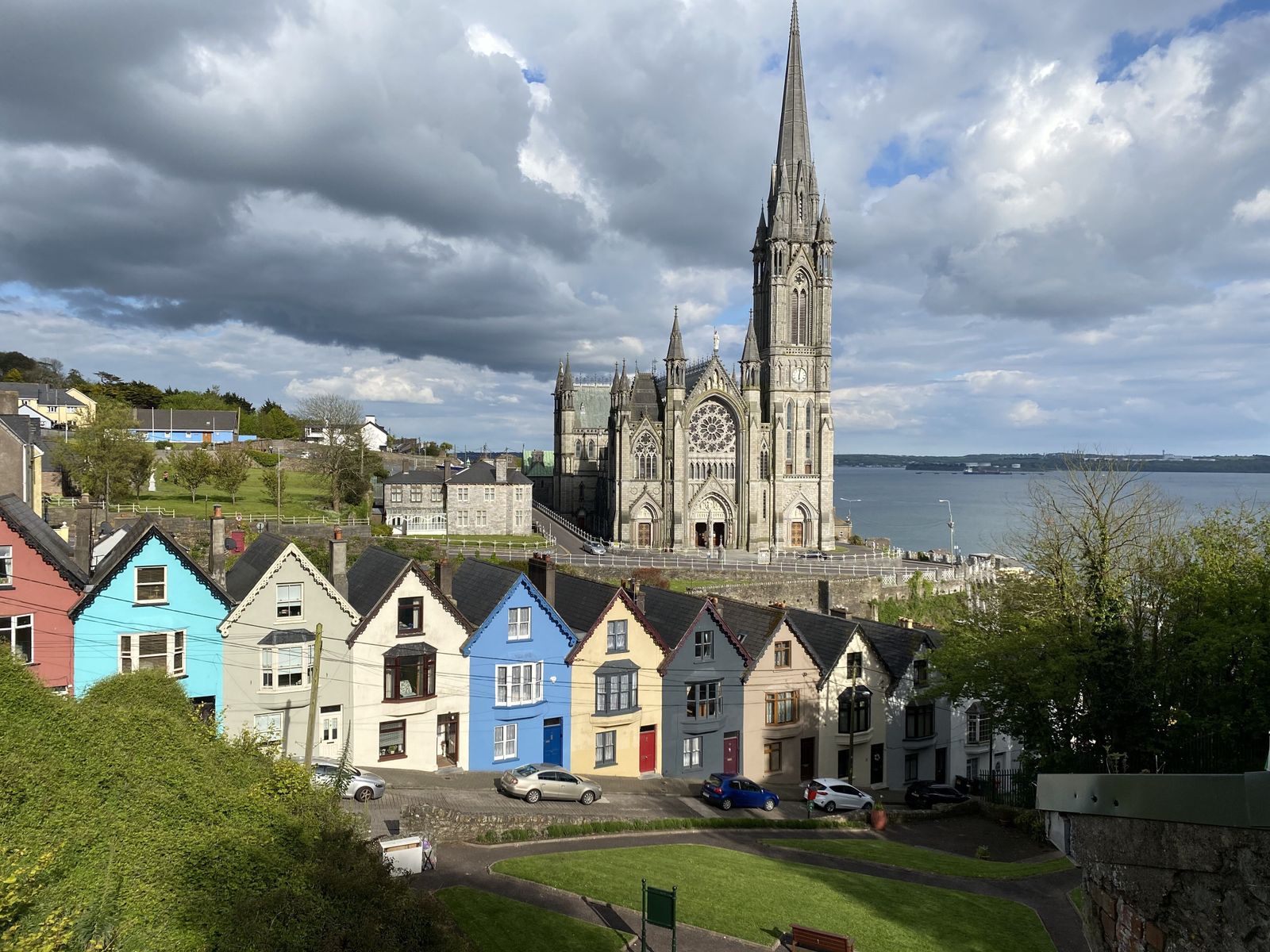
Cobh sits on the southern side of Great Island, where the ground rises steeply from Cork Harbour. The town is built in terraces above the water, with the cathedral on the skyline. It is a short train ride from Cork city and a useful base for the harbour.
The waterfront
The waterfront is the centre of the town, with the harbour on one side and a row of streets climbing behind it. The promenade looks across to Haulbowline and over towards the deep-water quay, where cruise ships come alongside in season. The bandstand on the promenade is a local landmark.
The short walk along the water gives the best view of the town from below, with the terraces stacked up the hill and the cathedral spire above them. On a clear day the harbour opens out towards Roches Point at the mouth, and the far shore is easy to pick out.
Cruise calls and harbour traffic change from year to year. The Port of Cork publishes the cruise schedule, and it is the body to check for anything on the water. The promenade itself is free to walk at any time, and benches face the harbour along its length.
St Colman's Cathedral
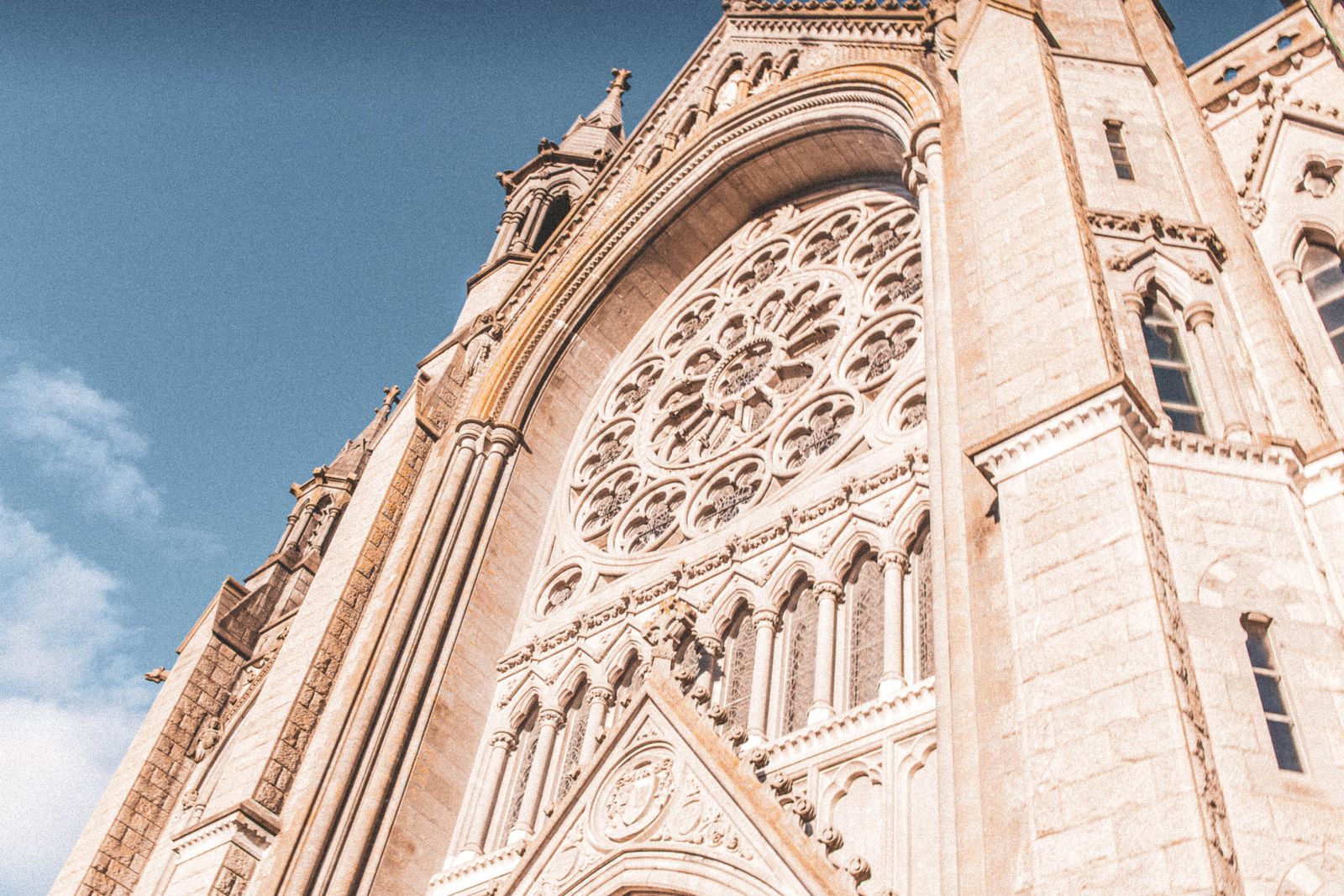
St Colman's Cathedral stands on the highest point of the town, and its spire is visible from much of Cork Harbour. It was built over several decades from the later nineteenth century, in a French Gothic style, with a tall west front and a rose window above the main door.
The interior has a decorated ceiling, carved stonework and a large organ. The carillon in the tower is played on occasion, and the bells can be heard across the town when they ring. The climb from the waterfront is steep, and the streets on the way up are narrow.
The cathedral is an active parish church. Visitors are welcome outside service times, and a charge may apply for some areas. Check the cathedral's own website for opening and for carillon recitals, as both change through the year.
The climb from the waterfront is steep. Allow time, and check the cathedral's own website for opening hours before setting out.
The emigration story
Cobh was the main emigration port for the south of Ireland, and large numbers of people left from its quays over the nineteenth and twentieth centuries. The town was known as Queenstown for much of that period, after a visit by Queen Victoria, and the older buildings still carry the name.
The last call of the Titanic was here in 1912, and the Lusitania was brought into the harbour after it was torpedoed in 1915. Both events are marked in the town, and the graves and memorials connected with them are within walking distance of the centre.
The heritage centre in the old railway station tells the emigration story, and the Titanic Experience occupies the old White Star Line booking office on the waterfront. Both are ticketed, and booking ahead is sensible in summer, when the town is busy with visitors from the cruise ships.
Spike Island
Spike Island lies in the harbour beyond Cobh, and has been a monastery, a fortress and a prison at different times in its history. The star-shaped fort is the main structure on the island today, with walls, bastions and a deep ditch cut around the perimeter. The island is reached by boat from the town.
Boats to the island leave from the quay in Cobh in season. The crossing is short, and guided tours of the fort are included in the visit. The tour covers the prison buildings, the harbour defences and the views back towards Cobh and the far shore, and there is time to walk part of the island.
Sailings depend on the weather and the time of year, and the island is closed outside the season. Check the island's own website for the current timetable before planning a day around it, as the number of crossings and the landing arrangements can change at short notice.
Spike Island sailings are seasonal and weather dependent. Check the island's own website for the timetable and for what is running on your date.
Around the town
The streets behind the waterfront climb in terraces, with rows of houses looking down on the harbour. The Five Foot Way and the higher roads give views over the town and across to the far shore, and the older streets keep their Victorian shape, with shopfronts and terraces largely intact.
The town has a small museum and a number of churches, and the railway station is on the waterfront, which makes the town easy to reach without a car. Walking between the main sights takes time because of the gradient, but the distances are short and the streets are safe to walk by day.
Cobh is on the Cork commuter rail line, with trains from Cork Kent station. Timetables change, so check Iarnród Éireann for the current service. Local buses also serve the town and the island, and the cross-channel ferries from the mainland bring cars onto Great Island.
Trains from Cork Kent to Cobh run through the day. Check Iarnród Éireann for the current timetable before travelling.
Where to base yourself
Cobh works as a base for the harbour and for the eastern side of Cork. Cork city is a short train ride away and has the wider choice of places to stay, restaurants and transport links. For a first trip, the city is the practical centre, with Cobh as an easy day out by rail.
Midleton and Carrigtwohill are close by road and rail, and Kinsale to the south makes a good base for the coast. Cobh itself has guesthouses and hotels in the town, mostly within walking distance of the waterfront, which suits a quieter stay close to the harbour.
For travellers who want the coast within reach, the harbour towns and Kinsale suit better than the city. For West Cork and the coast further west, a base in Cork city or further out is more practical, as the roads from Cobh add time to any westward journey.
Practical points
Cobh is in the Republic of Ireland, so prices are in euro and distances in kilometres. Traffic drives on the left. The town is hilly, and many streets are steep, which matters for anyone with limited mobility or pushing a buggy. Comfortable shoes are worth packing for a day in the town.
The weather is changeable, and rain is possible in any month. A waterproof layer is worth carrying even on a bright morning, and the harbour can be windy, particularly on the promenade and at the cathedral. Met Éireann publishes the forecast for the Cork area, and it is worth checking before a day on the water.
Emergency numbers are 112 and 999. Plugs are the three-pin type G. For entry rules, check the Irish Immigration Service before travelling, as requirements depend on your passport. The town is in the Republic, so euro and kilometres apply throughout the visit.