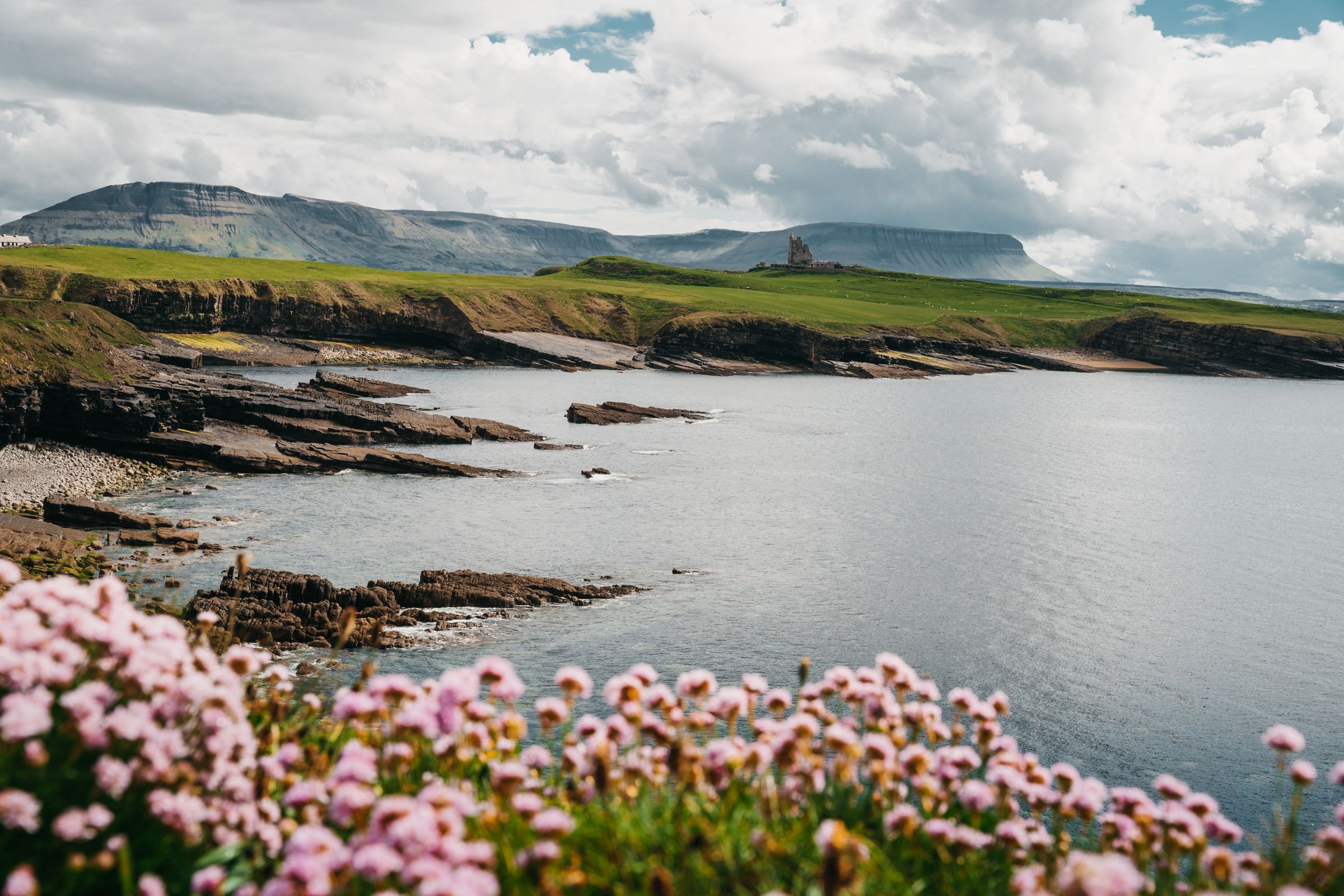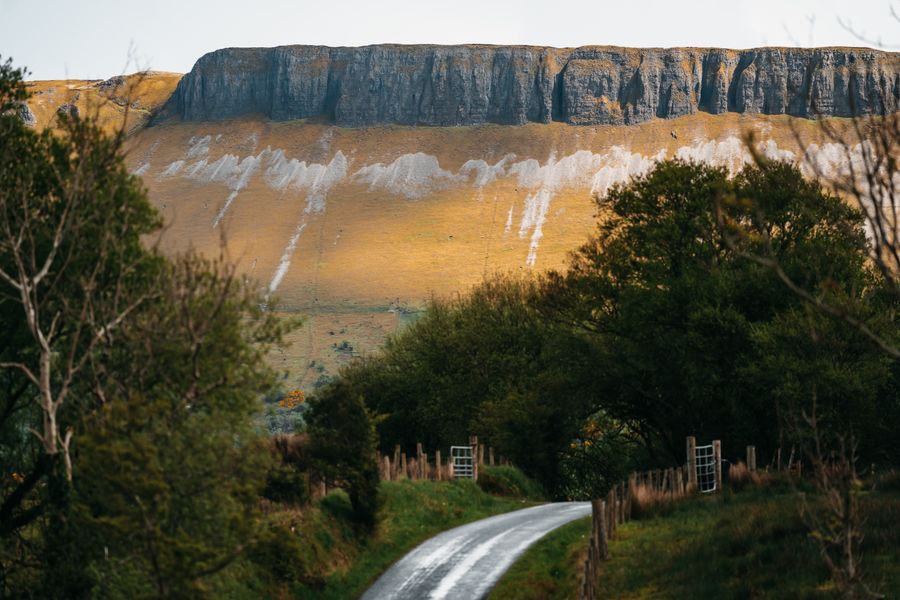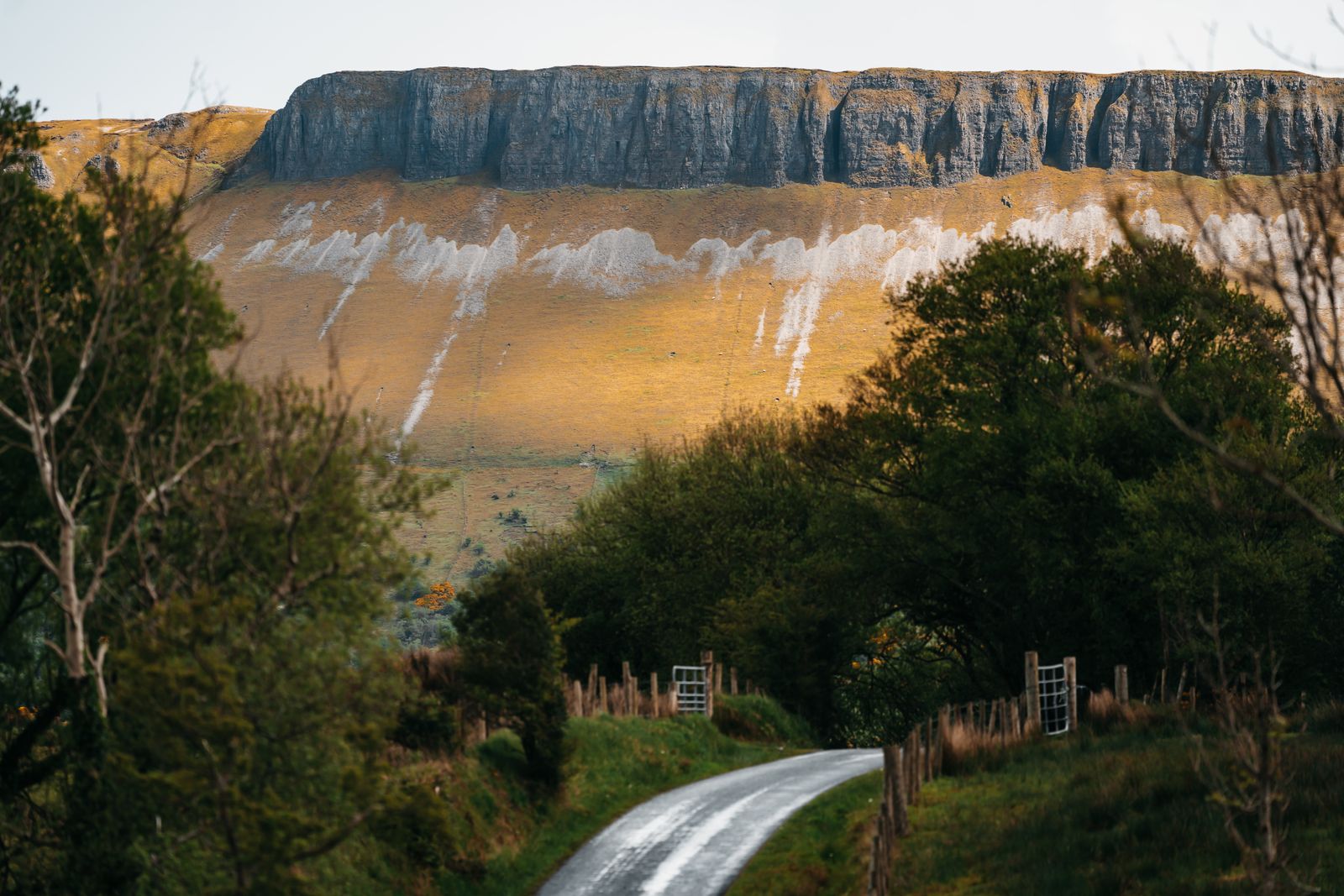
County Sligo sits on the Atlantic coast in the province of Connacht. The flat-topped mountain of Benbulben stands over the north of the county, and the coast runs west from Sligo town to Enniscrone, with surf beaches and small harbours along the way.
Mountain and coast
The north of County Sligo is dominated by Benbulben, a table-topped mountain of limestone and shale that rises sharply from the fields. It is part of the Dartry Mountains, which run east into County Leitrim. The mountain is best seen from the north, along the road between Grange and Sligo town.
South of the mountain, the land falls away to Sligo town and the wide estuary of the Garavogue River. The town sits where the river meets the sea, with Lough Gill just inland to the east. The lake holds several small wooded islands.
West of the town, the coast turns sandy. Strandhill faces the Atlantic with a long beach and a headland at Killaspugbrone. Further west, the shoreline runs past Easkey to Enniscrone, where a broad beach backs onto the village. Inland, the land is farmland and bog.
Yeats country
The poet W. B. Yeats spent much of his childhood in Sligo and drew on its landscape throughout his work. The area around Benbulben, Lough Gill and the villages to the north is often called Yeats country, and the name is used on road signs and in guidebooks.
Yeats is buried in the churchyard at Drumcliff, a village at the foot of Benbulben on the main road north from Sligo town. The grave is marked with a simple headstone bearing the words he chose for it. The churchyard also holds a high cross and the remains of a round tower.
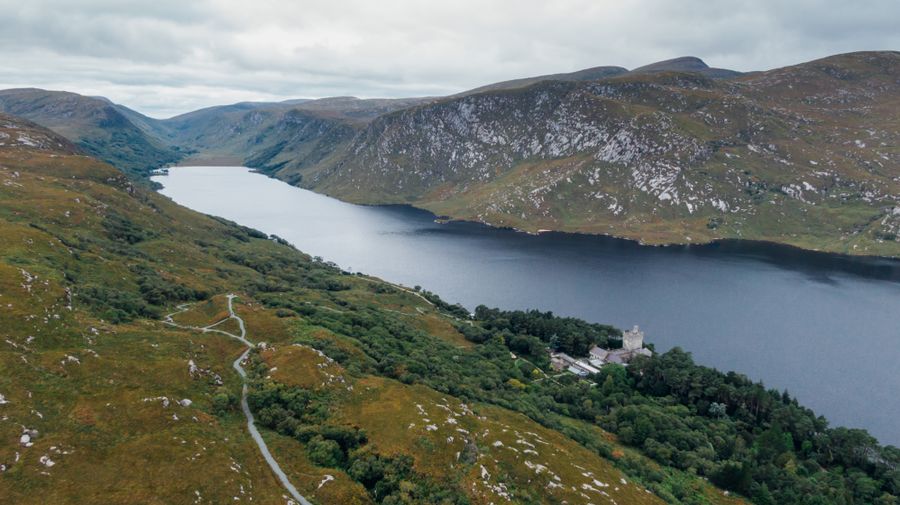
Lough Gill, east of Sligo town, is the setting for the poem The Lake Isle of Innisfree. The small island of Innisfree lies in the lake and can be seen from the shore road. Boat trips on the lake run in season, weather permitting.
The grave at Drumcliff is in an active churchyard. Check opening times with the Office of Public Works before visiting.
Sligo town
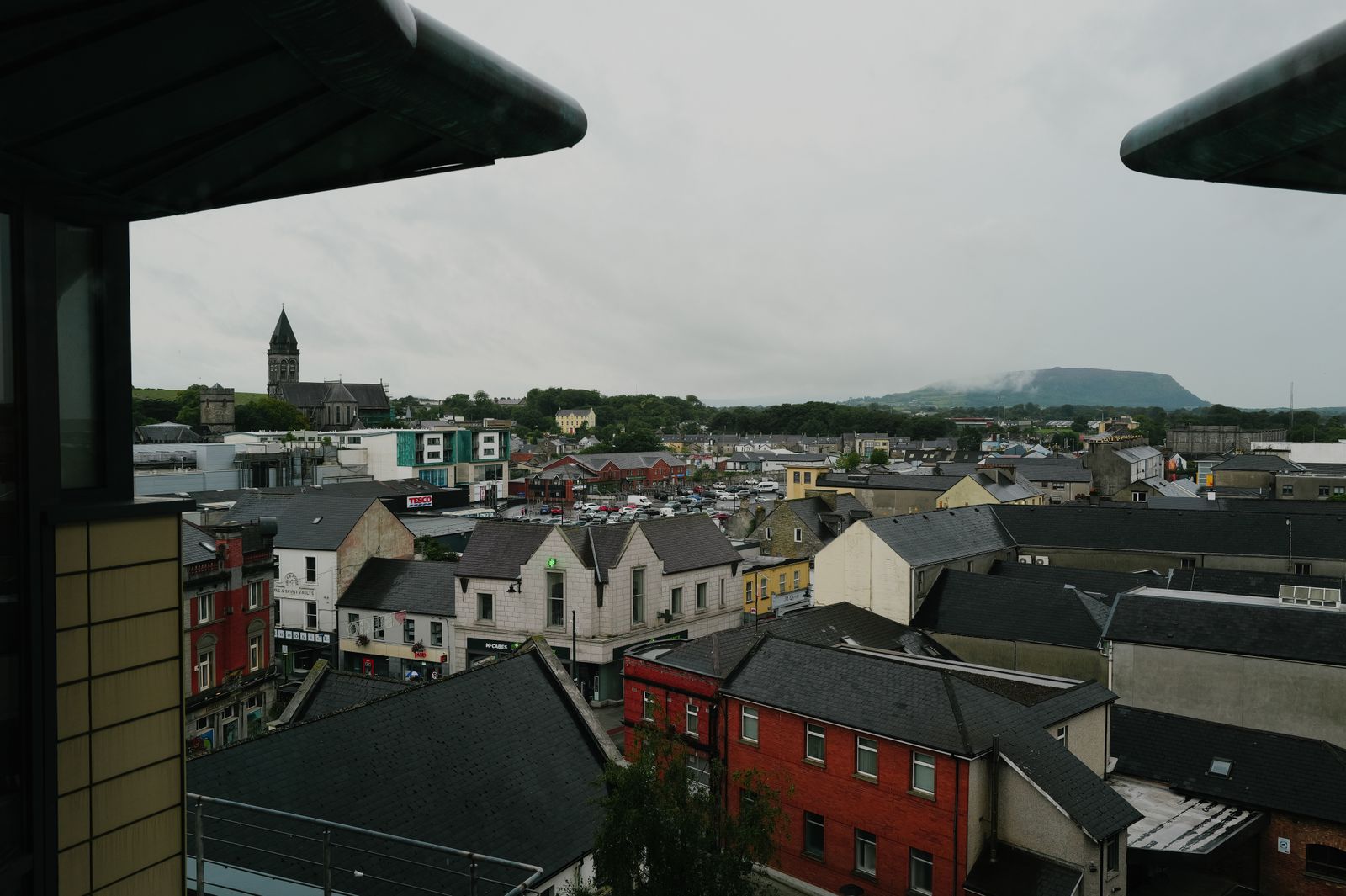
Sligo town is the county town and the main base for visitors. It has a compact centre with shops, cafes and pubs, and a river walk along the Garavogue. The town is small enough to cross on foot in twenty minutes.
The Sligo County Museum holds material on Yeats and the history of the county. The Model arts centre has a gallery and a theatre. Both are in the town centre and are open to the public, though hours vary.
Sligo is a good base for the north of the county, including Benbulben and Drumcliff, and for Lough Gill. It also has the widest choice of accommodation and the best bus links to other towns.
Strandhill and the surf
Strandhill is a village on the coast about 8 kilometres west of Sligo town. It has a long sandy beach that faces the Atlantic swell, and it is one of the main surf spots in the northwest. Surf schools operate from the beach in season, and boards can be hired in the village.
The beach is backed by dunes and a promenade. At the southern end, a low headland runs out to the ruins of Killaspugbrone church. The walk to the headland gives views back over the beach and across to Benbulben, and it is short enough for an evening.
Strandhill also has a seaweed bath and a few places to eat. It is a popular base for surfers and for walkers, with accommodation in the village and nearby. The village is close enough to Sligo town for an evening out, and buses run between the two.
Surf conditions change with the tide and wind. Check the forecast from Met Éireann and ask a local surf school about currents.
Enniscrone and the west
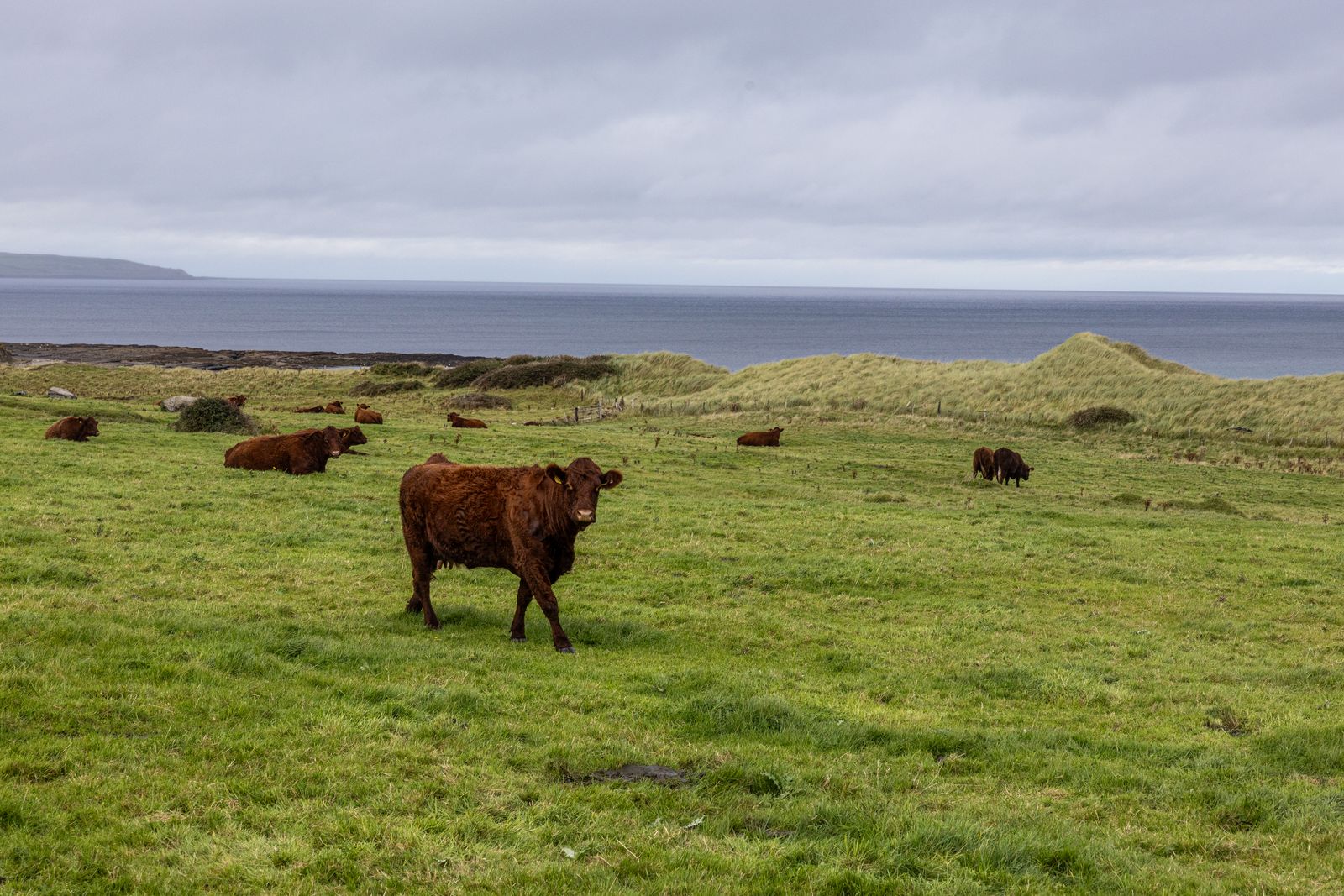
Enniscrone is a seaside village in the west of the county, near the border with County Mayo. It has a long sandy beach and a promenade, and it is a traditional holiday spot. The beach is backed by low dunes.
The village has a seaweed bath and a few shops and pubs. It is quieter than Strandhill and makes a good base for the western end of the county and for day trips into Mayo.
Inland from Enniscrone, the land is farmland and bog. The village of Easkey, between Enniscrone and Strandhill, has a surf beach of its own and a ruined castle by the river.
Getting around
Sligo town is on the main road and rail routes between Dublin and the northwest. The N4 runs from Dublin to Sligo, and the railway line from Dublin Connolly serves Sligo town. The journey takes about three hours by train.
Bus services link Sligo town with Strandhill, Enniscrone and other villages, but they are not frequent. A car gives more freedom to explore the coast and the mountain roads. Traffic drives on the left.
The nearest airport is Ireland West (Knock), about an hour's drive south. Dublin Airport is about three hours by road. Car hire is available in Sligo town and at the airport.
Timetables for trains and buses change. Check with Iarnród Éireann and Bus Éireann before travelling.
Where to base yourself
Sligo town is the most practical base for a first visit. It has the widest range of accommodation, the best bus and rail links, and is within easy reach of Benbulben, Drumcliff and Lough Gill. Strandhill is a short drive or bus ride away.
Strandhill suits surfers and walkers who want to be by the sea. It has a handful of places to stay and eat, and the beach is on the doorstep. It is less convenient for the north of the county.
Enniscrone is a good choice for a quieter seaside stay in the west, with a long beach and easy access to County Mayo. For a rural stay, the villages around Benbulben and Lough Gill have guesthouses and self-catering cottages.