The Aran jumper is a hand-knitted wool sweater with cable and trellis patterns, associated with the Aran Islands off the Galway coast. It is sold all over Ireland, but the islands are where the style is said to come from, and where knitting is still taught and shown to visitors.
Three islands, one style
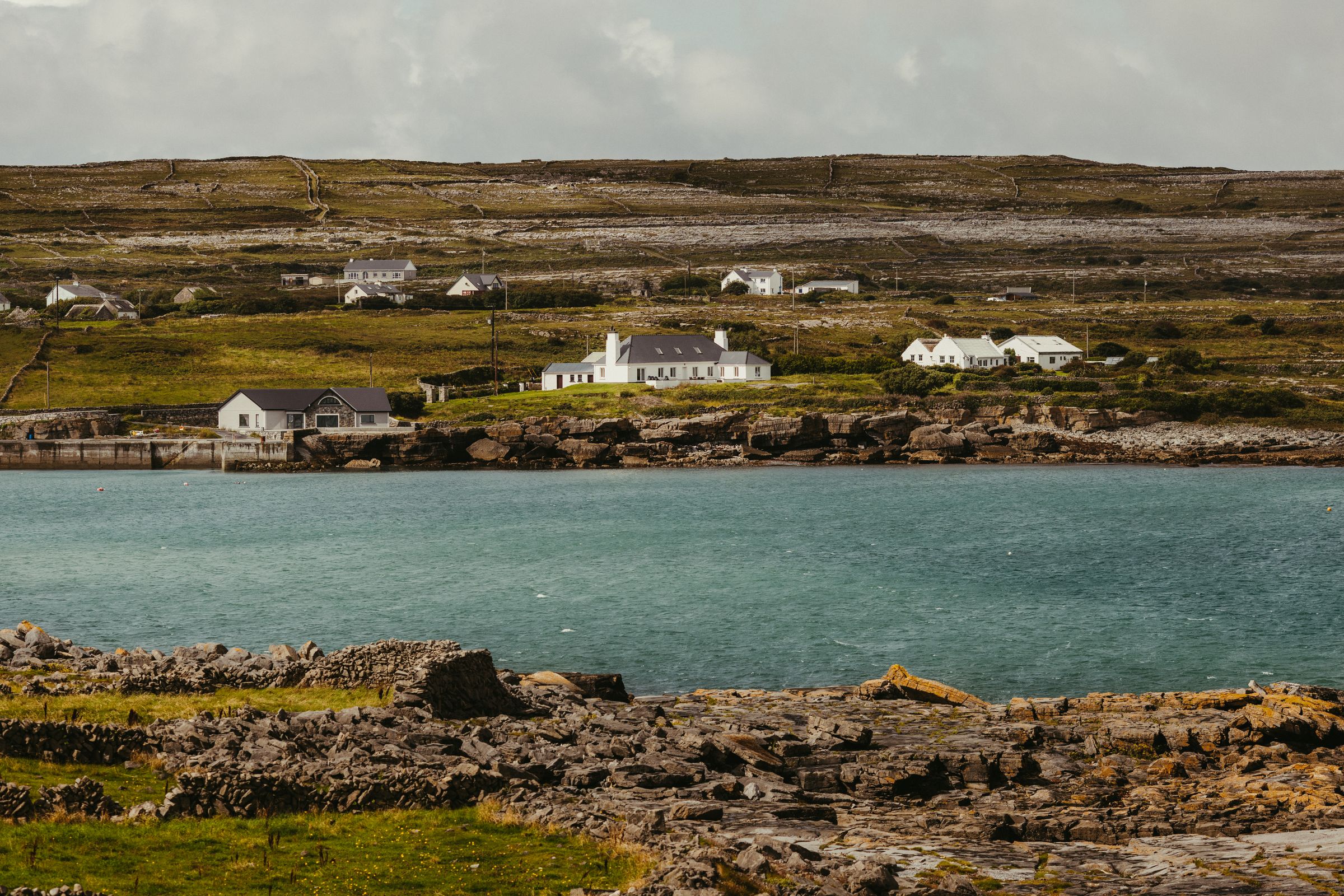
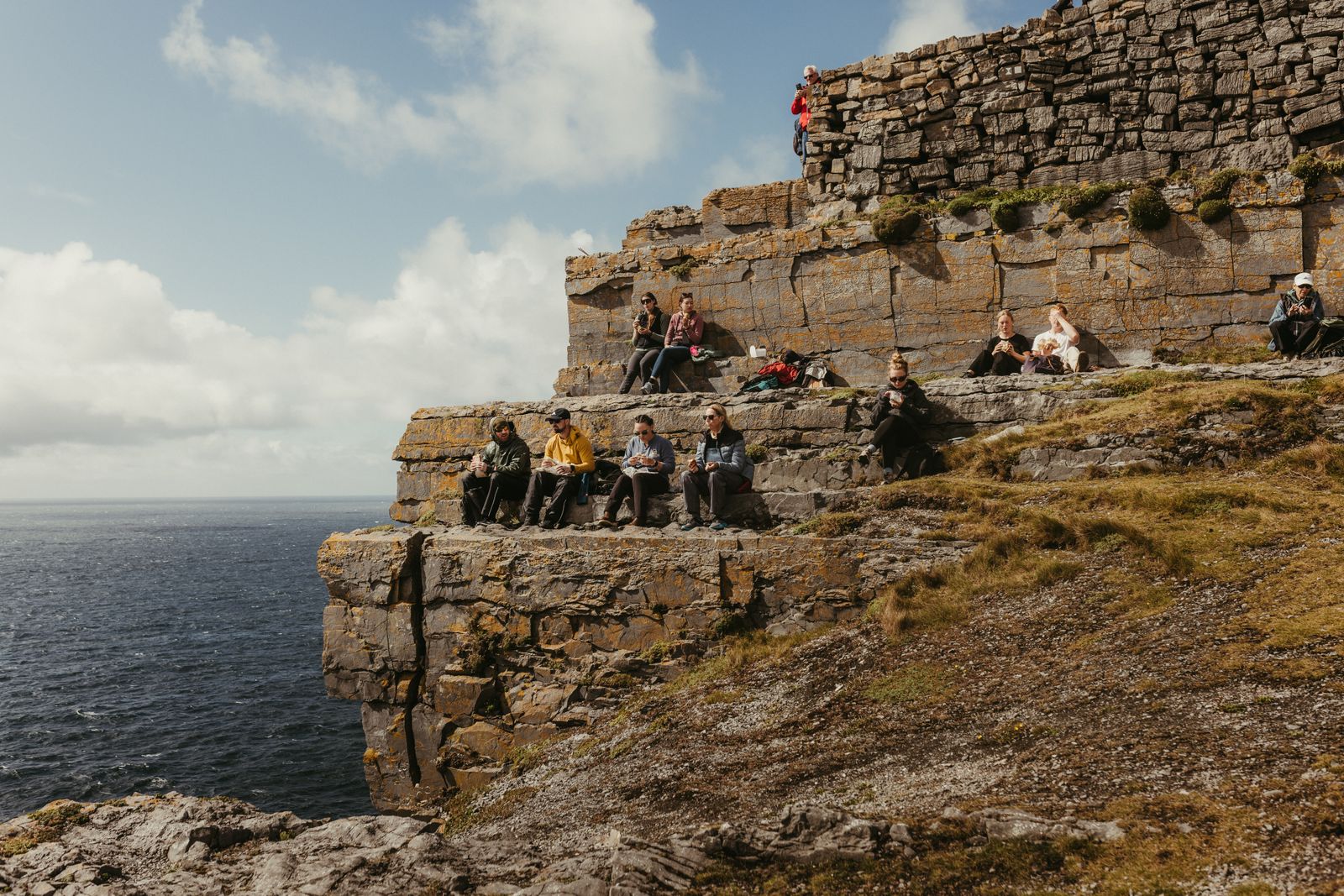
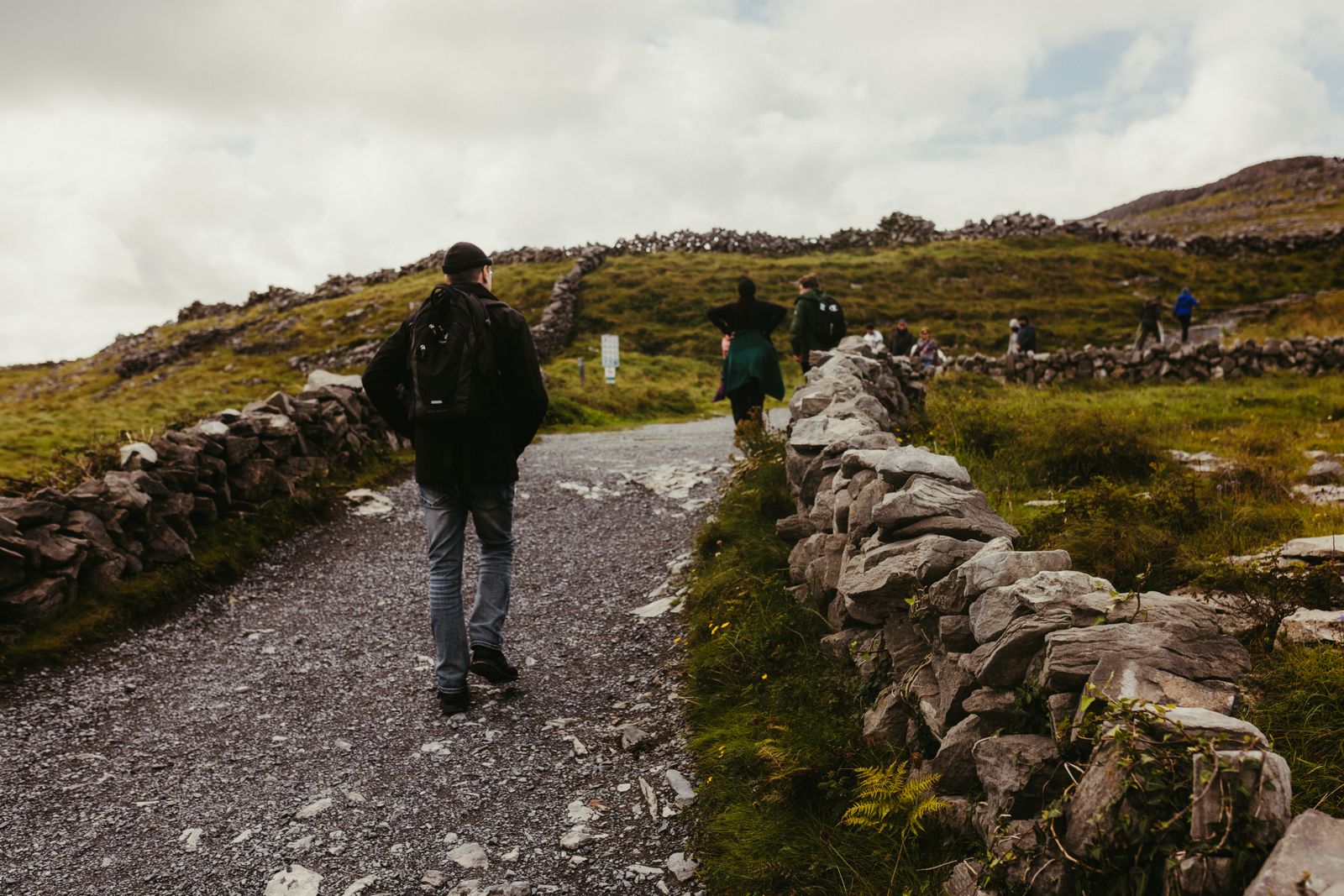
The Aran Islands are Inis Mór, Inis Meáin and Inis Oírr, at the mouth of Galway Bay. All three are Gaeltacht areas, where Irish is the community language and road signs are in Irish only. The land is limestone pavement, divided by dry stone walls, with small fields and few trees.
Fishing and farming supported the population for centuries, and knitting was part of household work rather than a separate trade. Women knitted while tending animals and children, and the finished garments were practical clothing for the men who fished and rowed.
The islands are reached by ferry from Rossaveel in Connemara and from Doolin in County Clare, and by air from Connemara. Sailings depend on weather and season, so check with the ferry operators and Aer Arann before travelling.
Cables, honeycomb and moss
The patterns are built from a small set of stitches. A cable is a group of stitches crossed over each other to make a twisted rope. Honeycomb stitch makes a raised diamond grid. Moss stitch, also called seed stitch, gives a bumpy texture between the panels.
A jumper is usually worked in panels: a central cable, flanked by honeycomb or trellis, with plain or moss stitch at the sides. The yoke and sleeves carry the pattern too. The wool is undyed or lightly dyed, in cream, grey and brown.
The patterns are not fixed to any one island. Knitters on all three islands worked variations, and modern patterns mix them freely. What marks the style is the density of the knitting and the use of cable panels across the whole garment.
What the patterns mean
You will hear that each stitch carries a meaning: a cable for a fisherman's rope, a diamond for a net, a zigzag for the cliffs. The story is told in shops, in guidebooks and on tours, and it is repeated often enough to sound settled.
The evidence is thin. Detailed pattern meanings are not recorded in older island life, and researchers who have looked into the question have found the explanations appearing in print only in the twentieth century, as the jumper became a product sold to visitors.
That does not make the knitting less real. It means the meanings are best treated as folklore: a story told about the garment rather than a record of what island knitters intended. The stitches themselves are documented and can be seen being worked.
How the style spread
Knitting was established on the islands by the nineteenth century, and island women sold knitwear to visiting scholars and artists. The jumper as it is known today took shape in the early twentieth century, as knitting for sale grew alongside knitting for the household.
From the 1930s onward, knitting cooperatives were set up on the islands to organise production and give knitters a market. The style reached a wider public through shops in Galway and Dublin and through photographs and films of island life.
By the middle of the century the Aran jumper was a recognised Irish product, sold at home and exported. Machine knitting later took over much of the market, while hand knitting continued on the islands and elsewhere in the west.
Knitting today
Hand knitting continues on the islands, though on a smaller scale than in the past. Some knitters work to order, and some demonstrate the craft to visitors. The skills are passed on through families and through classes rather than a formal trade.
Údarás na Gaeltachta, the agency for the Gaeltacht, supports enterprise on the islands, including craft work. Fáilte Ireland promotes craft as part of the visitor experience in the west. Neither body certifies what counts as an Aran jumper.
If you want a hand-knitted garment, ask how it was made and where. Machine-knit jumpers in the same patterns are widely sold and are cheaper. Both are legitimate purchases; they are simply different products.
Ferries to Inis Mór, Inis Meáin and Inis Oírr are weather dependent. Check sailing times with the ferry operators, and with Aer Arann for flights, before setting out.
Where to base yourself
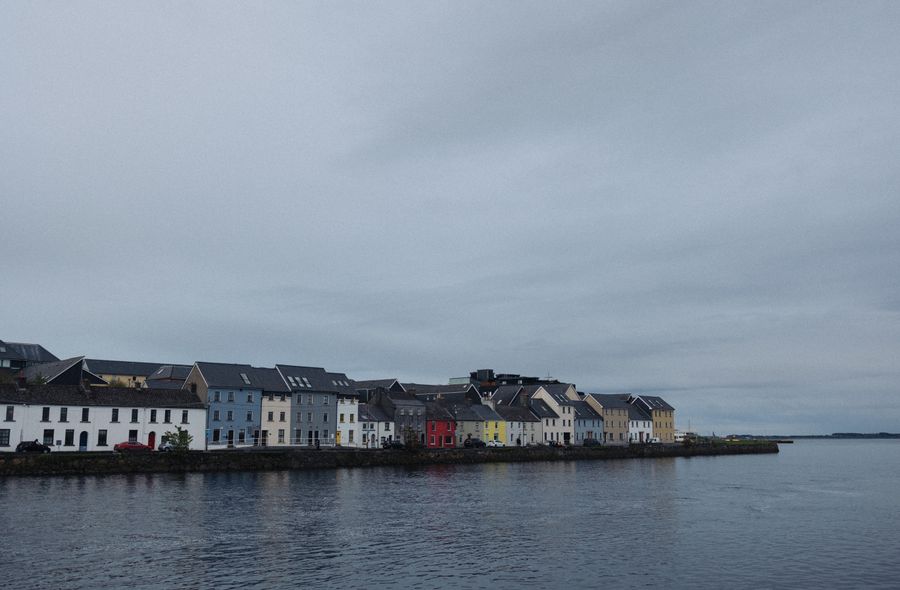
Galway City is the usual base for the islands, with transport to Rossaveel and buses onward, and a ferry service from the city to Inis Oírr in season. The city has the widest choice of places to stay and the best transport links.
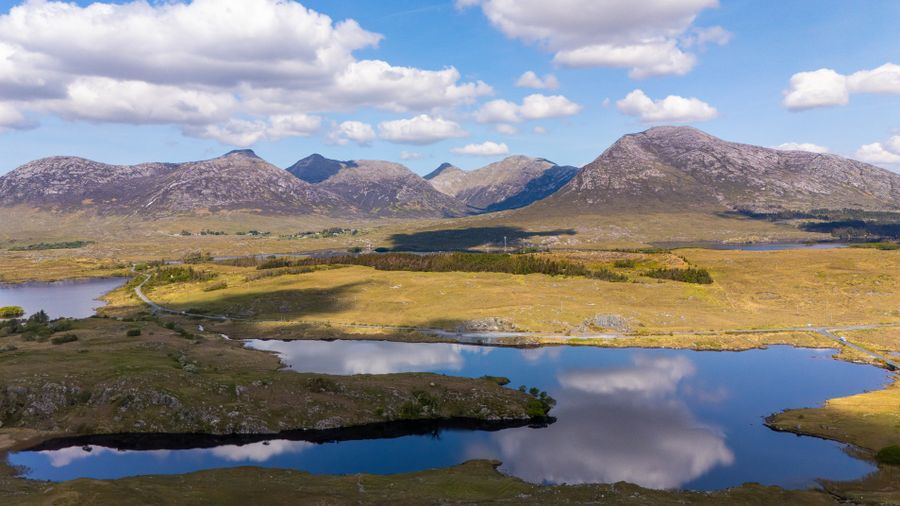
Connemara, west of the city, is closer to the Rossaveel ferry and suits a quieter stay among lakes and mountains. Doolin, in County Clare, has ferries to the islands and sits beside the Cliffs of Moher and the Burren.
Spiddal and the coast road west of Galway are also convenient, and are in the Gaeltacht, so Irish is heard locally. Wherever you stay, allow for a full day on the islands: the crossing and the return take time.
Sailings and flight times change with the season and the weather. Confirm with the ferry operators and Aer Arann, and check Transport for Ireland for buses to the ferry ports.
Buying with care
Aran-style jumpers are sold across Ireland and abroad. The label may say Aran, which describes the pattern rather than the place of manufacture. If the origin matters, ask directly where the garment was knitted.
Hand-knitted wool is warm and heavy, and softens with wear. Merino and lambswool versions are lighter and less scratchy. Try before buying if you can, since sizing in hand knits varies from piece to piece.
Care is simple: hand wash in cool water, press out the water without wringing, and dry flat. Store folded rather than on a hanger, which stretches the shoulders. Wool worn against the skin softens over time.
Seeing the craft
On the islands, the craft is visible in small workshops and in demonstrations arranged for visitors. Ask locally about what is running on the day, since opening depends on the season and on the people involved.
The Galway area has craft shops and markets where knitted work is sold, and the city's museums and heritage centres sometimes cover island life and textile work. Collections and displays change, so check with the venue.
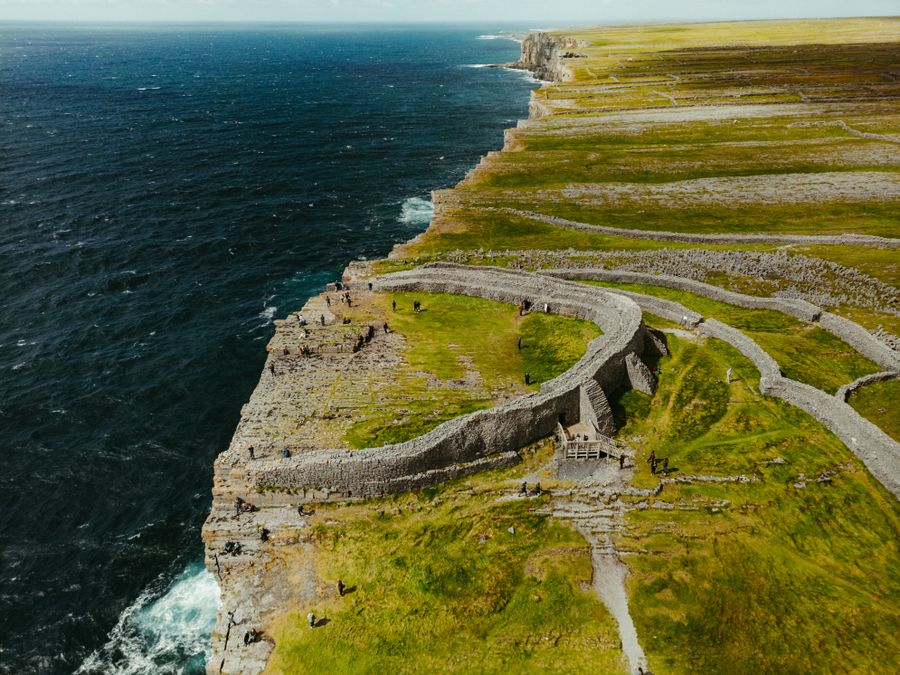
The islands themselves are the main attraction: Dún Aonghasa on Inis Mór, the smaller fields and lanes of Inis Meáin, and the beaches and church ruins of Inis Oírr. A jumper is a souvenir of a place that is worth the crossing on its own.