Each spring, basking sharks appear in the water off the west and south coasts of Ireland. They feed at the surface on plankton, moving slowly and showing a tall dorsal fin. Watching from a headland is the simplest way to see one.
A shark that eats plankton
The basking shark is a fish, not a mammal, and it feeds by filtering plankton from the water. It swims with its mouth open, straining the sea through gill rakers, and can grow to around ten metres. Despite the size, it is harmless to people, with no interest in anything larger than the tiny animals it feeds on.
In Irish it is called the liabhán mór, and older coastal accounts describe it as a summer visitor that appeared in numbers off the western headlands. It is a protected species in Irish waters, and disturbing one is an offence.
The shark's skin is rough, like sandpaper, and its colour is grey-brown above and paler below. The tall dorsal fin and the broad tail are usually what a watcher sees first, cutting the surface on a calm day.
Spring and early summer
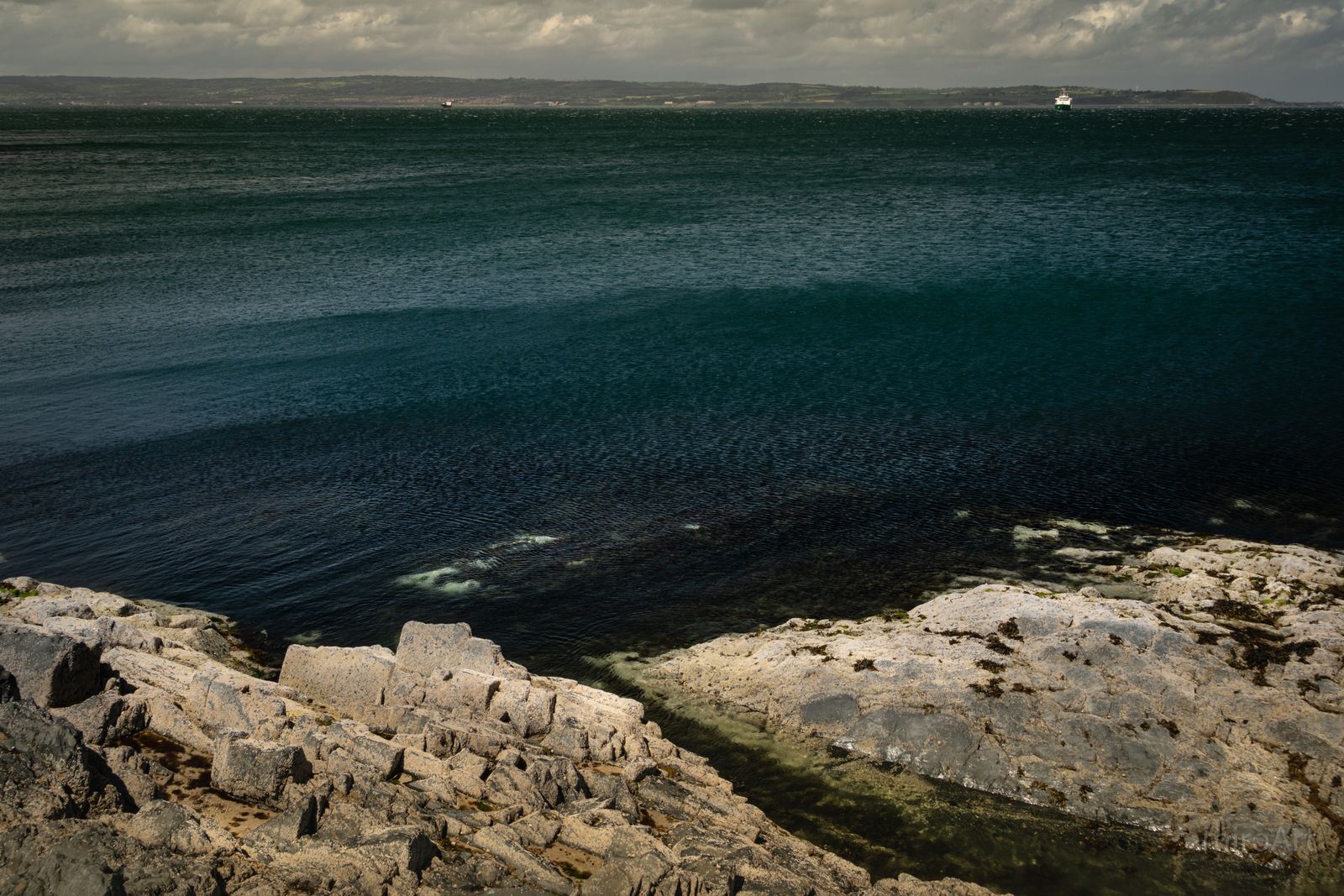
Basking sharks gather in Irish waters from spring into early summer, when plankton blooms near the surface. The timing shifts with the weather and the state of the sea, so a date that works one year may not work the next. Late spring is generally the most reliable window.
Calm, bright days are best, because a flat sea shows a fin clearly and the sharks come closer to the surface to feed. A stiff breeze and a choppy sea make them much harder to spot, even when they are present.
The season is short. By midsummer the sharks have largely moved on, and sightings drop away. Anyone planning a trip around them should treat the window as a possibility rather than a certainty and check local reports before travelling.
Sightings vary by year and weather. Check recent records with the Irish Whale and Dolphin Group before planning a trip around them.
Headlands of the west
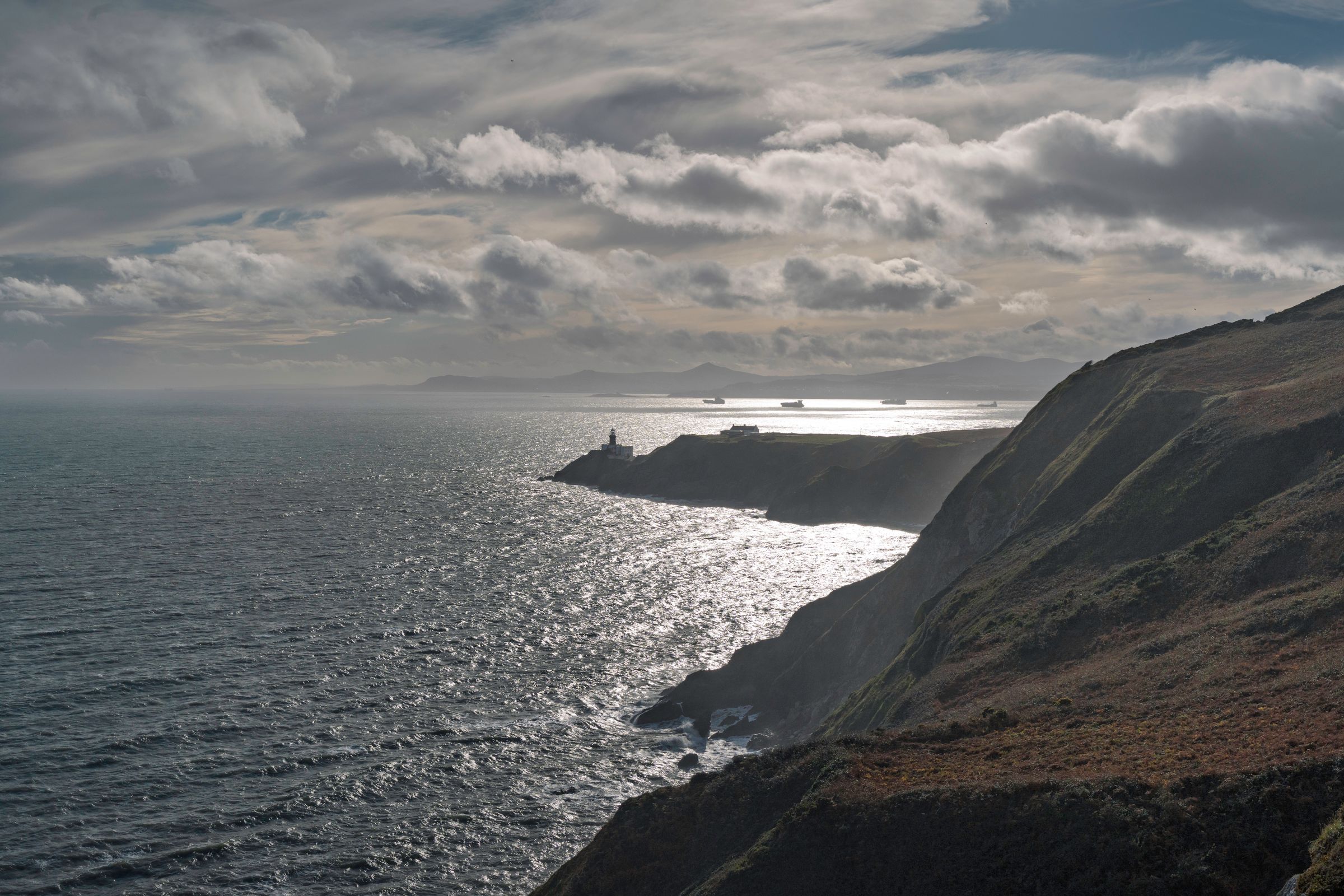
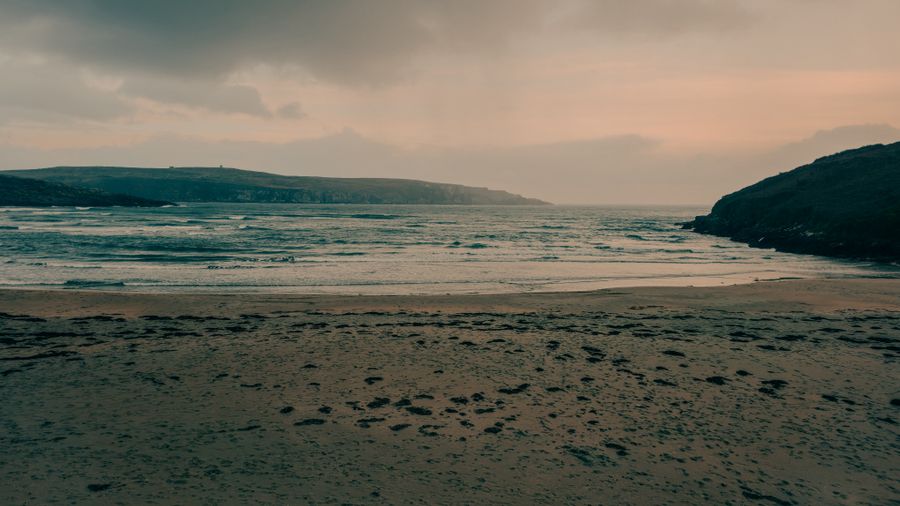
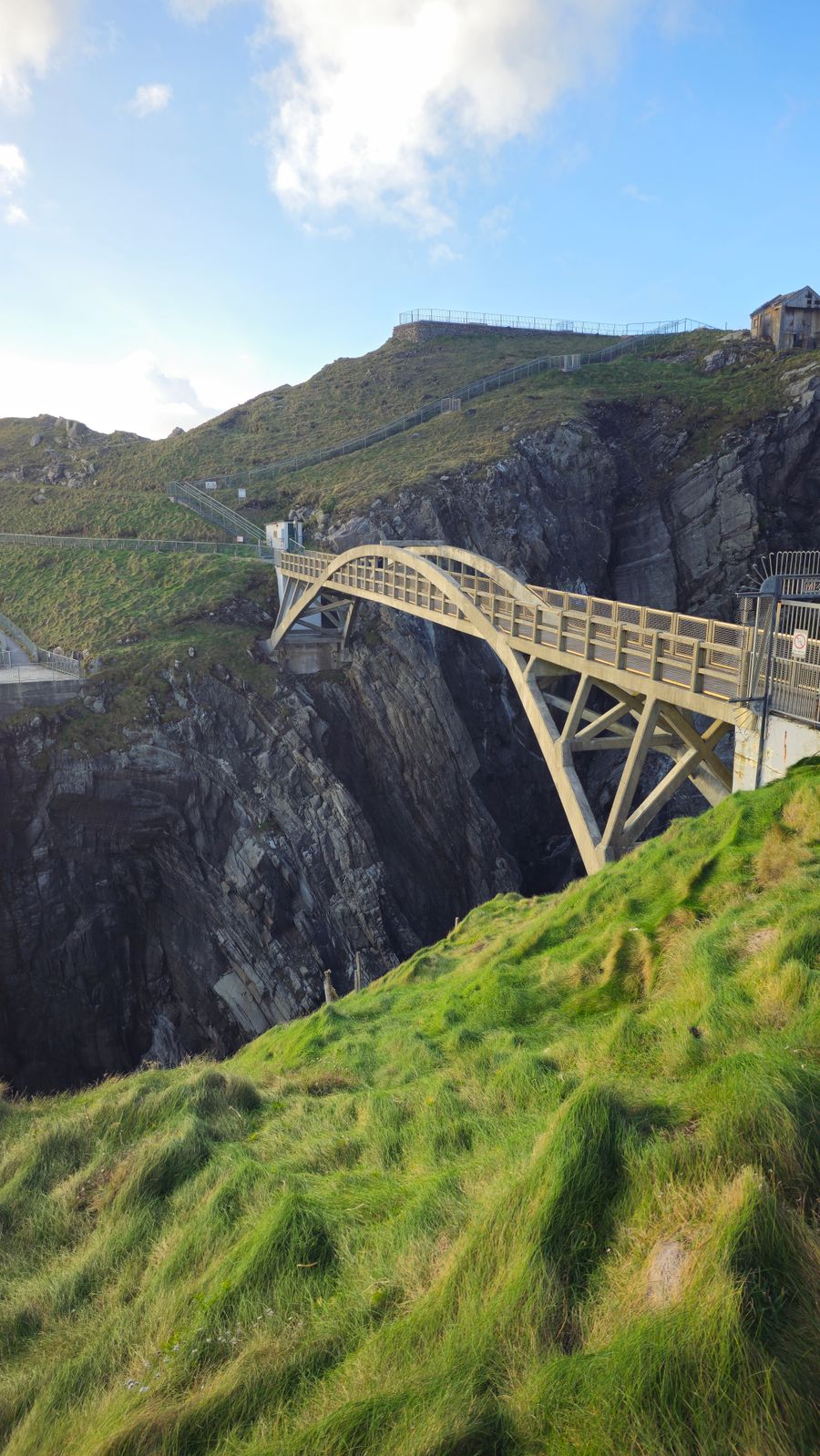
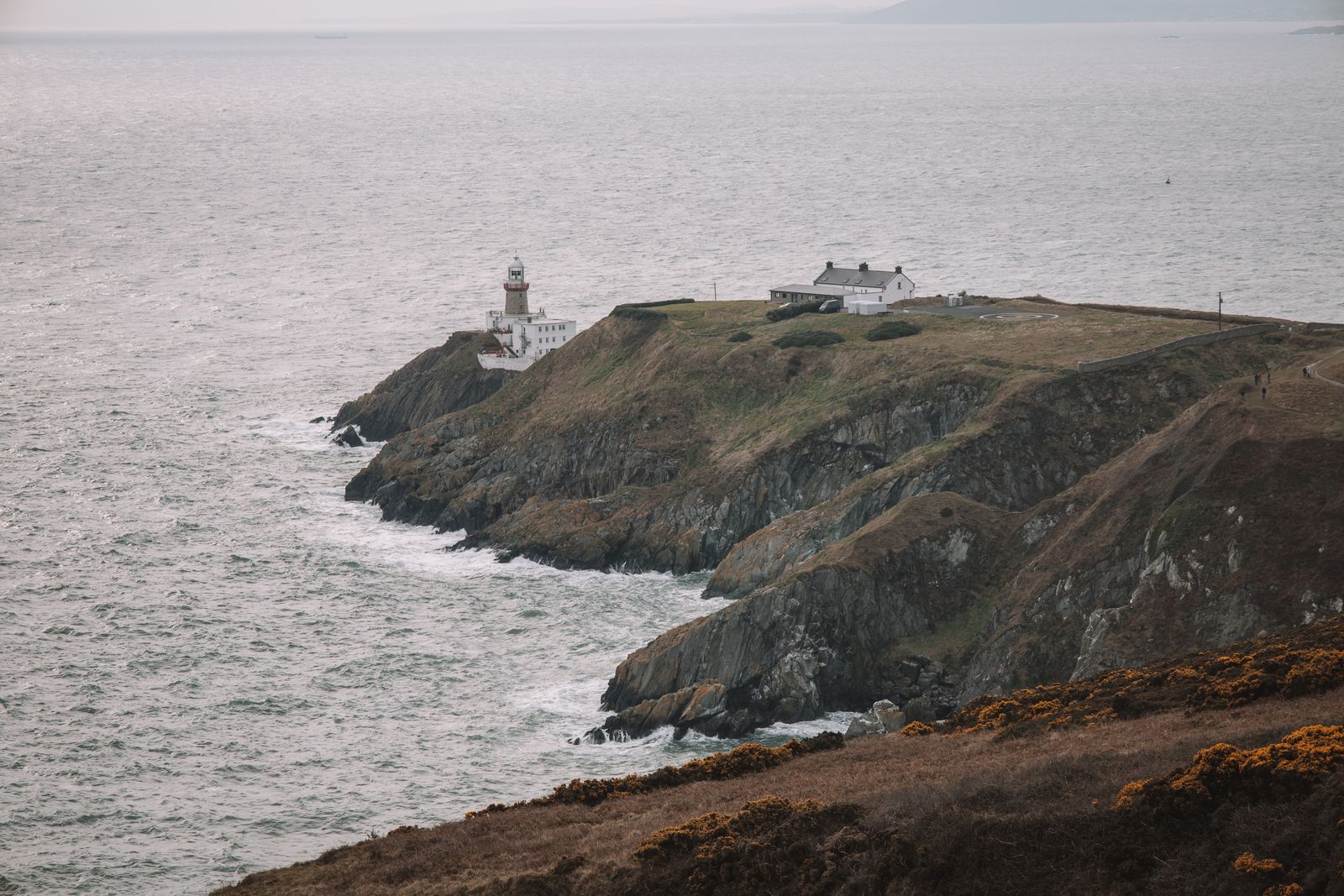
The west and south coasts are the places to look. Headlands that push out into open water give the clearest view, and the further from a busy harbour the better. Malin Head in Donegal, the Kerry and west Cork headlands, and the cliffs of Clare and the Aran Islands all have a record of sightings.
In West Cork, the coast around Skibbereen, Baltimore, Schull and Castletownbere looks out onto open Atlantic water. Headlands near these towns are good places to scan with binoculars, and the area is a sensible base for a few days of watching.
Further north, the coast of Mayo and Sligo and the mouth of Galway Bay also see sharks in spring. The pattern is the same everywhere: plankton-rich water, a calm surface, and a headland to stand on.
Watching from the shore
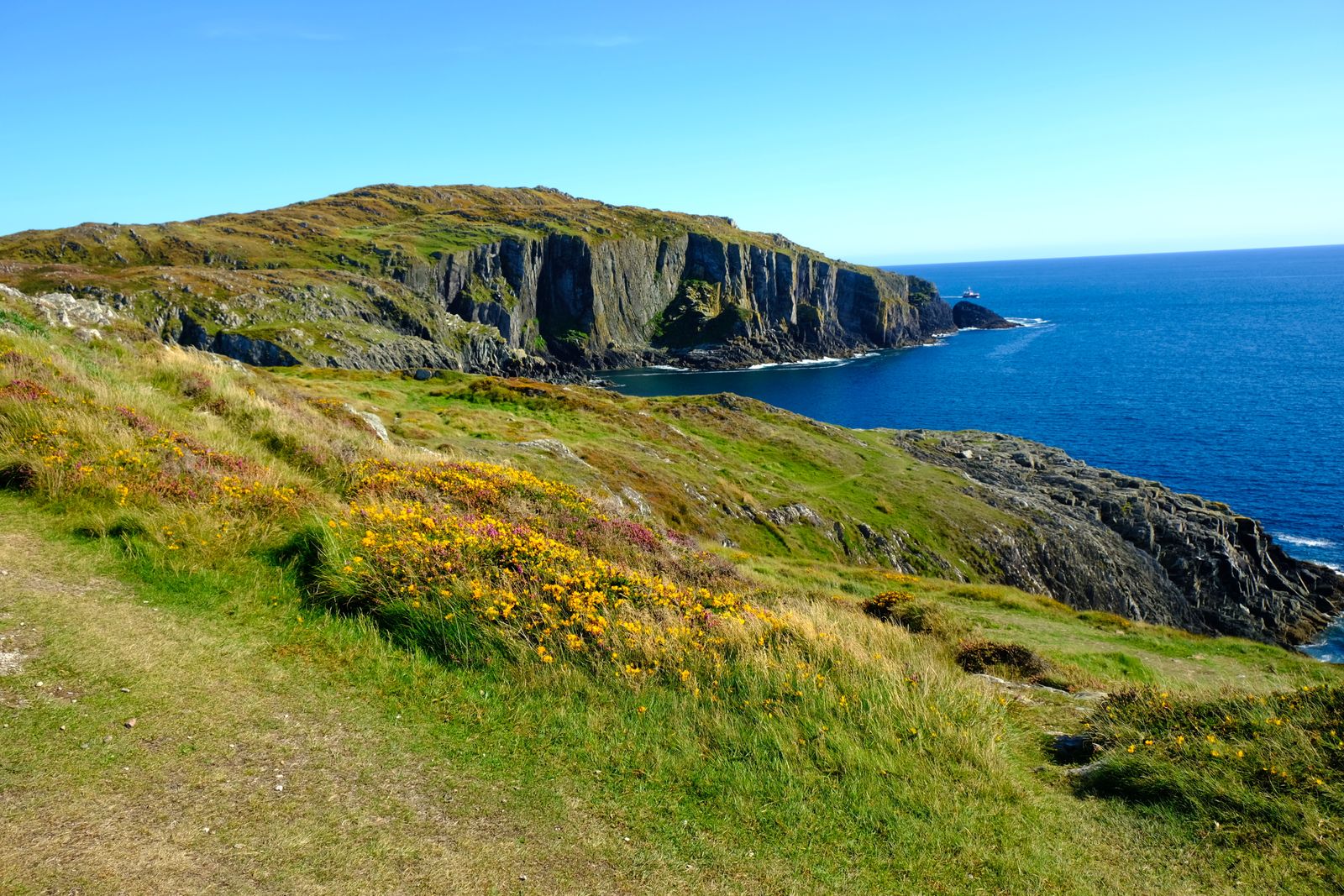
The simplest and least intrusive way to see a basking shark is from land. Find a headland with a clear view over open water, settle in with binoculars, and watch for a fin moving slowly and steadily. Basking sharks often travel in loose groups, so one sighting may be followed by others.
A fin that moves in a straight line and does not change direction is likely a basking shark. Dolphins move faster and in arcs, and seals show only a head. The slow, deliberate progress of a basking shark is distinctive once seen.
Patience matters. An hour of watching may bring nothing, and then several sharks at once. A flask, warm clothing and a windproof layer make the wait comfortable, and a calm morning is usually better than the afternoon.
Never approach a basking shark in the water. Keep a good distance and let the animal move away on its own.
Boats and rules
Basking sharks are protected, and there are rules for boats and for people in the water. Vessels should keep a distance, avoid cutting across a shark's path, and never chase or surround an animal. A shark that is feeding at the surface should be left to feed.
Swimmers and divers should not approach a basking shark, even though it is harmless. The animal is large, and a close encounter can be dangerous for both. A sighting from a boat at a respectful distance is the responsible way to see one.
Anyone running a boat trip should be able to explain how they operate around wildlife. The National Parks and Wildlife Service is the body that oversees protection of the species in the Republic, and its guidance is worth reading before booking anything on the water.
Where to base yourself
West Cork is a practical base for spring watching, and the booking search on this page is set to the region around Skibbereen. The town has shops and services, and the coast to the south and west is within easy reach by car. Baltimore, Schull and Castletownbere are smaller bases closer to the water.
Kinsale, at the eastern end of the coast, and Bantry, at the head of its bay, are also useful. Each has a harbour and a choice of places to stay, and each puts you within reach of headlands that face the open Atlantic.
Further north, Dingle and the Iveragh Peninsula in Kerry, and the coast of Clare around Doolin and the Burren, are all good bases in the same season. Wherever you stay, a car makes the difference, because the best watching places are often at the end of a minor road.
What else is out there
Spring watching often brings more than basking sharks. Harbour porpoises are common close to shore, and bottlenose dolphins are regular in some bays. Minke whales and, less often, larger whales pass through Irish waters in the same months.
Seabirds are part of the picture too. Gannets plunge into the water where fish are shoaling, and Manx shearwaters skim the surface offshore. A headland in spring can be busy with birds, seals and the occasional fin.
The Irish Whale and Dolphin Group records sightings and is the body to check for recent reports. BirdWatch Ireland covers the birds. Both publish guidance for watching wildlife without disturbing it, which is worth a look before setting out.