The sea south of West Cork is one of the better places in Ireland to see large whales. Fin, minke and humpback whales come to feed in the rich water off the coast, mostly from summer into winter. Watching is possible from the land or from a boat.
Why the whales come
The water off West Cork is productive. Upwelling and mixing bring nutrients to the surface, which feed the small fish and plankton that whales pursue. The shelf edge lies within reach of the coast in places, so deep-water species come closer to land than they do along many other stretches of the Irish shore.
Fin whales are the regular large visitors, often seen in ones and twos rather than in big groups. Minke whales are smaller and more solitary, and are usually seen closer to shore. Humpbacks pass through less predictably, and a sighting is a matter of luck and of time spent on the water.
Records kept by the Irish Whale and Dolphin Group show that sightings rise from early summer and can continue into the winter months. The pattern varies from year to year with weather and food supply, so no single week can be promised to anyone planning a trip around the whales.
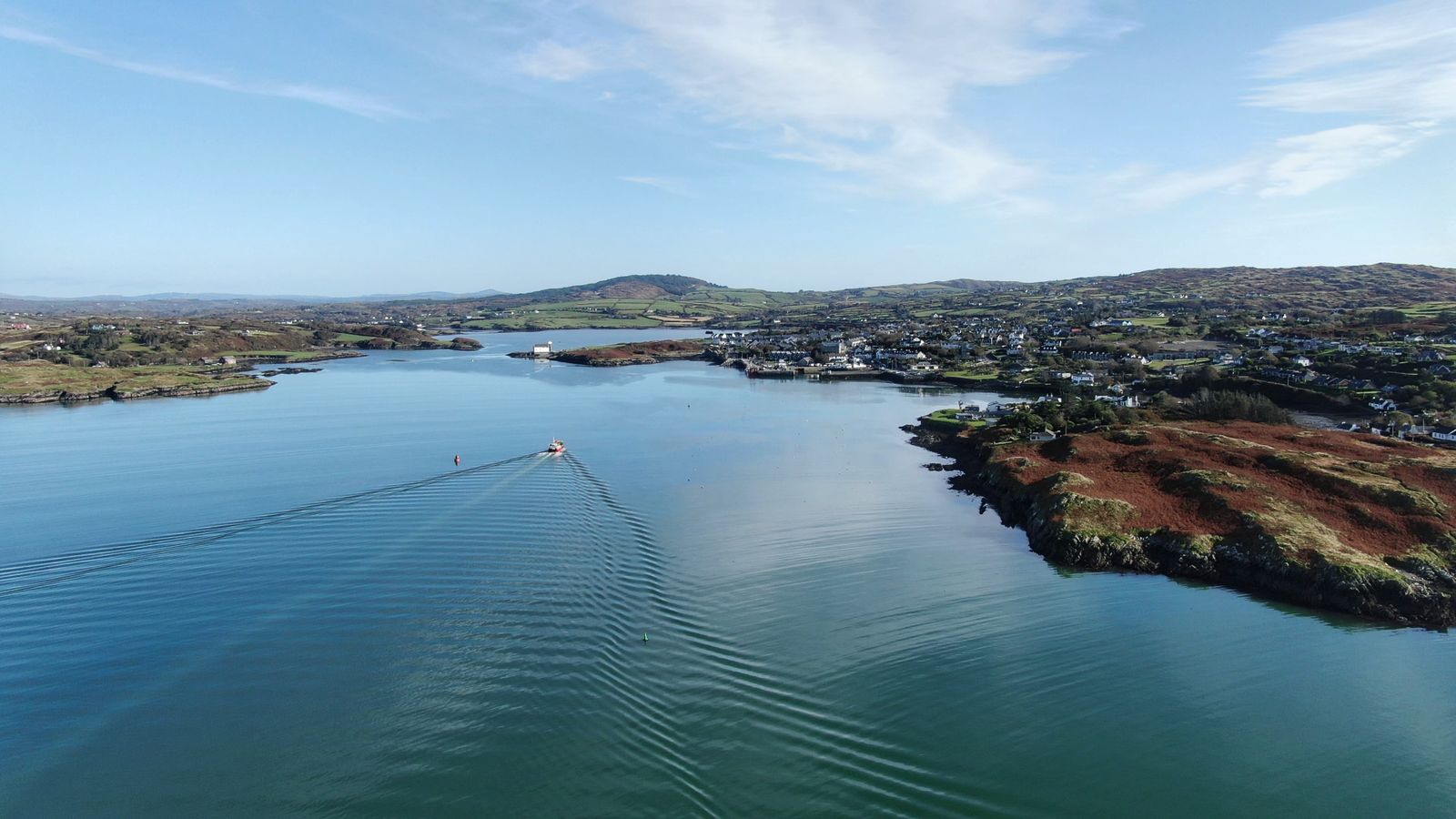
Watching from the land
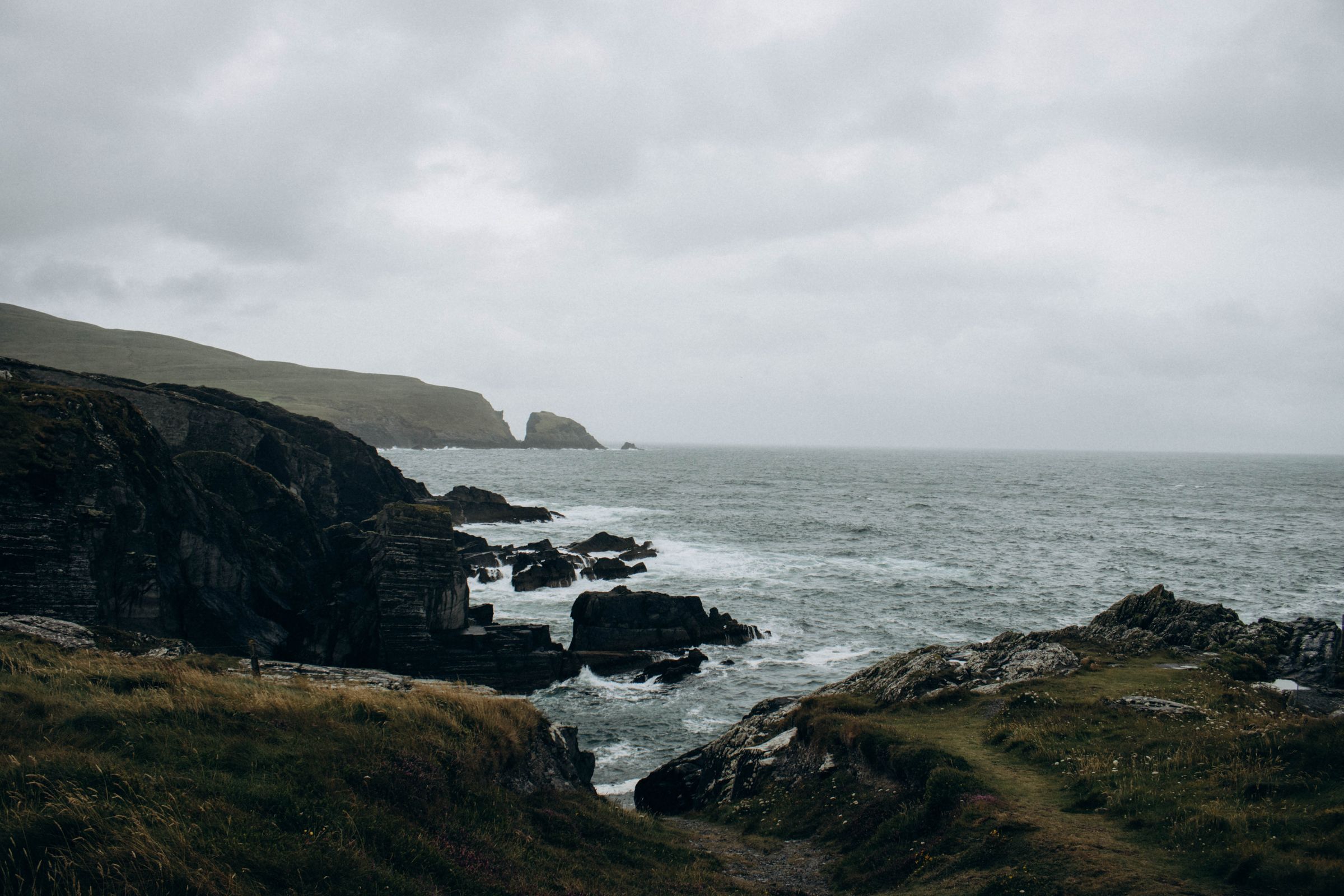
Several headlands give long views south over open water. Cape Clear Island and the cliffs around it are a known vantage point, and the higher ground above Baltimore and Union Hall looks out over the same sea. A calm day with good light is worth more than a long drive to a famous viewpoint.
Bring binoculars and patience. Whales are often seen as a blow, a tall spout of spray, or a dark back breaking the surface. Watching for twenty minutes without a sighting is normal, and a sighting can come suddenly. Scan slowly across the water rather than staring at one spot.
The Irish Whale and Dolphin Group runs a recording scheme and asks members of the public to report sightings. Reports help build a picture of where whales are around the coast, and the group publishes guidance on how to watch without disturbing the animals. Land-based watching is the easiest way to follow that guidance.
Check sea conditions with Met Éireann before setting out, and report any sighting to the Irish Whale and Dolphin Group.
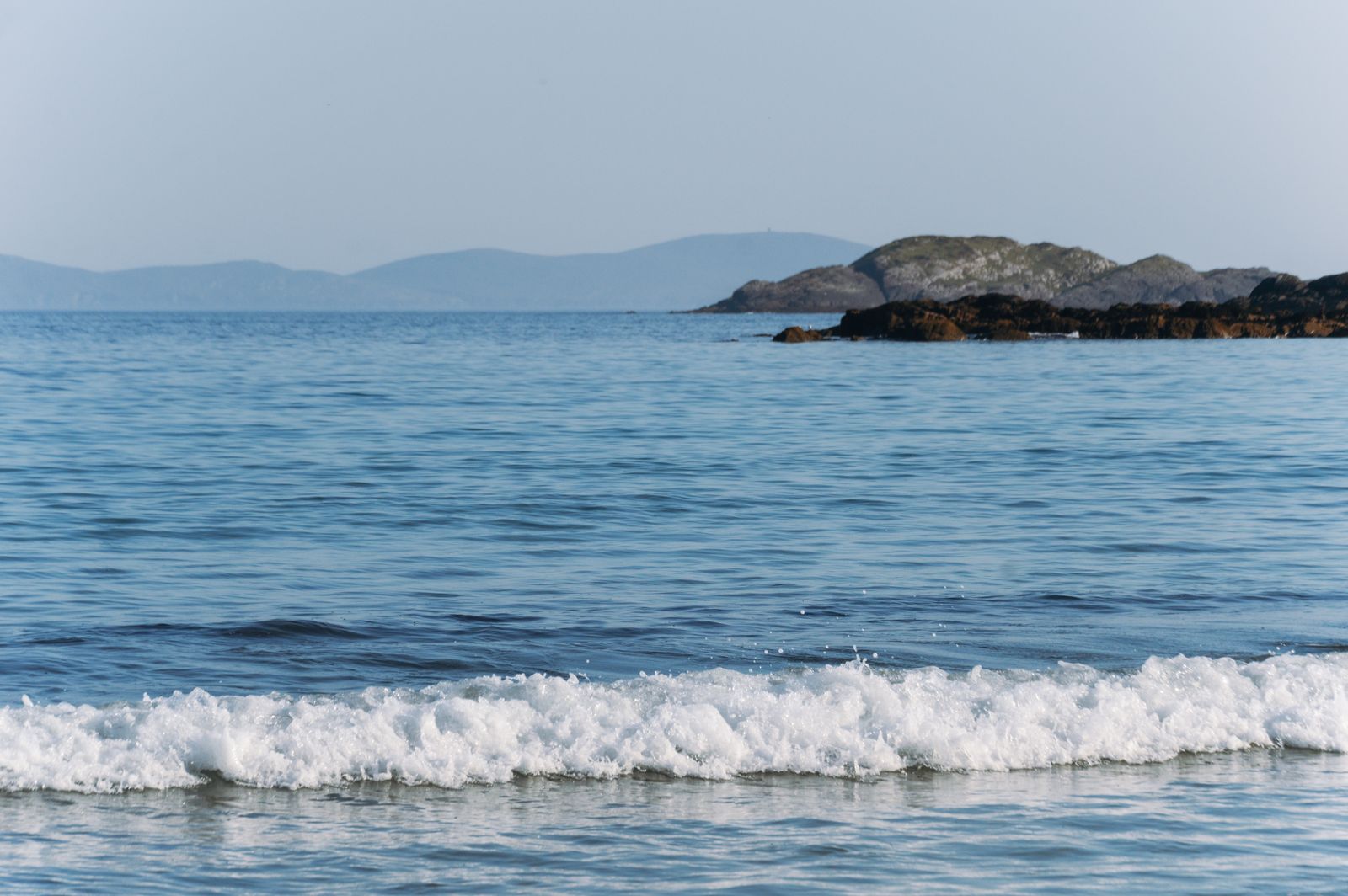
Going out on the water
Boat trips run from several West Cork harbours in the season, and some are run with wildlife watching in mind. Trips are weather dependent and can be cancelled at short notice, so a flexible plan helps. Choose an operator that holds a licence to carry passengers, and ask what happens if the sailing is called off.
From the water the scale of a fin whale becomes clear. The animals are large, and boats are required to keep a distance and to avoid cutting across their path. Follow the skipper's instructions and stay seated when the boat is moving. A sighting at close range is not worth crowding the animal.
If you are prone to seasickness, take it seriously. The swell off the south coast can be considerable even on a bright day. A shorter trip in sheltered water is a reasonable alternative, and dolphins and porpoises are often seen closer in, which suits anyone who would rather not spend hours in open sea.
Trips are weather dependent: confirm sailing with the operator on the day and check forecasts from Met Éireann.
When to go
The main window runs from summer into winter. Late summer and autumn often bring the best conditions, with settled weather and good visibility, though the sea can be rough at any time of year. Spring is quieter for large whales, and the coast is worth visiting then for other reasons.
Daylight matters. In midsummer there is light until late in the evening, which allows an afternoon on a headland to run long. By December daylight in the Cork area is short, so plan a watch around the middle of the day. Weather windows rather than fixed dates are what decide a good trip.
Nothing is guaranteed. Whales move with their food, and a week of strong winds can push them offshore or keep boats in harbour. Treat a sighting as a bonus and the coast itself as the reason for the journey. A second day in the area raises the chances considerably.
Where to base yourself
Skibbereen is the market town of the region and a practical base, with roads running south to the harbours and west along the coast. Baltimore and Union Hall are smaller places close to the water, useful if the plan is to be on a boat early. All three have places to stay and eat within walking distance of the centre.
Clonakilty and Bandon sit further east and give easy access to the coast around Courtmacsherry and Timoleague. Schull and Ballydehob, on the Mizen side, suit a quieter stay with the headlands close by. Castletownbere and the Beara peninsula lie further west again, for anyone combining whales with a longer coastal drive.
Distances in West Cork are longer than they look on a map, and the minor roads are narrow and winding. Allow more time than the distance suggests, and expect to drive to a headland rather than walk to one from most town centres. Fuel up in the towns, as filling stations are sparse on the peninsulas.
What else is out there
The same water holds harbour porpoises, common dolphins and bottlenose dolphins, and these are seen more often than the large whales. Basking sharks visit in the warmer months, feeding at the surface with their fins showing. A fin above the water is not always a whale, and the two are easy to confuse at distance.
Seabirds are part of the picture: gannets plunge-diving, Manx shearwaters skimming the swell, and auks on the cliffs. Puffins nest on islands and cliffs in the region, roughly from late spring to midsummer, with dates varying by colony. BirdWatch Ireland is the body to check for bird records.
Grey seals haul out on rocks and beaches around the coast. Keep a distance and let them settle, and keep dogs on a lead near haul-out sites. The Irish Whale and Dolphin Group is the body to check for marine sightings and for advice on reporting what you see.
Practical points
Bring warm, waterproof clothing even in summer. The wind on a headland is stronger than in town, and spray on a boat is likely. Sturdy shoes help on cliff paths, which can be muddy and uneven. A hat and gloves are worth packing for an evening watch, even in August, when the sea breeze drops the temperature quickly.
Stay back from cliff edges, particularly where the ground is undercut. Keep children and dogs close. On a boat, follow the skipper's instructions and wear any buoyancy aid provided. Never turn your back on the sea on an exposed headland, as a single large wave can reach further than expected.
The emergency number is 112 or 999. Mobile coverage is patchy on parts of the coast, so tell someone where you are going and when you expect to be back. Plugs are the three-pin type G. The Republic uses the euro and kilometres, and traffic drives on the left.