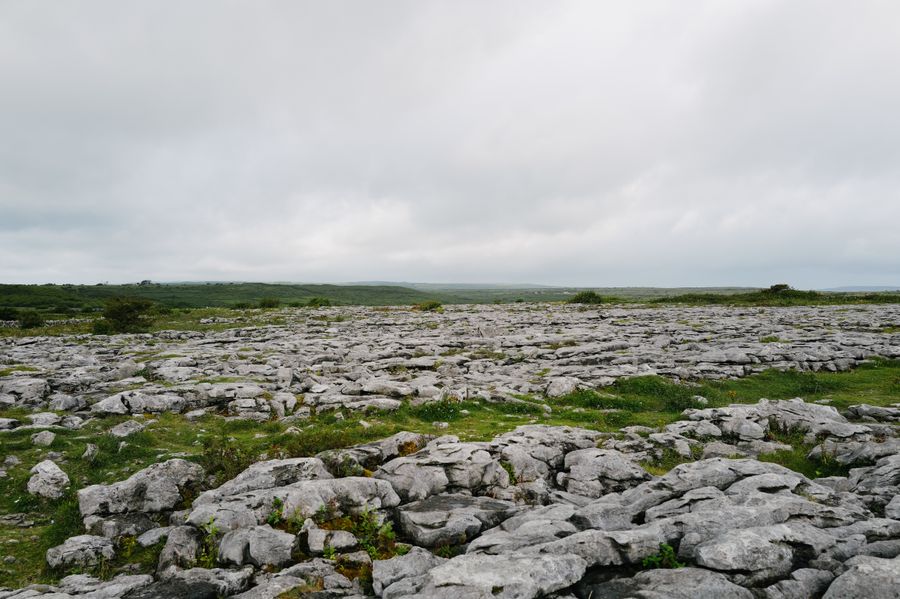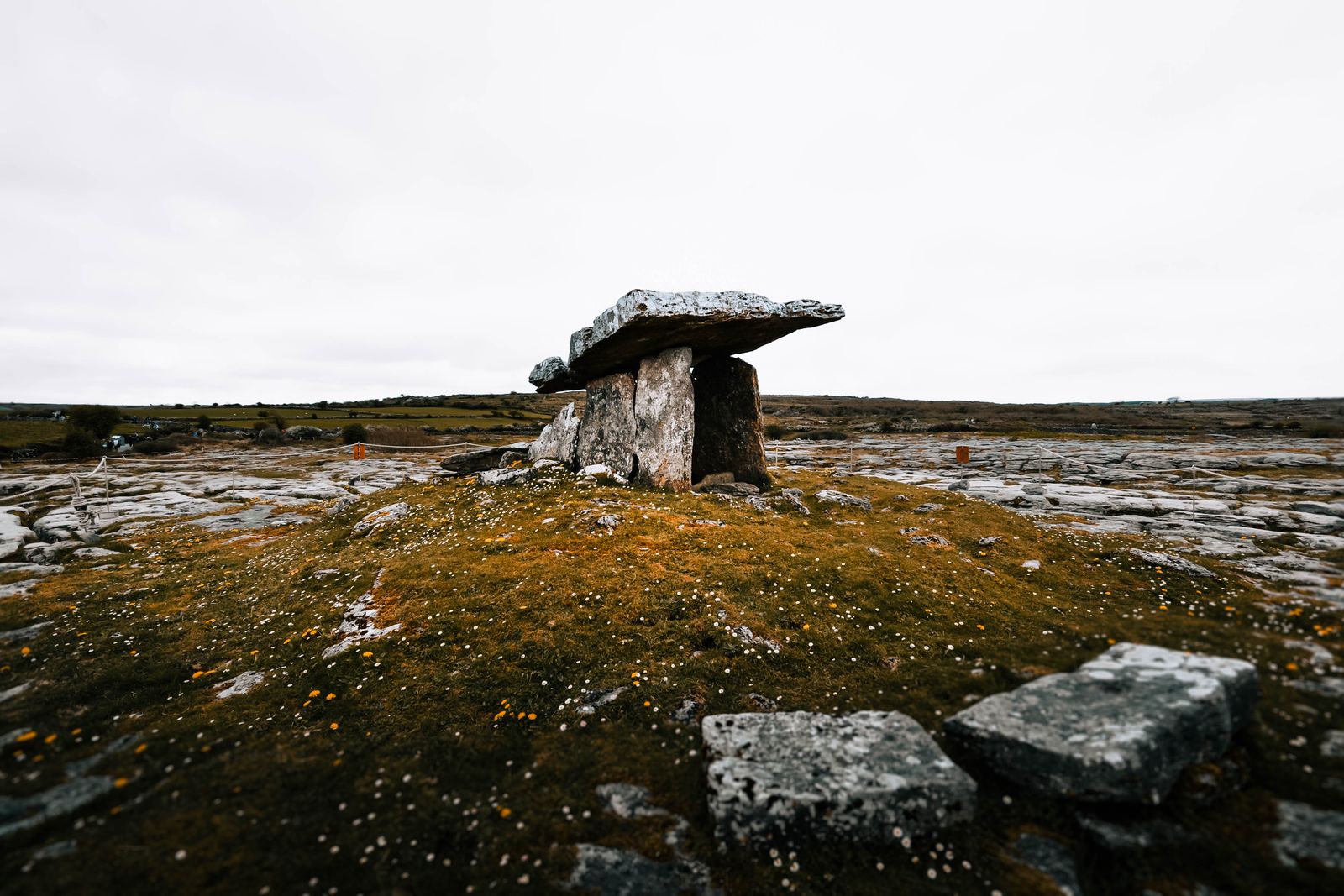
The Burren is a limestone plateau in north County Clare where the rock lies bare in wide slabs and the flowers grow in the cracks between them. Plants usually found in the Arctic, on alpine summits and around the Mediterranean grow here within a few paces of each other.
Why the mix grows here
Three conditions combine on the Burren. The limestone holds warmth and drains fast, so the surface stays dry and mild. Winters are softened by Atlantic air, which lets tender southern plants survive far north of their usual range. And the rock offers shelter in its cracks, where small plants sit out of the wind and hold a little soil.
The result is a flora that reads like a list from three different countries. Mountain avens, more at home in the Arctic, grows beside bloody cranesbill and other plants of southern Europe. Alpine species appear on the higher ground. Botanists have studied the area for well over a century because of this overlap.
The rock itself is the reason for the pattern. Limestone pavement is a bare, cracked surface with thin soil in the fissures, known as grikes. Most of the flowers grow in those lines of soil, so from a distance the pavement can look empty and close up it is crowded.
Spring on the pavement
The season starts early on sheltered ground. From March the first flowers appear in the grikes, and by April the pavement begins to fill. Mountain avens, the plant most associated with the Burren, opens its white flowers in spring and is easy to find on the open rock near the coast.
Spring is also the quietest time to visit. The light is long by May, the ground is usually drier than in winter, and the flowers are at their freshest. A hand lens helps, because many of the plants are small and grow low to the stone.
Spring flowers are not confined to the pavement. The green fields between the rock, the edges of the turloughs and the old stone walls all carry their own species, so a walk that crosses several kinds of ground will show far more than one that stays on the bare limestone.
Early summer colour
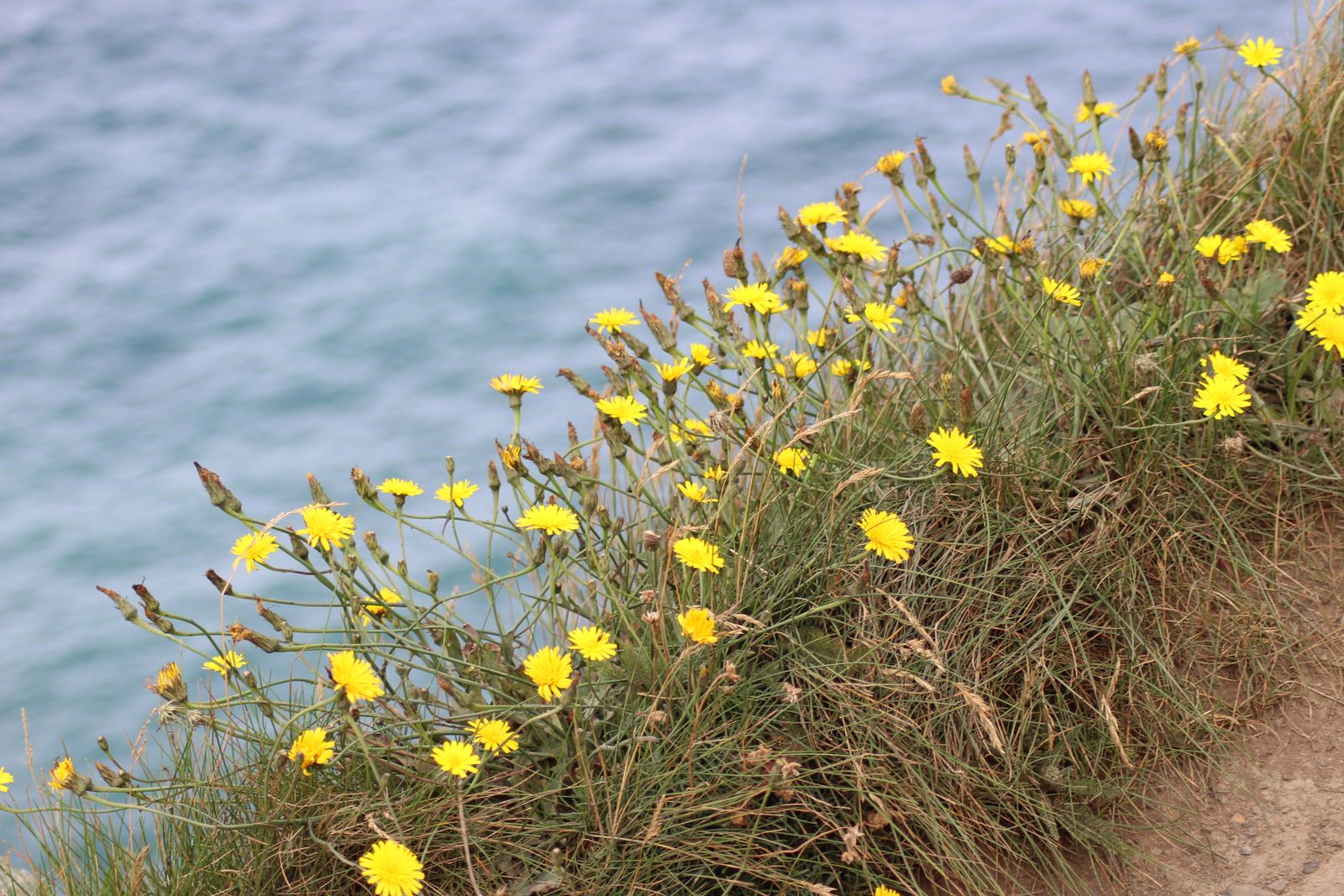
Late May and June bring the strongest display. Bloody cranesbill, a southern European plant, flowers in pink and purple across the pavement. Orchids appear in the damper hollows and along the field edges. Yellow and white flowers follow through June and into July.
The Burren is known for its orchids, and several species grow here, some of them scarce elsewhere on the island. They flower at different times through the early summer, so a visit in late June will show a different set from one in May.
By July the height of the display is passing, though flowers continue in the damper ground and along the coast. Late summer belongs more to the grasses and to the heather on the higher slopes, and the pavement itself looks drier and greyer than it did in spring.
Where to look
The Burren National Park, run by the National Parks and Wildlife Service, protects a section of the plateau and has waymarked walking routes. The park is free to walk, and its paths cross the kind of ground where the flowers grow. The service publishes guidance on routes and on protecting the vegetation.
Other good ground lies along the minor roads and lanes between Ballyvaughan, Carran and Kilnaboy, where the pavement comes right up to the verge. Parking is limited and the roads are narrow, so it is worth planning where to stop rather than pulling in at random.
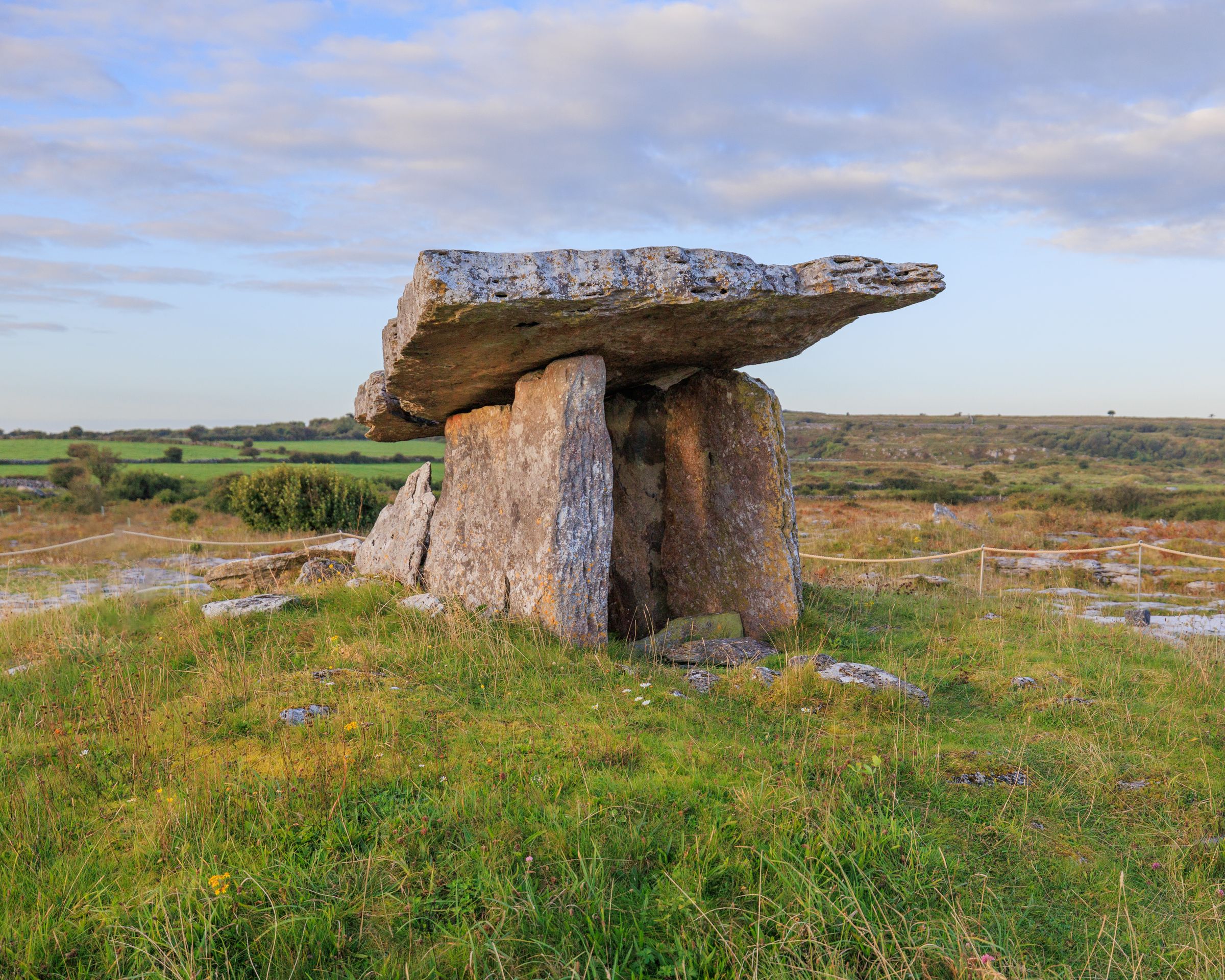
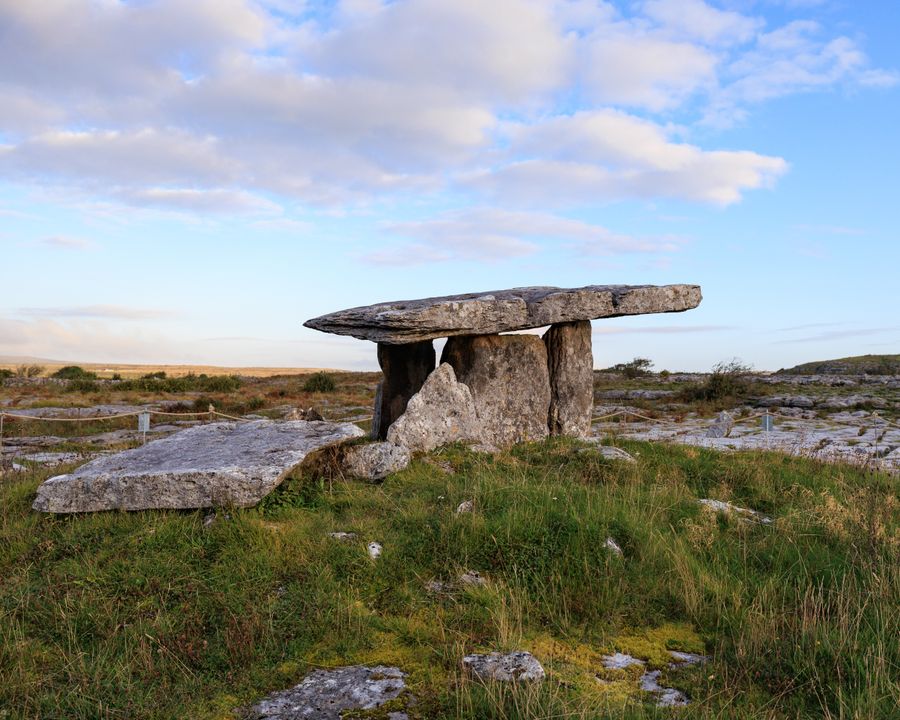
The coast around Black Head and the ground near the villages of Doolin and Ballyvaughan also carry flowers, with sea air and shelter from the wind. Poulnabrone Dolmen stands on open pavement and shows the bare limestone setting at its plainest.
Check the National Parks and Wildlife Service for route maps and seasonal advice before walking on the pavement, and Met Éireann for the forecast.
Orchids and rarities
The Burren holds a number of orchids, including species that are uncommon elsewhere in Ireland. They grow in the grikes, in the fields and along the edges of scrub, and they flower in succession through late spring and early summer. Some are easy to see from a path, others need a careful look.
Rare plants are part of the reason the area is protected. Picking is not appropriate anywhere, and on protected ground it is an offence. Photography and a close look from the path are the way to enjoy them, and a photograph is a better record than a picked flower.
The best approach is to walk slowly and look at the ground. Many of the specialities are small, low and easily missed from a standing height. Kneeling beside a stretch of pavement for a few minutes will usually turn up more than a quick scan along the whole route.
Turloughs and winter water
The Burren has turloughs, low basins that fill with water in wet weather and empty again in dry spells. They are a feature of the limestone lowlands and they carry their own plants, adapted to being flooded for part of the year and dry for the rest.
The water table rises and falls with the rainfall, so the turloughs change through the year. In winter and after heavy rain they can hold a shallow lake. In summer they may be dry grassland, sometimes grazed, with the marks of the water on the ground.
Walking near a turlough means watching the ground and the weather. The basins can fill quickly after rain, and the ground around them can be soft. Met Éireann's forecast is the place to check before a walk that crosses low ground.
Visiting without damage
Limestone pavement is fragile. The thin soil in the grikes takes a long time to form and is easily worn away by feet, so walking on the bare rock between the plants is better than walking through them. Staying on marked paths where they exist protects the ground.
The Burren is farmed, and fields and walls are working boundaries. Gates should be left as they are found, and livestock given room. Dogs should be kept under control, particularly near grazing animals and on the open pavement.
Weather changes quickly and the rock can be slippery after rain. Sturdy footwear, a waterproof layer and a map are sensible for any walk away from the villages. The National Parks and Wildlife Service and Met Éireann are the bodies to check for access advice and conditions.
Where to base yourself
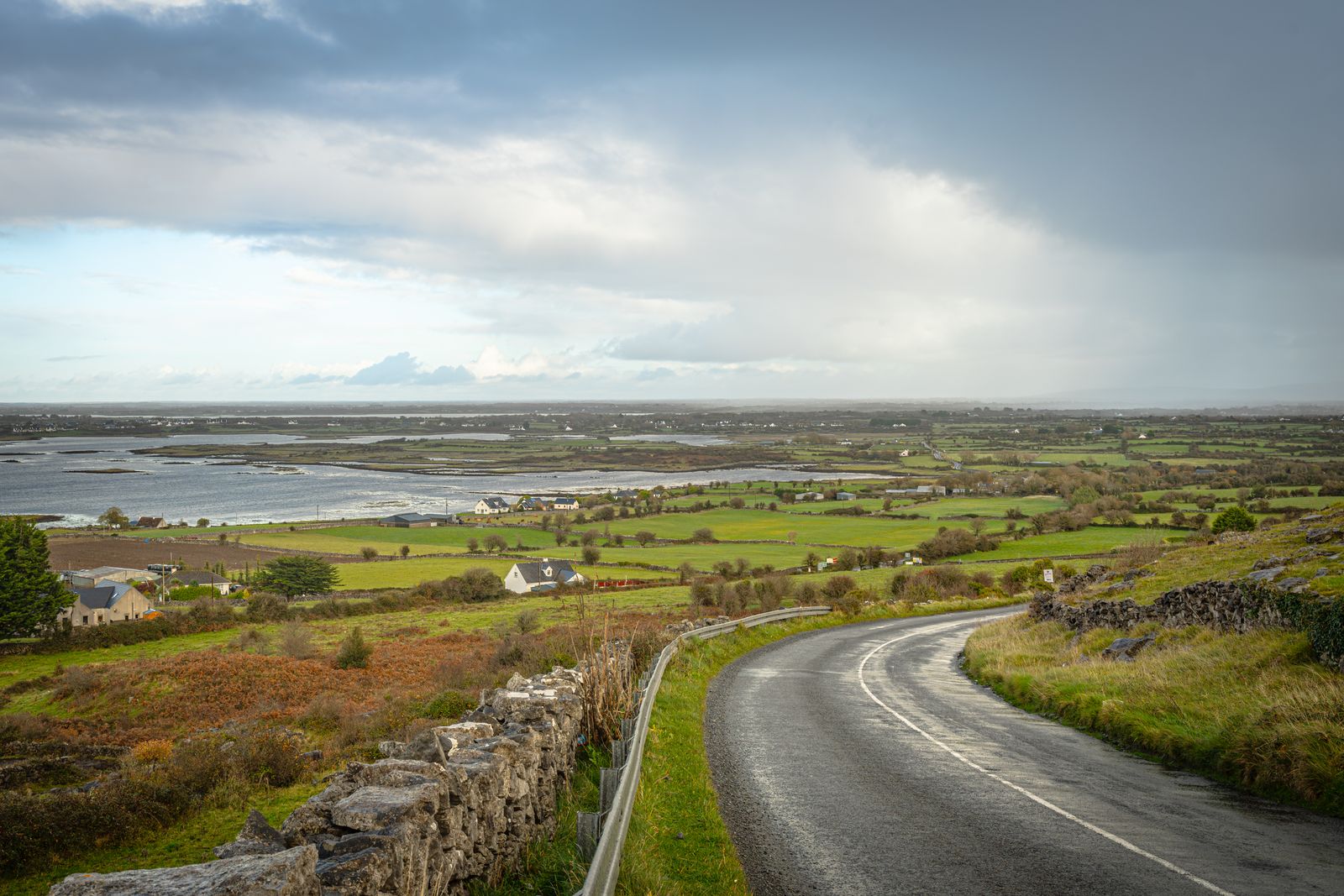
Doolin, on the coast at the western edge of the Burren, is a natural base for the flowers and for the cliffs. Ballyvaughan, on the northern side, sits among the pavement and looks across to Galway Bay. Both are small villages with limited accommodation, so booking ahead helps in summer.
Further south, Ennis is a market town with more choice and good road links, though it is a longer drive to the best ground. Lisdoonvarna and Kilfenora are smaller again and closer to the plateau. Galway city is within reach for a day trip but sits outside the Burren itself.
The nearest airport for the area is Shannon, which serves the west. Roads are narrow and winding in places, and traffic drives on the left. Transport for Ireland has a journey planner, and timetables for local buses change, so check with the operator before relying on a service.
Local buses and timetables change by season: check Transport for Ireland and the operator before planning a car-free day.