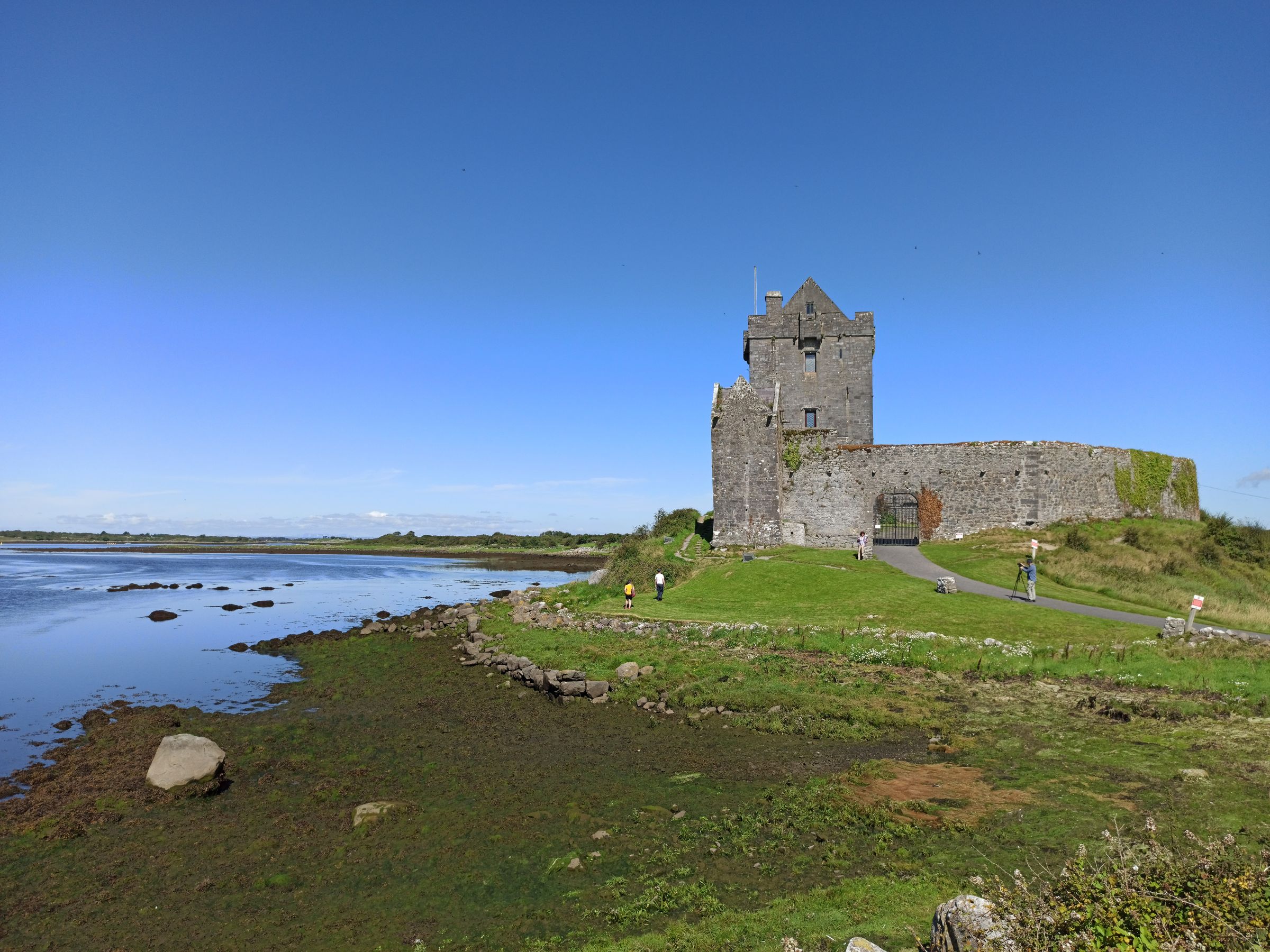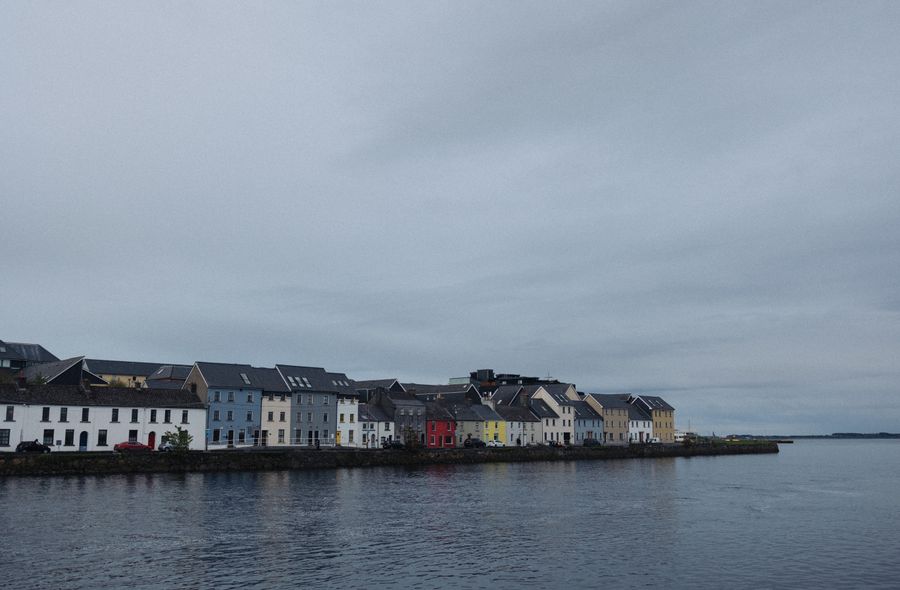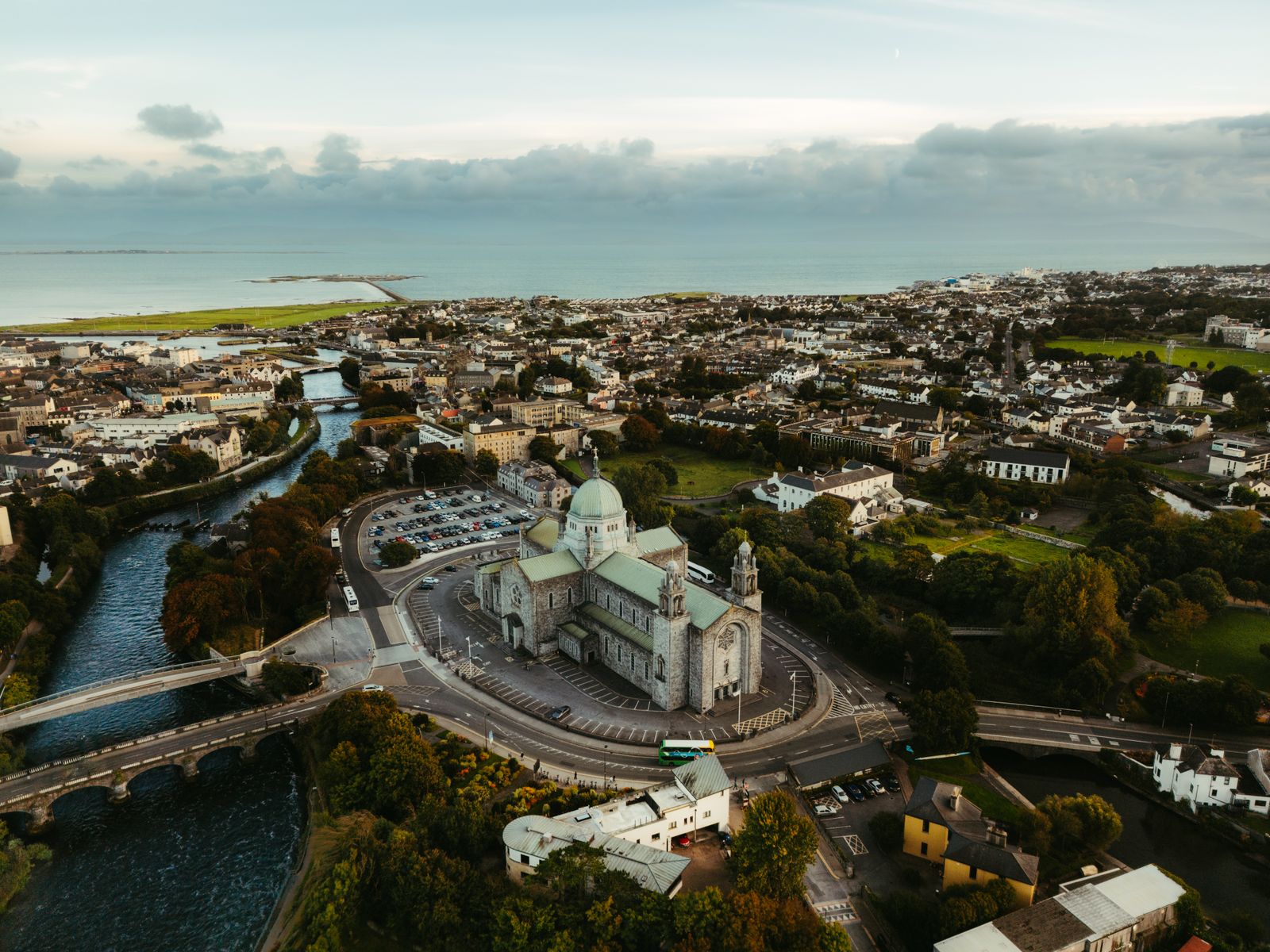
The Claddagh ring takes its name from a fishing village on the edge of Galway city, where the design is said to have begun. The elements are simple: two hands holding a heart, with a crown above. What the ring means depends partly on how it is worn.
The village it names
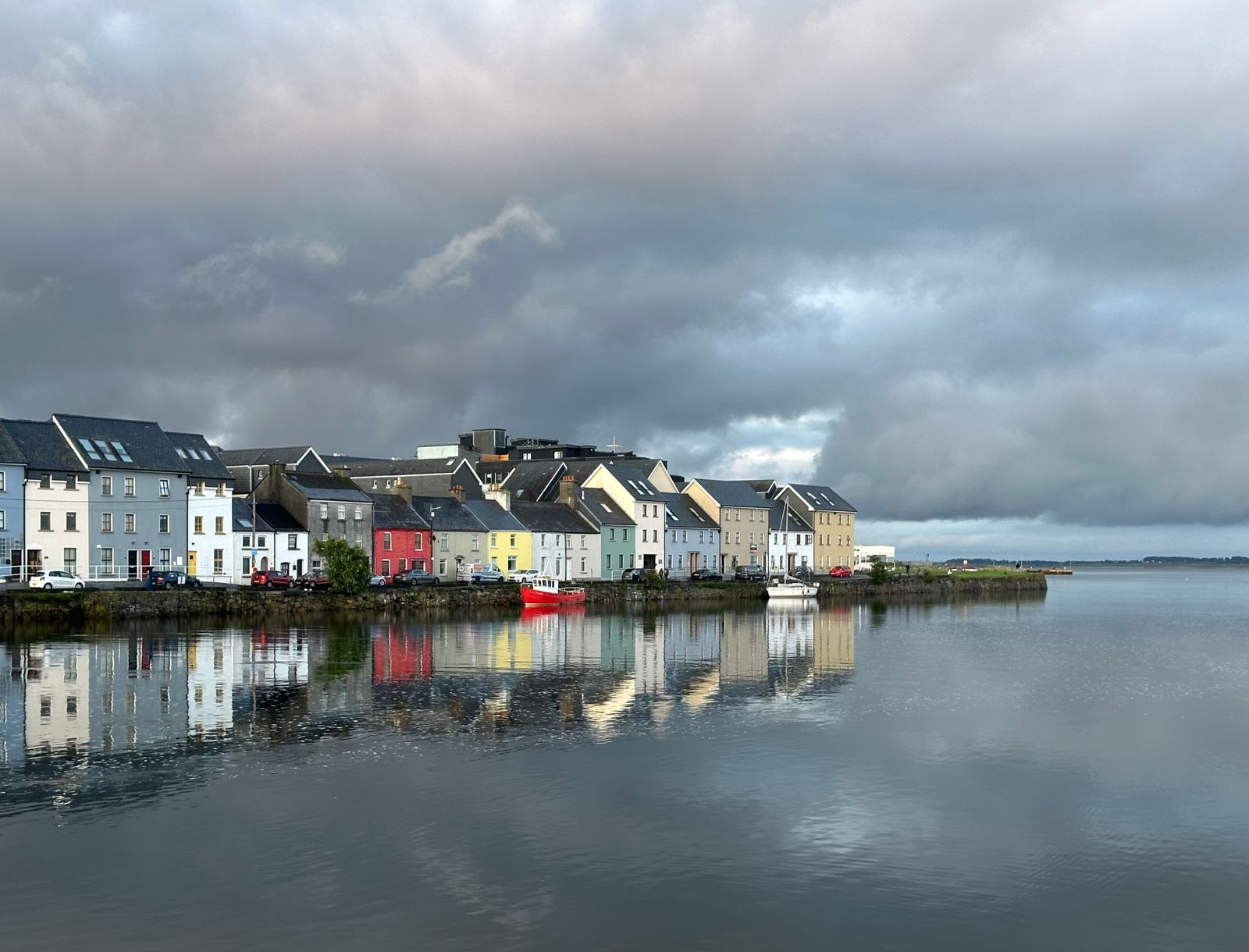
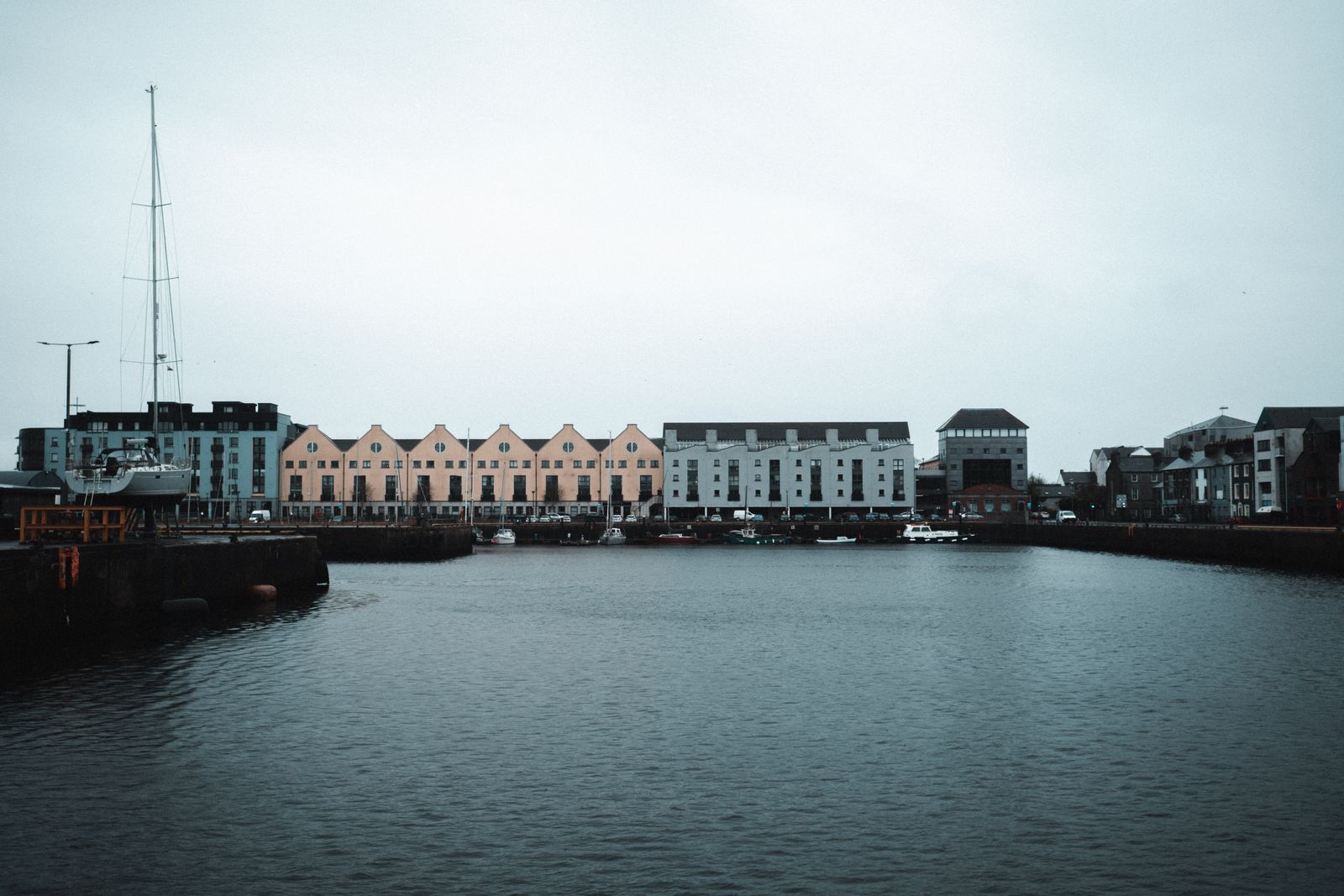
The Claddagh was a fishing settlement just outside the old walls of Galway, on the west bank where the Corrib meets the bay. It was a distinct community with its own customs, boats and seasonal rhythms, and for a long time it kept somewhat apart from the town beside it.
The name comes from the Irish for a stony shore, and the village stood on low ground by the water. Fishing families lived there in thatched houses, working the bay in currachs and small sailboats. The settlement was later absorbed into the growing city.
Little of the old village survives in its original form, but the name persists in the streets and quays on that side of Galway. The ring carries the name further than the place itself ever could, and it is the village, rather than any one workshop, that the design is named after.
Reading the design
The design has three parts. Two hands clasp a heart between them, and a crown sits above the heart. Each part is usually given a meaning: the hands for friendship, the heart for love, and the crown for loyalty. Read together they form a short statement about a relationship.
The ring is worn with the crown pointing either towards the fingertip or towards the knuckle, and the direction is held to say whether the wearer is free or committed. On the right hand with the crown out, the wearer is said to be unattached; turned in, they are spoken for.
On the left hand the same logic applies to engagement and marriage. The conventions are not fixed rules and vary between families and countries, so a ring seen in the street is not reliable evidence of anything. It is a tradition rather than a system of signals.
The ring is sold widely in Galway and beyond. If you want the story rather than the shopping, Galway City Museum holds material on the Claddagh and its people: check its current displays before travelling.
Origins and stories
Several stories account for the ring, and none can be proved. The best known tells of a Galway man taken to sea and sold into servitude, who learned the craft of goldsmithing abroad and returned to the Claddagh to find his sweetheart still waiting. The ring he made is said to have carried the hands, the heart and the crown.
Other versions move the story to different families and different centuries, and some credit a Galway goldsmith with the design. The stories disagree on names, dates and places. What they share is the link between the ring and the village, and the idea of love sustained across distance.
The ring is often described as having been made in Galway since the seventeenth century, though the earliest surviving examples are later than the stories suggest. The design as it is known today settled into its present form in the nineteenth and twentieth centuries, as the ring spread beyond the west.
Dates and claims around the ring are debated. Galway City Museum and the National Museum of Ireland are the bodies to check for documented examples and current research.
How it travelled
The ring left Galway with the people who left Galway. Emigration from the west of Ireland in the nineteenth and twentieth centuries carried it to Britain, North America and Australia, where it was worn and copied. In Irish communities abroad it became a marker of origin as much as of affection.
In the twentieth century the ring moved from a local custom to a widely recognised symbol. It appears in jewellery displays far from Ireland, and it is often given at engagements and weddings, or passed down within families. Many people wear one with no direct connection to Galway at all.
That spread has a commercial side. Rings are made in Ireland and elsewhere, in gold, silver and other metals, and quality varies. Buyers who care about where a ring was made should ask, since the design itself is not protected and any workshop can produce it.
Wearing and giving
A Claddagh ring is commonly given at an engagement, but it is also given at a wedding, on a birthday, or as a family keepsake. Some families pass one down through generations, and a ring may be reset or resized for the next wearer rather than replaced.
Because the ring carries a message, the hand and the direction matter to some wearers and not at all to others. Couples sometimes choose to wear matching rings, and visitors often buy one as a memento of a trip to Galway without attaching any particular status to it.
Sizing matters more than with many rings, since the design is wide across the band and the hands sit proud of the finger. A ring that is too loose will turn, and the direction of the crown, if it matters to the wearer, will not stay put.
Galway as a base
Galway city is the natural base for anyone following the ring back to its name. The Claddagh is a short walk from the centre, along the Corrib and past the Spanish Arch, and the city has the museums, churches and streets that fill a day or two. Buses and trains connect it to the rest of the country.
Beyond the city, Connemara lies west along the coast, with mountains, bog and lakes, and makes a quieter base for a few nights. Doolin and the Burren in County Clare are a drive south along the coast, useful for the cliffs and the limestone landscape.
Further afield, Westport in County Mayo and Sligo town are both on the western route north, and each works as a base for a wider tour. Galway city suits travellers without a car best, since it has the fullest transport links and the shortest walk to the Claddagh itself.
Buying with care
Rings are sold across Galway and elsewhere in Ireland, from small workshops to large shops, and the range of quality is wide. A buyer should look at the band, the finish of the hands and the setting of the heart, and ask what metal is used and where the piece was made.
Hallmarking is the usual safeguard. Precious metal items sold in the Republic are normally hallmarked, and the mark identifies the metal and the maker. A ring offered without a hallmark is worth questioning, particularly at a high price.
The design is old and widely copied, so a ring bought far from Ireland may be perfectly well made. What cannot be bought is the connection to the place. Anyone who wants that should visit the Claddagh itself, walk the quays, and see the ground the name comes from.