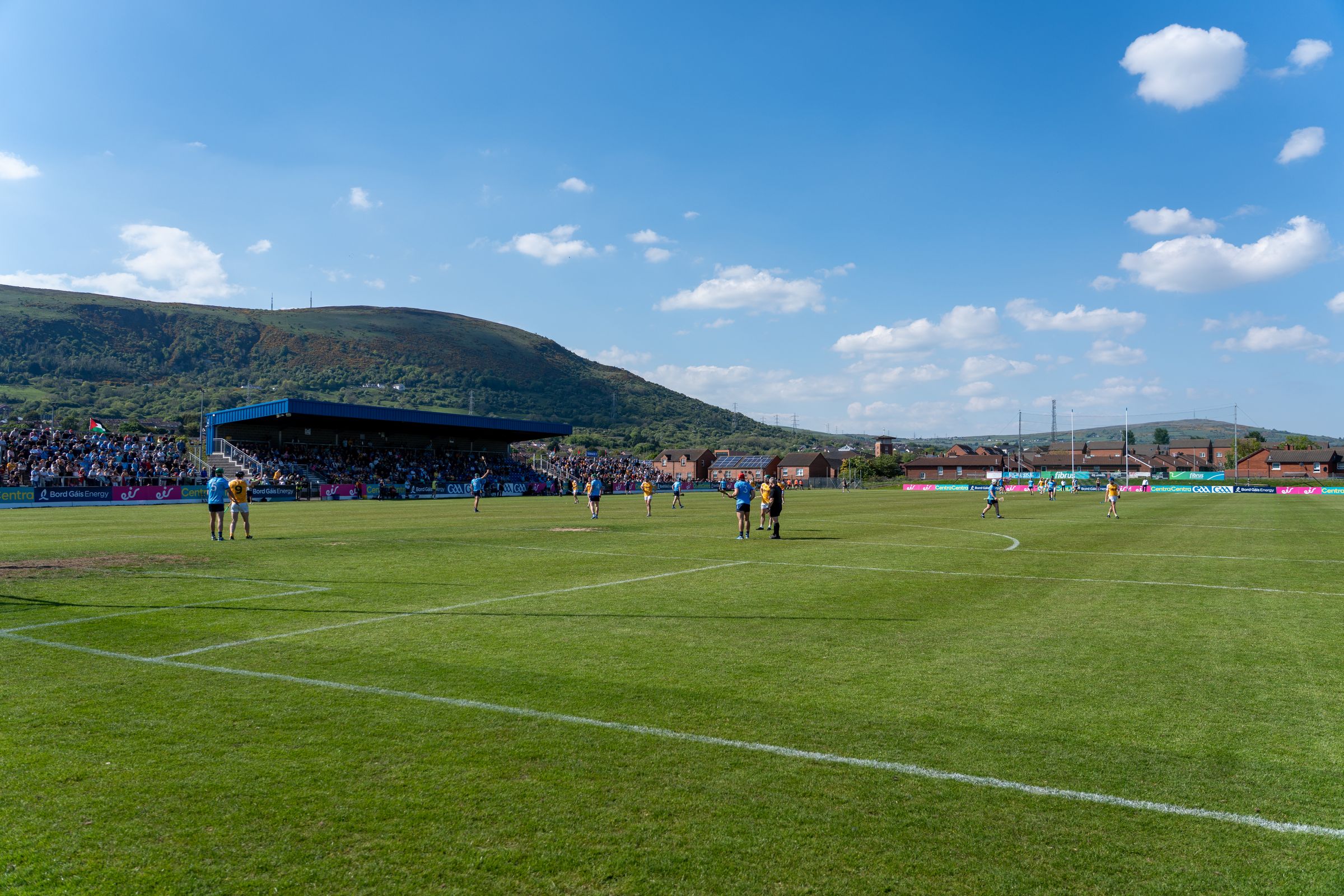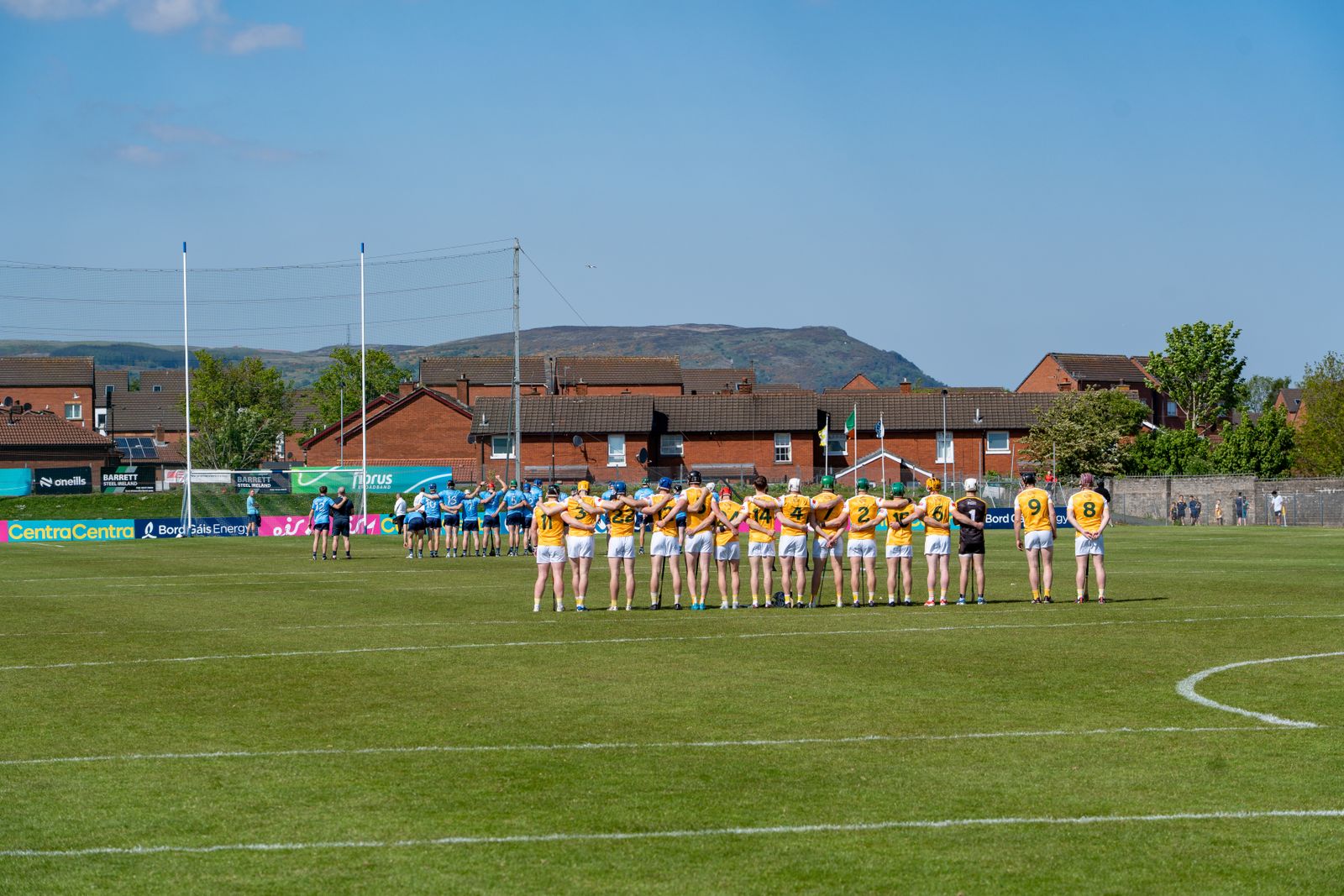
Gaelic games are the sports most closely tied to place in Ireland. Players turn out for the parish club and, at the top level, for the county, and the summer championships draw crowds to grounds in every province. Understanding the two main codes makes a match worth attending.
Two main codes
The Gaelic Athletic Association runs two main field sports. Hurling is played with a curved wooden stick called a hurley and a small leather ball, the sliotar, and is fast and aerial. Gaelic football is played with a round ball, handled and kicked, closer in shape to soccer and Australian rules.
Both are played on a rectangular grass pitch with goals at each end: a net below a crossbar, and posts above it. A goal, into the net, counts for three points. A point, over the bar, counts for one. Scores are written with the goals first, so a total of 1-14 means one goal and fourteen points.
The game is amateur. Players are not paid to play, and clubs are rooted in parishes and townlands. County players train for months around work and study, and the county jersey carries a strong local identity.
Hurling, the older game
Hurling is played fifteen a side, with a goalkeeper, six defenders, two midfielders and six forwards. The sliotar can be struck in the air or on the ground, lifted with the hurley and caught by hand. A player may carry the ball on the stick for a limited number of steps before playing it.
The game is quick and the ball travels far. A good striker can send the sliotar the length of the pitch, and catching a high ball under pressure is one of the skills spectators notice first. Helmets with face guards have been compulsory for players since 2010.
Hurling is concentrated in the south and east, with strong county traditions in Kilkenny, Tipperary, Cork, Limerick, Waterford, Galway, Clare, Wexford, Offaly and Dublin. It is also played in parts of Ulster and in Irish communities abroad.

Gaelic football
Gaelic football is played fifteen a side and is the more widely spread of the two codes. The ball can be carried in the hands for four steps, then must be played: bounced, kicked, or passed by hand or foot. A solo run, dropping the ball onto the foot and catching it again, is a common way to carry it further.
Tackling is shoulder to shoulder and the ball can be dispossessed by hand. The game is physical but disciplined, and referees manage it closely. Scores are frequent, and a match often finishes with a total in the twenties or thirties for each side.
Football is played in every county on the island, and the county championship is followed closely in places with little hurling tradition. Dublin, Kerry, Mayo, Tyrone, Donegal and Galway have strong records in the modern game.
The season and the championship
The inter-county year begins with the National Leagues in spring, played across divisions. The championship follows from late spring into summer, with provincial competitions in Leinster, Munster, Ulster and Connacht feeding into an All-Ireland series. The finals are played at Croke Park in Dublin.
The formats have changed several times in recent years, with round robin groups and qualifiers added and adjusted. Anyone planning a trip around a match should check the current structure and fixture list with the Gaelic Athletic Association, because dates and formats are set season by season.
Club championships run alongside and after the inter-county season, usually from late summer into autumn and winter. Club matches are local, often free to walk in or ticketed at the gate, and give a good sense of the game at its roots.
Where to watch
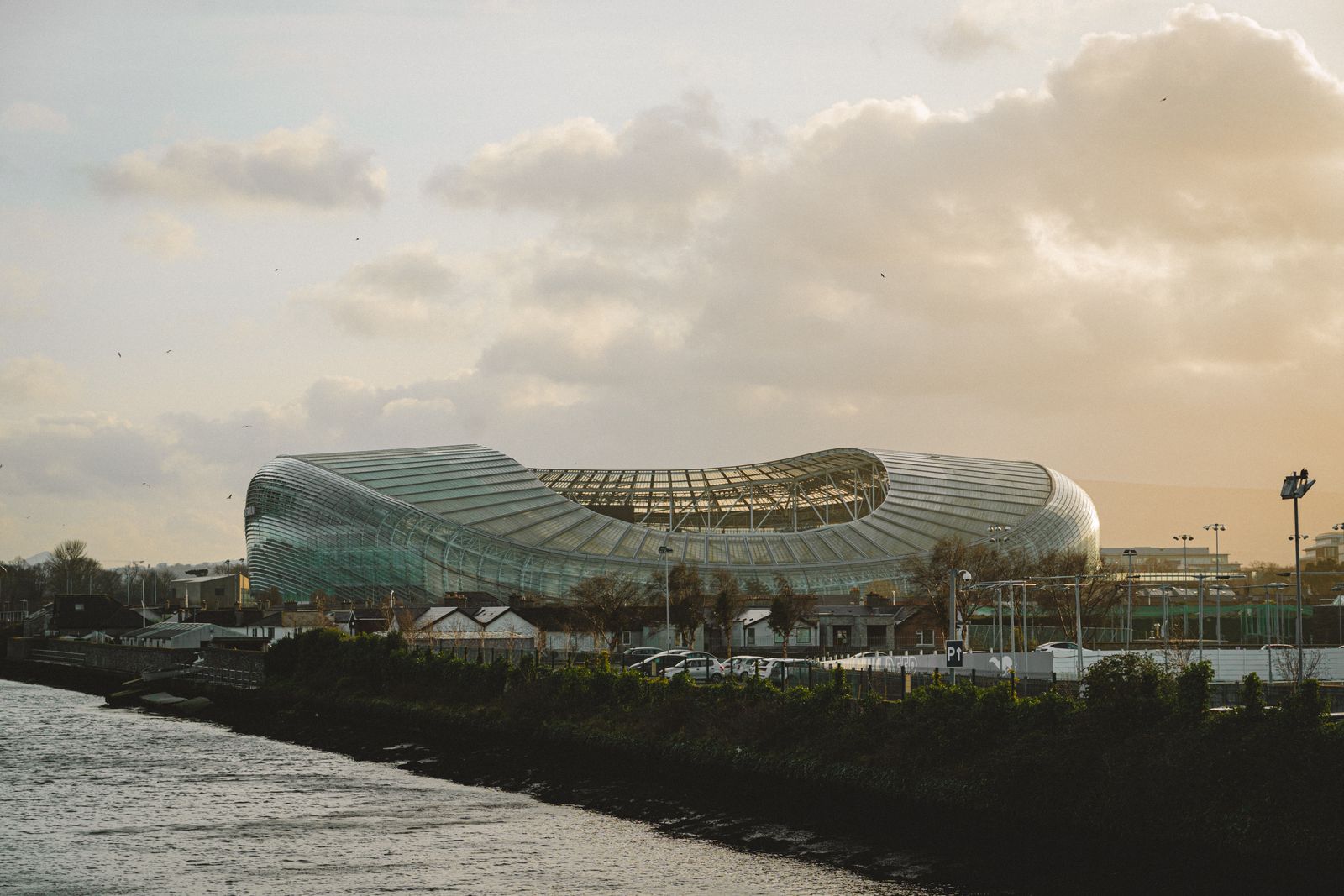
Croke Park in Dublin is the main stadium and the venue for the All-Ireland finals. It is also a conference and concert venue, and the GAA museum there covers the history of the association and the games. Matches are also played at provincial grounds in each province.
Beyond the big grounds, club pitches in every county host matches through the year. A visitor who wants to see a game without planning around the championship can look for a local club fixture, which is usually informal and easy to attend.
The main championship grounds are in the larger towns and cities, so a base in Dublin, Cork, Galway, Limerick or Kilkenny puts a visitor within reach of matches in summer. Check the fixture list and the venue before travelling.
Fixtures and venues change each season. Check the Gaelic Athletic Association website for confirmed dates, and Transport for Ireland for travel to grounds.
A few rules to follow
A few rules help a first-time spectator. The ball may be carried for four steps in football, and a player who wants to keep running must bounce or solo it. In hurling, the ball may be lifted with the hurley but not thrown.
A player who commits a foul may be shown a yellow card, and a second yellow means a red and no replacement. Black cards, used in football for certain deliberate fouls, send a player off with a substitute allowed. These are managed by the referee with linesmen and umpires.
Scoring is the part most visitors pick up quickly: a goal is worth three points and is signalled with a green flag, a point with a white flag. The scoreboard shows goals and points separately, so a total of 2-12 is twenty points.
Attending a match
Tickets for championship matches are sold through the Gaelic Athletic Association and at grounds, and demand is highest for finals and provincial deciders. Club matches are usually simpler, with a small charge at the gate or free entry.
Grounds are open-air and the weather can change during a match, so waterproofs are more useful than an umbrella. Seating is covered in the main stands at Croke Park, but terrace standing is common at smaller grounds.
Travel to a big match can be busy. Public transport is the simplest option in Dublin, with Dublin Bus and the Luas serving the area around Croke Park. For matches elsewhere, check with Iarnród Éireann or Bus Éireann, or the local operator, before setting out.