A holy well is a spring that local tradition has given to a saint. Some are in fields, some beside roads, some in church grounds. People still visit them, leave small objects and walk around them in a set direction. Many are in County Sligo and the wider west.
What a holy well is
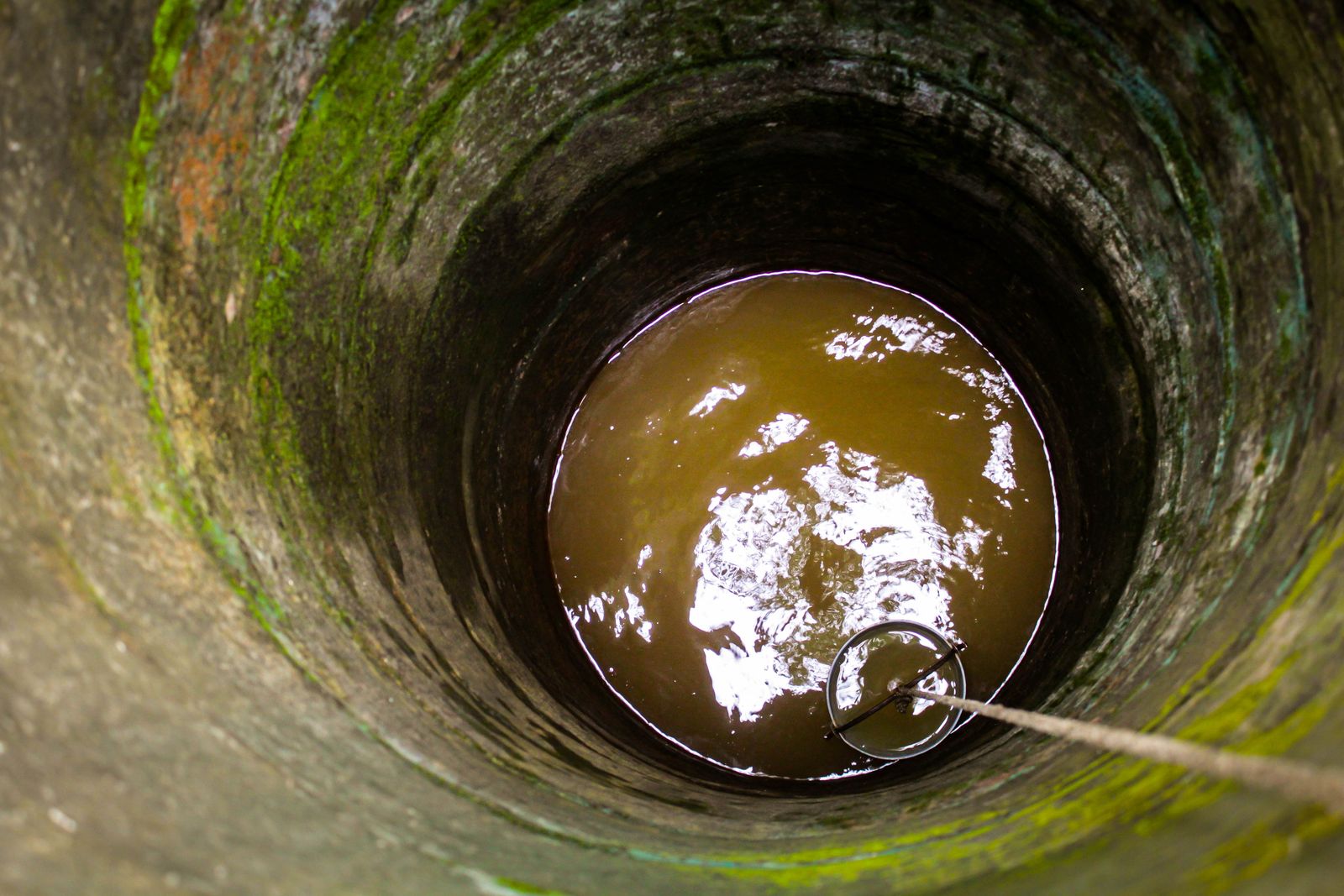
A holy well begins as a natural spring, a place where groundwater reaches the surface. In Ireland many such springs were given to a saint, often a local one whose name survives in the townland or the parish. The well itself may be a simple pool, a stone-lined basin or a small built wellhouse with a roof and a niche.
The saint is usually linked to the site by a story: a cure, a crossing, a founding of a nearby church. Some wells carry the names of well-known saints, Patrick or Brigid among them. Many more carry names known only locally, remembered in Irish and sometimes in English.
The water is not treated and is not drinking water. Visitors treat the well as a place of devotion rather than a supply. What matters at the site is the pattern of use: the prayers, the rounds, the small offerings left on a stone or a tree.
Rounds and pattern days
The usual custom is to walk around the well a set number of times while saying prayers, often moving in a clockwise direction. The number of rounds varies from place to place. Some wells have a specific sequence: a round, a prayer at a stone, another round. Local people know the form; visitors should watch and follow.
A pattern day is the saint's feast day, when people gather at the well. Some pattern days are still observed with a short outdoor Mass or a quiet gathering. Others have faded and the well is visited individually. The date belongs to the local community and to the parish, so check locally before planning a visit around one.
Offerings are part of the tradition: a stone placed on a cairn, a piece of cloth tied to a branch, a coin left on a ledge. Customs differ by county. Leaving something is optional, and removing what others have left is not appropriate.
Pattern days are set by the local parish, not by any national calendar. Ask locally or check with the parish before travelling for one.
Sligo and the west
County Sligo has a good number of wells, several linked to saints associated with the monasteries and churches of the area. The county is compact and the wells sit in farmland and along minor roads, which makes a short tour by car straightforward. Sligo town is the natural base for the county and for the roads north and west.
Nearby towns work as bases for a wider look. Sligo town covers the county and the coast towards Strandhill and Rosses Point. To the south, Tubbercurry and Ballina in County Mayo serve the wells of south Sligo and north Mayo. To the north, Bundoran and Ballyshannon in Donegal are close to the border and to wells in that county.
The wider west has wells in most parishes. Galway, Mayo, Roscommon and Leitrim all have them, often unmarked on maps. A well can be a few metres from a road or a walk across two fields. The best approach is to ask in the parish or at a local heritage group, which often keeps a record.
Many wells stand on private farmland. Ask at the nearest house before crossing a field, and leave gates as you find them.
What you will see
A well site often includes a stone surround, a small wellhouse, a niche for a statue and a patch of ground kept clear. Some have a rag tree, a whitethorn or ash hung with strips of cloth. Others have a cairn of small stones, or a slab with a carved cross or a saint's name.
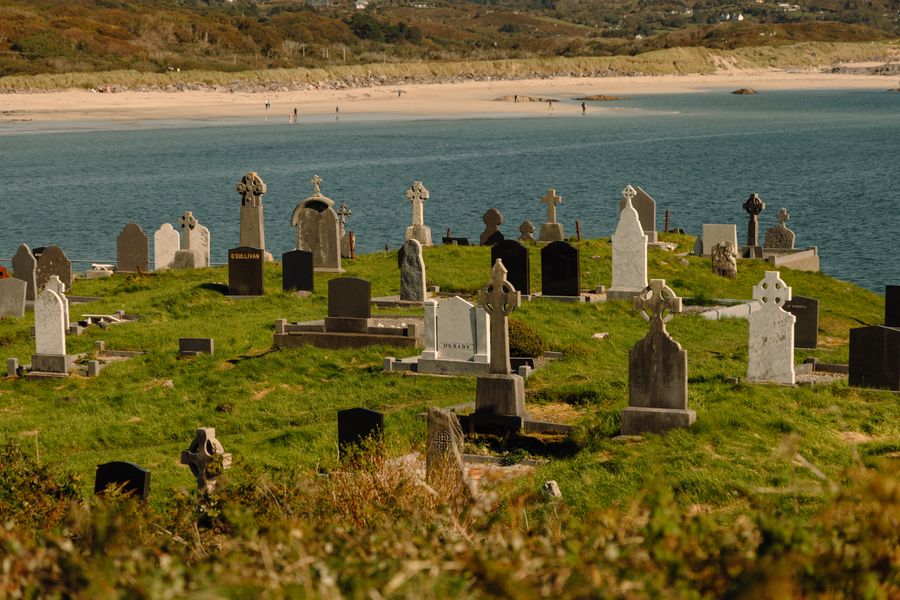
The setting is usually small and quiet. There may be a low wall, a gate and a few steps. Some wells are in the corner of a graveyard or beside a church ruin. A few are in the open with no structure at all, just a pool and a stone.
Not every well is well kept. Some are overgrown or have lost their structure. A well that looks neglected may still be visited. Treat the ground around it as a place of devotion, keep to the path and do not move stones or objects.
Care and access
Access varies. Some wells are on public ground, beside a road or in a churchyard. Many are on private land, reached by a field path or a lane. There is no general right to cross private land in the Republic, so ask first. In Northern Ireland the same applies: ask the landowner.
The ground can be wet and uneven. Wear footwear that copes with mud and grass. Do not drink the water. Keep dogs on a lead near livestock, and close gates. If a well is beside a working farm, keep to the edge of the field and avoid machinery and animals.
Leave the site as you find it. Do not remove offerings, do not add plastic or non-degradable items, and do not light candles where there is dry vegetation. If a well is on a heritage list, the local authority or the parish usually knows who maintains it.
For wells in the Republic, local heritage officers and the parish are the usual contacts. For Northern Ireland, ask the landowner and the local council.
Getting there and around
Most wells are reached by car, on minor roads and lanes. Sligo town has rail and bus connections, and a car can be hired there for the county and the wider west. Traffic drives on the left. Distances are in kilometres in the Republic and miles in Northern Ireland.
Public transport will not reach most wells. TFI Local Link buses serve rural areas, but stops are on main roads and the final approach is on foot. Transport for Ireland has a journey planner for the Republic. Timetables change, so check with the operator before relying on a service.
If a well is close to a larger site, combine the two. Sligo has Carrowmore and the cairns of the uplands, and the coast is close. The wells of the west sit near monastic sites and old churches, which often share the same saint. Allow time for lanes and for walking.
Minor roads and lanes can be narrow and unsigned. Check road conditions locally and allow more time than a map suggests.
Where to base yourself
Sligo town is the practical base for County Sligo. It has the rail and bus connections, and the roads out to the wells are short. Strandhill and Rosses Point are on the coast, within easy reach of the town and the county's inland roads.
For a wider trip, Westport in County Mayo and Galway city both work as bases for the west. Westport is close to the Mayo and south Sligo wells, and Galway city covers Connemara and the roads east into Roscommon. Bundoran and Ballyshannon in Donegal suit the northern wells.
Book accommodation in the town that matches the roads you plan to drive. A base in Sligo town keeps the county's wells within a short drive. A base further west means longer days but a wider choice of sites. The booking search on this page is set to the Sligo region.