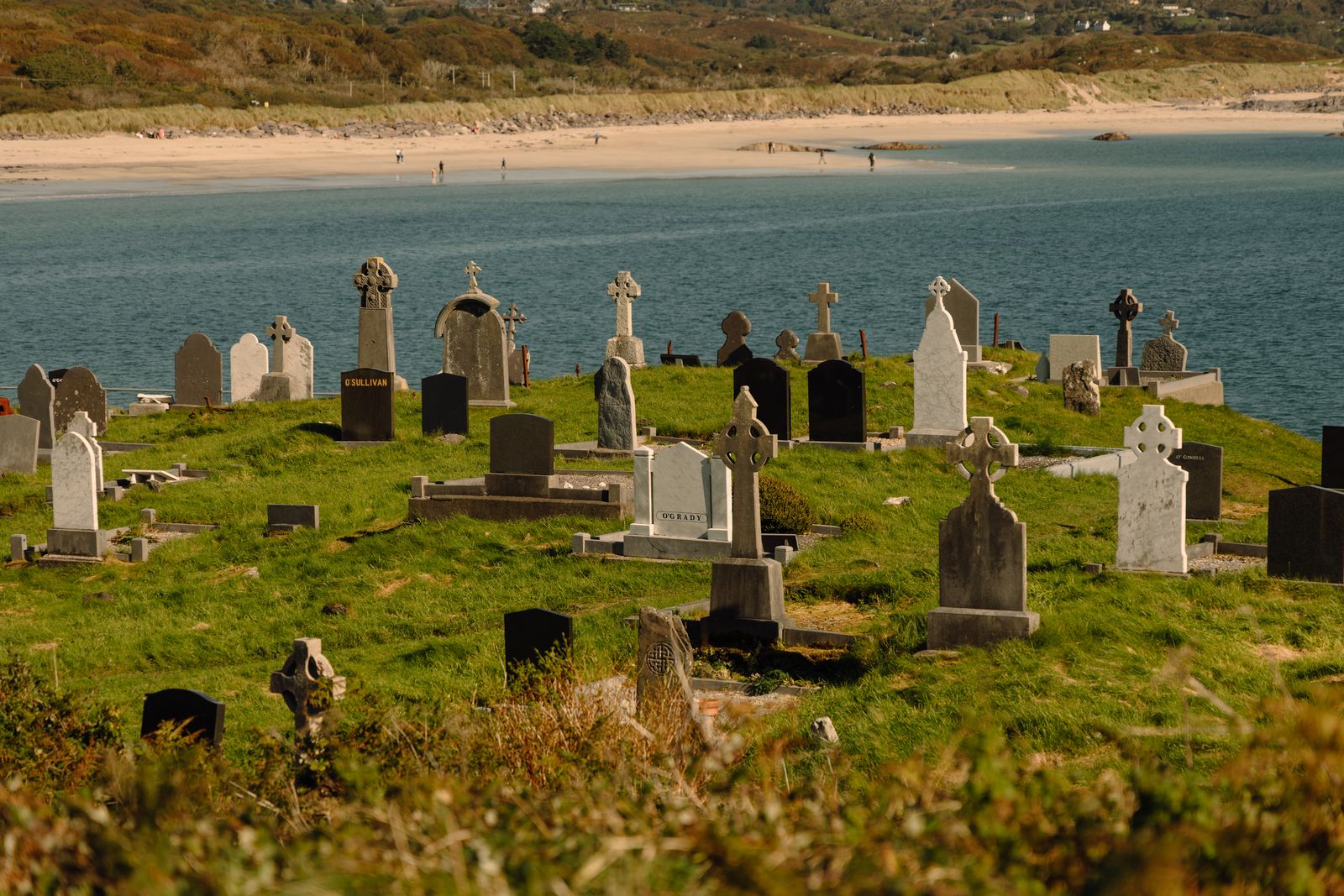
Ogham is the earliest form of writing used in Ireland, a script of short notches cut along the edge of a standing stone. Most surviving examples are in the south and west, and County Kerry holds a good number of them, several within easy reach of Dingle.
What ogham is
Ogham is a script made of short strokes cut across or beside a single line, usually the natural edge of a standing stone. The line is called the stemline. Groups of one to five notches stand for letters, and the alphabet is known as the Beith-luis-nin after its first letters.
It was designed to be cut into stone or wood, not written with ink on parchment. That is why it survives mostly on standing stones, where the marks are incised into the face or arris of the stone. The script reads along the stemline, usually from the bottom left upwards and over the top, following the edge.
The letters are arranged in four groups of five, with a few extra characters for diphthongs. Most inscriptions are short: a name, sometimes a second name, and a word marking a relationship or a tribal group. They are memorial or boundary marks rather than long texts.
Reading a stone
A typical inscription names a person in the genitive case, followed by a word meaning son, descendant or tribe. A common formula is a name followed by MAQI, the older form of the word for son. Others use AVI, meaning descendant, or MUCOI, meaning people or tribe.
The names are often in an early form of Irish, older than the language of the medieval manuscripts. That makes the stones valuable to linguists as well as historians, since they preserve personal names and tribal names that appear nowhere else.
Reading a stone in the field takes patience. The notches are shallow, weathered, and often lichen-covered. Raking light, early or late in the day, shows them best. Do not chalk or rub a stone: it damages the surface and is not permitted on monuments in state care.
Many ogham stones stand in fields or churchyards on private land. Ask at the nearest house before crossing a field, and check access with the Office of Public Works for sites in state care.
Ogham in Kerry
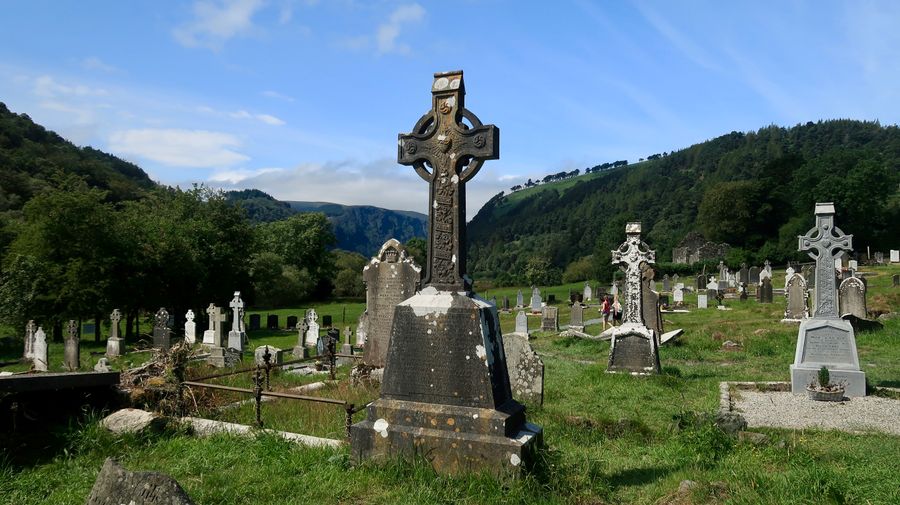
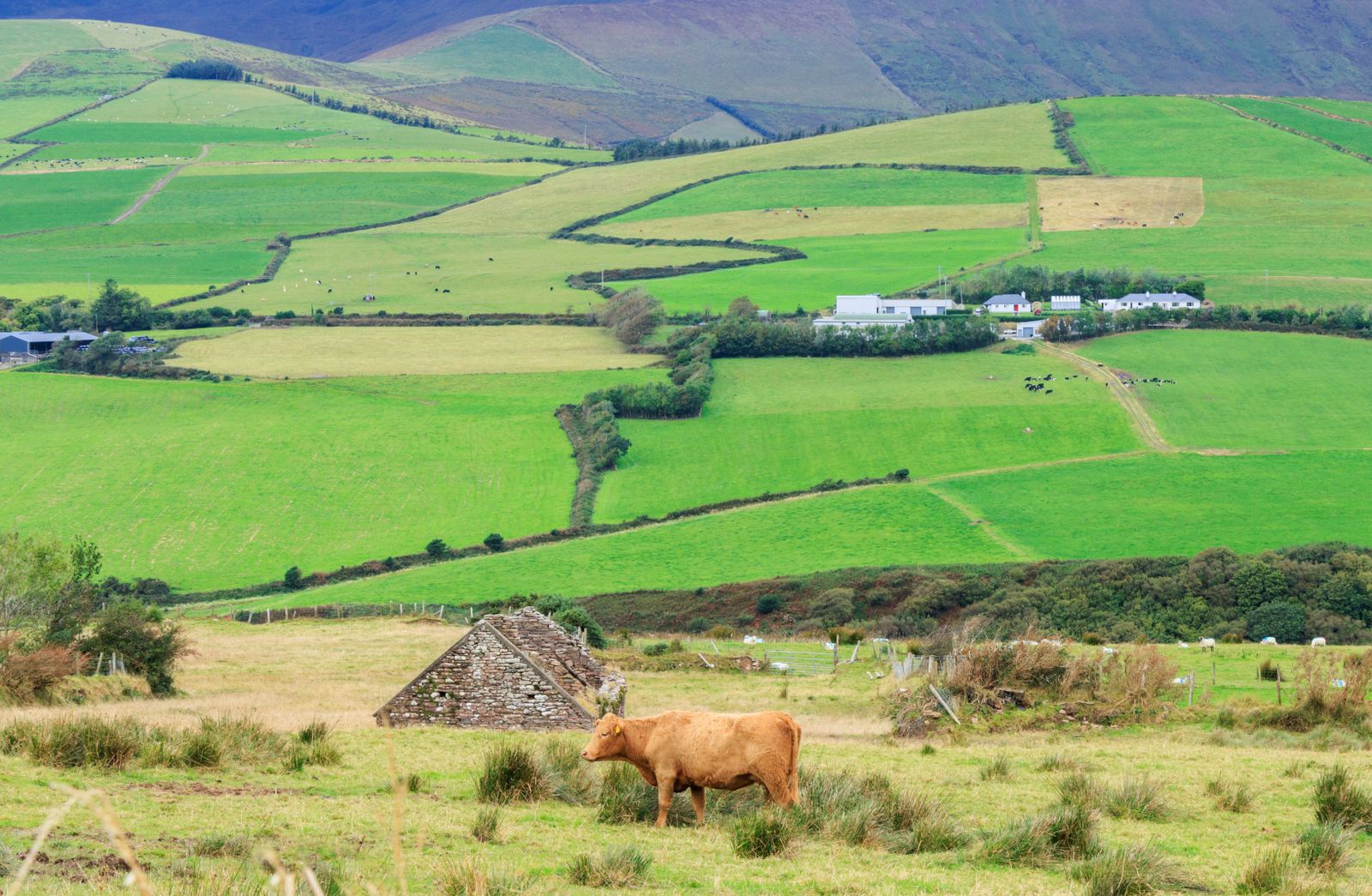
Kerry holds a cluster of ogham stones, many of them in the west of the county. Several are in churchyards or burial grounds, reused as grave markers long after the script fell out of use. Others stand in fields, sometimes built into walls.
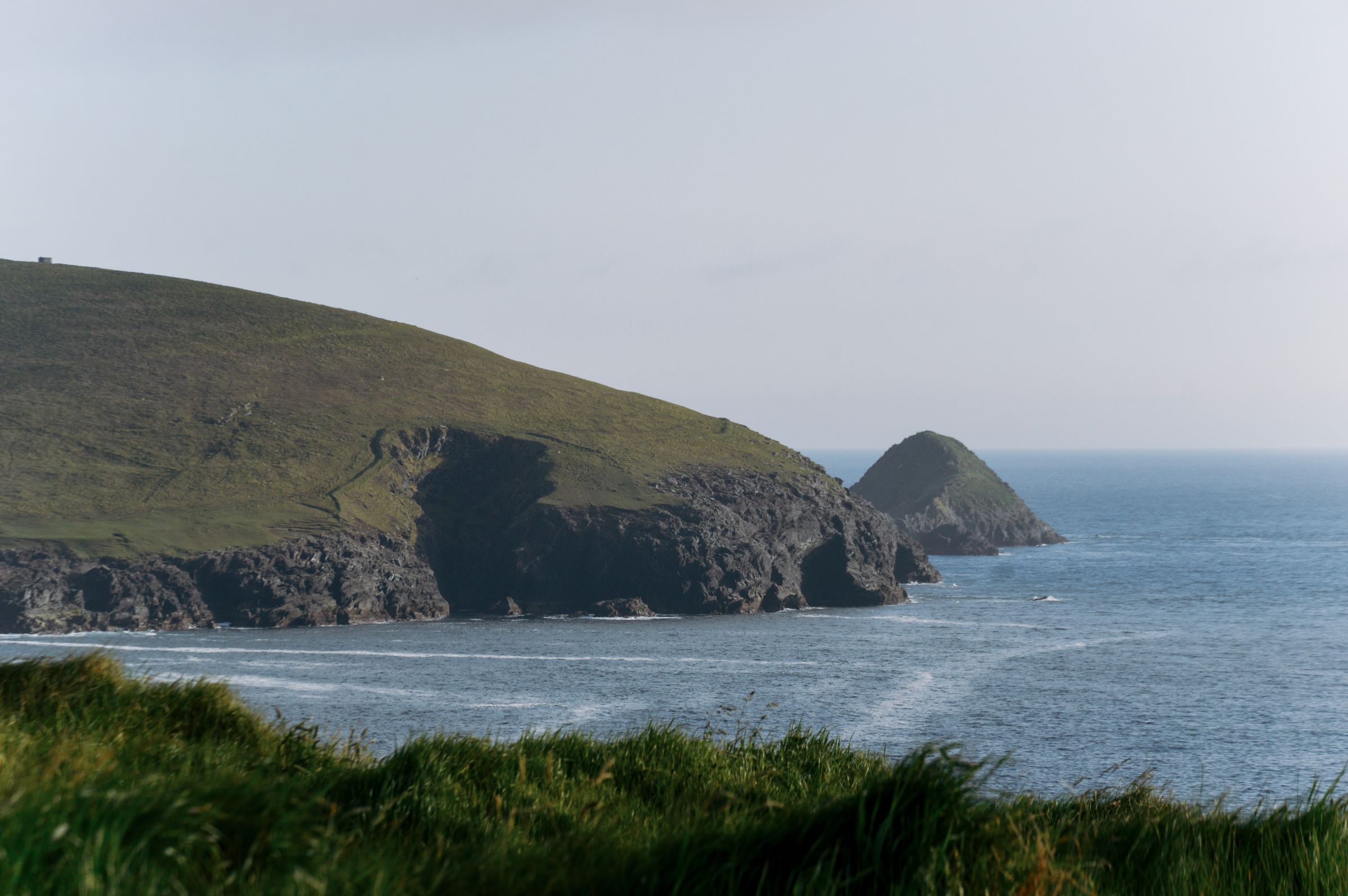
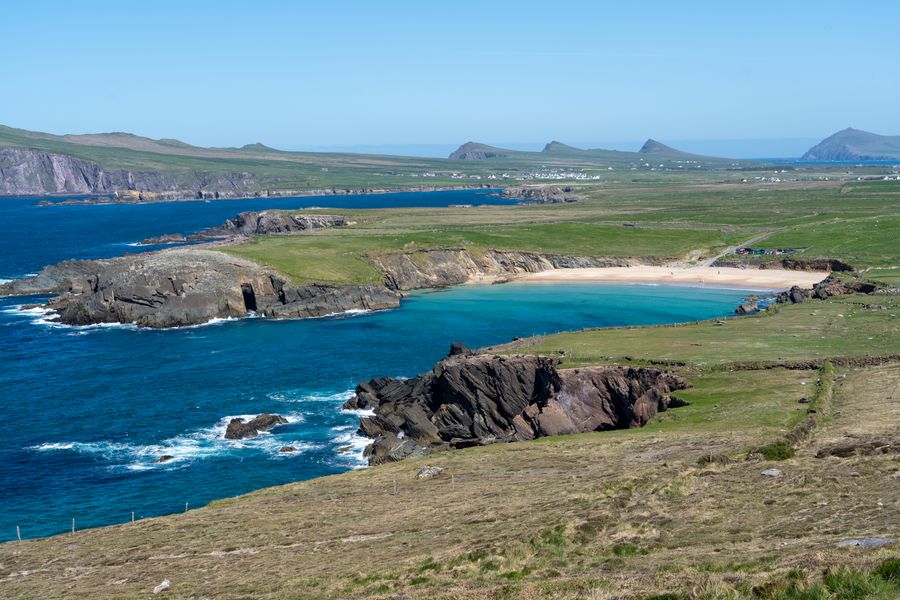
The Dingle Peninsula has a concentration of early Christian and medieval sites, and ogham stones are part of that landscape. Some are in the care of the Office of Public Works and can be visited; others are on private land and visible only with the landowner's agreement.
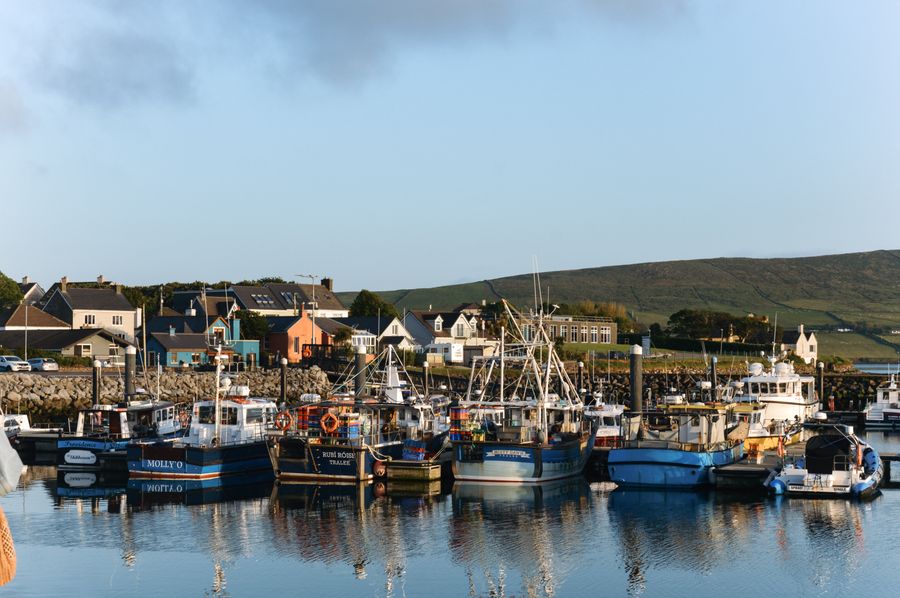
The nearest towns for a base are Dingle itself, and Tralee to the east. Dingle is the handier base for the western sites, while Tralee suits anyone touring the wider county. Both have accommodation and are linked by road and by bus services that change with the season.
When and why
Most ogham inscriptions in Ireland are dated to roughly the fifth and sixth centuries, the centuries around the arrival of Christianity. Some may be earlier, and the script may have been used on wood before it was cut in stone.
The purpose was commemoration. A stone marked a grave, a boundary or a claim to land, and named the person or group it belonged to. Many stand near early church sites, which suggests a link between the script and the first Christian communities.
The tradition faded as Latin script and vellum manuscripts took over. Ogham was never lost entirely: it appears in later manuscripts and in antiquarian drawings, and it is still used today as a decorative alphabet on jewellery and signs, often without regard to the original spelling.
Legend and lore
Medieval Irish tradition attributed the invention of ogham to Ogma, a figure of the Tuatha Dé Danann, and the script appears in tales as a form of secret communication. The word ogham is used in the sagas for carved messages on staves.
One story tells of a carved rod used to warn a hero off a road. Another describes ogham cut on a stone to mark a grave. These are literary inventions, but they show that the script was remembered long after it stopped being cut.
The word is also linked in folklore to the god Ogma and to the idea of a tree alphabet, with letters named after trees. That tree association is real in the letter names, though the idea that each letter stood for a tree in a calendar is a later and less certain reading.
Seeing them well
Ogham stones are modest monuments. They are usually under two metres tall, often less, and the inscriptions are small. A visit takes minutes rather than hours, so plan several sites into a day rather than one.
Bring a torch for stones in churchyards or under cover, and a notebook for recording what you see. Do not touch the carved surface more than necessary, and never use chalk, paint or rubbing wax on a monument.
The weather matters. Wet stone shows the notches less clearly than dry stone, and low sun is best. Spring and autumn give good light without the summer crowds, and the roads on the peninsula are quieter outside July and August.
Practical points
Access varies. Sites in state care are generally open and free to walk, while stones in fields or church grounds depend on the landowner or the local church. Some are signposted from the road; others are not, and a map and a local enquiry help.
The Ordnance Survey of Ireland maps mark many archaeological sites, and the National Monuments Service records each one. Check the record before setting out, since a stone marked on a map may be hard to find on the ground.
Distances on the peninsula are short but the roads are narrow and winding. Allow more time than the map suggests, and drive on the left. Bus services on the peninsula are limited and seasonal, so check with the operator before relying on them.