RegisterFind a stay
Ireland's Heritage Towns for a Slow Day of Exploring

Culture · Westport

Ireland'sHeritageTownsforaSlowDayofExploring

Six compact Irish towns where the museum, the cathedral and the good coffee are all within a ten-minute walk of each other.

Ireland's Heritage Towns for a Slow Day of Exploring
Region
Westport
County
Mayo
Topic
Culture
Reading time
3 min
In this article
4 sections

Westport is laid out in the Georgian manner, with a mall lined by lime trees and the Carrowbeg river running under low stone bridges. Start at Westport House, the 18th-century mansion on the estate north of town, then walk back in along the Quay road, which takes about 25 minutes at an easy pace. The town's streets are largely independent shops rather than chains, and Saturday mornings are busiest. The Greenway cycle path to Achill begins at the old station, and bike hire is available in town.

Westport, County Mayo: the town that rewards an early start

For a slow day, I would book two nights rather than one, because Westport works best when you can walk up Croagh Patrick's lower slopes in the morning and still have the afternoon free. Buses and trains serve Westport station on the Dublin to Westport line, roughly three and a half hours from Heuston. May, June and September give the best balance of daylight and quiet. Skip the town in the middle of August if crowds bother you.

Kinsale, County Cork: harbour streets and a short walk to Charles Fort

Kinsale's centre is a tight knot of steep lanes above the Bandon river, with the 17th-century courthouse, St Multose Church and the harbour all within a few minutes of each other. The Scilly Walk out to Charles Fort is a marked coastal path of about 2.5 kilometres each way, taking around 40 minutes at a stroll, and the fort itself is a star-shaped Williamite structure with views back over the town. The walk is exposed, so bring a jacket even in July.

Kinsale is 25 kilometres south of Cork city, about 30 minutes by car, and buses run from Cork's Parnell Place station. It is a good base for the Wild Atlantic Way's southern start and for day trips to Timoleague Abbey and the Old Head. Book early for summer weekends, as the town's guesthouses fill quickly. October is a fine month here, with quieter streets and still-mild weather. I would skip the mid-summer regatta weekend unless you enjoy crowds.

Drogheda and Trim, County Meath: two towns, one slow day

Drogheda sits on the Boyne, 50 kilometres north of Dublin, and the train from Connolly takes around 35 minutes. The town's high points are the two St Peter's churches, one of which holds the shrine of St Oliver Plunkett, and the 13th-century Laurence's Gate, a surviving barbican on the old wall. From Drogheda, a short drive or local bus reaches the Battle of the Boyne site at Oldbridge and the passage tombs at Newgrange, which need a booked tour from the Brú na Bóinne visitor centre.

Trim, 40 minutes further west, is quieter and has the largest Anglo-Norman castle in Ireland, sitting directly on the Boyne with a riverside walk around it. The town's narrow streets hold a handful of good cafés and the crumbling Yellow Steeple. I would base in Trim for the night and use Drogheda as a stop on the way, rather than trying to do both in one afternoon. Book Newgrange tickets well ahead in summer, as slots sell out days in advance.

Cashel and Kilkenny: the inland route

The Rock of Cashel rises abruptly from the Tipperary plain, and the walk up from the town takes about ten minutes. The complex holds a round tower, a 12th-century chapel and a cathedral, and the view across to the Galtee Mountains on a clear day is the reason to come. Cashel itself is a single-street town with a heritage centre and a few pubs, so it works as a half-day rather than a full one. The town is 75 minutes by car from Kilkenny and around two hours from Dublin.

Kilkenny is the stronger base: a medieval city with the 12th-century castle, St Canice's Cathedral and its round tower, and the surviving merchant houses of the medieval mile along High Street. The train from Dublin Heuston takes about 90 minutes. I would book a hotel in Kilkenny for two nights and drive to Cashel early one morning, returning via the Rock of Dunamase. June is the finest month here for light, though the Kilkenny Arts Festival in August fills every room.
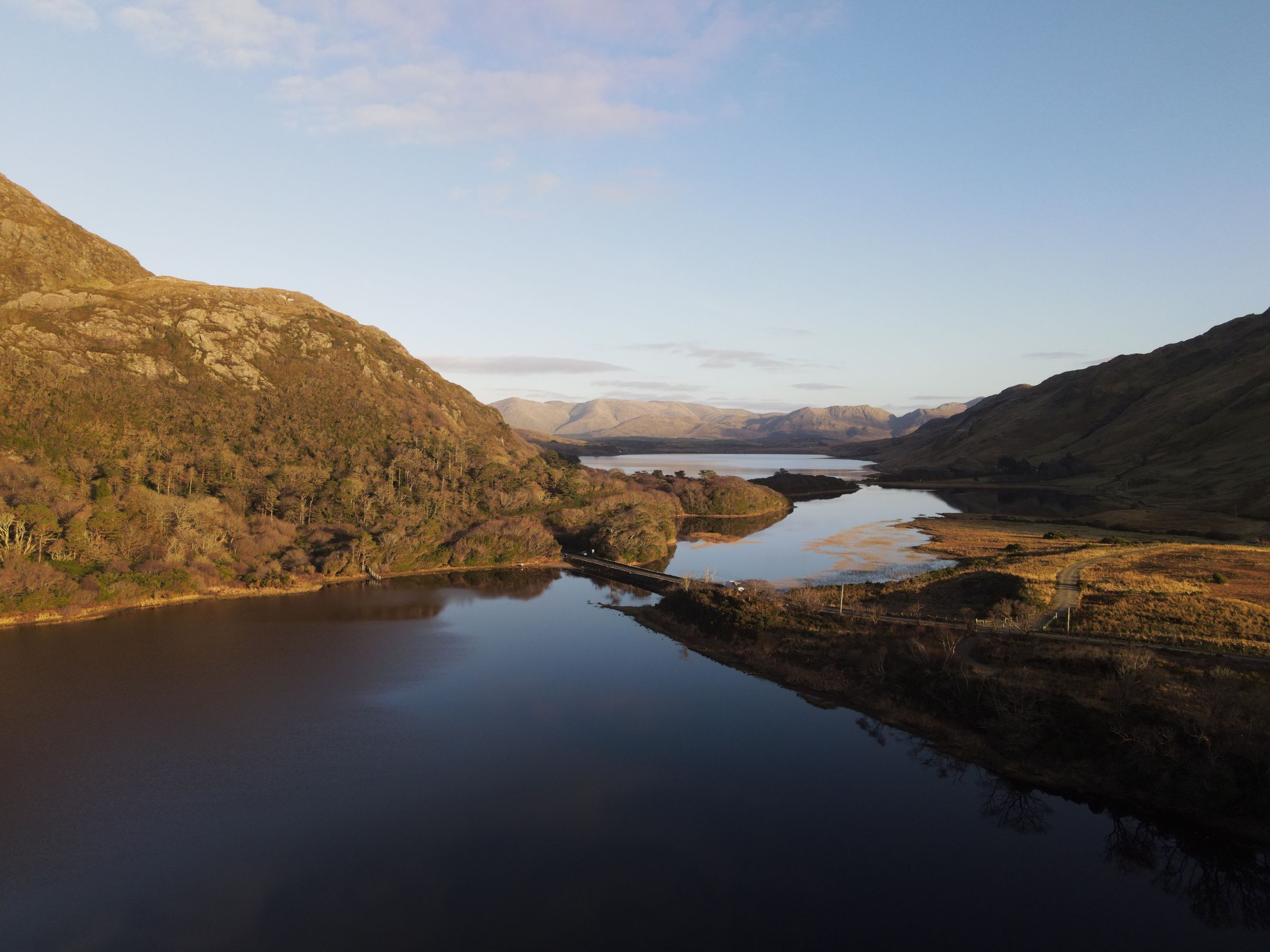
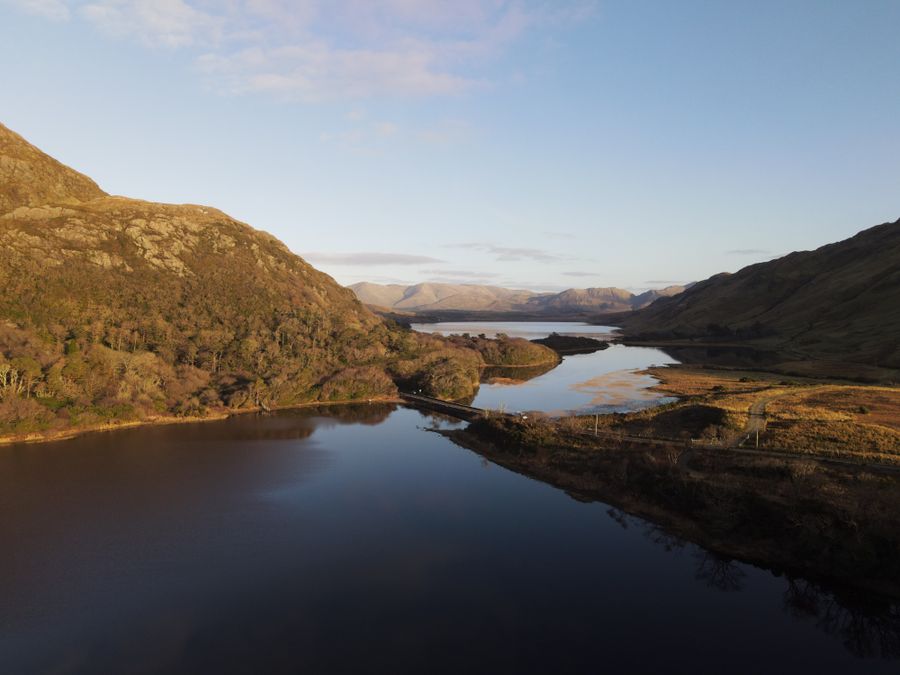
Lake and mountain landscape in Connemara, Ireland, showcasing natural beauty

Six compact Irish towns where the museum, the cathedral and the good coffee are all…

Westport, County Mayo

Eolas · Good to knowIn this article.

01

Westport, County Mayo: the town that rewards an early start

For a slow day, I would book two nights rather than one, because Westport works best when you can walk up Croagh Patrick's lower slopes in the morning and…

02

Kinsale, County Cork: harbour streets and a short walk to Charles Fort

Kinsale's centre is a tight knot of steep lanes above the Bandon river, with the 17th-century courthouse, St Multose Church and the harbour all within a few…

03

Drogheda and Trim, County Meath: two towns, one slow day

Drogheda sits on the Boyne, 50 kilometres north of Dublin, and the train from Connolly takes around 35 minutes.

04

Cashel and Kilkenny: the inland route

The Rock of Cashel rises abruptly from the Tipperary plain, and the walk up from the town takes about ten minutes.

Ceisteanna · QuestionsAsked often.

How many heritage towns can I reasonably see in one day? +

One, or at most two very close together. Cashel and Kilkenny pair well because they are 75 minutes apart by car, but trying to add a third town means you will spend the day driving. Choose a base and walk it properly.

Do I need a car to explore these towns? +

Not for Westport, Kinsale, Drogheda or Kilkenny, all of which have train or bus connections from Dublin or Cork. A car helps for Cashel, Trim and the Boyne Valley sites, where public transport is thin and timetables are limited.

When is the best month for a slow heritage day in Ireland? +

May, June and September offer long daylight, manageable crowds and generally settled weather. July and August are busiest at Newgrange, the Rock of Cashel and Kinsale, and accommodation in Kilkenny during festival week is hard to find.

Are these towns walkable with luggage? +

Yes in most cases. Westport, Kilkenny and Kinsale have compact centres where stations or bus stops are within 10 to 15 minutes of the main streets. Trim and Cashel are small enough to cross on foot, though the walk up to the Rock is steep.

How far ahead should I book a hotel in Kilkenny or Westport? +

For summer weekends, six to eight weeks is sensible, and longer for festival dates. Outside July and August, a week or two usually secures a room, though Westport fills for climbing weekends on Croagh Patrick throughout the year.

What should I skip if I only have a short trip? +

Skip Cashel as an overnight stop unless you are passing through Tipperary, as the town itself is small. Likewise, Drogheda works better as a morning stop en route to the Boyne Valley than as a base for several nights.

Are any of these towns good for a rainy day? +

Kilkenny and Drogheda are best in wet weather, with the castle, two cathedrals and the High Street shops all indoors. Kinsale and Westport are more exposed, though both have enough cafés and pubs to sit out a shower.

Which town would you book first for a first visit to Ireland? +

Kilkenny, because it combines a medieval core, a castle, a cathedral tower and good rail links from Dublin in around 90 minutes. Westport is the better second choice once you have seen the east and want the west coast.

Keep exploring.

Related articles

Where to stay

Hotels to consider

See all hotels

Related articles

Where to stay

Hotels to consider

See all hotels
Lóistín · Where to stayWhere to stay in Westport.282 stays in the Westport region, each with its own page: photos, location and guest reviews.
Hotels in Westport

Check before you go: Fáilte Ireland, Comhaltas Ceoltóirí Éireann, Transport for Ireland.