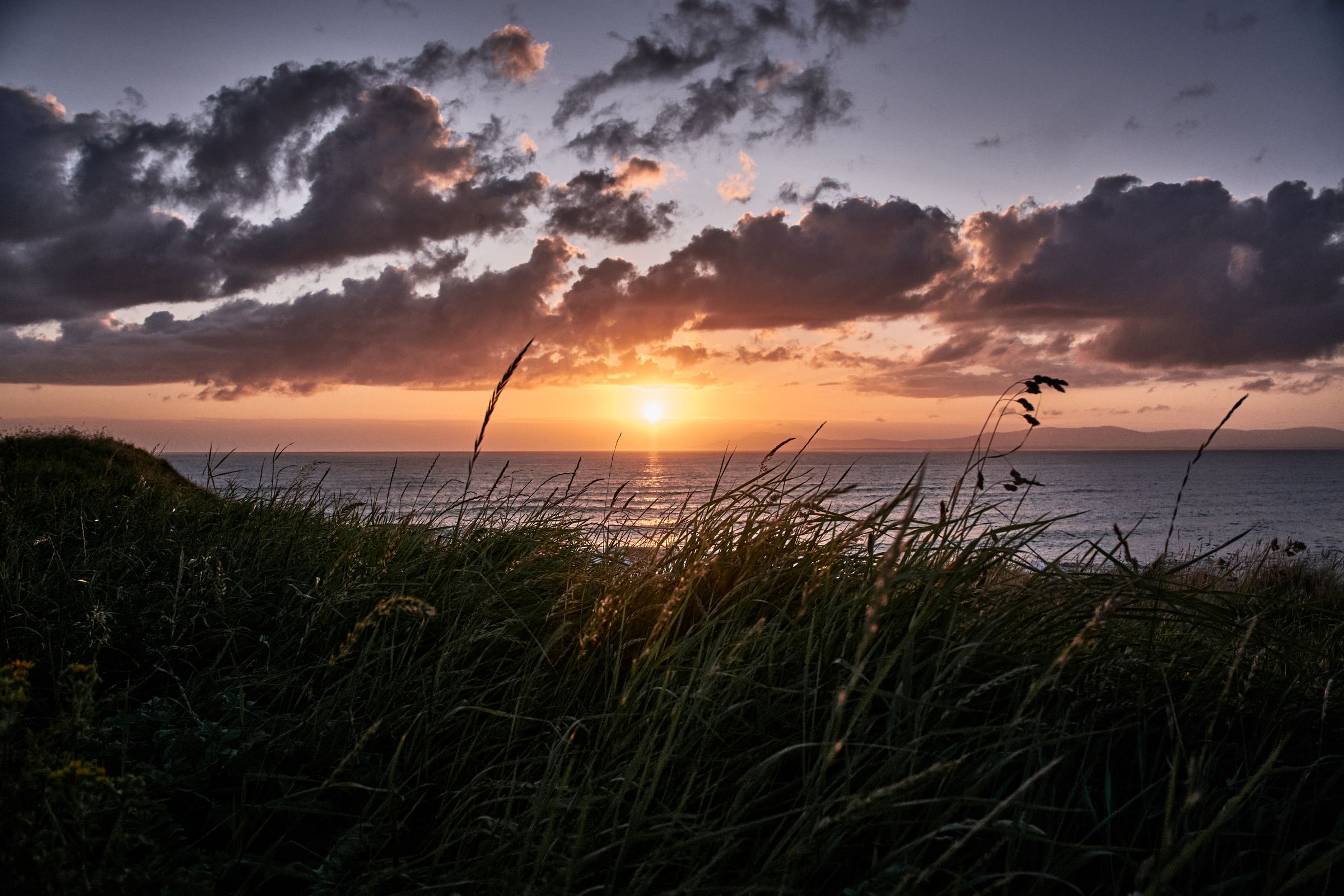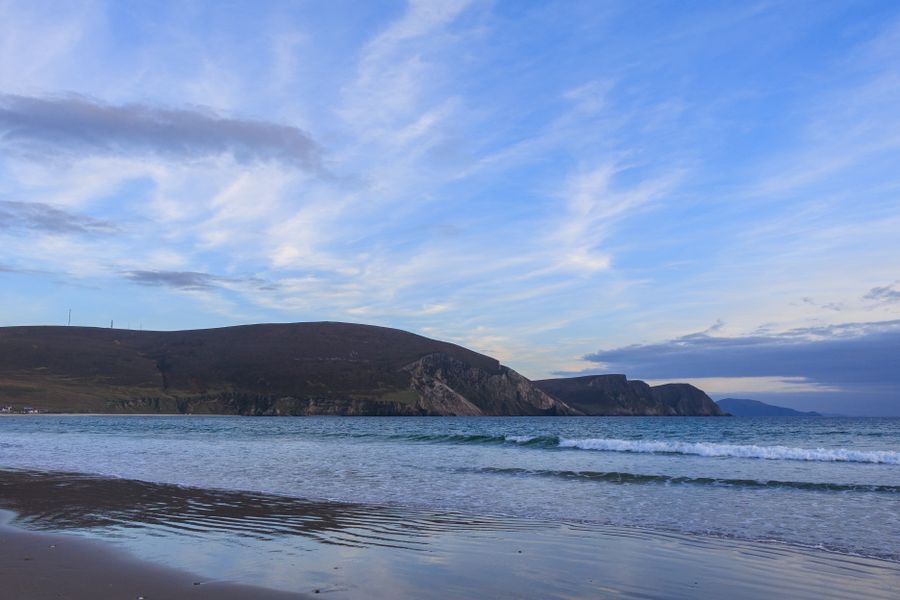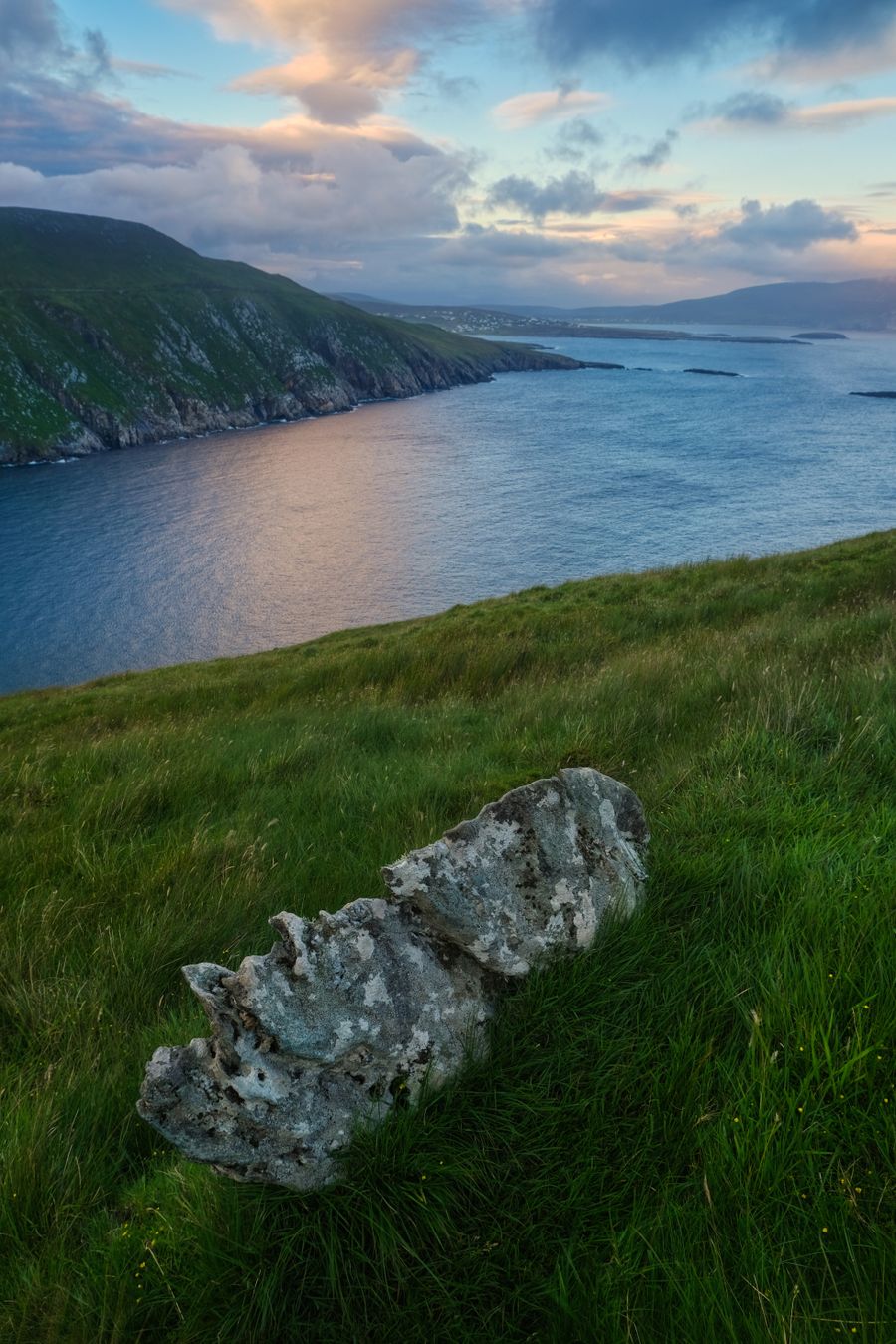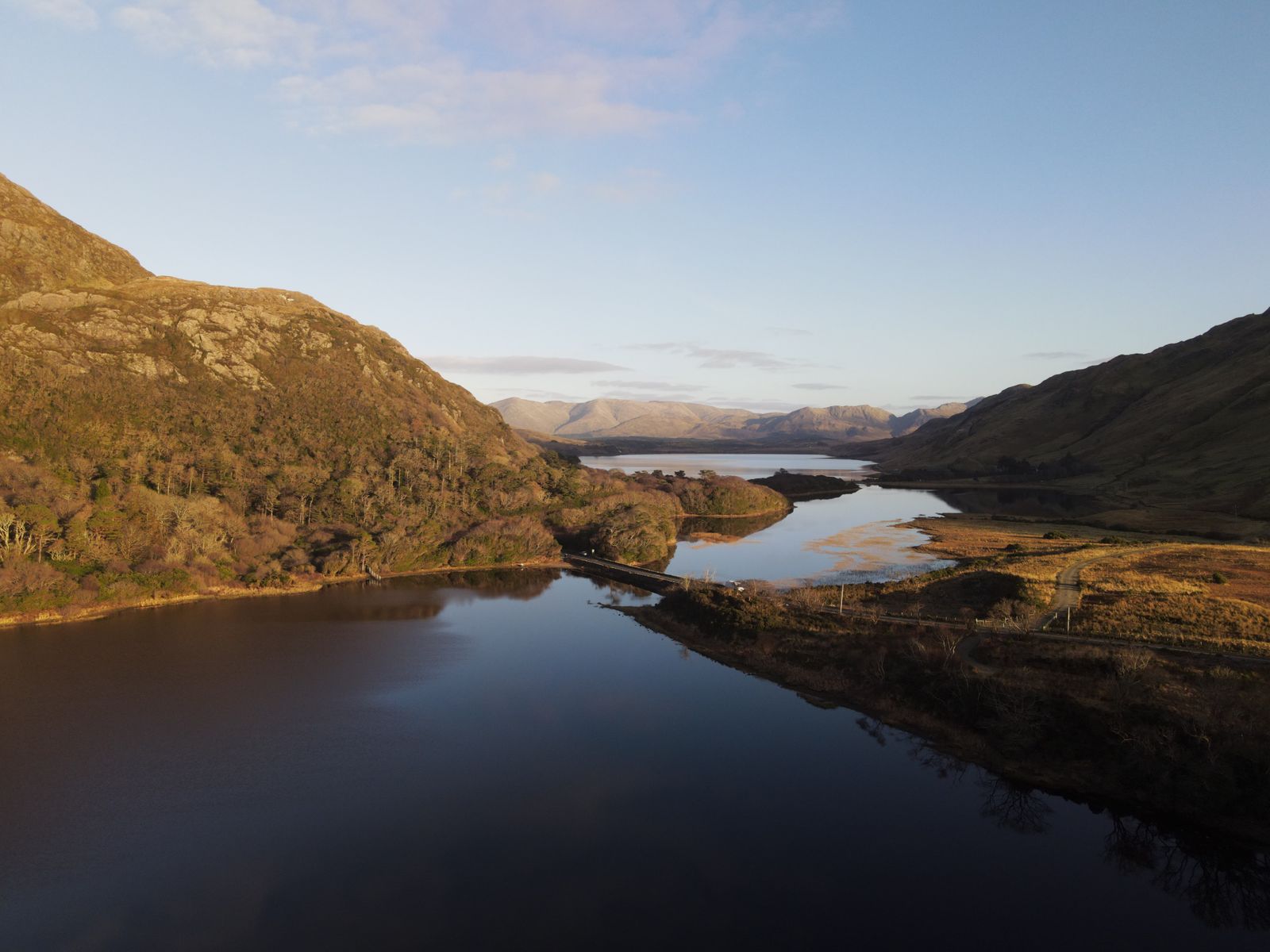
In late June the sun sets very late in Ireland and the sky stays bright long after that. Daylight in Dublin runs to about 17 hours around the solstice. The long evenings change what a day out looks like, and they are the reason many people plan a summer trip to the west.
How the light works
Ireland sits far enough north that summer days stretch well beyond the hours most visitors expect. Around the June solstice, daylight in Dublin runs to about 17 hours, against about 7.5 hours in late December. The further north you go, the longer the evening, so a summer night in Donegal is brighter than one in Cork.
The sun does not drop far below the horizon at this latitude, so the sky keeps a glow after sunset. In the north and west, around the solstice, the sky never becomes fully dark. This is not the midnight sun of the Arctic Circle, but the nights are short and the twilight is long.
Met Éireann publishes sunrise and sunset times for its weather stations, and these are the figures to check for a particular date and place. Times shift by a minute or two each day, so the difference between early June and early July is noticeable by the end of a trip.
What the extra light allows
The obvious use is a late walk. A coastal path or a forest track that would be a rush before dark in winter can be taken at an easy pace in June. Headlands and beaches in the west hold the light longest, and an evening walk after dinner becomes the main event of the day rather than an afterthought.
Drives are easier too. A scenic route taken in the late afternoon and early evening has softer light and thinner traffic than the same road at midday. On the Wild Atlantic Way, the hours before sunset are often the best of the day for pulling in at a viewpoint and staying a while.
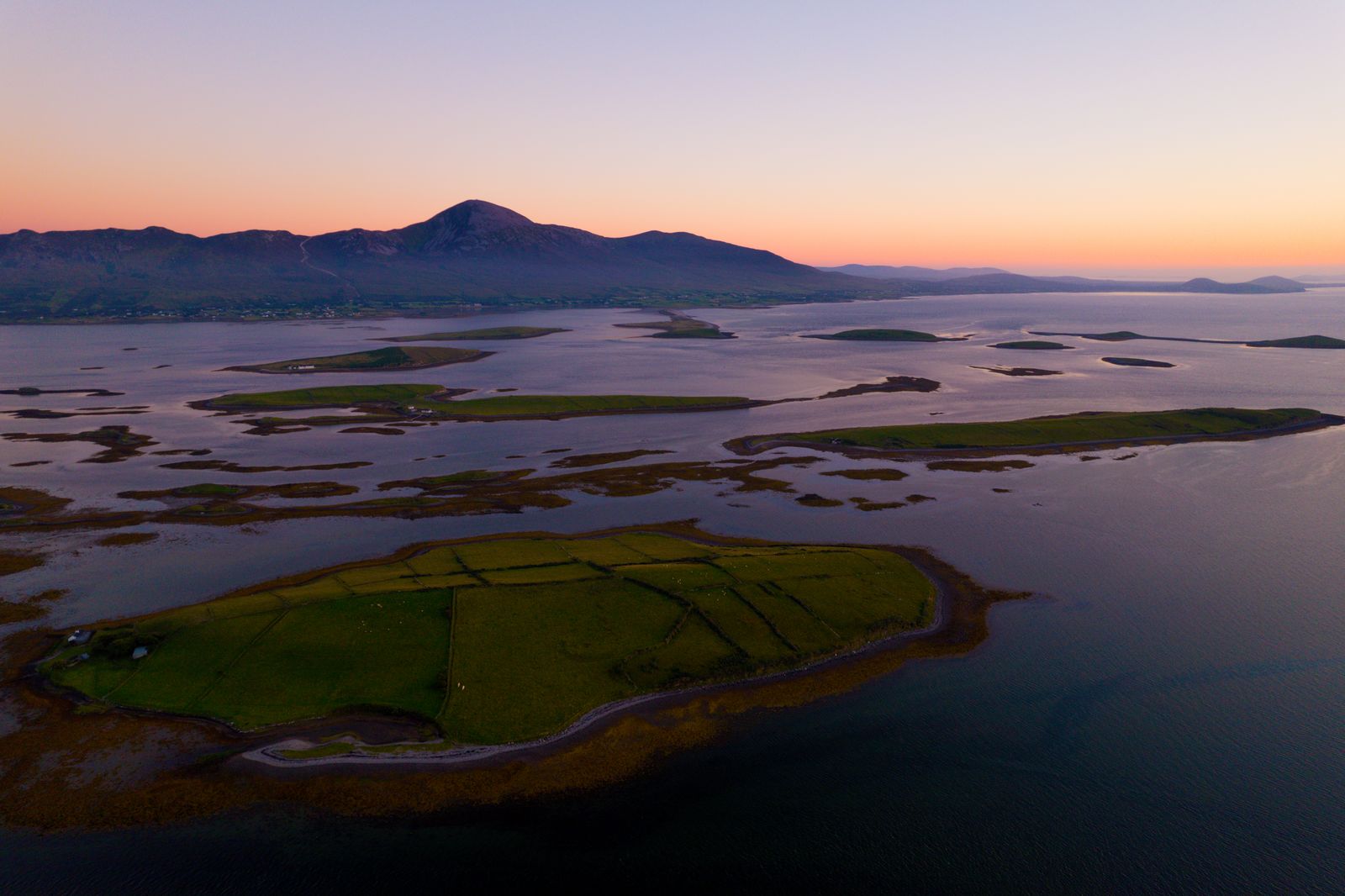
Photographers get a long window of low, angled light. The hour or so before sunset and the twilight after it are the times when hills, islands and water read most clearly. In June that window can run late into the evening, so a tripod and patience are rewarded.
Check sunrise and sunset times for your dates with Met Éireann before planning a late walk or drive.
What the weather does
Long evenings do not guarantee dry ones. Ireland has a temperate oceanic climate, with rain possible in every month. A June evening can be clear and mild, or grey and wet, and the two can follow each other within an hour. The west and the hills are wetter than the east.
Temperatures in summer are cool rather than hot, and the evening air cools quickly once the sun goes down. A layer to put on after sunset is worth carrying even on a bright day. Wind off the Atlantic adds a chill on exposed coasts and headlands.
The upside of a wet evening is that it rarely lasts the whole night in summer. Showers pass through and the light returns. Planning an indoor stop for the middle of the day and keeping the evening free is a sensible way to use the long light.
Met Éireann issues forecasts and warnings; check them on the day rather than relying on a weekly outlook.
Where to base yourself
Westport in County Mayo is a good centre for the long evenings. The town sits at the head of Clew Bay, with islands and a long coastline to the west and mountains to the south. Achill Island and the villages along the bay are within easy reach for an evening drive.
Further north, Sligo and Donegal offer coast and mountain in the same late light. Sligo has Benbulbin and a coastline of beaches and headlands. Donegal has Sliabh Liag, sea cliffs that face west and hold the evening sun. Both towns make a workable base for a few days.
In the west of County Galway, Clifden and the Connemara villages put you among lakes, bog and mountain, with the coast close by. Galway City is a larger base with more going on in the evening. Each of these places is a town or village to stay in, with the surrounding landscape doing the work.
The midnight twilight
Around the solstice, the north and west of the island never quite reach full darkness. The sky in the north stays lit through the short night, a deep blue rather than black. This is the effect that draws people to the coast in June.
It is worth being out for it at least once. A beach or a headland facing north or west, an hour or so after sunset, gives the clearest view. The light fades slowly and then begins to brighten again, so there is no sharp end to the evening.
The effect is strongest in Donegal and on the north coast of Northern Ireland, which is part of the UK. Further south it is less pronounced, though the twilight is still long. Wherever you are, the sky is at its most interesting in the hour after sunset.
Practical points
Traffic drives on the left everywhere on the island. In the Republic, distances are in kilometres and speeds in km/h; in Northern Ireland, in miles and mph. There are no routine checks on roads crossing the border, so a summer trip can take in both without formalities.
Evening walks on hills and coasts need care. Tell someone where you are going, carry a torch even in June, and check the tide if the route crosses a beach or a causeway. Coastal paths can be uneven, and the light goes quickly once the sun is down.
Public transport runs later in the cities than in the countryside. In rural areas, evening services are limited, so a car or a planned lift back is the practical option. Check timetables with the operator, as they change with the season.
For rural evening travel, check timetables with Bus Éireann, TFI Local Link or Translink, as services vary by season.
Across the border
Northern Ireland is part of the United Kingdom, so pounds and miles apply there. The Causeway Coastal Route runs between Belfast and Derry~Londonderry, and its north-facing coast is one of the best places on the island for the late June light. The Giant's Causeway is cared for by the National Trust.
Entry rules depend on the passport you hold. For the Republic, check the Irish Immigration Service; for Northern Ireland, check gov.uk. Ireland is not in the Schengen area, so the rules are separate from those for mainland Europe.
The long evenings make the north coast worth a night or two. Portstewart, Portrush and Ballycastle are towns to base in, with the cliffs and beaches close by. The light on the sea in the late evening is the reason many people time a visit to the solstice.