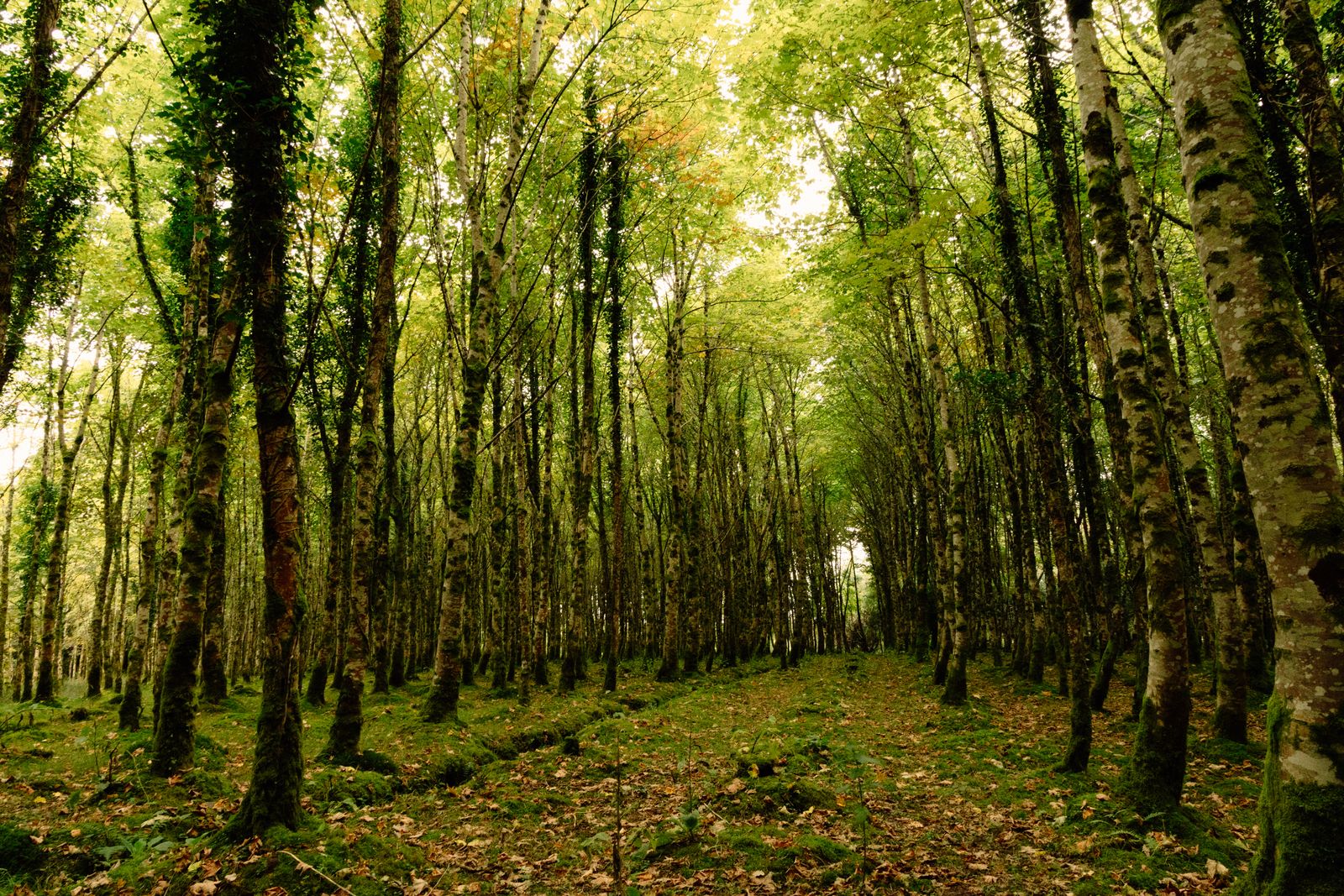
Ireland was once covered in woodland, and only fragments of it remain. The old woods that survive are mostly on estates, in mountain glens and on the shores of the Killarney lakes. They are small, quiet places, and they reward a slow walk.
What remains
Woodland cover in Ireland is low by European standards, and most of it is conifer plantation rather than native trees. The old native woods survive as fragments: in estate demesnes, on the shores of the Killarney lakes, in a few mountain glens and on the wetter western hills. Some are no more than a few hectares, held in a fold of land where grazing and felling never quite reached.
The largest concentration of old native woodland on the island is in and around Killarney National Park, where oak woods run down to the lake shores. Elsewhere the woods are scattered: Glenveagh in Donegal, the glens of Wicklow, parts of Connemara and the Burren, and small pockets on estates in the east and south.
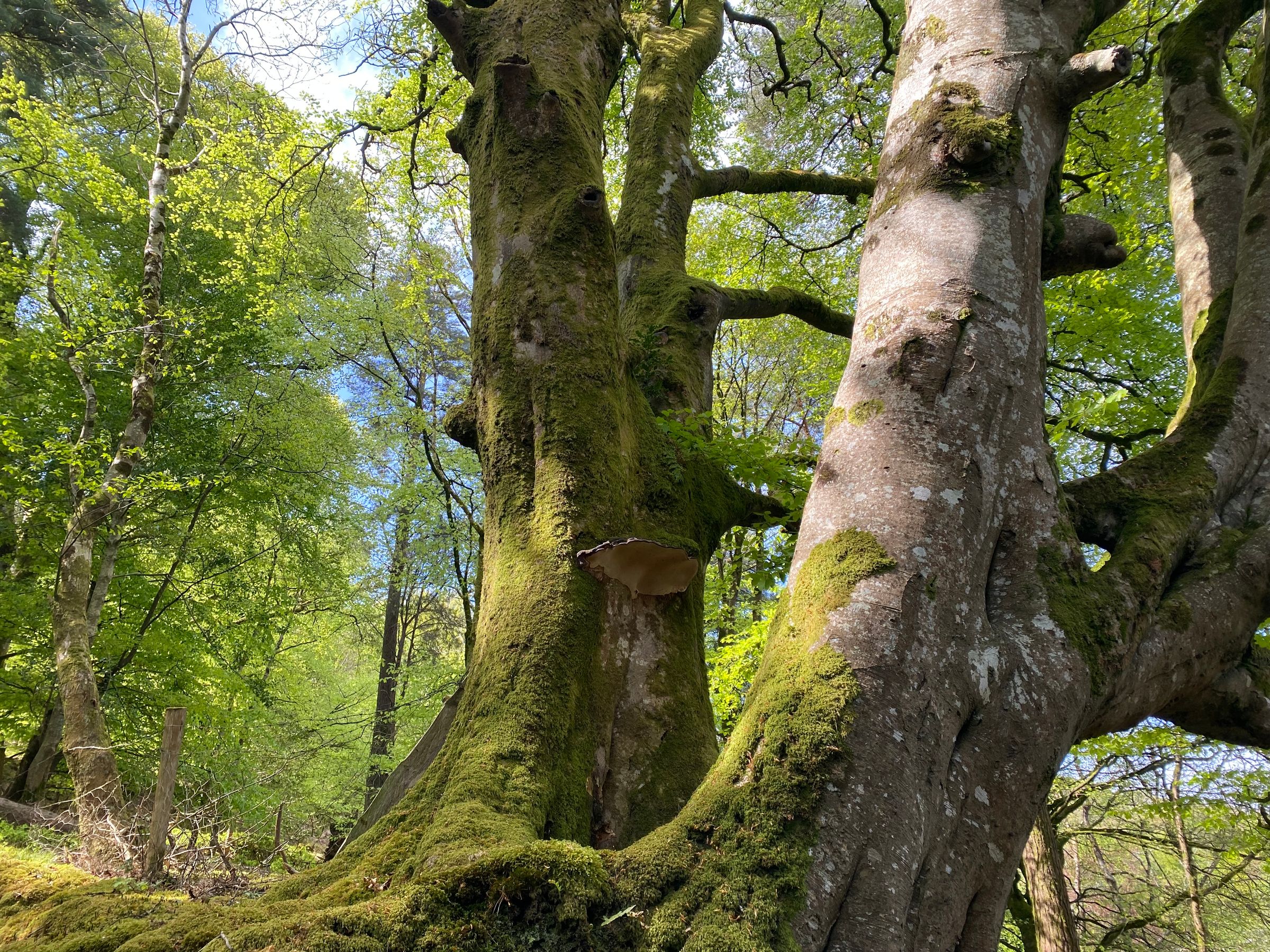
These woods are not wilderness. Almost all have been shaped by people over centuries, by coppicing, grazing and planting, and many are still working landscapes. What makes them special is the continuity: the same ground has carried trees for a very long time, and the plants and insects that depend on old woodland have survived with them.
The trees to know
Sessile oak is the signature tree of the old Irish woods, especially in Kerry and Wicklow, often with a dense understorey of holly. Ash and hazel grow on richer soils, birch and rowan on poorer ground, and alder along wet edges and streams. Willows line the rivers, and Scots pine appears in a few western woods.
Holly is the tree that gives many Irish oak woods their dark green look in winter, when the oak is bare. It is native here and grows freely in the understorey, which is why old woods stay green through the coldest months. Yew, strawberry tree and whitebeam are rarer, and the strawberry tree in particular is associated with the Killarney area.
Look also at what grows on the ground. Bluebell, wood anemone, wood sorrel and wild garlic indicate old woodland, because they spread slowly and rarely colonise new plantations. A wood carpeted with bluebells in late spring is likely to be long established, and worth treating gently.
Bluebells flower roughly from late April into May, but the date shifts with the weather. BirdWatch Ireland and the National Parks and Wildlife Service publish seasonal notes.
Killarney and the south
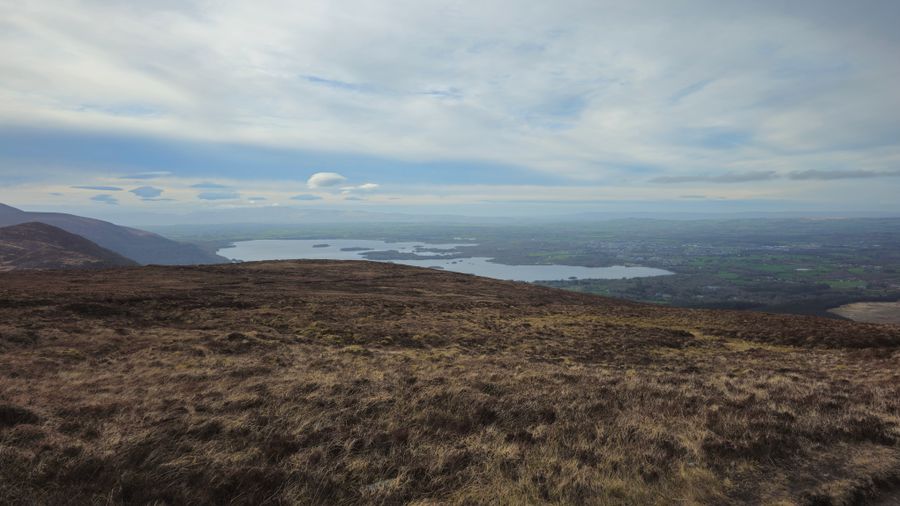
Killarney National Park holds the best known native woods on the island, with oak and holly running down to the lakes below the mountains. The woods around Muckross and along the lake shores are easy to reach on foot from Killarney town, and paths run through them to viewpoints and old buildings.
The town of Killarney is the obvious base, with Kenmare and Killorglin within reach for a quieter stay. The woods are busiest in summer, and early morning is the calmest time to walk them. Red deer graze the woods and open ground, and are most often seen at dawn and dusk.
South of Killarney, the woods thin out, but old estate woodland survives in parts of West Cork and around the valleys of the Blackwater. These are smaller and less visited than Killarney, and often sit alongside gardens and old demesnes that are open to walkers.
The west and the glens
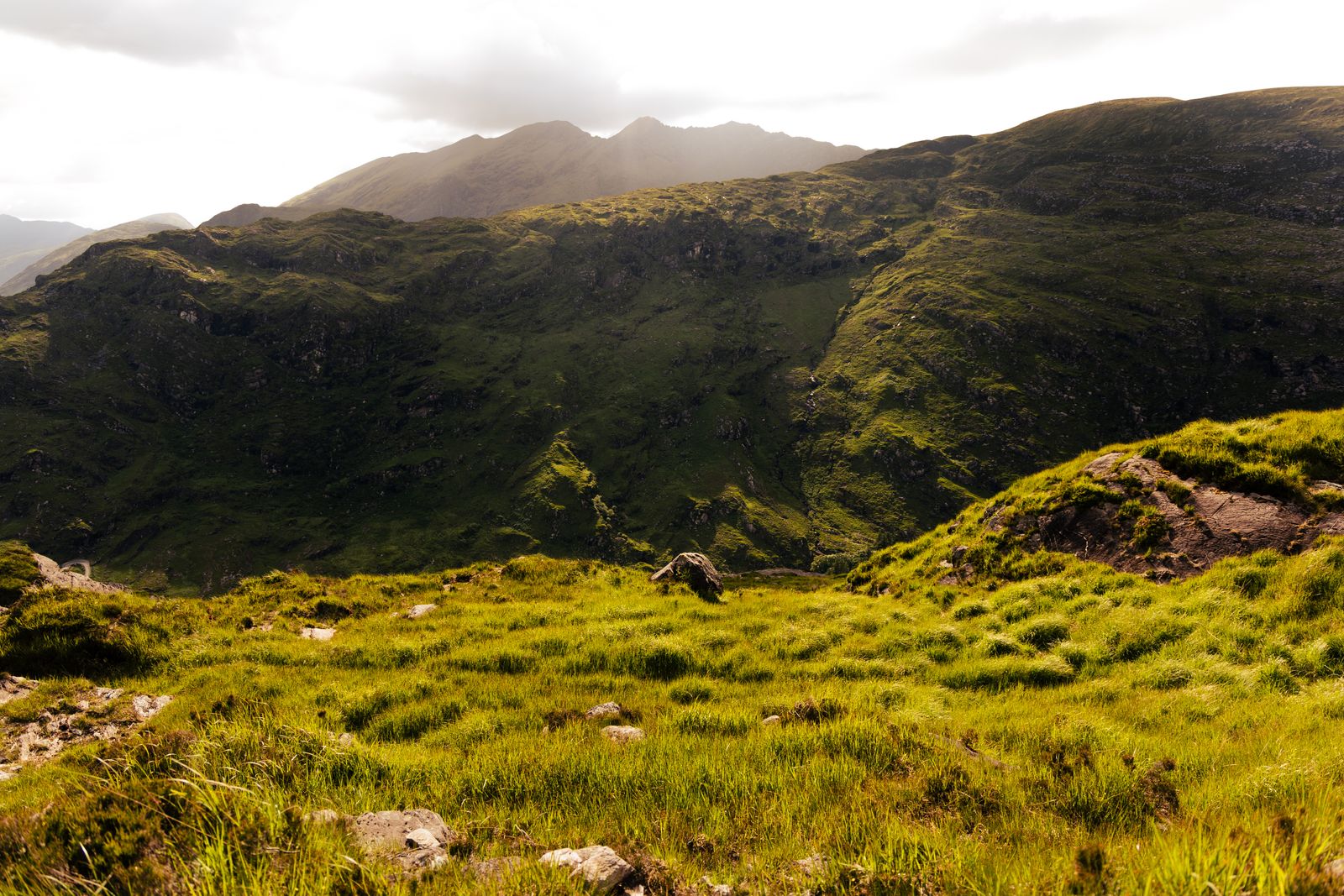
In Connemara, woodland survives in sheltered valleys and around old estates, often as a mix of oak, ash and hazel with a wet, mossy feel. The Burren has small hazel woods in its grykes and valleys, growing low to escape the wind. These western woods are small, and often reached on foot.
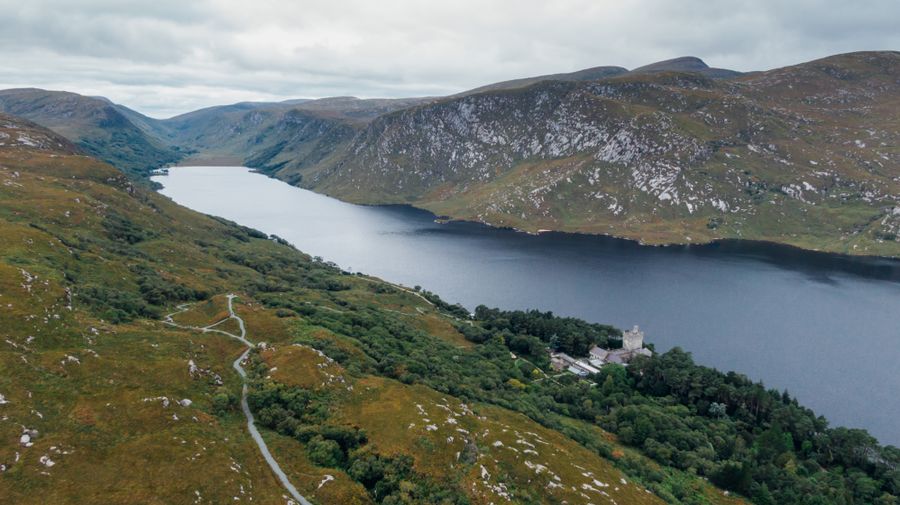
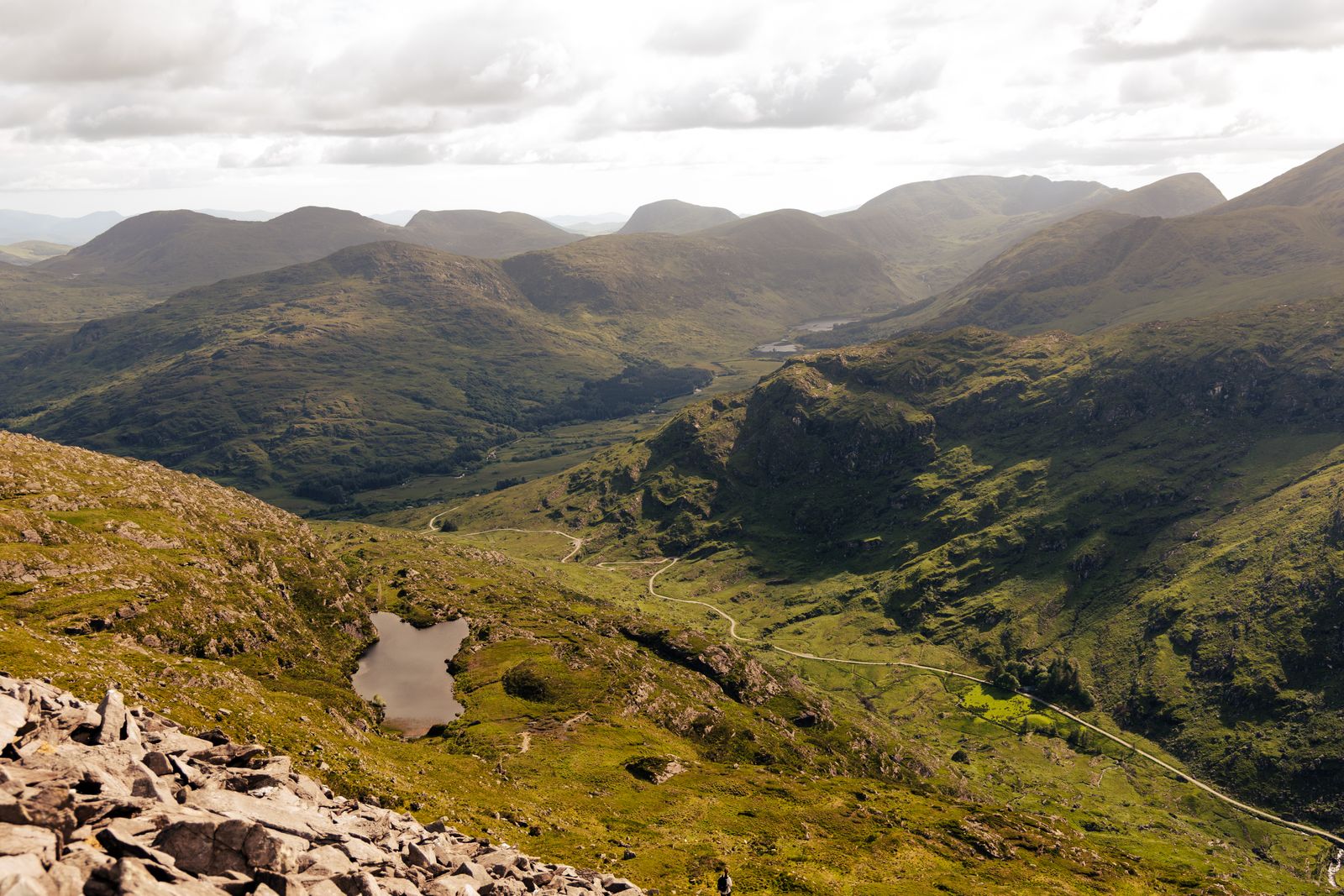
Glenveagh National Park in Donegal holds native oak and birch woodland in its glens, below the mountains and around the lake. The woods are part of a larger landscape of bog and mountain, and the contrast between the two is part of the appeal. Donegal has other small woods, often in estate grounds.
Galway and Westport make useful bases for the western woods, with Connemara and the Burren within a day's drive. Sligo and Donegal suit the northern woods. Distances in the west are longer than they look on a map, so plan on fewer stops rather than more.
Mountain and estate woods often have rough, wet paths. Check current access and trail conditions with the National Parks and Wildlife Service or the Office of Public Works before setting out.
Wicklow and the east
The Wicklow Mountains hold oak and birch woods in the glens, with holly and rowan beneath, and the woods around Glendalough are among the most visited in the east. The valley floor is easy walking, while the surrounding hills give longer routes through woodland and open mountain.
Further south, old woods survive on estates in County Kilkenny and County Waterford, often around big houses and gardens. These are gentler places, with paths and lawns alongside the trees, and they suit a half day rather than a full one.
Dublin is a practical base for the Wicklow woods, with the city and the mountains close together. Kilkenny and Waterford suit the southern estates. Public transport reaches some trailheads, but a car makes the smaller woods much easier to reach, and timetables change, so check with the operator.
When to go
Late spring is the best time for the ground flora, when bluebells and wood anemone are out and the trees are in fresh leaf. Autumn brings colour to the woods, especially in Killarney and Wicklow, and the light is often better for walking. Summer is green and busy, and winter shows the structure of the wood.
Weather in Ireland changes quickly, and rain is possible in every month. The west and the hills are wetter than the east, and paths in wooded glens can stay muddy for days after rain. Waterproof footwear and a rain jacket are worth carrying at any time of year.
Wildlife is easiest to see in the quiet hours. Red deer in Killarney, birds in the canopy and insects along the woodland edge are all more active at dawn and dusk. Binaries are useful, and so is patience: the woods reward standing still as much as walking through.
Visiting with care
Native woods are fragile, and many are small. Stay on paths where they exist, keep dogs under control and take litter home. Bluebells and other woodland plants are easily damaged by trampling, and picking them removes the flowers that set seed for the next year.
Some woods are managed by the National Parks and Wildlife Service or the Office of Public Works, and some by Coillte or private estates. Access arrangements vary, and some sites are closed at certain times for management or wildlife. Check with the managing body before travelling to a smaller wood.
In Northern Ireland, woodland is looked after by a range of bodies, including the National Trust and the Department for Communities, and access is in pounds and miles. Wherever you walk, the emergency number is 112 or 999 on both sides of the border, and phone signal can be weak in wooded glens.