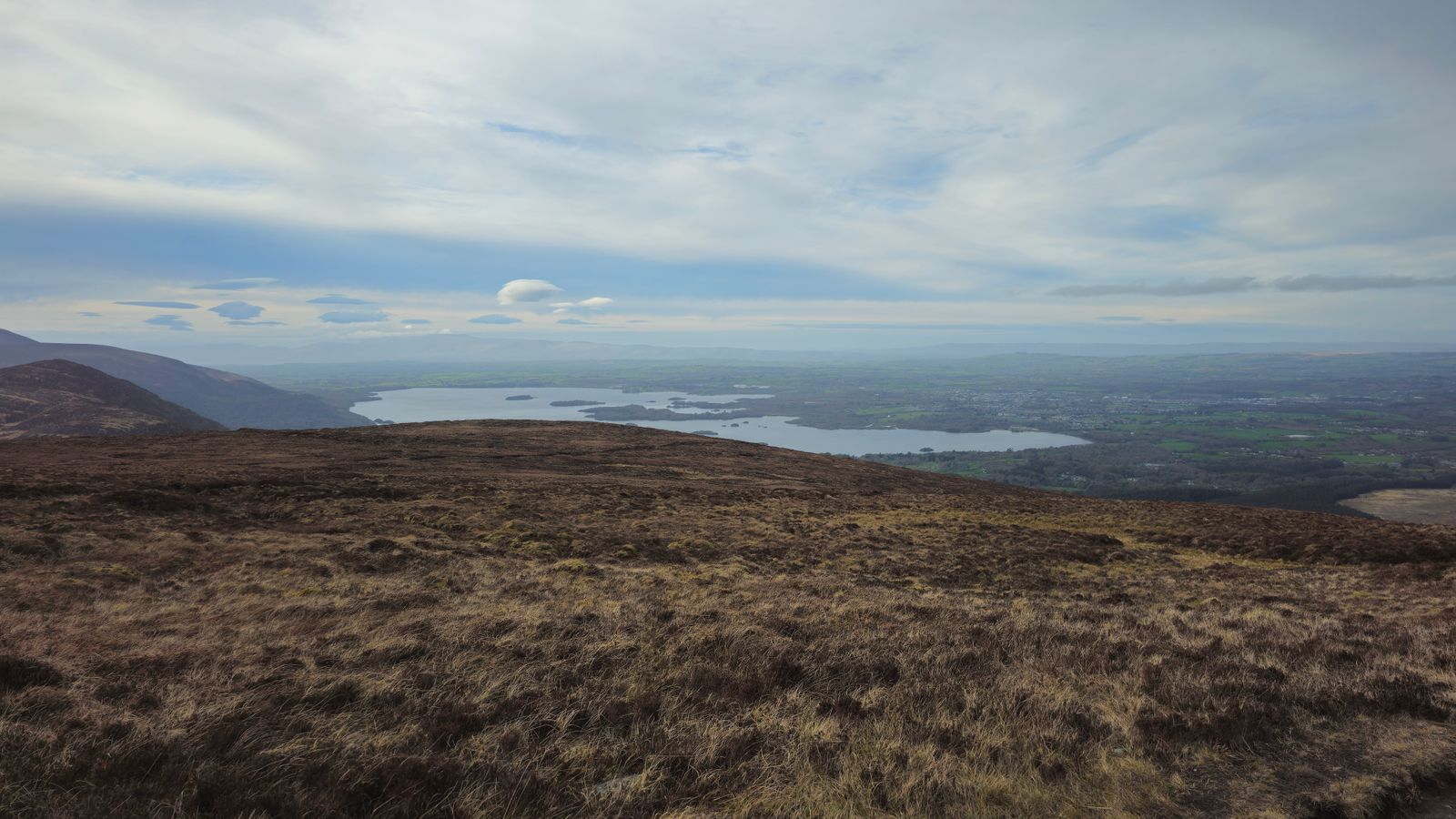
Killarney National Park covers mountain, lake and woodland just west of Killarney town. It holds the lakes of Killarney, the oak woods of Muckross and Tomies, Muckross House and Ross Castle, and the peaks of Mangerton and Torc.
The three lakes
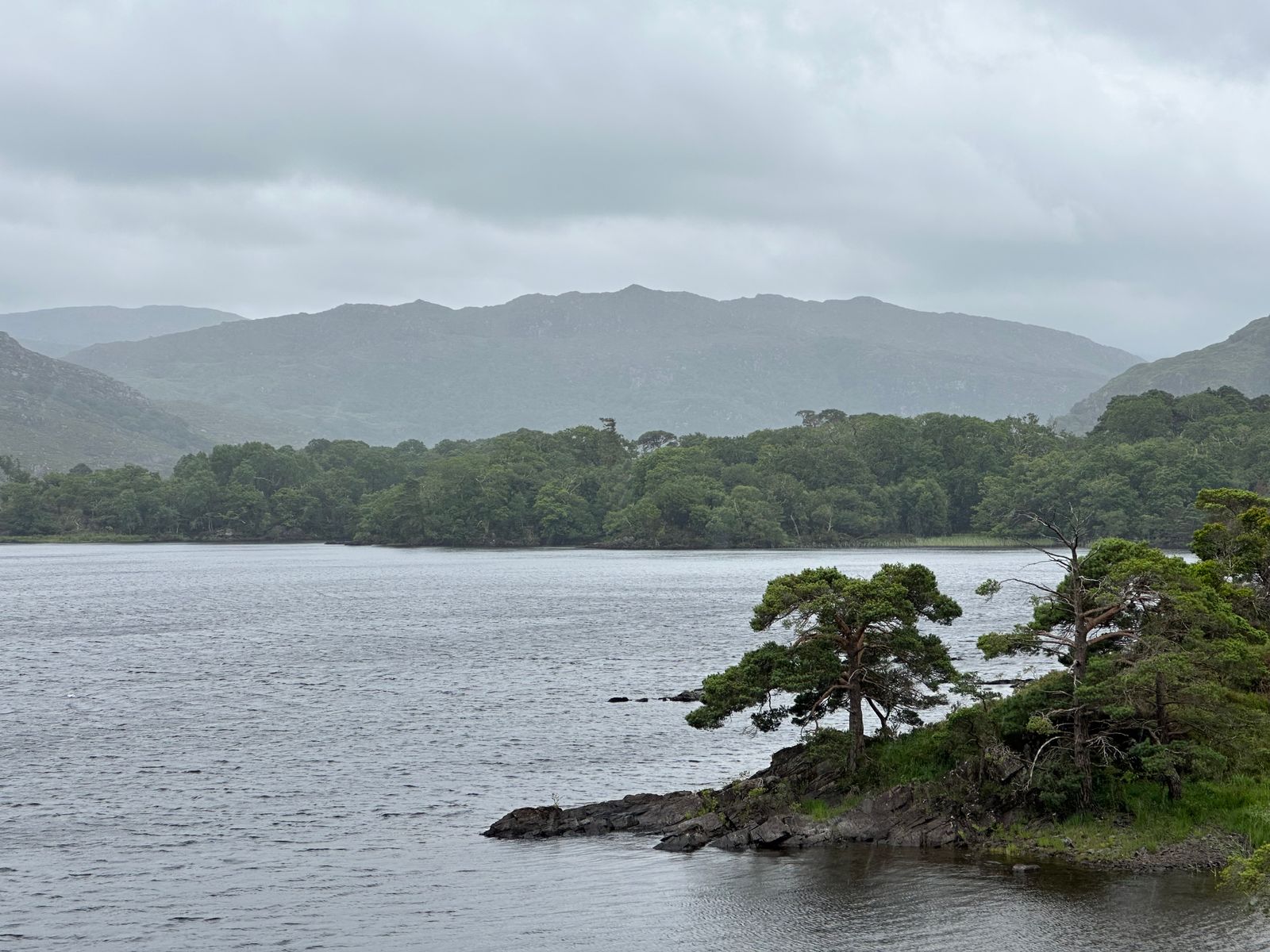
The park is built around three connected lakes. Lough Leane is the broad lower lake beside Ross Castle and the Muckross shore. Muckross Lake, also called the Middle Lake, sits between wooded shores below Torc Mountain. The Upper Lake lies further west, narrower and closer to the mountains, with the Kenmare road running along its southern side.
The lakes fill a glacial valley, and their shape still follows the ice. Water from the Upper Lake flows down through the Middle Lake and into Lough Leane, then out by the River Laune towards Killorglin and the sea at Castlemaine.
Walking the shore gives the best sense of the scale. Paths run along the Muckross and Ross Island shores, and short stretches of road link them. Boats on the lakes are run by private operators from several jetties; sailings depend on weather and season.
Lakeside paths flood after heavy rain. Check National Parks and Wildlife Service notices for closures before setting out.
Muckross House and gardens
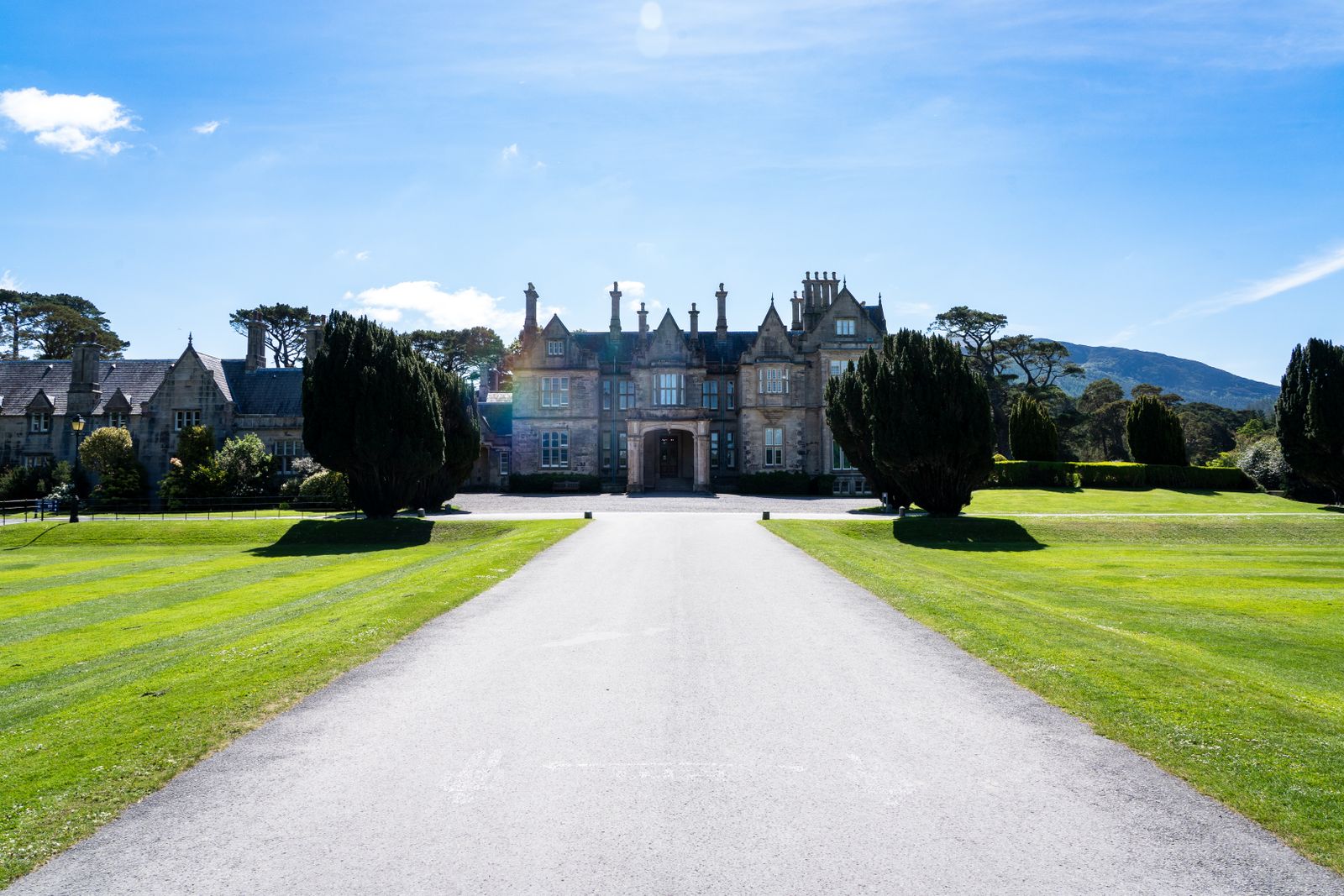
Muckross House is a large Victorian house set among lawns and gardens on the Muckross peninsula, between Lough Leane and Muckross Lake. The house is run by the Office of Public Works, and the gardens around it are free to walk.
The house was built in the nineteenth century for the Herbert family, who owned the Muckross estate. Its furnished rooms and the surrounding estate give a picture of landed life in Kerry in that period. Entry to the house is ticketed, and opening times vary by season.
The grounds hold walled and informal gardens, a working farm area and long avenues of trees. Traditional farms on the estate show older methods of farming in the region. A visitor centre near the house has information on the park and its history.
Ross Castle and Ross Island
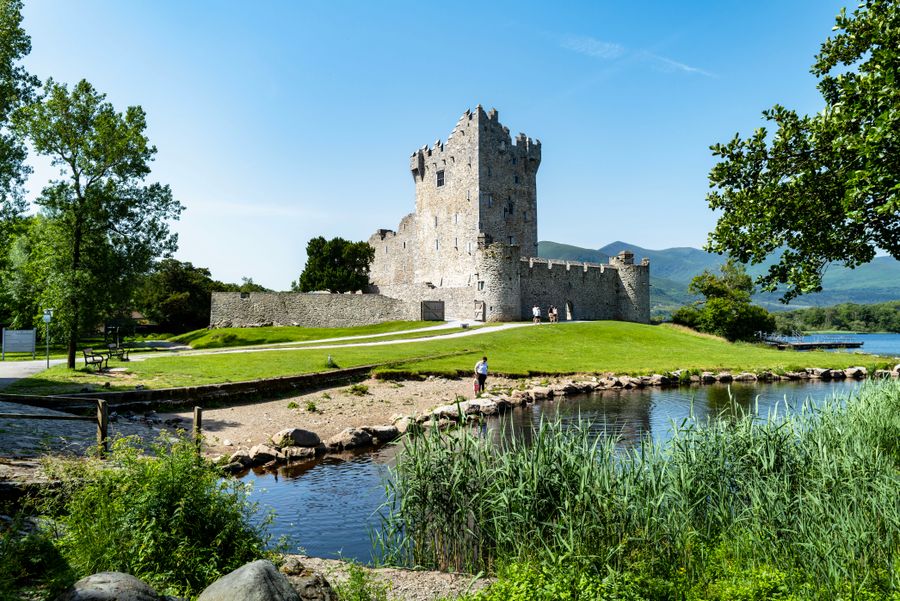
Ross Castle stands on the shore of Lough Leane, a short walk or cycle from Killarney town. It is a tower house of the O'Donoghue family, built in the late Middle Ages and later held by the Brownes. The castle is run by the Office of Public Works.
Guided tours of the tower run in season and are ticketed. The grounds and the shore path around the castle are free to walk. From the water's edge there are views across Lough Leane towards the Muckross shore and the mountains beyond.
Ross Island, the wooded ground behind the castle, has walking paths through old oak and yew. Copper was mined on the island in the past, and traces of early working have been found there. The paths are short and suit an hour or two.
Walks and mountain paths
Waymarked walking routes leave from the town and from car parks along the Kenmare and Muckross roads. The Muckross and Dinis routes are gentle, following woodland tracks and shore paths. Torc Waterfall sits below Torc Mountain, reached by a short path from a car park on the N71.
Longer routes climb into the hills. Mangerton Mountain rises south of the lakes, and the path to the Devil's Punch Bowl is rough in places. The mountains around the park, including Torc and Mangerton, need boots and a check on the weather.
The Kerry Way long-distance route passes through the park, following old roads and tracks between Killarney and Kenmare. Sections can be walked as day routes, with the Kenmare road and local buses giving ways back to town.
Mountain weather changes quickly. Check the Met Éireann forecast and carry a map, as phone signal is patchy in the hills.
Woodland and wildlife
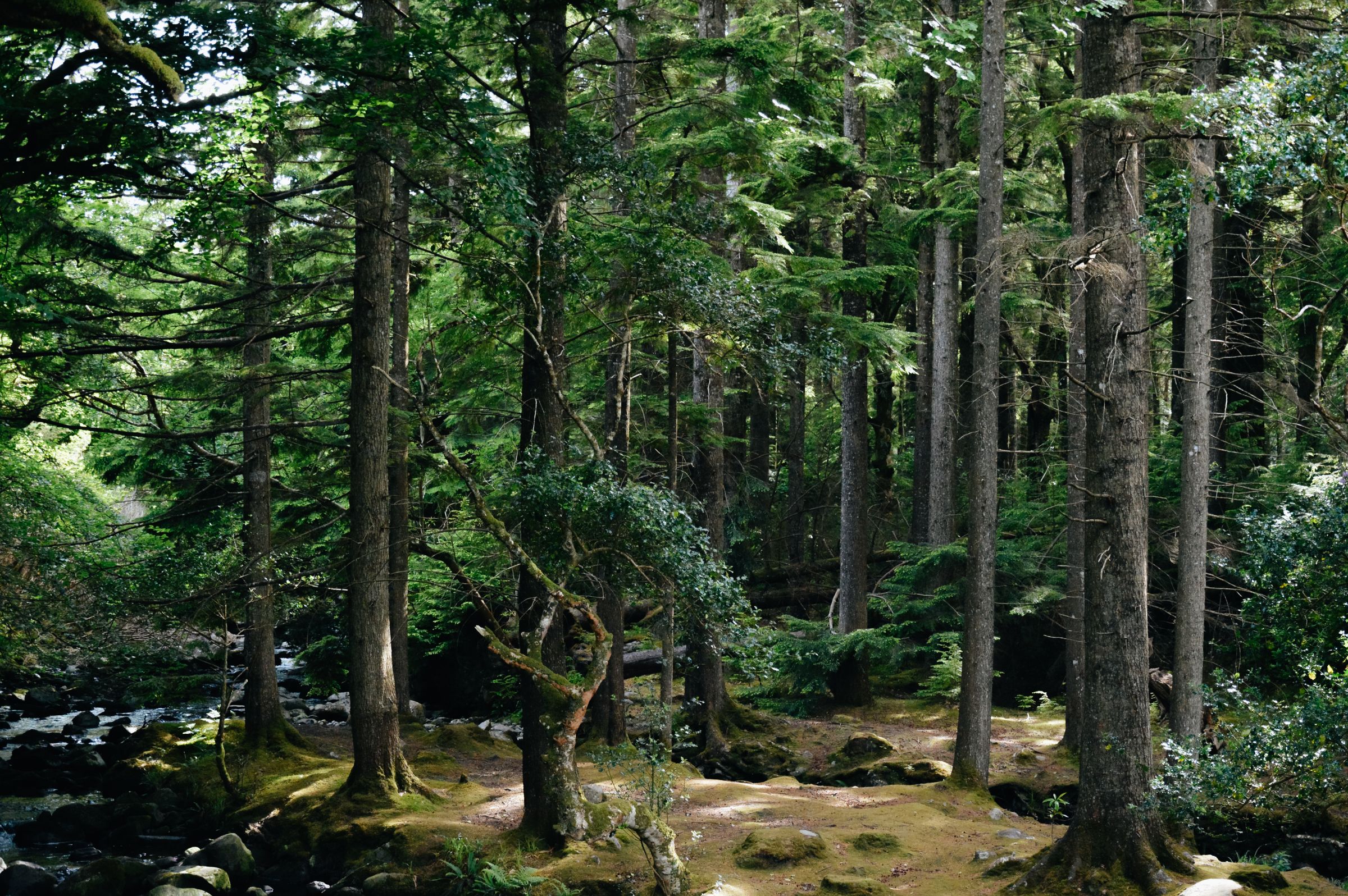
The oak woods of Muckross and Tomies are among the oldest native woodland in the country. Sessile oak, holly and birch grow with mosses, ferns and lichens, and the woods are grazed in places to keep the canopy open.
Red deer live in the park, and herds are often seen on the Muckross estate and the lower slopes. The deer are wild and should be watched from a distance, especially in autumn. Otters and kingfishers use the lakes and rivers.
Birdlife includes woodland species, gulls and waterfowl on the lakes, and raptors over the open ground. Puffins and other seabirds are not found here, being coastal nesters. BirdWatch Ireland has general information on Irish species.
Getting around the park
The park is free to enter and open all year. Car parks at Muckross, Torc and Ross Castle fill early in summer, and the roads through the park are narrow. Cycling is a good way to link the main sites, and bikes can be hired in Killarney town.
Jaunting cars, horse-drawn traps, run from the town to Muckross and Ross Castle. They are a private trade, and fares are agreed with the driver. Walking between the sites is possible but the distances add up.
Killarney is the natural base, with the park on its doorstep. Kenmare to the south and Killorglin to the north are quieter alternatives within driving distance. Buses and trains serve Killarney, and Transport for Ireland has a journey planner.
Check Iarnród Éireann and Bus Éireann timetables before travelling, as services change with the season.
Beyond the park gates
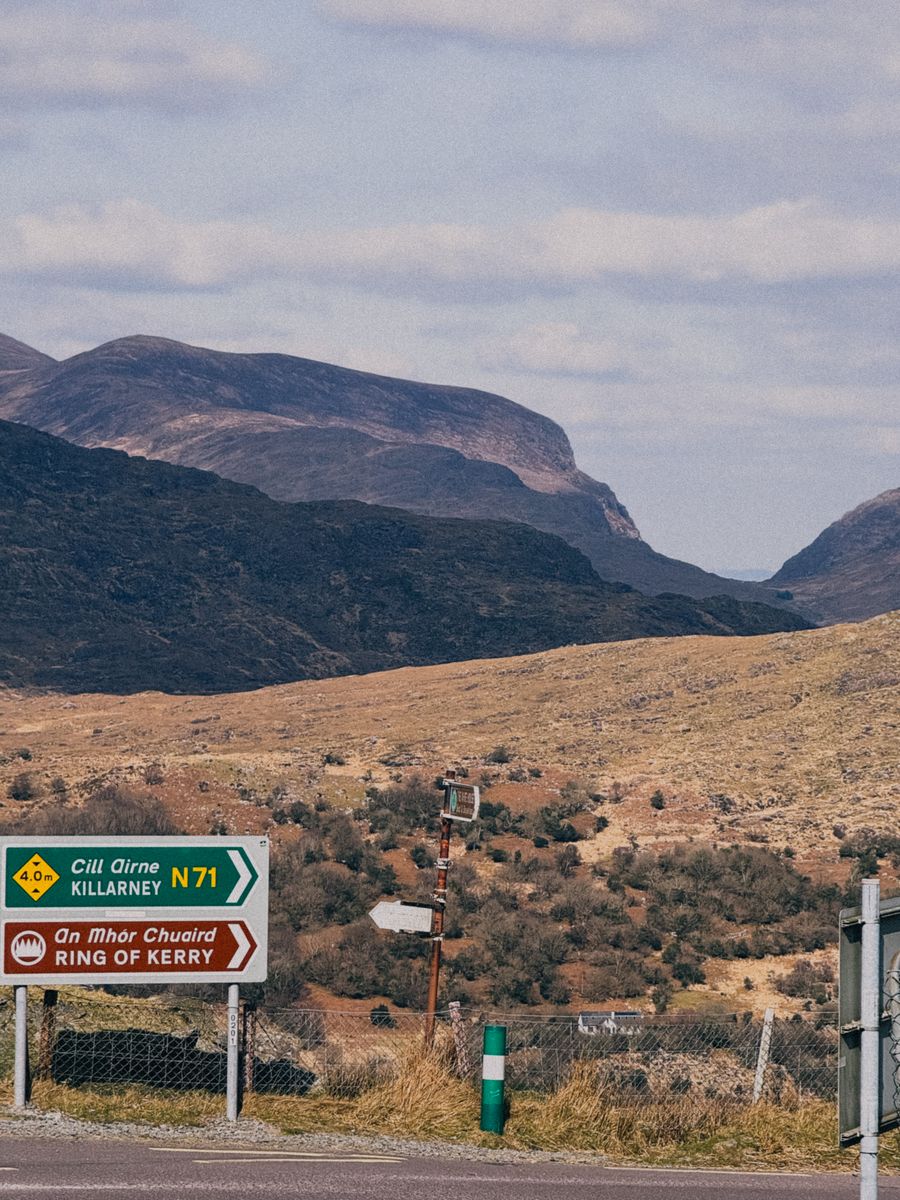
The park sits at the start of the Ring of Kerry, which loops the Iveragh Peninsula from Killarney. The Gap of Dunloe, a narrow mountain pass, lies to the west and can be walked or cycled. Ladies View on the Kenmare road looks down over the lakes.
Muckross and Dinis are linked by tracks, and the Kenmare road runs along the Upper Lake towards Moll's Gap. The village of Beaufort and the MacGillycuddy's Reeks lie to the west, with Carrauntoohil the highest mountain on the island.
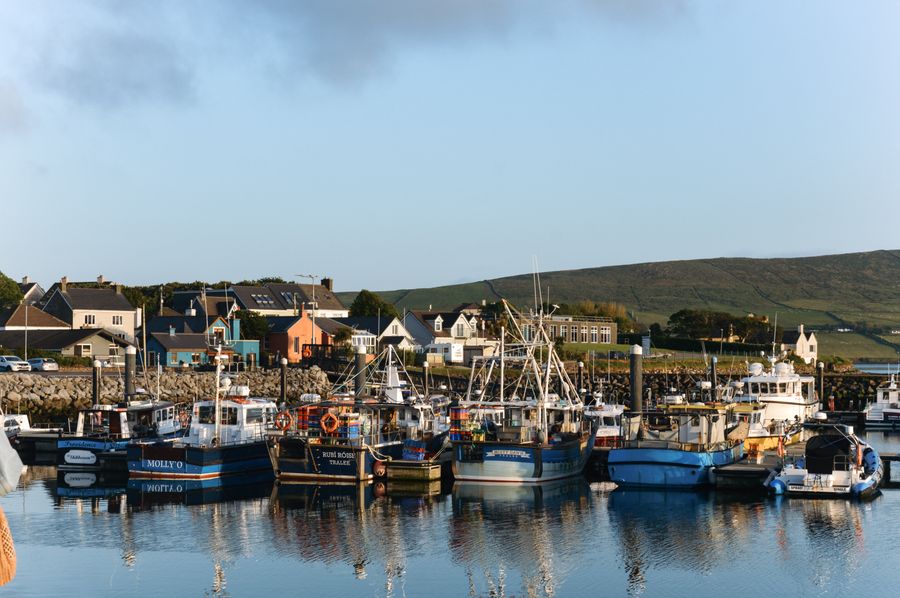
Killarney town has churches, streets and a cathedral, and is a base for the wider region. The Dingle Peninsula and the coast at Killorglin are within a day's drive. The park itself rewards more than one visit.