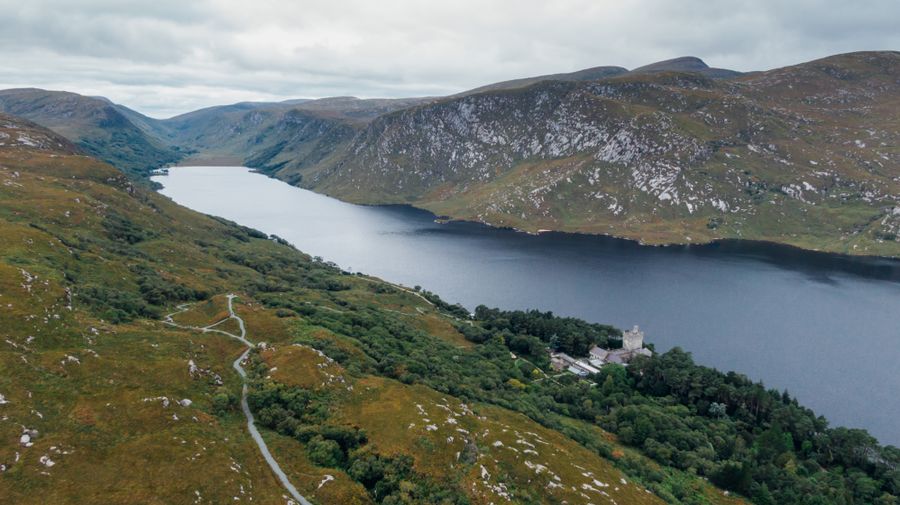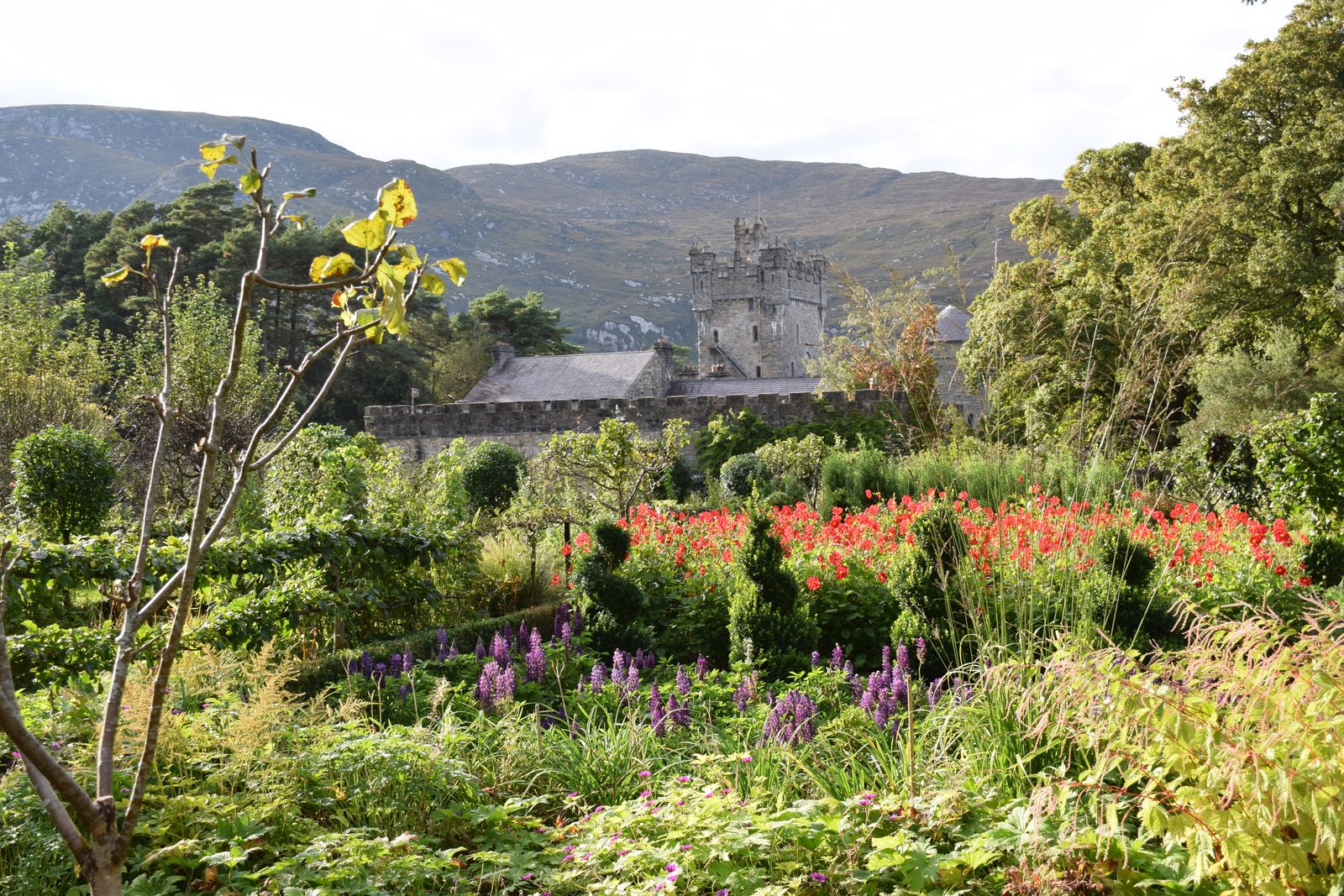
Glenveagh National Park lies in the Derryveagh Mountains of north Donegal, around a long lake and a castle with walled gardens. The park is run by the National Parks and Wildlife Service and covers a large stretch of mountain, bog and woodland.
The park itself
Glenveagh National Park covers a large area of the Derryveagh Mountains in north Donegal, taking in mountain, blanket bog, woodland and the long lake of Lough Veagh. It is one of the national parks of the Republic, run by the National Parks and Wildlife Service. The park was created from a large private estate, and the old house and gardens at its heart are still the focus of most visits.
The park is open all year, though the castle and gardens keep their own seasonal hours. The grounds and walking routes are free to walk. There is a visitor centre near the car park, with information on the park's geology, wildlife and history.
The landscape is typical of the Donegal highlands: steep-sided glens, dark peaty water and bare quartzite summits. Rain is possible in any month, and the mountains catch more of it than the coast. Waterproofs and boots are worth carrying even on a bright morning.
Castle and gardens
Glenveagh Castle is a nineteenth-century baronial-style house built beside the lake, with a view down the glen. It was extended over the years and passed through several owners before the estate came to the state. The castle is ticketed, and guided tours run in season.
The walled gardens are the reason many people come. They hold a collection of trees and shrubs from around the world, planted to suit the damp, mild climate. The gardens are laid out in sections, with a long border, a kitchen garden and paths through woodland.
Opening times for the castle and gardens change through the year, and tours can fill in summer. Check the National Parks and Wildlife Service and Heritage Ireland before travelling, and allow time for the walk from the car park to the house.
Castle tours and garden opening hours change by season: check the National Parks and Wildlife Service before setting out.
Walking routes
A tarmac road runs from the visitor centre along the lake to the castle, a gentle walk of a few kilometres with the water on one side and the mountains on the other. A shuttle bus covers the same route in season, useful for anyone short of time or travelling with children.
Longer waymarked routes climb into the hills above the glen. The Derryveagh Mountains are rough and pathless in places, and the weather can close in quickly. Navigation skills and a map are needed on the higher routes, and the ground is wet underfoot for much of the year.
The park is also a place for quiet low-level walking. Woodland paths near the gardens and the lakeshore road suit an easy afternoon. Dogs must be kept under control, and some areas are closed at times for wildlife or land management.
Red deer and birds
Glenveagh is known for its herd of red deer, which grazes the hillsides and woodland edges. The deer are wild and move with the seasons, so sightings are never guaranteed. Early morning and evening are the better times, and a pair of binoculars helps.
Golden eagles were reintroduced to the park in the past, and the wider Donegal hills hold a range of raptors and moorland birds. The lake and its edges attract water birds, and the woodland holds common songbirds. BirdWatch Ireland is the body to check for local recording and advice.
The park's mix of bog, heath and native woodland supports plants and insects that are scarce elsewhere. Blanket bog covers much of the higher ground, and the colours change through the year from brown to purple. Stay on the paths where they exist, as bogland is easily damaged.
Getting there
Glenveagh lies inland from the north Donegal coast, reached by minor roads from the direction of Letterkenny and Dunfanaghy. The nearest village is Churchill, a short drive from the park entrance. The roads are narrow in places, and the last stretch climbs into the hills.
There is no railway station in this part of Donegal. Bus services in the county are limited and change with the season, so check with Bus Éireann and TFI Local Link for current routes and times. Most visitors arrive by car, and the car park at the visitor centre is the main starting point.
Driving is on the left, and distances in the Republic are in kilometres. Fuel and supplies are best picked up in the larger towns before heading into the hills, as services near the park are few.
Rural bus services in Donegal are limited and seasonal: check Bus Éireann and TFI Local Link for current times.
Where to base yourself
Letterkenny is the largest town in the area and a practical base, with a full range of services and a straightforward drive to the park. It suits anyone who wants shops, restaurants and a choice of places to stay within reach of several days out in Donegal.
Dunfanaghy and the villages of the north coast are smaller and closer to the sea, with beaches and coastal walks nearby. They make a good base for combining Glenveagh with the coast, though services are fewer and some places close out of season.
Churchill is the nearest village to the park entrance and suits a short stay focused on the park. Further afield, Donegal town and the south of the county are too far for a day trip to be comfortable, so base in the north for this visit.
Elsewhere in Donegal
The north coast around Dunfanaghy has long beaches and clifftop walks, and the Horn Head peninsula looks out across the Atlantic. The area is quieter than the west coast and rewards a slow day of walking and looking.
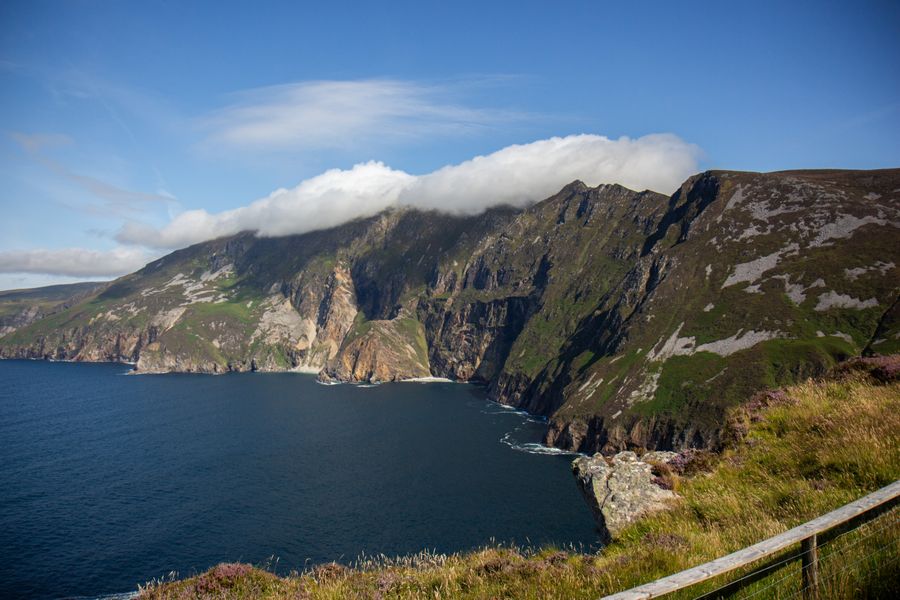
Sliabh Liag, in the south of the county, is a high sea cliff with a viewing path and a visitor centre. It is a long drive from Glenveagh, so plan it as a separate day rather than combining the two.
The Wild Atlantic Way runs through Donegal, and the county's stretch takes in remote peninsulas and Gaeltacht areas where Irish is the community language. Road signs in those areas are in Irish only, so a map helps.