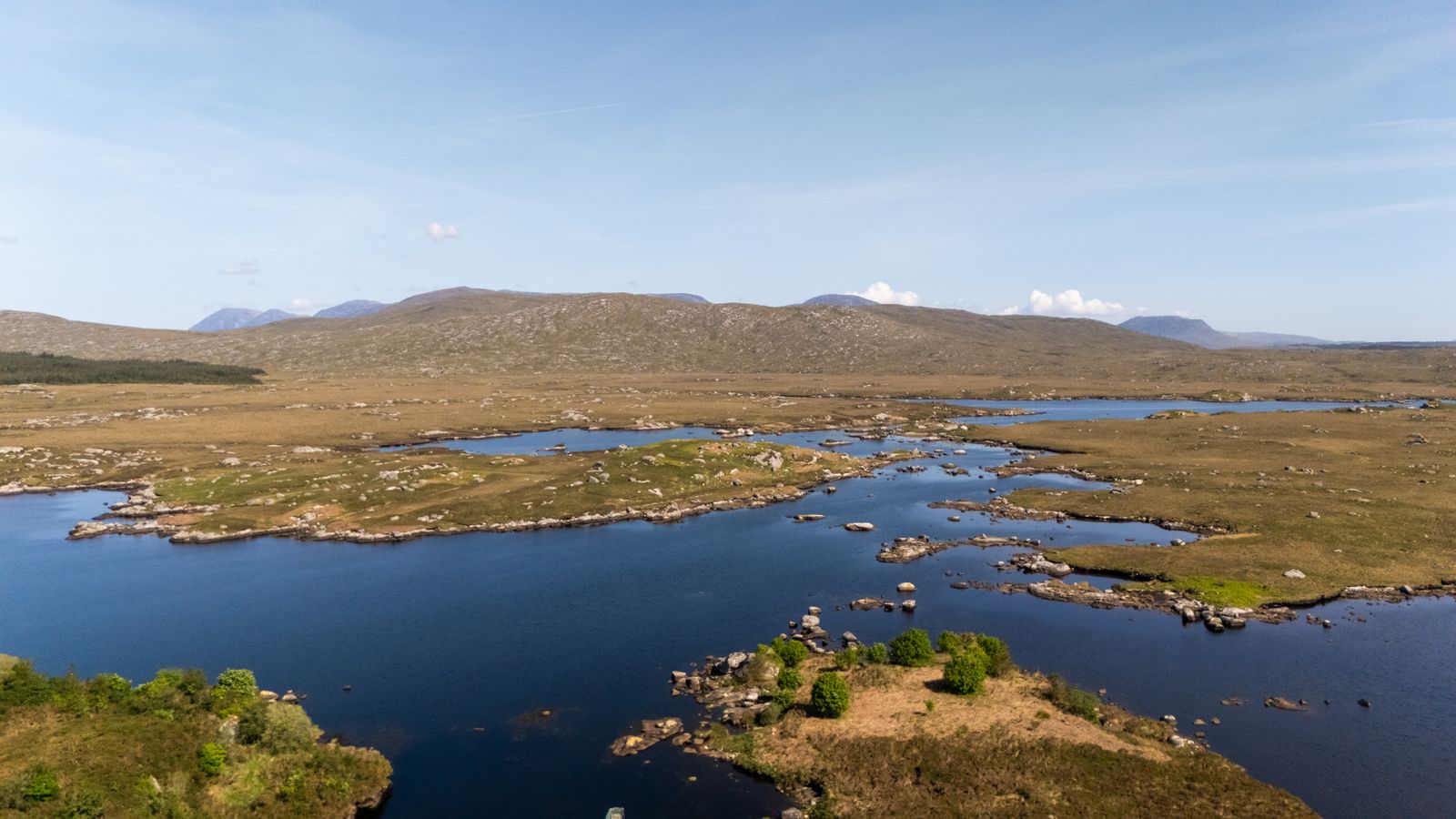
A bog looks like a flat brown expanse from the road. Close up it is a living surface of moss, heather and pools, built up over thousands of years from dead plants that never fully rotted. Learning a few signs lets you tell blanket bog from raised bog and see how the land was cut.
What makes a bog
A bog forms where rainwater cannot drain away. The ground stays waterlogged, so the plants that die there rot only partly, because the water holds out the oxygen that decay needs. Layer on layer of this partly rotted plant matter builds up as peat, which is mostly water and carbon.
The key is that bogs are fed by rain rather than by groundwater or rivers. That makes them acidic and low in nutrients, which is why the plants that thrive there are specialists. A wet hollow fed by springs or streams is a fen, richer and greener, and a different habitat.
Peat grows slowly. A metre of it can take a thousand years or more to form, so a deep bog is a record of a long stretch of time. The surface is only the top of a stack of preserved plant remains, pollen and sometimes ancient wood.
Blanket bog on the hills
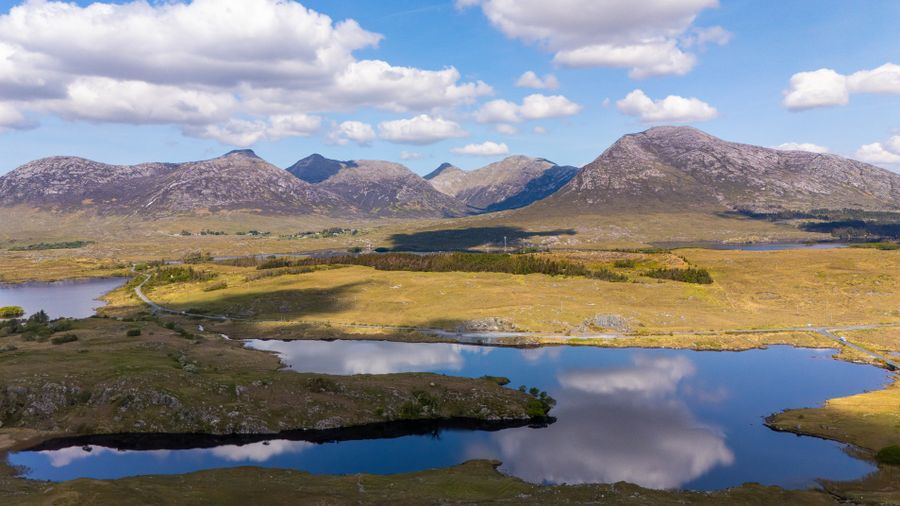
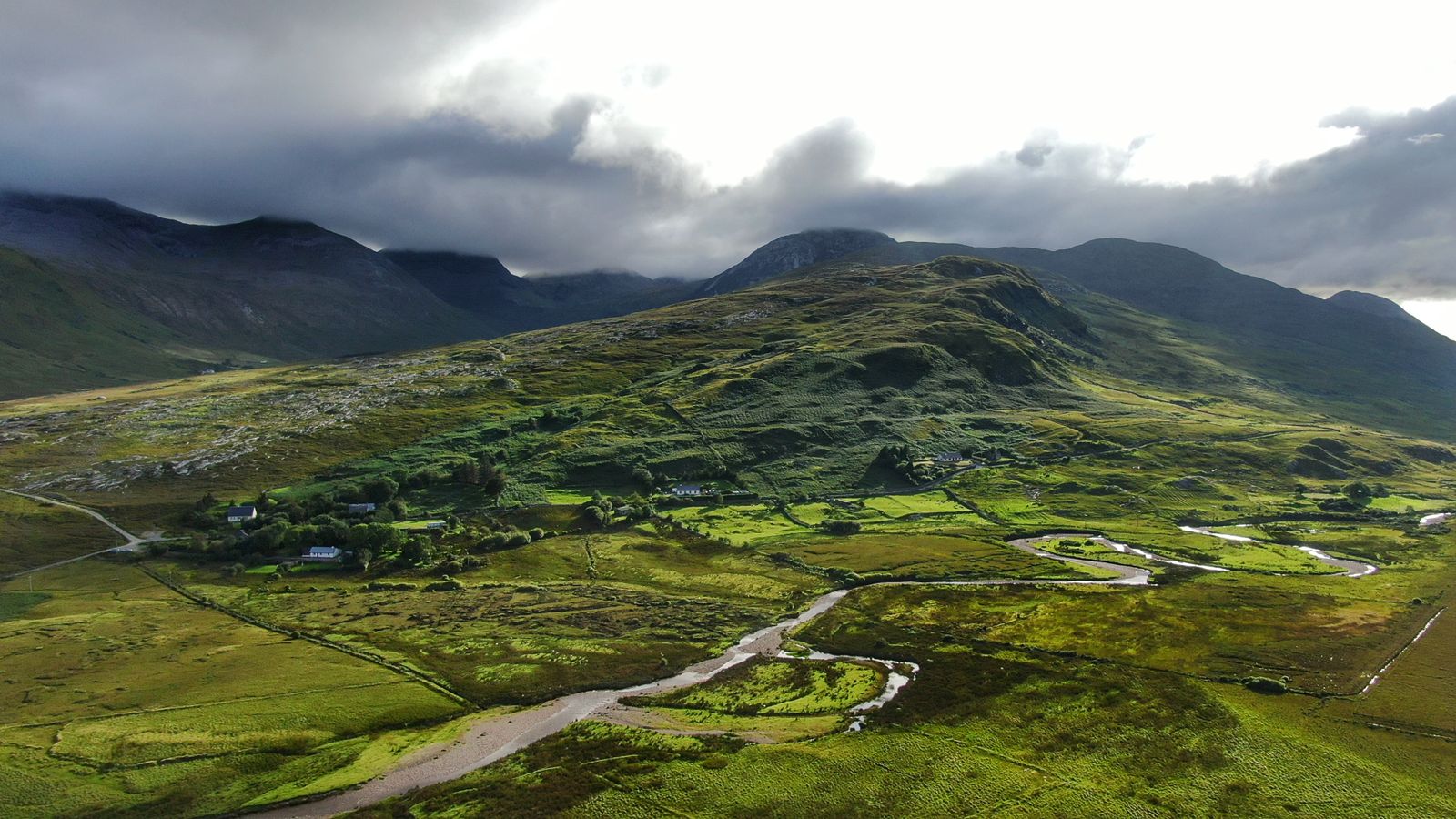
Blanket bog covers slopes and low ground across the wetter west, where high rainfall keeps the surface saturated. It drapes over the land like a cover, following the shape of the hills rather than filling a basin. The uplands of Connemara, Mayo, Donegal and Kerry hold large areas of it.
On the ground it looks like a patchwork of heather, sedges and pale moss, with darker pools in the hollows. The surface is uneven and springy, and after rain it holds water like a sponge. Walking off a track can mean sinking to the ankle or worse.
Drainage and grazing have damaged much blanket bog, and erosion shows as bare peat and gullies on steeper slopes. Where the surface is intact the mosses keep building, and the bog continues to store water and carbon.
Conditions underfoot change with the weather. Check the forecast with Met Éireann and carry waterproof boots, as even a short walk crosses wet ground.
Raised bog on the plain
In the midlands, bogs grew in shallow lakes and hollows left after the last ice age. Fed only by rain, they slowly rose above the surrounding land as a low dome, which is why they are called raised bogs. The midland counties hold most of what remains.
A raised bog has a wet centre and drier margins, and the vegetation changes across it. Sphagnum mosses in several colours form hummocks and hollows, with heather, cotton grass and bog rosemary on the drier parts. The dome is easy to miss from a distance.
Many raised bogs were cut for fuel over centuries, by hand and later by machine. The old banks and drains, and the flat dark cuttings, are still visible and are part of how you read the landscape.
The plants to look for
Sphagnum moss is the builder of the bog. It holds many times its weight in water and comes in greens, reds and browns. Look for it in wet hollows and on hummocks, and squeeze a handful to feel the water it stores.
Bog cotton, with its white tufts, shows up in early summer and is easy to spot from a distance. Heather turns the hills purple in late summer. Sundew, a small carnivorous plant, grows on wet surfaces and catches insects to make up for the poor soil.
Bog rosemary, with narrow leaves and pink flowers, and the white flowers of bogbean in pools, are other signs. The mix of these plants tells you how wet and how undisturbed a patch of bog is.
Do not pick plants or dig into the surface. Bogs are protected habitats in many places, and the National Parks and Wildlife Service advises on access and wildlife.
Reading old cuttings
Straight-edged dark banks and flat, even ground are the marks of turf cutting. Hand cutting left narrow banks and drains, and the cut face shows the layers of peat, sometimes with tree stumps or roots preserved in it.
Machine cutting leaves wider, smoother surfaces and deeper drains. Some cutaway bogs have been partly restored, with drains blocked and pools dug, and the surface allowed to rewet. Others have been planted or left bare.
The pattern of drains, banks and tracks is a history of how people used the bog for fuel. Reading it tells you whether a site is still working, abandoned or under restoration.
Where to see one
Connemara holds large areas of blanket bog, with the Twelve Bens and the coast close by. Clifden and Oughterard make good bases for exploring it, and the roads west pass through open bogland. Westport and the Mayo hills are another strong area.
In the midlands, the raised bogs lie between towns such as Tullamore and Athlone. Some sites have boardwalks and viewing points, and the National Parks and Wildlife Service manages several as nature reserves.
The Burren in Clare is limestone rather than bog, but its wet hollows and uplands show a different set of habitats. Wherever you go, stay on tracks and boardwalks to protect the surface.
Walking a bog safely
Bogs are wet and uneven, and a wrong step can put you in a pool or a drain. Wear boots with grip, carry a map and a charged phone, and tell someone your route. Mobile coverage can be patchy in the hills.
In remote areas, follow marked tracks and waymarked routes. The weather changes quickly, and mist can make the featureless ground hard to navigate. Rain gear and a spare layer are worth carrying in every season.
In an emergency, call 112 or 999. Give a grid reference if you can, and stay where you are if you are lost. Mountain rescue teams cover many upland areas and respond to calls from walkers.
When to go
Late spring to early autumn is the best time to see the bog in colour, with cotton grass, heather and the mosses at their most visible. Summer days are long, and the light on the hills lasts into the evening.
Winter bogs are wetter and darker, and the ground is softer. Access can be difficult, and some tracks flood. If visiting then, check conditions with the National Parks and Wildlife Service and stick to shorter routes on firmer ground.
Whatever the season, rain is possible in every month, and the west is wetter than the east. Check the forecast with Met Éireann before setting out, and plan for a change in the weather.