Samhain is the old Irish festival that marks the end of the harvest and the start of the dark half of the year. It falls around the start of November and is the ancestor of much of what Halloween now is.
What Samhain was
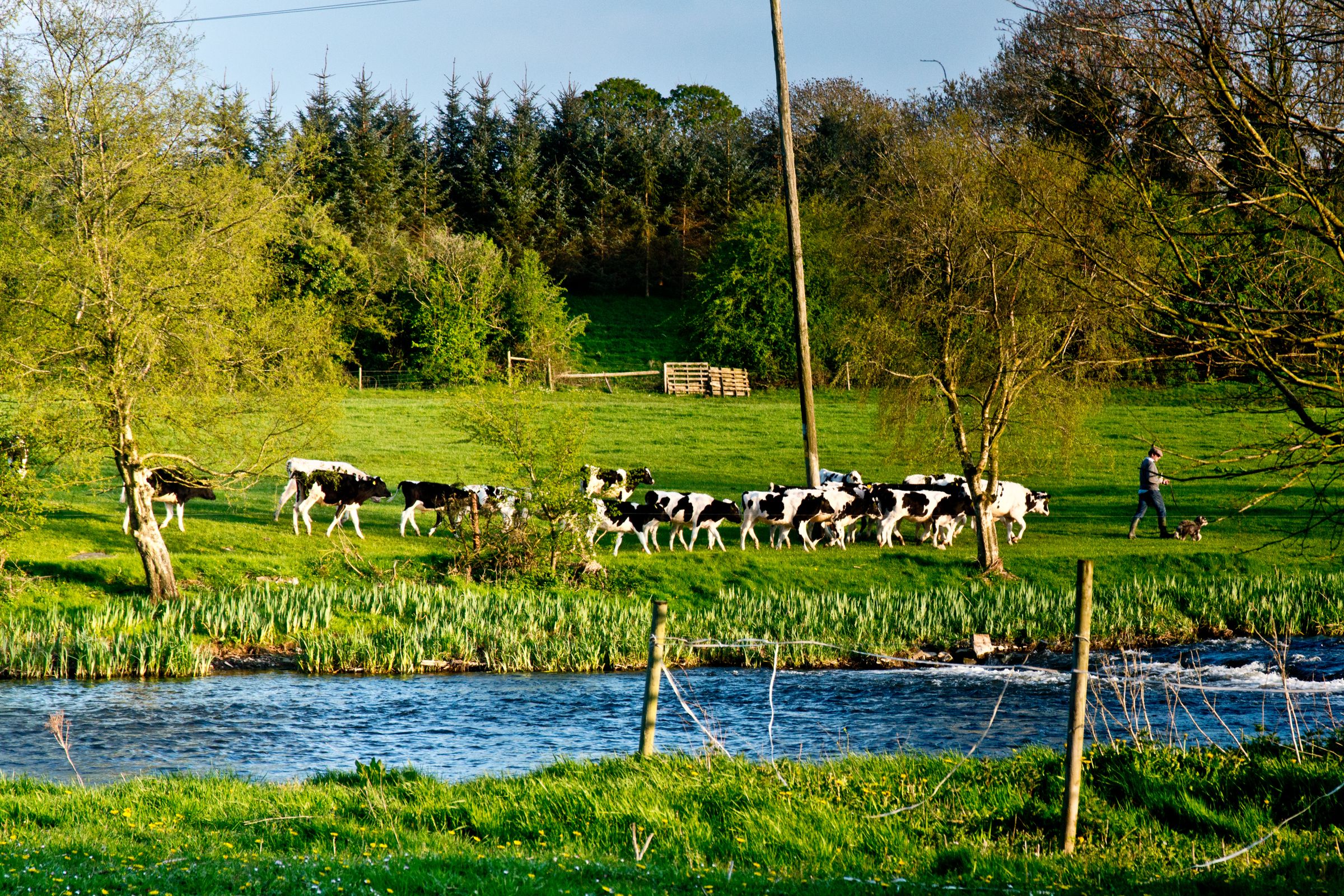
Samhain is one of the four quarter days of the old Irish year, alongside Imbolc, Bealtaine and Lughnasa. It marked the end of the harvest and the beginning of winter, when cattle were brought in from the summer pastures and the working year turned inward. The farming tasks of the season, the last of the grain and the settling of stock, all clustered around it.
The name is usually read as summer's end. In the old reckoning the year began at Samhain, so the festival was both a close and an opening, and the days around it were treated as a time out of ordinary time. Ordinary work and ordinary rules were understood to pause, and the stories that survive from the tradition treat the night as one apart.
The date is generally given as the evening of 31 October into 1 November, since the old festivals began at dusk. Modern calendars and events vary, so check with the organisers and with Heritage Ireland for what is running in any given year. Nothing about one year's programme can be assumed for the next.
Events change each year. Check the current programme with Heritage Ireland and the Office of Public Works before travelling.
The otherworld at hand
In the old stories the boundary between this world and the otherworld was thought to be thin at Samhain. People, and things, could cross more easily than at other times of the year, and the tales are full of encounters that begin on that night. The early literature of Ireland returns to the theme again and again.
This is the root of much of modern Halloween. The idea that the dead return, that the door between worlds stands open, and that ordinary rules are suspended for a night all come from the older festival rather than from anywhere else. The turnip lantern, the masked visitor and the shared meal all have older counterparts.
The customs that grew around it were practical as well as supernatural. Food and light were set out, noise was made to turn away unwelcome visitors, and the last of the harvest was brought safely in before the dark. Some of these practices survived in the countryside long after the festival itself had faded from common use.
The Hill of Ward
The Hill of Ward, also called Tlachtga, stands in County Meath a few kilometres from Athboy. It is a low hill with a ringwork on top, and it is the site most closely tied to Samhain in the tradition. The earthworks are best seen in low winter light, when the shape of the ground is clearest.
According to the old lore, the festival fire was lit here and from it other fires were kindled across the country. Whether or not that is literally true, the hill has been a gathering place at Samhain for years, and the association is well established in local memory and in the written tradition.
The hill is a state monument and is free to walk, but it is a working archaeological site on private farmland. Keep to paths and gates, leave nothing behind, and check with the Office of Public Works before planning a visit. Ground conditions can be soft after rain, and the top is exposed to wind.
Meath and the Boyne
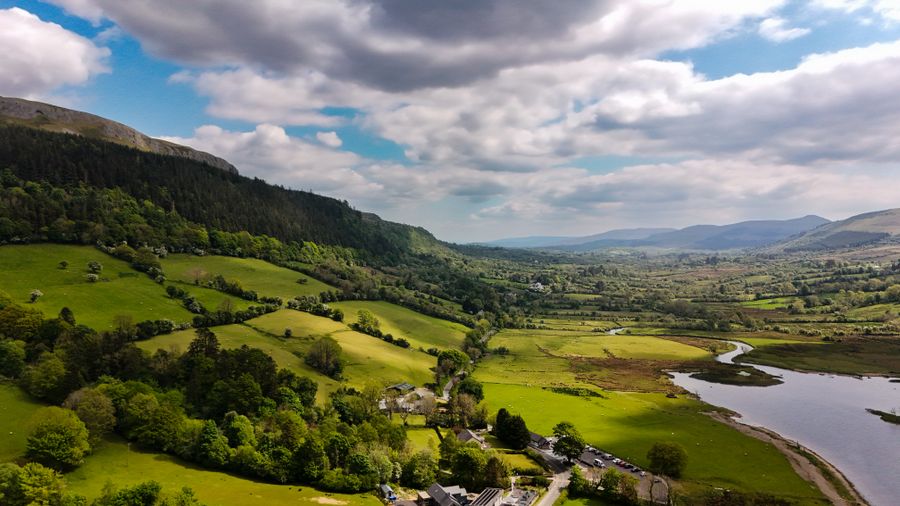
The Hill of Ward sits in a landscape dense with older monuments. The Boyne Valley nearby holds Brú na Bóinne, with Newgrange and Knowth, and the Hill of Tara is a short drive away. All of it rewards a day or two rather than a hurried stop, and the sites sit close enough together to combine.
The nearest towns for a base are Athboy, Trim and Navan. Trim has a castle and a river walk, Navan is the largest of the three with the widest choice of places to stay, and Athboy is closest to the hill itself. Kells, to the north, is another option with a monastic history of its own.
Dublin is within easy reach by road, and the booking search on this page is set to the Dublin region. From the city, Meath is a straightforward day trip or a short run for an overnight stay. Public transport serves the main towns, though the hill itself is best reached by car or on foot from Athboy.
Opening arrangements at Brú na Bóinne and the Hill of Tara change with the season. Check with the Office of Public Works and Heritage Ireland.
How it is marked now
Samhain has been taken up again in recent years, with gatherings, talks and fire events in Meath and elsewhere. These are organised by community groups and heritage bodies, and the programme changes from year to year. Some draw on the older lore directly, while others treat the season more loosely as a marker of autumn's end.
Halloween events at heritage sites, evening walks in the countryside and seasonal markets all draw on the old festival. Some are aimed at families, some at adults, and some are ticketed while others are free to attend. It is worth reading the description of an event before committing, since the tone varies widely.
Because dates, times and tickets change annually, check the current programme with the organisers and with Heritage Ireland before travelling. Nothing about the modern events should be assumed from one year to the next, and some fill up well in advance.
Food, fire and fortune
The old customs of Samhain were mostly about food and light. A meal was set out, a candle left burning, and the last of the harvest eaten before the winter set in. Divination games were common, especially those about marriage, and they were played by firelight with the household gathered round.
Barmbrack, a fruit loaf, is the best known of the foods tied to the season. Objects were once baked into it to tell fortunes, though modern loaves sold in shops usually leave them out for safety. Colcannon, made with potato and kale or cabbage, is another dish associated with the time of year.
Bonfires were lit, and the practice survived into modern Halloween in parts of the country. In many towns the bonfire has moved to an organised event, and local authorities publish guidance on where fires are and are not allowed. Check that guidance before lighting anything, and respect any closure in place.
Visiting at Samhain
Late October in Ireland is cool and often wet, with daylight shortening quickly. Rain is possible on any day, and the ground at hilltop sites can be soft. Waterproof clothing and footwear are more useful than an umbrella in the wind, and a spare layer is worth carrying on an exposed hill.
The Hill of Ward is a short walk from the road, but the ground is uneven and the top is exposed. The site is not suitable for wheels or for anyone unsteady on their feet, and there are no facilities on the hill itself. Plan around short daylight and bring a torch if visiting late in the day.
For a longer stay, Dublin makes the easiest base, with Meath reachable by road and by bus. Check timetables with Bus Éireann and Transport for Ireland, since services change, and check opening arrangements with the Office of Public Works. In an emergency, dial 112 or 999 on either side of the border.