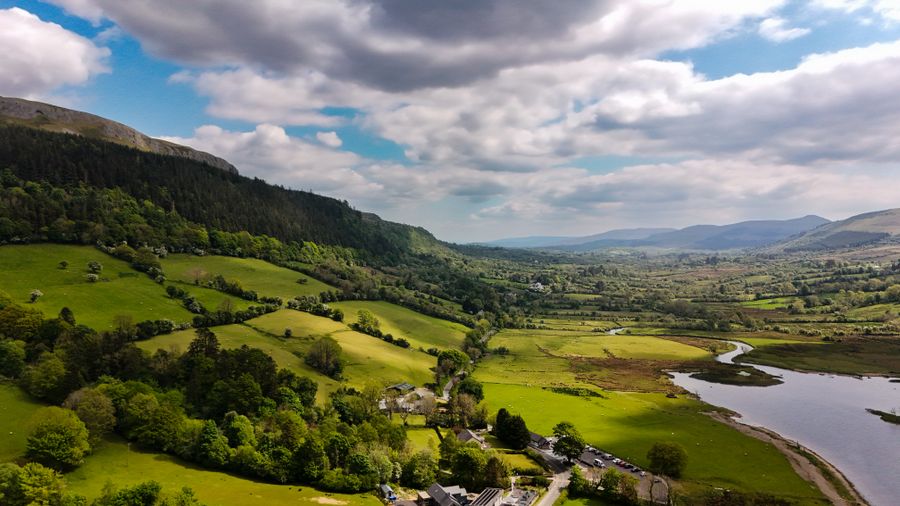
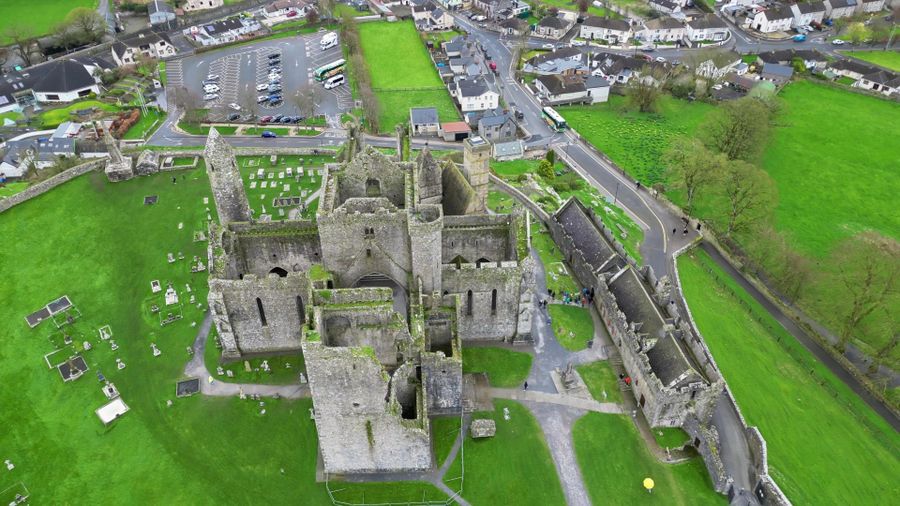
Newgrange is a large passage tomb built above a bend of the River Boyne in County Meath, and it forms part of the Brú na Bóinne complex with the tombs at Knowth and Dowth. Access to the monuments is by guided tour from the visitor centre.
The Brú na Bóinne complex
Brú na Bóinne is the name for the group of prehistoric monuments in the bend of the River Boyne, north of the village of Donore in County Meath. The three main tombs are Newgrange, Knowth and Dowth, all built in the Neolithic period. Around them lie smaller monuments, enclosures and evidence of later activity, so the whole area is treated as one archaeological landscape.
The complex is a UNESCO World Heritage Site, listed for the scale of the tombs and the concentration of prehistoric art and burial evidence in one place. The visitor centre on the south bank of the river is the starting point for all visits, and the monuments themselves are reached from there.
The land between the tombs is farmland and private ground. Visitors stay on the paths and join the guided tours, which is the only way to enter the chambers at Newgrange and Knowth. The setting, a low ridge above a slow river, is part of what makes the place worth the trip.
Inside Newgrange
Newgrange is a round mound faced with stone, with a passage running into the centre and a chamber at the end. The passage is narrow and low, and visitors walk in single file, bending at points. The chamber has a corbelled stone roof that has kept it dry for thousands of years, and three recesses where burials and grave goods were placed.
The entrance is marked by a carved kerbstone, and the mound is ringed by a circle of large standing stones. The front of the mound was rebuilt in the twentieth century, so the white quartz facade seen today is a modern interpretation rather than a record of how it looked when built. Guides explain this on the tour.
The chamber is lit artificially during visits, and the tour lasts a short time. Groups are kept small because of the space inside. Photography is restricted in the chamber, and the guides give the current rules at the start of the tour.
The winter solstice light
Above the entrance passage is a roof box, an opening built so that at midwinter the rising sun sends a shaft of light along the passage to the chamber floor. The effect lasts a few minutes around sunrise and depends on clear weather. It is the reason the tomb is known well beyond Ireland.
Access to the chamber at the solstice is decided by a lottery run by the Office of Public Works, with names drawn from entries made in advance. The numbers admitted are small, and the weather can still spoil the event. Details of the draw and its dates are published by the OPW, and the rules change, so check with them before planning.
For everyone else, the tour includes a simulated version of the solstice light in the chamber, which gives an idea of the effect at any time of year. The real event is not something a general visit can promise.
Solstice places are allocated by lottery run by the Office of Public Works. Check the OPW for current entry dates and rules before planning a winter visit.

Knowth and Dowth
Knowth is the largest of the three tombs in the complex, a mound with two passages, one facing east and one facing west. The kerbstones around it carry a large collection of carved megalithic art, more than at any other site in the complex. Visitors can walk on top of the mound and look out over the Boyne valley.
Dowth is the least developed of the three for visitors. It is a mound with several passages and a wide kerb, and access has been limited in recent years for conservation reasons. The Office of Public Works sets the current arrangements, so check before travelling if Dowth is the reason for the trip.
The visitor centre exhibition covers the archaeology of all three tombs, with models and finds. It is worth an hour before the tour, because it explains what the guides then point out on the ground. Allow half a day for the centre and one tomb, more for two.
Getting there and booking
The visitor centre is on the south bank of the River Boyne near Donore, off the road between Drogheda and Slane. Drogheda is the nearest town with rail and bus connections, and the site is a short drive or taxi ride from there. Parking is at the centre, not at the monuments.
Entry is by guided tour only, and tickets are bought through the visitor centre, with booking ahead advised in summer and around school holidays. Opening hours and tour times change through the year, so check the Brú na Bóinne visitor centre pages run by the Office of Public Works for your date.
A shuttle bus runs from the centre to Newgrange and Knowth, crossing the river. The walk between the centre and the tombs is not open to visitors, so the shuttle is part of the visit. Allow time for the crossing and for the group to assemble at each monument.
Tour times and opening hours change with the season. Check the Office of Public Works Brú na Bóinne pages before setting out, and book ahead in summer.

Elsewhere in the Boyne valley
The Battle of the Boyne site at Oldbridge lies a short drive east of the tombs, with a visitor centre and walks on the battlefield. Slane Castle and the Hill of Slane are to the north, the latter associated with Saint Patrick and with wide views over the valley. These are separate sites with their own arrangements.
The Hill of Tara, seat of the high kings in tradition, is south of the Boyne near Navan. It is an earthwork landscape rather than a built monument, free to walk, and run by the Office of Public Works. The Lia Fáil standing stone stands on the hill.
The monastic site at Monasterboice, north of Drogheda, has high crosses and a round tower in a graveyard. Mellifont Abbey, the first Cistercian house in Ireland, is nearby and cared for by the Office of Public Works. Both make short stops on a day around the tombs.
Where to base yourself
Drogheda is the practical base for Newgrange, with rail and bus links and a choice of places to stay. It sits on the Dublin to Belfast corridor, so it works for a night or two between the two cities. The town itself has a medieval core and a riverside setting.
Slane and Navan are alternatives inland, useful if the Boyne valley and the Hill of Tara are also on the list. Both are small towns with places to stay and eat, and both are within easy driving distance of the visitor centre. A car makes the scattered sites much easier to reach.
Dublin is close enough for a day trip, with the drive from the city taking under an hour outside busy periods. Basing in Dublin and taking a tour or driving out is common, but staying in Meath gives quieter mornings at the tombs and time for the other sites in the valley.