The Boyne Valley lies within an hour of Dublin and holds some of the most visited monuments on the island. A car makes the circuit straightforward: the passage tombs at Brú na Bóinne, the Hill of Tara and Trim Castle sit within a short drive of each other, with the river running between them.
The shape of the drive
The drive works best as a loop rather than a straight line. Most visitors start from Dublin and head north on the M1, leaving it near Drogheda for the Boyne Valley. From there the minor roads run west along the river through Slane towards Navan, with Trim beyond.
A common order is Brú na Bóinne in the morning, the Hill of Tara around midday and Trim Castle in the afternoon. That puts the timed entry first, when the day is freshest, and leaves the more open sites for later.
Distances between the three main sites are short, but the roads are narrow and winding in places. Allow for slower progress than the map suggests, and keep the day to three or four stops rather than trying to cover every monument in the valley.
Timed slots at Brú na Bóinne sell out in summer. Book through Heritage Ireland before travelling and check opening times with the Office of Public Works.
Brú na Bóinne
Brú na Bóinne is a bend of the Boyne holding three large passage tomb complexes: Newgrange, Knowth and Dowth. It is a UNESCO World Heritage Site, and access to the tombs is by guided tour from the visitor centre on the south bank of the river.
Newgrange is the best known, a round mound with a stone entrance and a roof box above the door that catches the midwinter sunrise. Knowth has a large collection of carved stones around its mounds. Dowth is quieter and less developed for visitors.
The visitor centre explains the archaeology before a shuttle bus carries you to the monuments. Tours are ticketed and run to a timetable, so the visit takes longer than the short drive between sites might suggest. Allow a half day here.
The Hill of Tara
The Hill of Tara is a low ridge of earthworks rather than a standing monument, and it rewards a little preparation. It was the seat of the high kings of Ireland in early tradition, and the site holds a complex of banks, ditches and mounds built over a long period.
The most visible feature is the Mound of the Hostages, a passage tomb, alongside the Royal Enclosure and the standing stone known as the Lia Fáil. The views across the surrounding countryside explain why the site was chosen.
A small church and graveyard sit within the hill, and the OPW maintains the site. Ground can be soft after rain, so footwear matters. The hill is exposed, and wind is common even on bright days. Allow an hour or so to walk the main earthworks.
The Hill of Tara is free to walk and open ground. Check current arrangements with the Office of Public Works, as grazing and path access can change through the year.
Trim and its castle
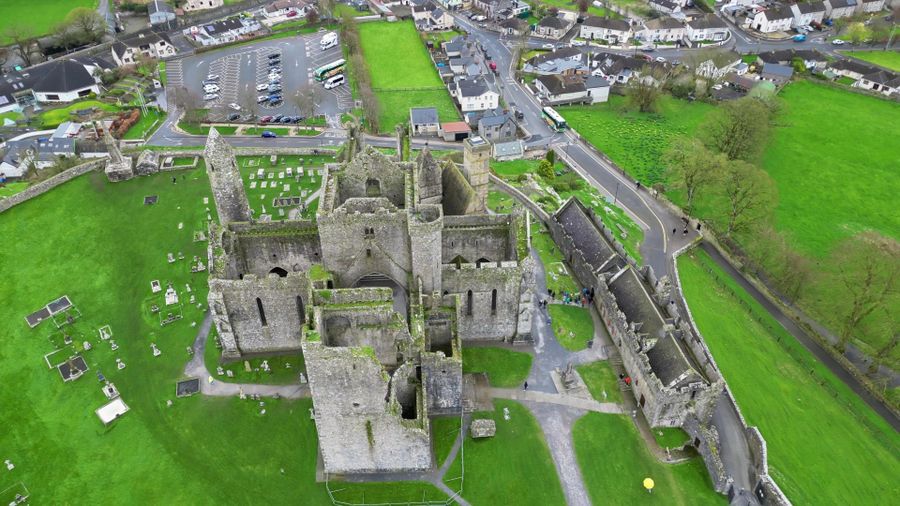
Trim is a small town on the River Boyne with a castle that dominates the centre. Trim Castle is the largest Anglo-Norman castle in Ireland, a long curtain wall around a central keep, and it is run by the OPW. Access to the keep is by guided tour.
The town itself is worth an hour. The castle sits beside the river, with a walk along the bank, and the old streets around Market Square hold the remains of the town walls and a medieval church. It is a good place to end the day.
Trim is also a sensible base for the valley. It has a range of places to stay and eat, and it puts the western sites within easy reach. Navan, a short drive east, is larger and has more choice for an overnight stop.
Other stops in the valley
The Battle of the Boyne site at Oldbridge, west of Drogheda, marks the 1690 battle with a visitor centre and walks through the grounds. It is run by the OPW and sits close to the main road, making it an easy addition.
Slane is a village above a bend in the river, with a hill and a historic demesne nearby. The Hill of Slane is associated with St Patrick in tradition and has views over the valley. The village is a natural pause between Brú na Bóinne and Navan.
Monasterboice, north of Drogheda, holds a round tower and a group of high crosses in a graveyard. It is a quiet site, free to walk, and it suits anyone with an interest in early Christian stonework. The crosses are among the finest on the island.
Where to base yourself
Drogheda is the closest town to Brú na Bóinne and has the widest choice of accommodation in the east of the valley. It sits on the Dublin to Belfast road and rail line, so it works without a car for the eastern sites, though the western ones need transport.
Trim suits anyone who wants the castle and the river on the doorstep, and it is quieter in the evening than Drogheda. Navan, between the two, is a market town with a good range of services and easy access to Tara.
Dublin is a practical base for a single day out, with an early start. Staying in the valley instead allows a slower pace and a second day for Monasterboice, Slane and the river walks. Book ahead in summer, when the Boyne Valley is busy.
Timetables and seasonal opening change. Check with Iarnród Éireann and Bus Éireann for rail and coach times, and with the OPW for site hours.
Driving and practicalities
Traffic drives on the left. Roads in the valley range from motorway to narrow country lanes, and the lanes can be tight between hedges. Take them slowly, and expect tractors and cyclists on the smaller roads, especially at harvest time.
Signs in this part of Meath are in English, as the county is outside the Gaeltacht. Parking at the main sites is signposted, and Brú na Bóinne has a dedicated car park at the visitor centre rather than at the monuments themselves.
The weather is changeable in every season, and the sites are exposed. Rain is possible in any month, so waterproofs are worth carrying. Daylight runs from about 17 hours around midsummer to about 7.5 hours in late December, which affects how much fits into a winter day.