Seals are among the most reliable large animals to see on the Irish coast. They haul out on rocks, sandbanks and quiet beaches all around the island, and a patient hour at a known site often brings a sighting. Knowing the two species and the rules of watching makes the encounter better for both sides.
Two species, told apart
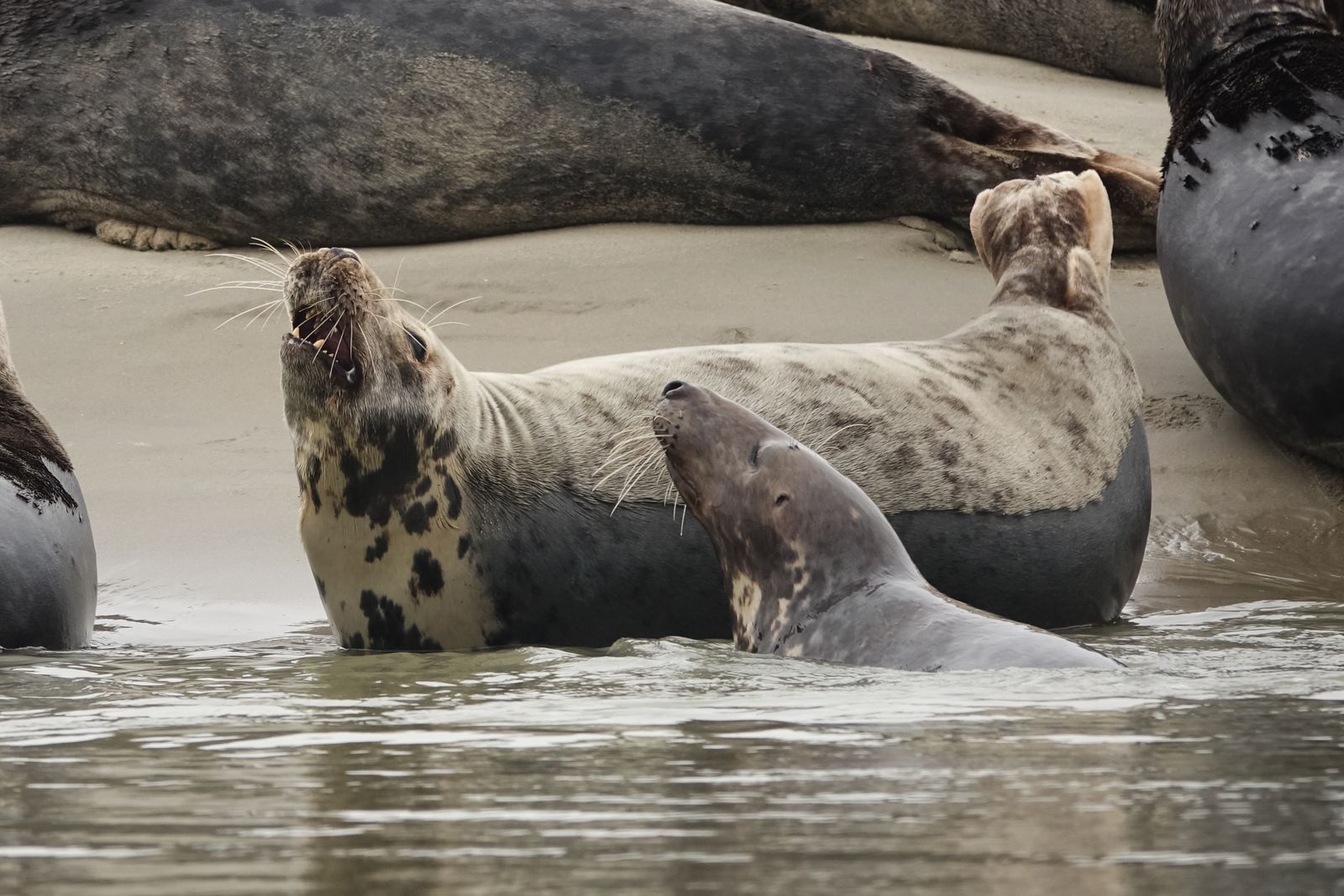
Ireland has two breeding seals. The grey seal is the larger of the two, with a long head that slopes in a straight line from the crown to the nose, and nostrils set well apart. Adult males are dark and heavy, with a Roman nose. The common seal, also called the harbour seal, is smaller, with a rounder head, a shorter muzzle and nostrils that meet in a V shape.
Colour is a poor guide. Grey seals vary from pale cream to near black, often with blotches, and common seals can be grey, brown or buff with fine spotting. Look at the head shape and the nostrils instead. On a haul-out with both species present, the size difference is usually clear once animals are side by side.
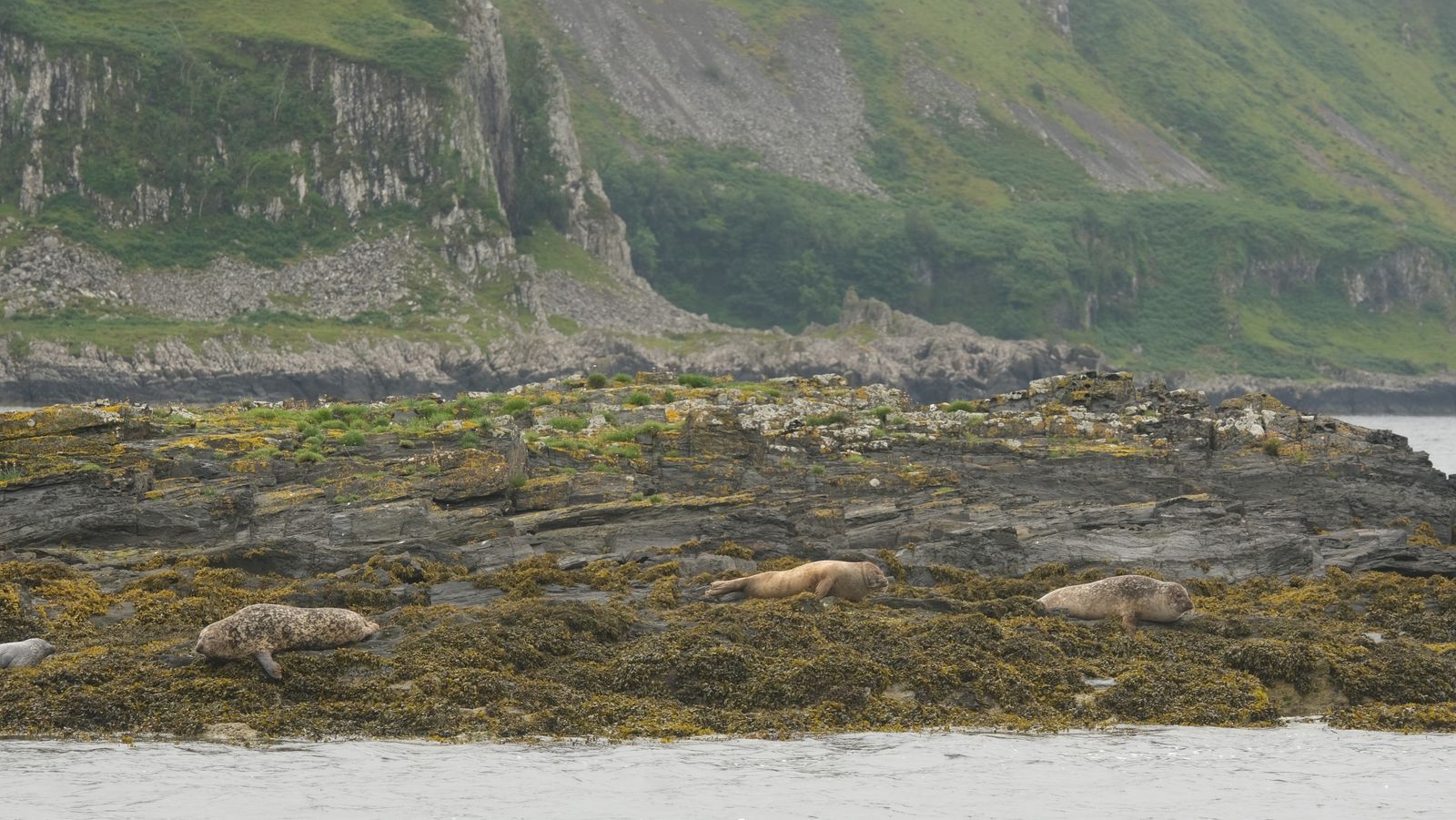
Common seals favour sheltered inlets, estuaries and sandbanks, and often rest with their bodies curved into a banana shape. Grey seals prefer more exposed rocks and islands, and lie flatter. Both are protected in the Republic under the Wildlife Acts and in Northern Ireland under the Wildlife Order, and disturbing them is an offence.
Where they haul out
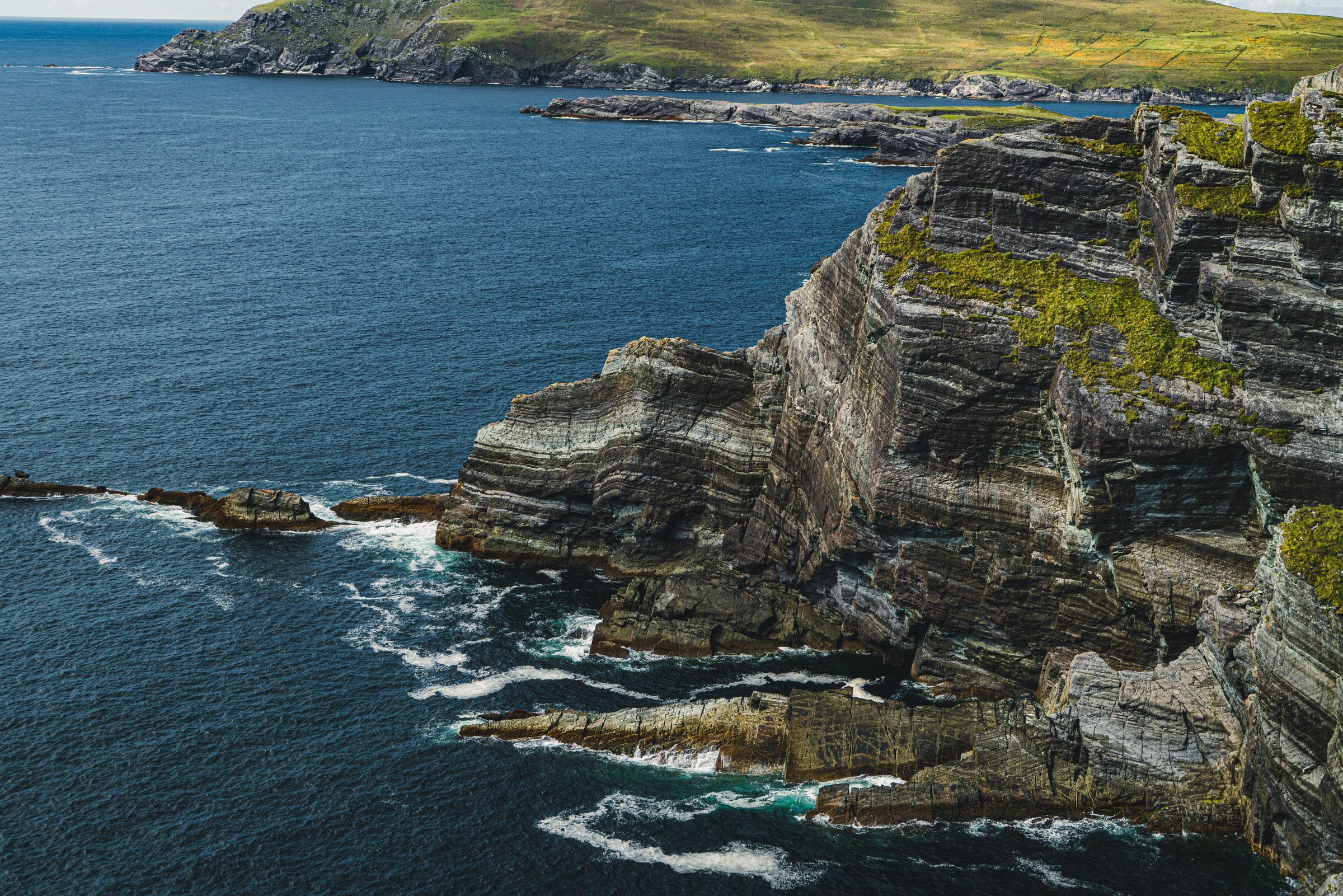
Seals are widespread around the whole island. The west coast has many known sites, from the inlets of Donegal and Mayo to the islands and rocky shores of Connemara and the Kerry coast. The Dingle Peninsula and the Blasket Islands hold regular haul-outs, and the sandbanks and estuaries of the south and east have their own populations.
In Northern Ireland, seals are recorded along the coast of County Down and around Strangford Lough, and on the rocky shores of County Antrim. The larger colonies tend to be on islands and remote stretches where boats and walkers are few. Some sites are on land managed by the National Parks and Wildlife Service, others by the National Trust or private owners.
The best approach is to ask locally. Harbour offices, visitor centres and wildlife groups often know which rocks hold seals and which are best left alone. A sighting from a headland or a boat at a respectful distance is usually better than a close approach on foot, which pushes animals into the water.
The year of a seal
The two species breed at different times. Grey seals pup in autumn and early winter, mostly from September into December, with the peak varying by site. Common seals pup earlier, in late spring and early summer, often from June into July. Pups are born with a pale coat, and grey seal pups moult into a darker coat within a few weeks.
Outside the breeding season, seals spend much of their time at sea feeding, and haul out to rest, digest and moult. The annual moult takes up a stretch of weeks in late winter and spring, when animals look patchy and spend longer ashore. A seal on its own on a beach is often simply resting, not sick or abandoned.
Puffins and seals share some of the same Atlantic islands, though not the same season. BirdWatch Ireland and the RSPB can advise on island visits where both are present. Seals are curious and will sometimes follow a kayak or boat, but that is their choice, not an invitation to close in.
How to watch well
Keep your distance. On land, stay well back from a haul-out and avoid putting yourself between seals and the water, which is their escape route. Use binoculars or a long lens rather than moving closer. On a boat, slow down, keep a steady course and let the animals decide whether to approach.
Watch the signs. If heads go up and animals start to shuffle towards the water, you are too close. A haul-out that empties into the sea because of your approach has cost the animals a rest period, and in the breeding season it can separate mothers from pups. Back off quietly and let them settle.
Keep dogs on a lead and away from seal beaches, and never handle a pup. Do not feed seals, and do not drive boats or kayaks through a group. If you find a seal that looks injured or entangled, note the location and report it to the relevant authority rather than attempting a rescue yourself.
Check local guidance before visiting a haul-out: the National Parks and Wildlife Service in the Republic, DAERA in Northern Ireland.
Where to base yourself
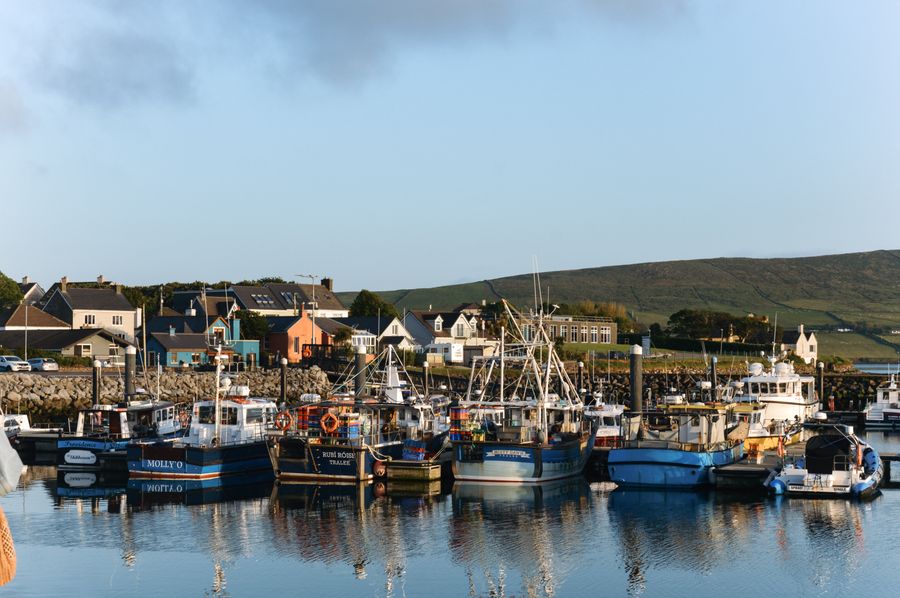
For the seal sites of the south west, Dingle is a natural base. The town has fuel, food and a range of places to stay, and the peninsula's harbours and headlands put you within reach of several haul-outs. Tralee and Killarney are also workable bases for the wider Kerry coast, with good road links.
Further north, Galway city and the villages of Connemara serve the inlets and islands of the west, while Westport and Sligo cover the Mayo and Sligo shores. In the south, Cork city and the towns of West Cork give access to the estuaries and sandbanks of the coast, and Waterford covers the south east.
In Northern Ireland, Belfast and the towns of the Causeway Coast are the practical bases for the Antrim shore, and Newry or Downpatrick for Strangford Lough. Wherever you stay, plan around the tide and the weather rather than a fixed timetable, and give a haul-out a wide berth on foot.
When to go
Seals can be seen in any month, but the character of a visit changes with the season. Autumn is the time for grey seal pups on the main breeding sites, when the numbers ashore are at their highest and the animals are most sensitive. Common seal pups appear in early summer.
Late winter and spring bring the moult, when seals spend longer on land and look scruffy. Summer offers the calmest sea for boat trips and the longest evenings for watching from a headland. Winter storms can make the coast dangerous, and the shorter daylight limits how far you can walk.
The weather decides more than the calendar. Check a forecast from Met Éireann in the Republic or the Met Office in Northern Ireland before setting out, and remember that the west and the hills are wetter than the east. A calm, dry day with a falling tide is often the best combination for a shore watch.
Staying safe and legal
Seal watching happens on the coast, and the coast has its own rules. Check tide times before walking to a headland or across a beach, keep back from wet rocks and cliff edges, and tell someone where you are going. In an emergency, call 112 or 999 on either side of the border.
The law protects seals from disturbance in both jurisdictions. In the Republic, the National Parks and Wildlife Service and An Garda Síochána deal with wildlife offences. In Northern Ireland, the Department of Agriculture, Environment and Rural Affairs and the Police Service of Northern Ireland do. Report a suspected offence rather than intervening.
Remember that Northern Ireland is part of the United Kingdom, with pounds and miles, while the Republic uses the euro and kilometres. There are no routine checks on roads crossing the border. Distances and driving times on a seal trip should be planned with that in mind, especially on the narrower roads of the west.