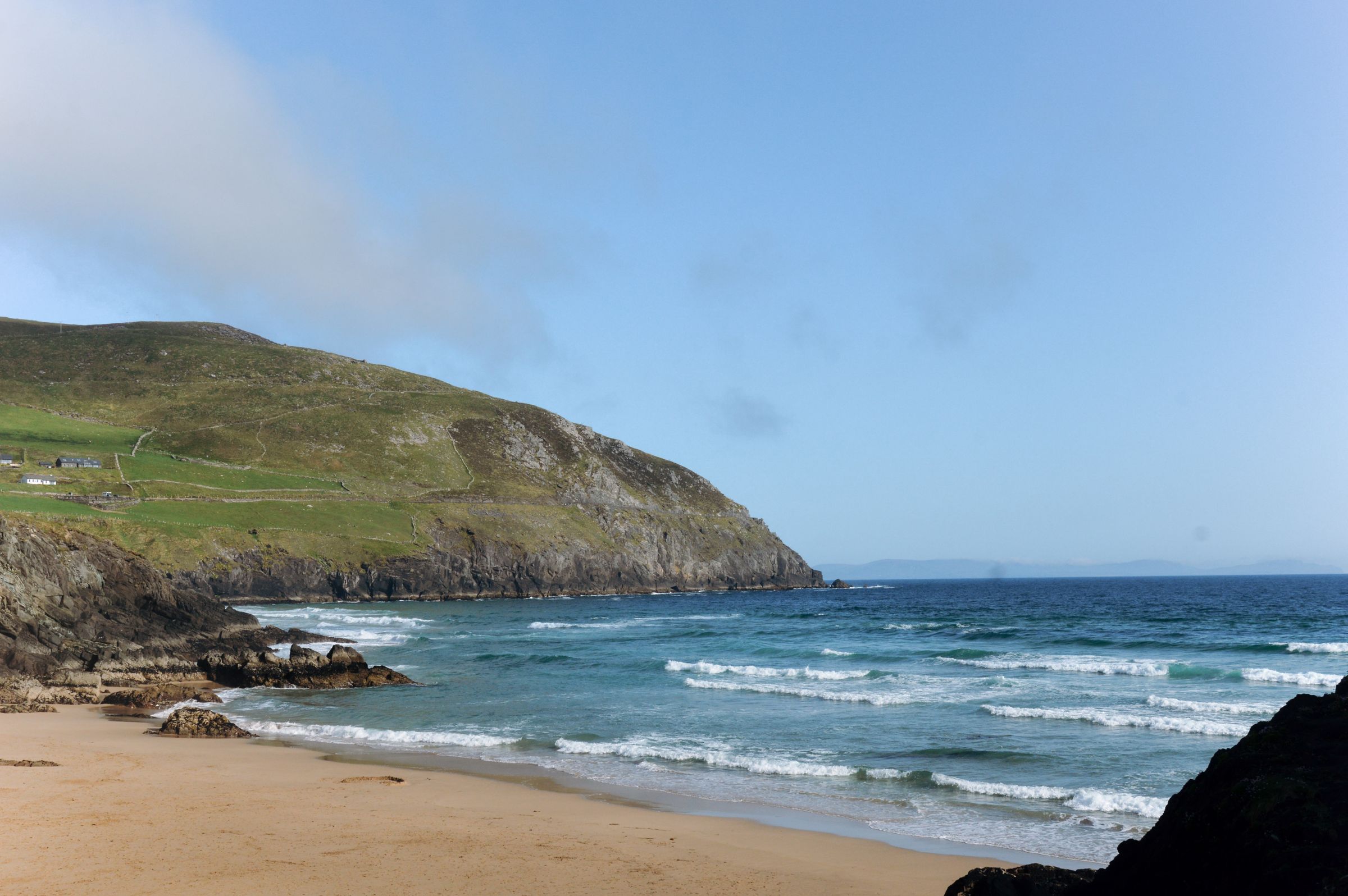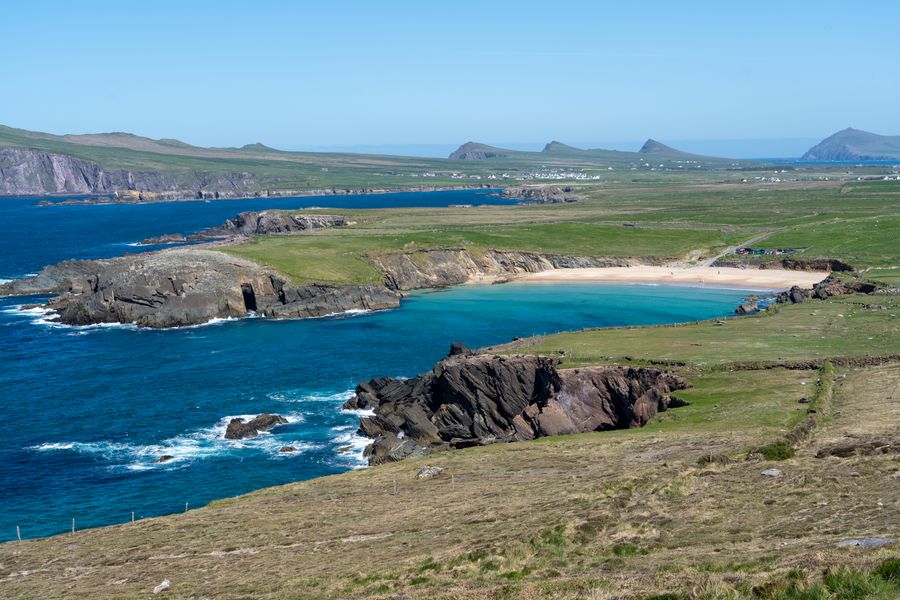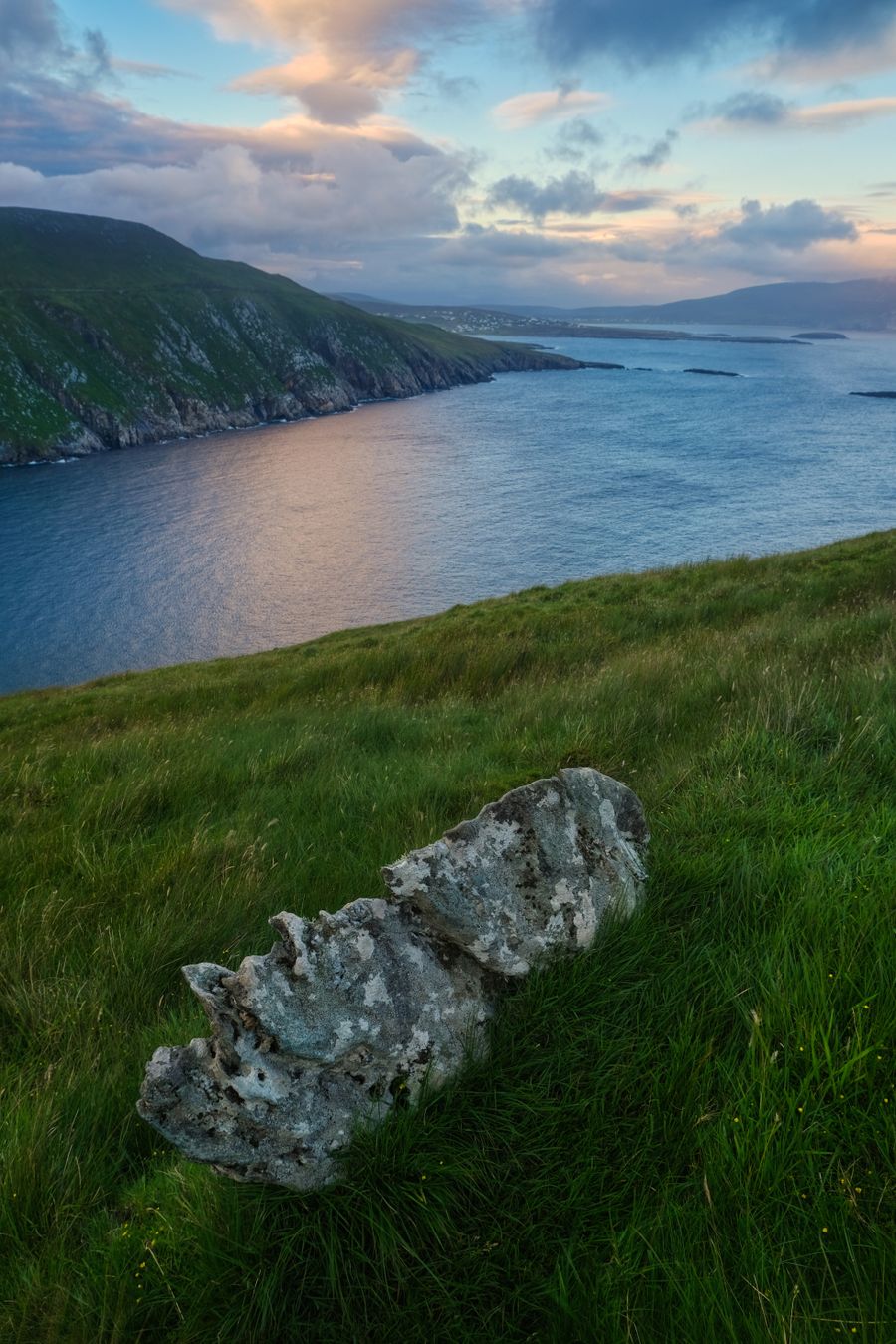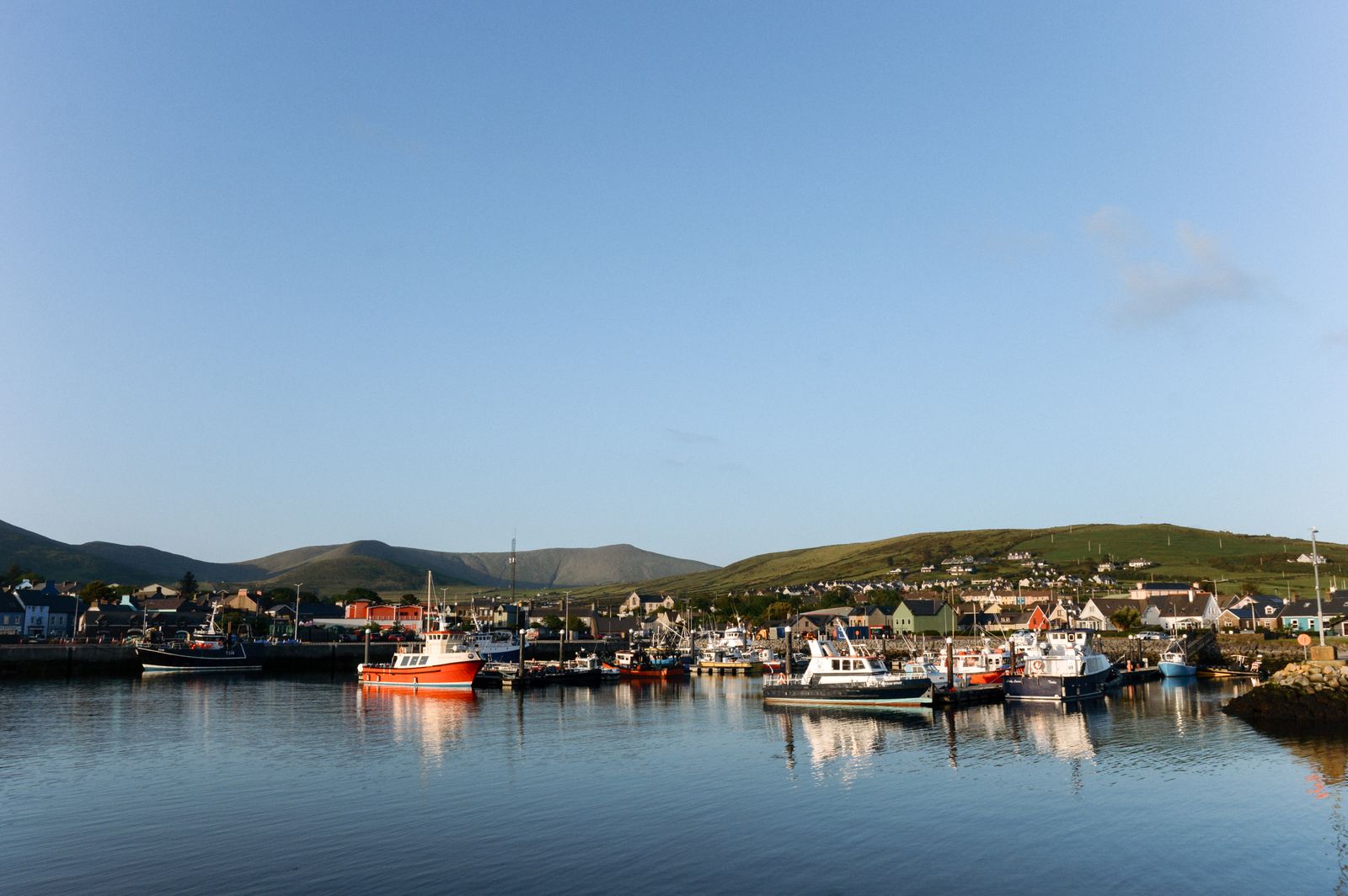
Dingle harbour sits at the end of the Dingle Peninsula in west Kerry, sheltered from the Atlantic by a long breakwater. Fishing boats still work from the quay, and the streets behind it hold shops, cafés and pubs. It is a good base for the peninsula.
Along the quays
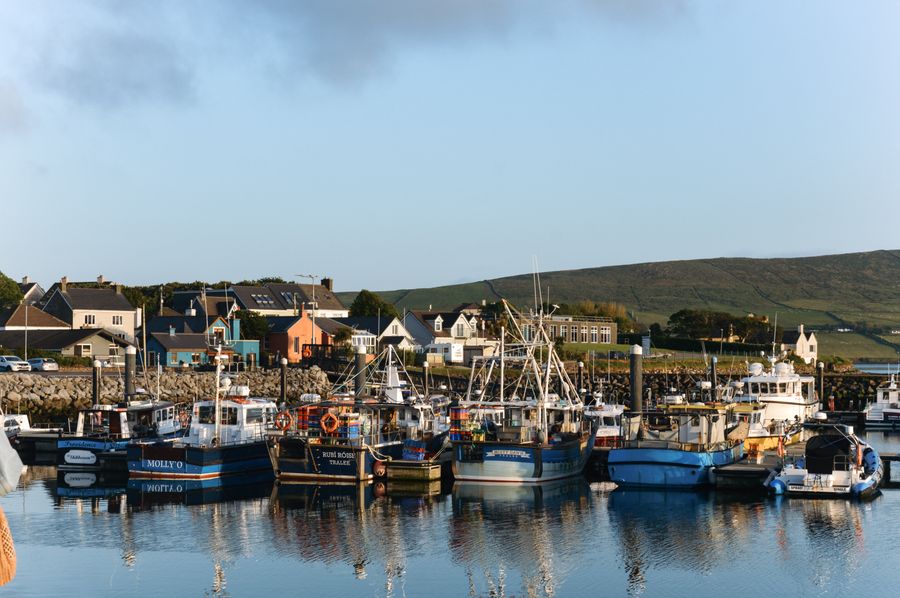
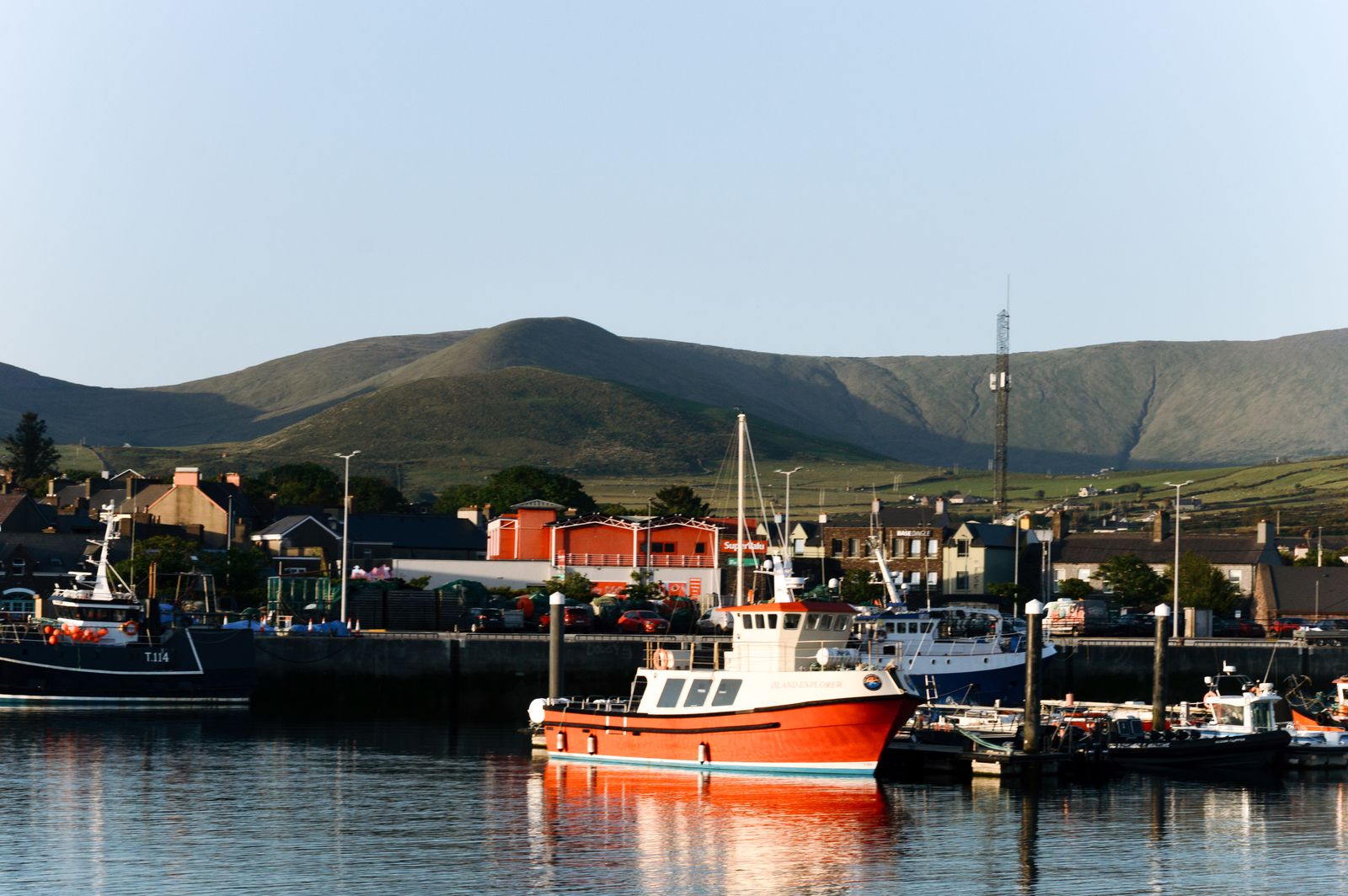
The harbour is a working one, not a marina dressed up for visitors. Trawlers and smaller fishing boats tie up along the quay walls, and the smell of diesel and salt is part of the place. The breakwater runs out towards the harbour mouth and gives a long view back over the town and up to the hills behind it.
Walking the quay takes a short time but rewards a slow pace. Look at the boats, the ropes and the crates, and the gulls working the water. On a wet day the shelter of the walls makes the walk possible when the open coast is not.
The harbour is free to walk at any time. Parts of the working quay are in use by boats and vehicles, so keep clear of machinery and mooring lines, and take care on wet stone.
Boats and the water
For many years a bottlenose dolphin lived in and around the harbour and drew boat trips out to see it. The dolphin, known locally as Fungie, has not been seen since 2020, and the boat trips that followed it have changed or stopped. Do not plan a visit around seeing it.
Boat trips still run from the harbour in season, including trips around the harbour and out towards the mouth and the Blasket Islands. Sailings depend on weather and sea state, and timetables change through the year, so check with the operator on the day.
Sea angling and kayaking also go from the harbour area in season. The water is cold at any time of year, and the weather can turn quickly on this coast. Ask locally about conditions before setting out.
Boat trips and sailings depend on weather and season. Check with the operator on the day, and ask at the harbour office about conditions.
The town behind
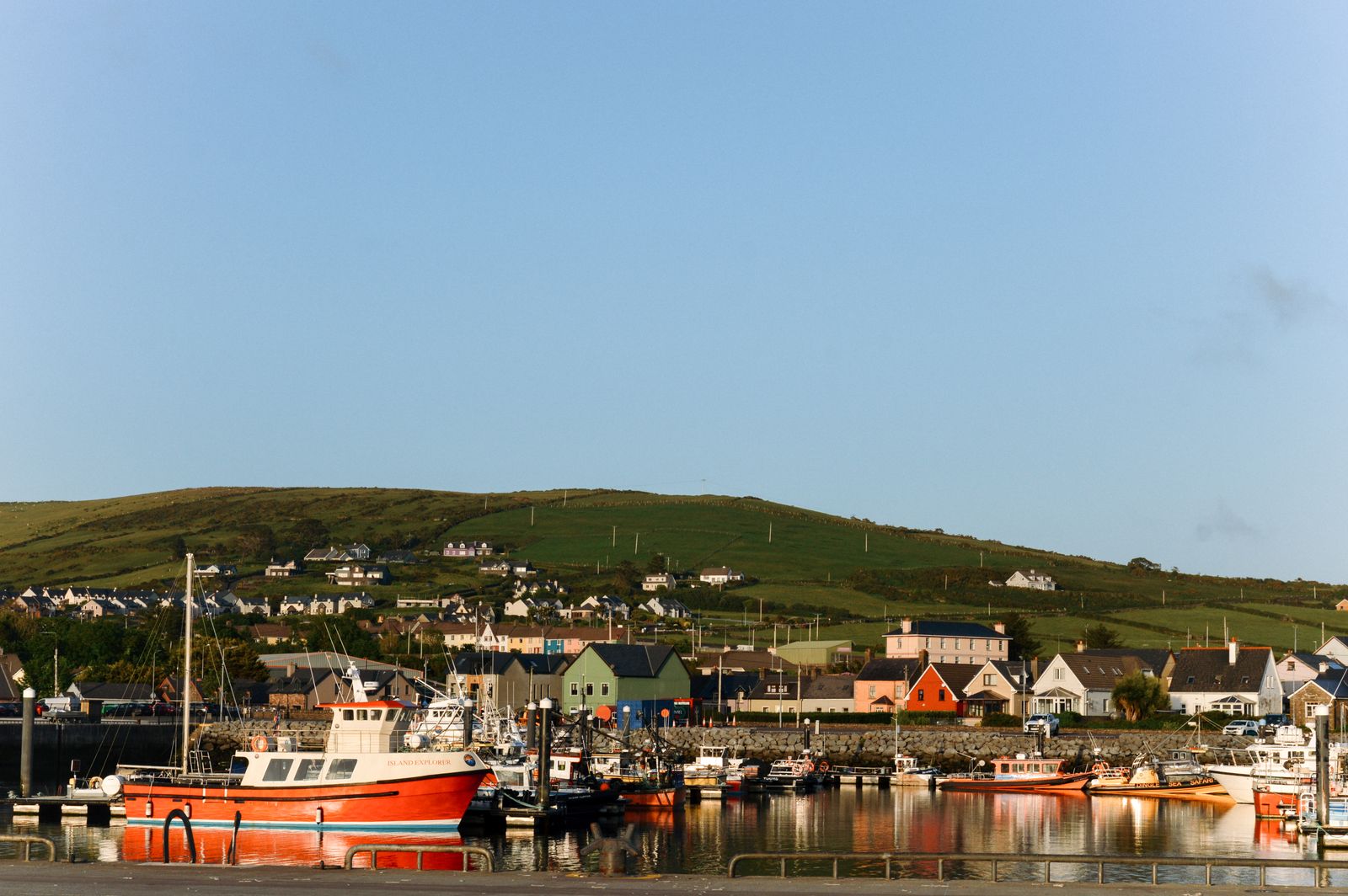
The streets behind the quay are the heart of the visit. Shopfronts are painted in strong colours, and the names over the doors are a mix of Irish and English. The town is in a Gaeltacht area, where Irish is the community language, and road signs here are in Irish only.
The main streets are short and walkable. A loop from the harbour up through the town and back down takes under an hour at an easy pace, longer with stops. There are cafés, food shops and craft shops along the way, and a small heritage centre with displays on the peninsula.
Dingle is a small town and gets busy in summer. Parking near the harbour fills early in the day. Arriving on foot or by bus avoids the search for a space, and the town is compact enough to cross in minutes.
Music in the evening
Dingle is known for its pubs and for traditional music played in them. Sessions are common in summer, when musicians gather in the evenings, and quieter out of season. The music is not staged for visitors: it is played by people who live in the area, and the standard is high.
A session is an informal gathering of musicians, usually in a corner of a pub, playing tunes together. Listeners are welcome, and buying a drink is the usual courtesy. Talking loudly through a quiet set is not. Sessions start at different times, so ask locally on the day.
The town also holds festivals through the year, including food and music events. Dates change annually, so check with the local tourist office or the festival organisers for the current year rather than relying on last year's programme.
Session times vary by pub and season. Ask at the local tourist office or in the pubs on the day you arrive.
Food and produce
The harbour supports a food culture built on fish, shellfish and local farm produce. Fish landed here reaches kitchens in the town and beyond. Menus in the area tend to follow the catch and the season rather than a fixed list.
The town has food shops, a bakery or two and a small regular market. The market days change, so check locally. Fish shops sell what has come in that day, and the range depends on the weather and the boats.
Eating well here does not require booking far ahead, but in high summer the better known places fill up. Booking a table earlier in the day is a sensible habit in July and August, and quieter in spring and autumn.
Getting there
Dingle is at the end of the R559 road from Trá Lí (Tralee), which is the nearest large town and the county town of Kerry. The drive from Tralee takes around an hour, and the road crosses the peninsula through hills and past beaches.
Bus services connect Tralee and Dingle, with some services continuing around the peninsula in season. Timetables change, so check with Bus Éireann or TFI Local Link for the current schedule. The nearest railway station is at Tralee, on the Iarnród Éireann network.
The nearest airport is Kerry, near Farranfore, with onward travel by road. Shannon and Cork are further but have more flights. Driving is the practical way to reach the harbour and to explore the peninsula beyond it.
Bus times on the peninsula change by season. Check Bus Éireann or TFI Local Link for the current timetable before travelling.
Choosing a base
Dingle town suits people who want the harbour, the pubs and the music within walking distance. Staying in the town means the car can stay parked, and evenings are easy. It is the obvious base for a first visit to the peninsula.
Other bases on the peninsula are quieter. Villages along the coast and towards the end of the peninsula have places to stay and access to beaches and walks, with less evening activity. They suit people who want to drive out each day and return to quiet.
Tralee is a larger base with more services, a railway station and a wider choice of accommodation. It is less atmospheric than the harbour but practical for a longer stay, and it puts Killarney and the Ring of Kerry within reach.