W. B. Yeats spent childhood summers in County Sligo and the place stayed with him for the rest of his life. The county's lakes, hills and coast appear again and again in his poems, and much of the landscape can still be walked and driven today.
Why Sligo
Yeats was born in Dublin and spent much of his working life in London, but his mother's family came from County Sligo and he spent long summers there as a child. The names of the county, its townlands, lakes and hills, fill his poems from early work to late.
He returned often as an adult, and the landscape of Sligo and neighbouring Leitrim became the setting for much of his writing. The phrase Yeats country is used for the area around Sligo town, Lough Gill and the slopes of Benbulbin.
Visitors do not need to know the poems to enjoy the place, but a little reading before a trip adds a layer to the scenery. Many of the places named in the verse are publicly accessible and free to walk.
Drumcliffe churchyard
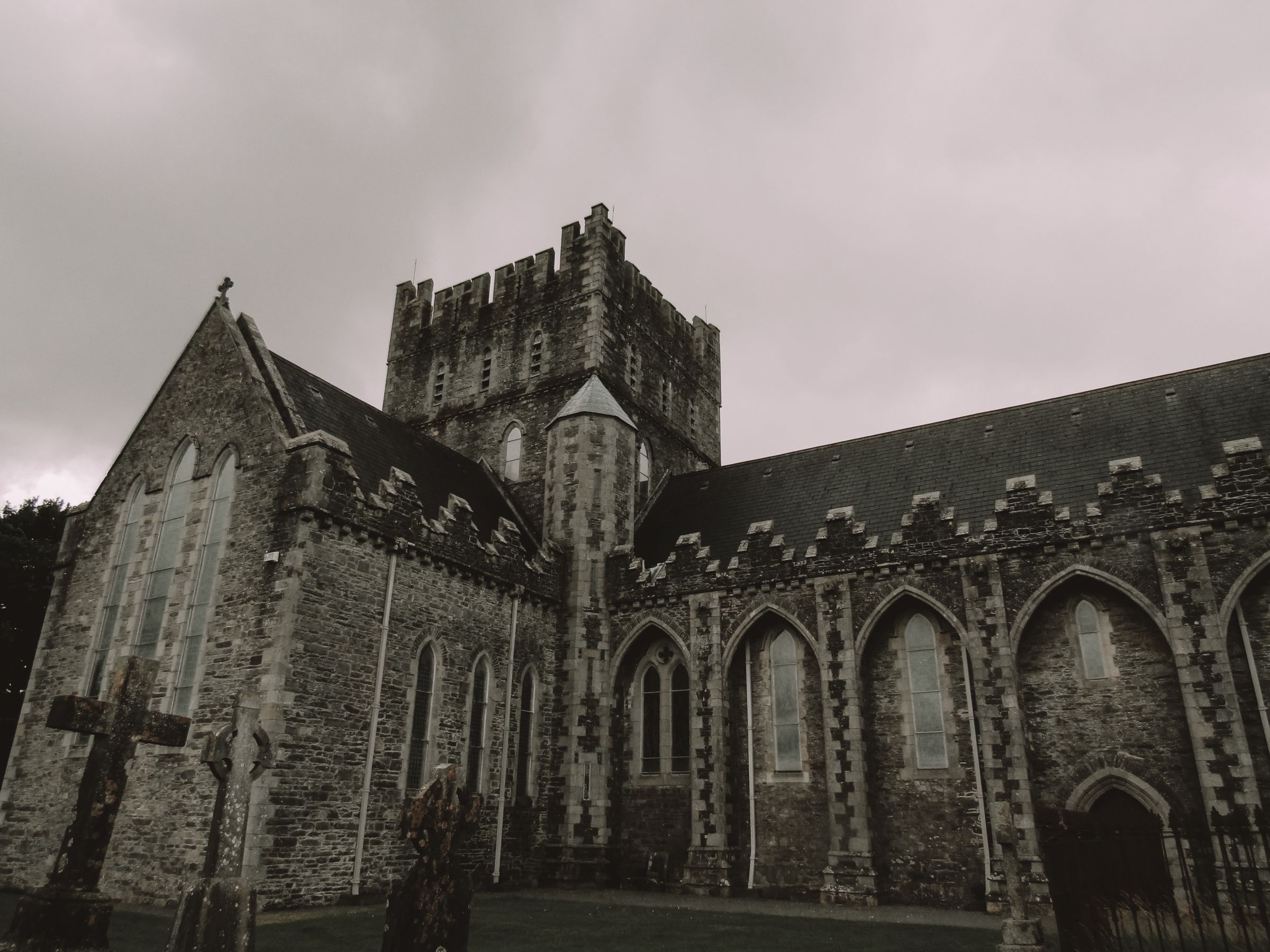
Drumcliffe, a few kilometres north of Sligo town, is where Yeats is buried. The churchyard sits below Benbulbin, with the mountain filling the view to the north. The grave is marked by a plain headstone with the poet's name and dates.
The churchyard also holds a high cross and the remains of an older church, so the visit is not only literary. The site is open to walk through, and a small visitor centre beside it covers the poet's life and the history of the church.
The epitaph on the grave comes from one of his late poems, a short and often quoted line about life and death. Visitors should treat the churchyard as a working burial ground and keep to the paths.
Drumcliffe is a short drive from Sligo town. Opening hours at the visitor centre change with the season, so check with the Office of Public Works before setting out.
Lough Gill and Innisfree
Lough Gill lies east of Sligo town, partly in County Leitrim. Its wooded shores and small islands are the setting for The Lake Isle of Innisfree, one of Yeats's best known early poems, written while he was living in London.
Innisfree itself is a small island in the lake. It can be seen from the shore and from boats on the water, but it is not generally open to land on. The poem's picture of a cabin and a bean row is imagined rather than real.
A looped drive around the lake passes several viewpoints and quieter stretches of shore. The road is narrow in places, and the light on the water changes quickly with the weather.
Under Benbulbin
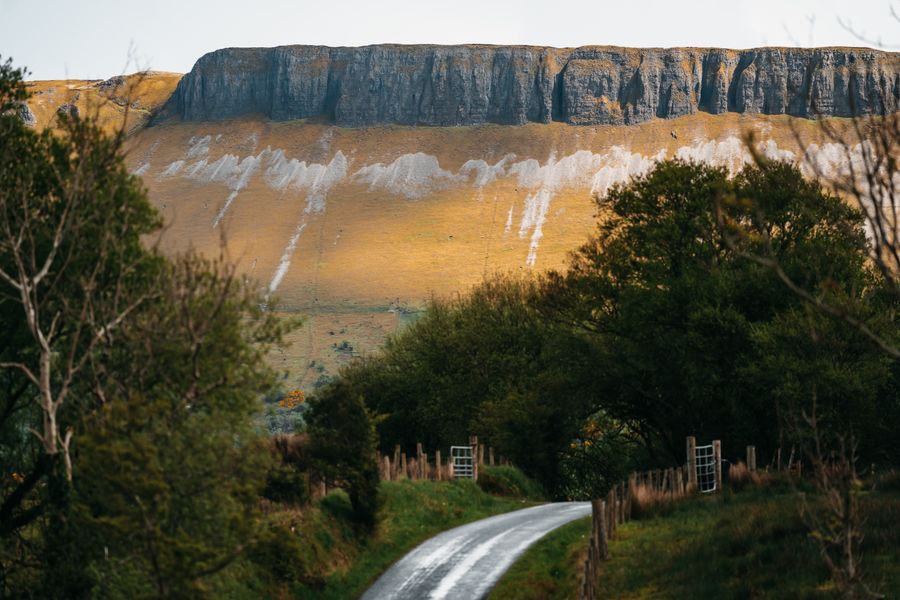
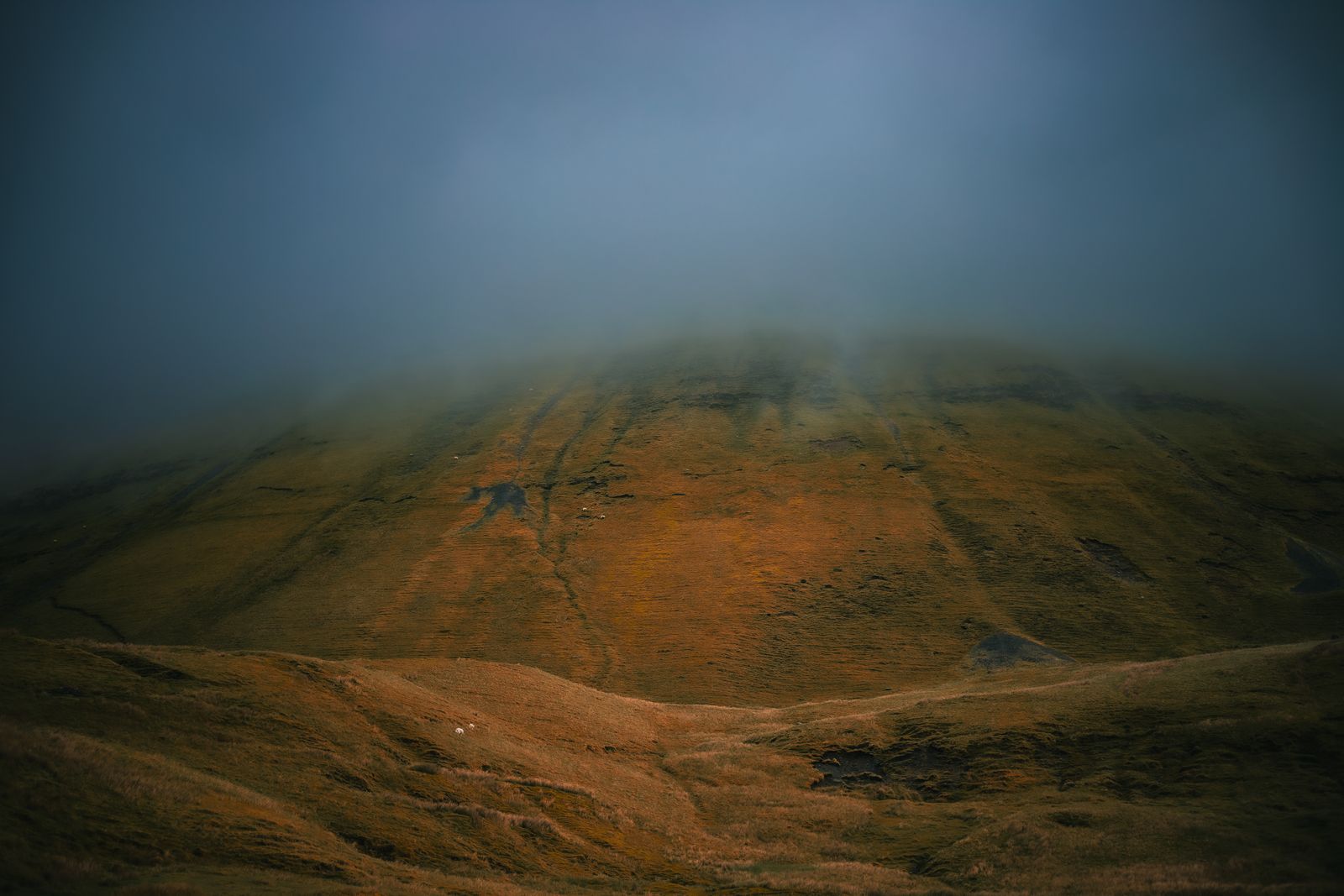
Benbulbin is the flat-topped table mountain that dominates the skyline north of Sligo town. Its shape comes from layers of limestone and shale, and its steep northern face is a landmark from much of the county.
The mountain appears in Yeats's late poem Under Benbulbin, which names the peak and the surrounding country. Walking on the plateau is possible on established routes, but the terrain is exposed and the weather can change fast.
For most visitors the best approach is from below, on the roads and lanes around Drumcliffe and Grange, where the mountain fills the view without any need to climb. Hill walking groups and guidebooks cover the safer routes.
Weather on Benbulbin can turn quickly and the plateau has little shelter. Check the forecast with Met Éireann and carry a map before any walk above the valley.
Sligo town as a base
Sligo town is the natural base for Yeats country. It has the widest choice of places to stay, the main rail and bus connections, and the greatest number of places to eat. Drumcliffe, Lough Gill and the mountain are all within a short drive.
The town itself has a literary connection beyond Yeats: it hosts a summer school devoted to his work, and the county library and museum hold material on the poet and the wider history of Sligo. The town centre is compact and walkable.
Other bases suit different trips. Strandhill and Rosses Point, on the coast west of town, are quieter and close to beaches. Enniskillen and the Leitrim villages around Lough Gill suit anyone wanting to explore the lake from the eastern side.
Getting around
Sligo town is served by rail on the line from Dublin and by bus routes from several directions. The railway station is close to the town centre. Timetables change, so check with Iarnród Éireann and Bus Éireann before travelling.
A car makes the scattered sites much easier. Drumcliffe, Lough Gill and the roads below Benbulbin are not all on convenient bus routes, and some lanes have no public transport at all. Traffic drives on the left and distances are in kilometres.
Cyclists will find quiet roads around the lake and along the coast, though the main roads into Sligo town carry fast traffic. Transport for Ireland has a journey planner that covers trains and buses across the region.
Rural bus services around County Sligo are limited and some run only on certain days. Check timetables with TFI Local Link and Bus Éireann before relying on public transport.
Reading before you go
A short selection of poems read before a visit makes the landscape easier to see. Early poems such as The Lake Isle of Innisfree and The Stolen Child draw on Sligo and Leitrim places, while later work turns to the mountain and the wider county.
The poetry is not always easy. Yeats wrote in a formal style and used a private set of symbols, and some poems reward a second reading. Anthologies with notes help, and the visitor centre at Drumcliffe gives context to the life.
Beyond the poems, the county has a wider literary and archaeological history. Sligo is rich in megalithic tombs and early Christian sites, and the landscape that shaped the poetry is also worth seeing on its own terms.