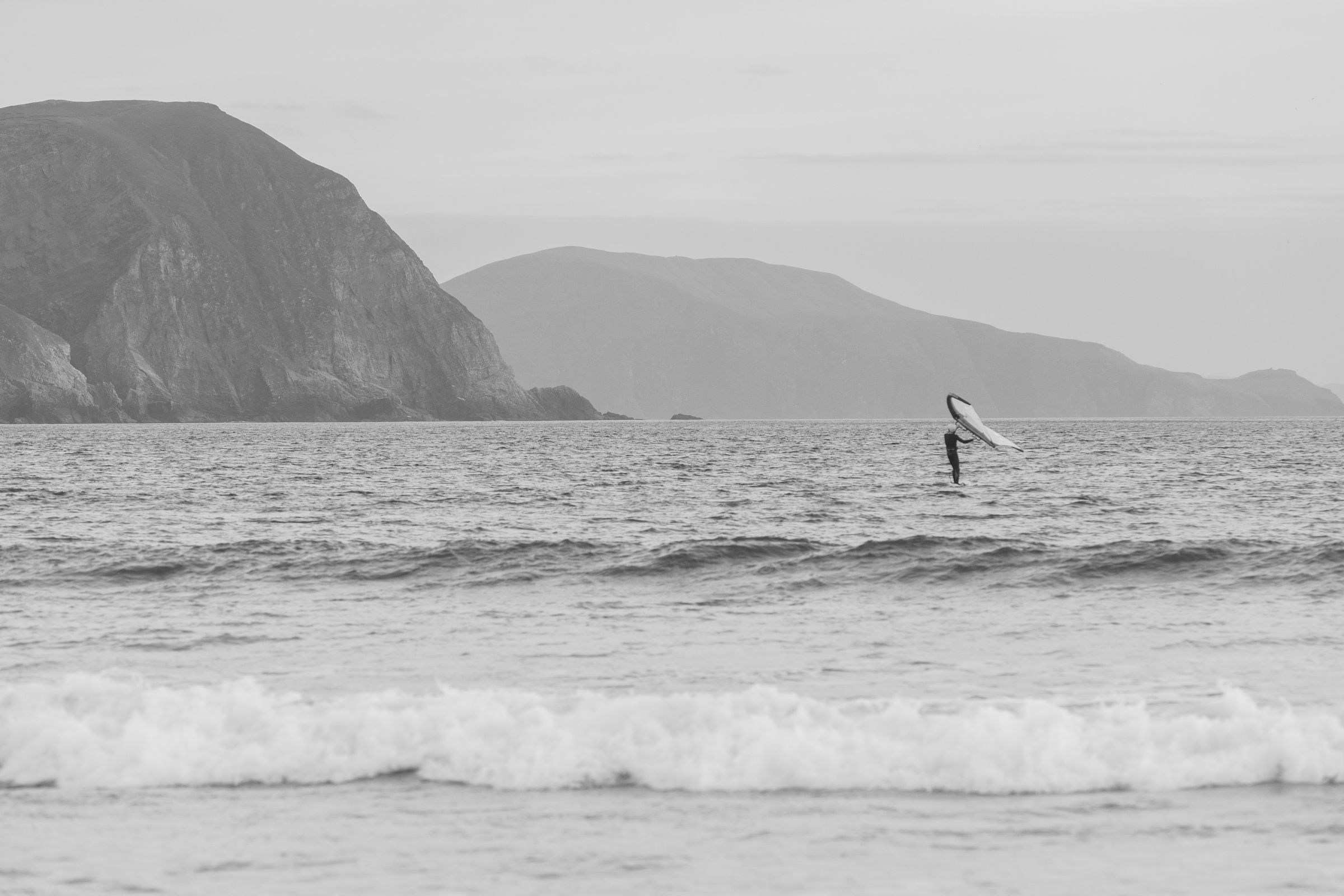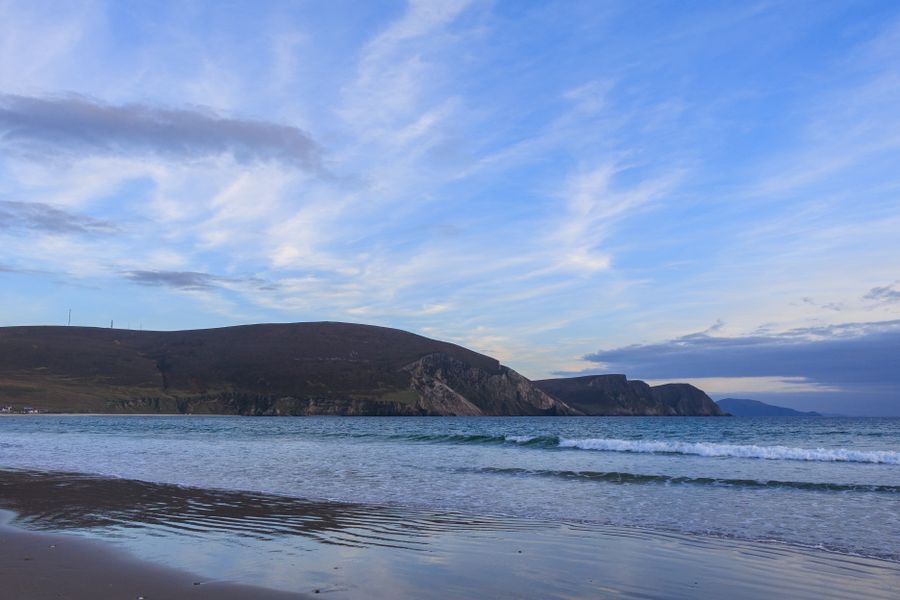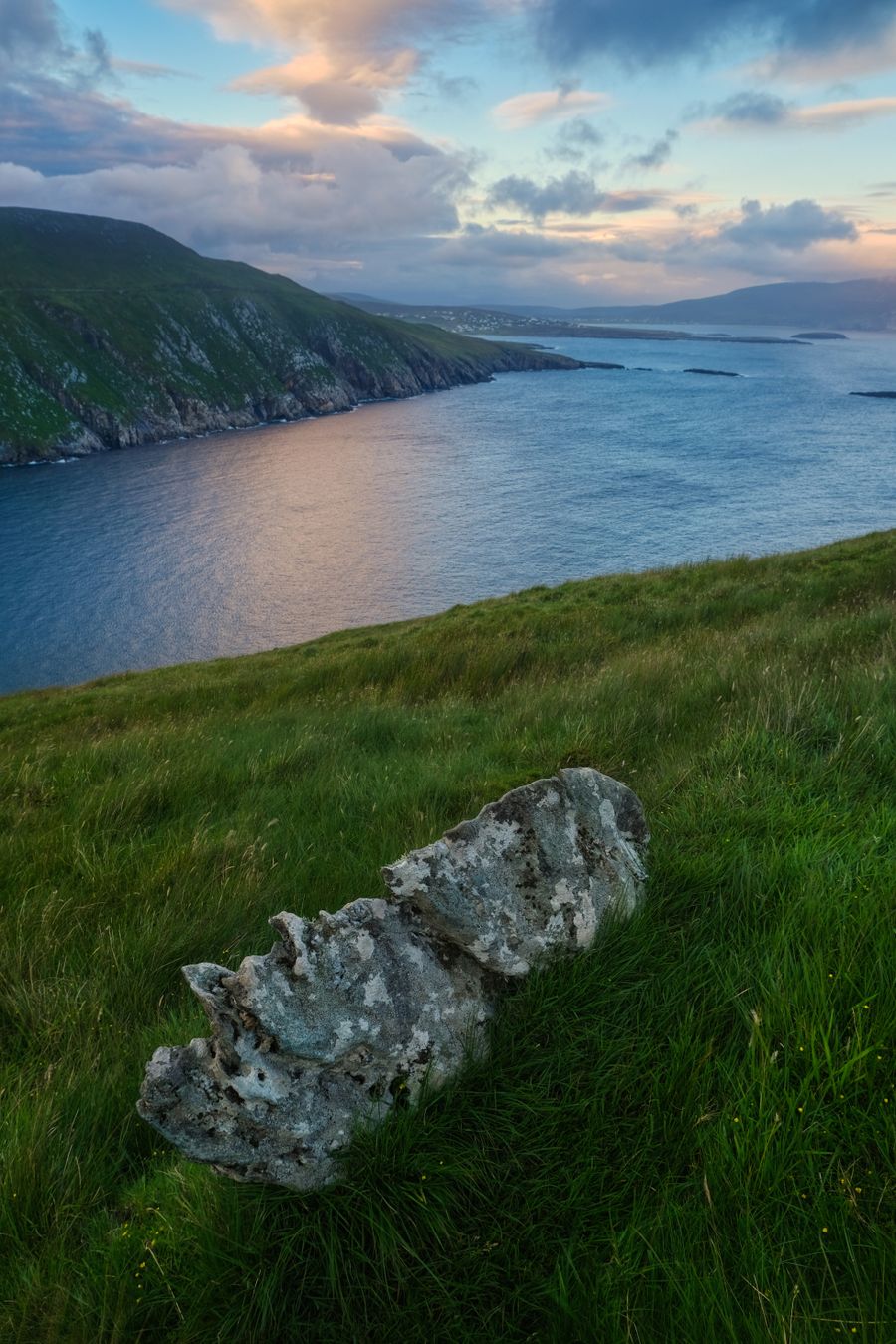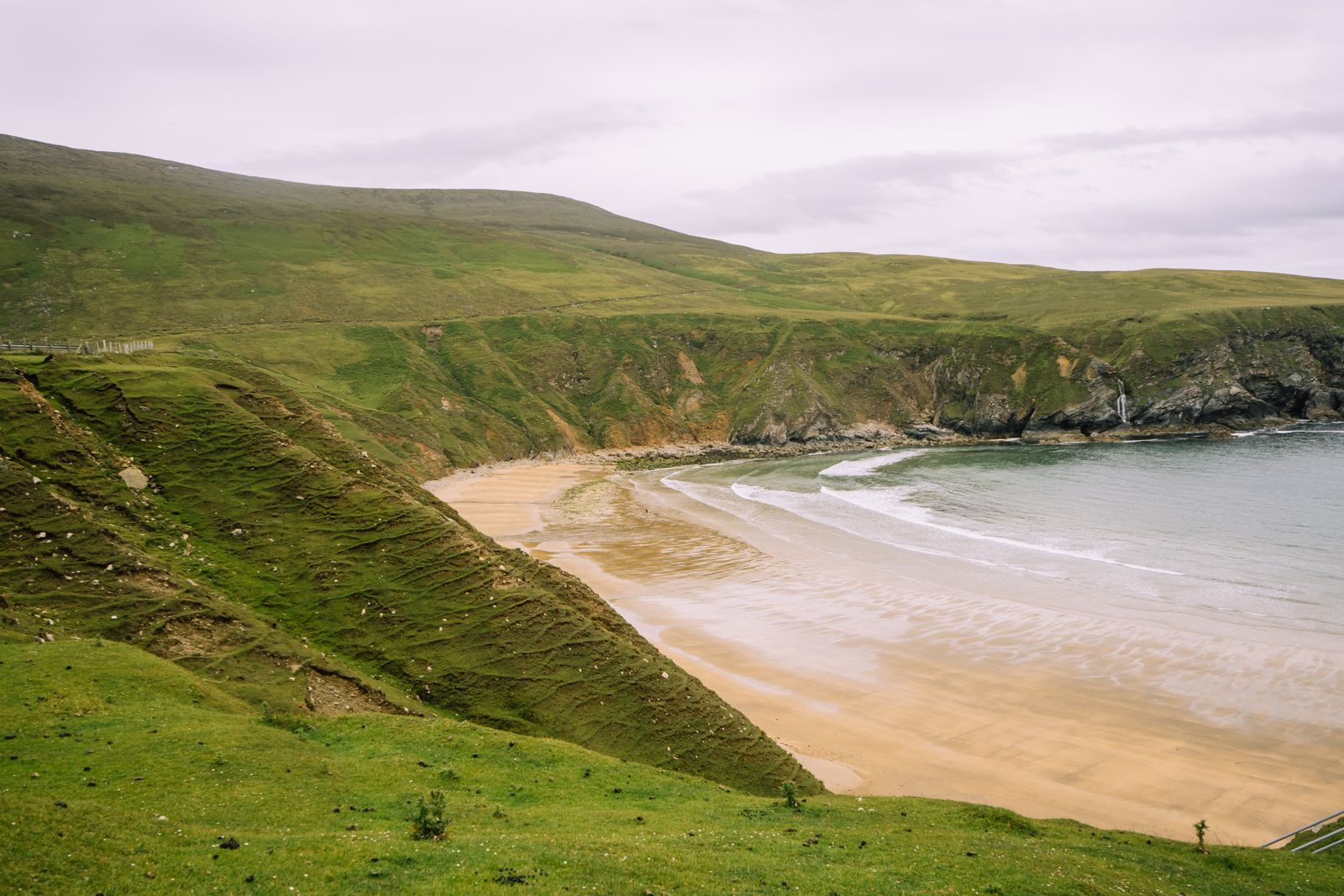
Keem Bay sits at the far western end of Achill Island in County Mayo, where the road runs out below the slopes of Croaghaun. The beach is sheltered, the water is clear, and the cliffs close in on both sides.
The beach itself
Keem Bay is a curved strand of pale sand set between low headlands, with Croaghaun rising behind it. The shape of the bay keeps the worst of the Atlantic swell out, so the water is often calmer here than on the exposed strands further east. The beach shelves gently, which makes it easier for children than many west coast strands.
The bay faces north west, so it catches the evening light in summer. There is a car park above the beach and a slipway down to the sand. Facilities are limited: plan on bringing what you need, and take litter away with you.
Swimming is popular in summer but there is no lifeguard cover on a fixed season that can be relied on. Check locally before entering the water, and never swim alone in an unfamiliar bay.
Getting to Keem
Achill Island is reached from the mainland by a bridge at Achill Sound, so no ferry is needed. From Westport the drive follows the N59 west and then the R319 through Newport and Mulraney. The road to Keem leaves the main island road near Keel and climbs over the hill before dropping to the bay.
The final stretch is a narrow road with passing places and a steep descent. It is not suited to large vehicles, and parking at the bay fills quickly on fine summer days. Arriving early or late in the day makes a difference.
There is no rail station on Achill. Bus services run to the island from Westport, but the timetable is limited and changes with the season. Check with Bus Éireann and TFI Local Link before relying on public transport for the last miles.
The road down to Keem is narrow with passing places. Check road conditions locally in winter, and ask at Achill tourist information about coach access.
Croaghaun and the cliffs
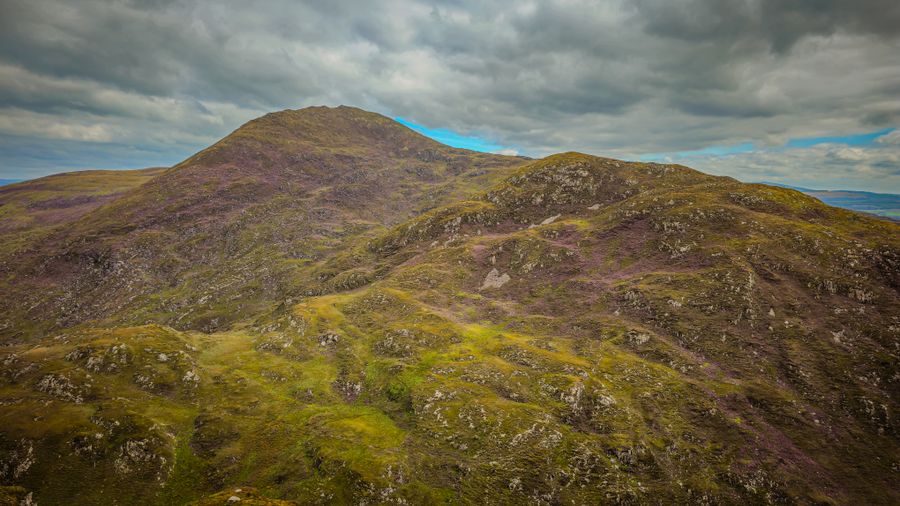
Croaghaun is the mountain that closes off the bay to the south, and its seaward face drops in a long line of cliffs. The cliffs are among the highest in Ireland, though they are less visited than the better known sets further south. They are best seen from the water or from the slopes above the bay.
Walking routes from Keem climb towards Croaghaun, but they are rough and unmarked in places. Cloud can come down quickly and the ground is boggy. Proper boots, a map and a check on the forecast from Met Éireann are sensible before setting out.
The cliffs and the surrounding hills are part of a wider landscape of blanket bog and heath. Ground-nesting birds use the area in spring and early summer, so keep to paths and keep dogs under control.
Swimming and the water
The bay is a recognised swimming spot in summer, and the shelter of the headlands means the surface is often flat. Water temperatures stay cold through the year, even in August, so a wetsuit is common and a short dip is sensible for anyone not used to it.
There are no lifeguards on a published rota that can be guaranteed. Rip currents can form near the headlands even in calm weather. Swim with others, watch the tide and the swell, and get out if the water starts to pull.
Kayaks and small craft are launched from the beach in summer. Winds can pick up quickly in the bay, so check the marine forecast from Met Éireann before heading out.
Water stays cold all year. Check the marine forecast from Met Éireann and ask locally about currents before swimming.
Seabirds and seals
The cliffs around Keem and Croaghaun hold seabird colonies in the breeding season. Puffins, razorbills and guillemots nest on the ledges, with puffins usually present from late spring into midsummer. Dates move with the weather, so treat any timing as approximate.
Grey seals are seen in the bay and around the headlands. They haul out on rocks at low tide and should be watched from a distance, particularly if pups are present. BirdWatch Ireland has guidance on watching seabirds without disturbing them.
Basking sharks pass along this coast in the warmer months, feeding near the surface. Sightings are never guaranteed, and boats should keep well clear. The Irish Whale and Dolphin Group records sightings around Achill.
Weather and seasons
Achill is exposed to the Atlantic, and the west of the island is wetter than the east of Ireland. Rain is possible in every month, and low cloud can sit on Croaghaun for days. A dry forecast for Westport does not always hold at Keem.
Summer brings long evenings, with daylight in Dublin running to about 17 hours around the June solstice. Winter days are short, and the road down to the bay can be affected by wind, ice and flooding. Check the forecast from Met Éireann and local road updates before travelling.
The beach is at its busiest in July and August. Outside those months it can be almost empty, with the car park open and the bay quiet. Bring layers in every season, and footwear that copes with wet sand and rough ground.
Where to base yourself
Westport is the main town on this part of the Mayo coast and a practical base for Achill, with a wide choice of places to stay and good road links east. The booking search on this page is set to the Westport area for that reason.
Closer to the island, the villages of Newport, Mulraney and Achill Sound shorten the drive to Keem. Keel and Dooagh on the island itself are the nearest settlements to the bay, with a small choice of accommodation and food.
For a longer stay, Westport gives access to Croagh Patrick, Clew Bay and the wider Wild Atlantic Way. Achill suits a quieter trip with shorter drives and more time on the beach and hills.