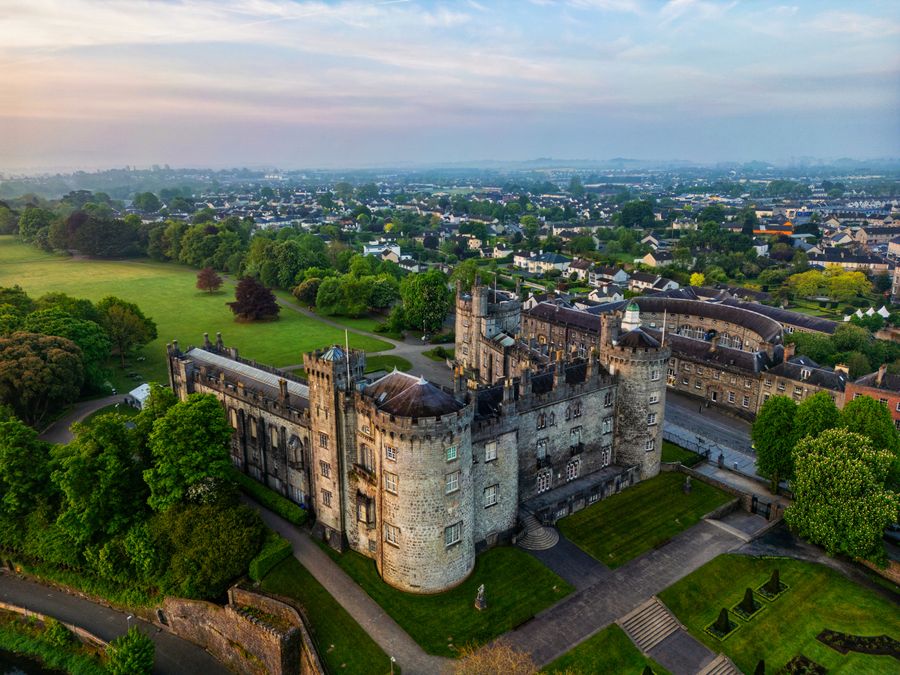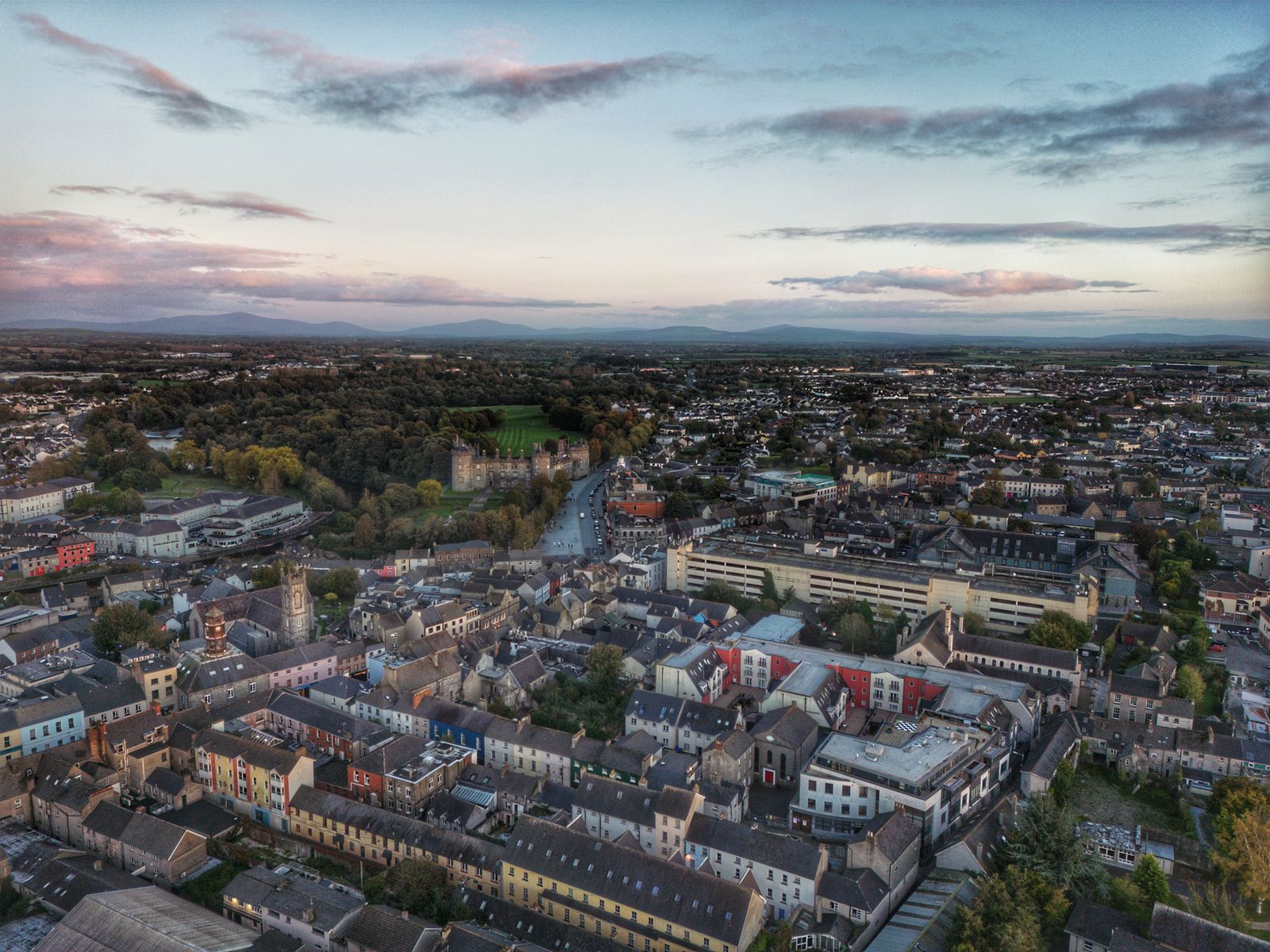
Kilkenny Castle stands on high ground above the River Nore, at the south end of the city's Medieval Mile. The state rooms are open on a ticketed basis, and the parkland around the castle is free to walk through the day.
A castle over 800 years
The castle was begun in the late twelfth century by William Marshal, on the site of an earlier wooden fort. It passed to the Butler family in the fourteenth century and stayed with them for centuries, through long periods of rebuilding, siege and remodelling. The family held the title Earl, later Marquess, of Ormonde.
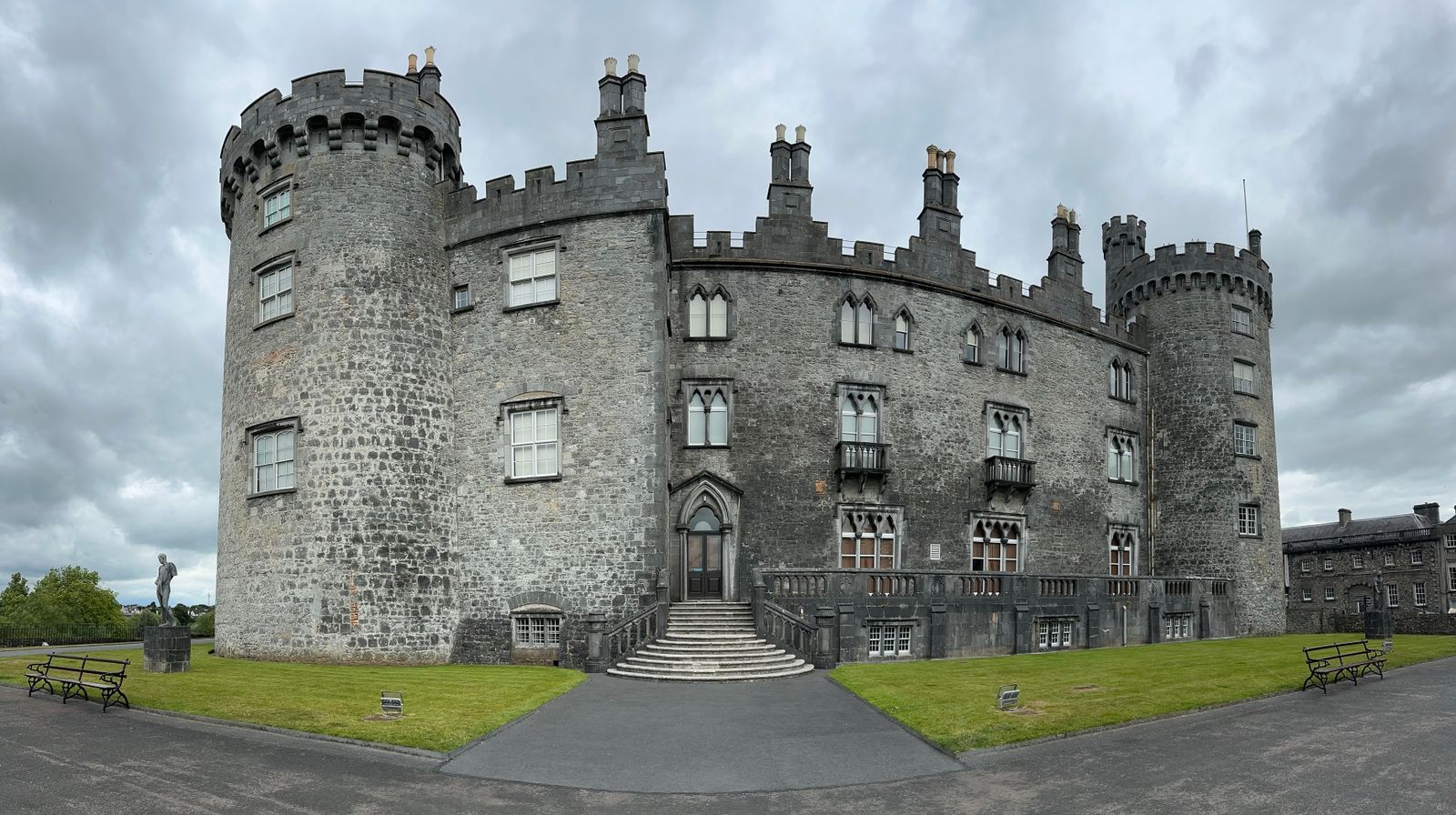
Much of what stands today is a nineteenth-century reworking of a medieval core, carried out for the third Marquess of Ormonde. The family left in the twentieth century, and the castle came into public ownership. The Office of Public Works has cared for the building since then, and the state rooms are presented much as the family left them.
The result is a building that reads as several castles at once: a Norman keep, a Victorian country house and a formal state residence, all in the same long range of stone above the river. The earlier walls and towers can still be picked out within the later work.
The state rooms
The tour of the castle runs through a sequence of state rooms, including a long picture gallery with a timber roof, a drawing room, a dining room and the bedrooms used by the family. Furniture, paintings and plasterwork survive from different periods, and the rooms are arranged to show how the house worked.
The picture gallery is the longest room, with portraits along one wall and windows over the park on the other. The dining room is set as it would have been for a formal meal, with a long table and a sideboard. The drawing room holds portraits and furniture from the Ormonde collection.
Access to the rooms is by guided tour or by timed entry, depending on the season. Numbers are limited, so it is worth checking the Office of Public Works, Heritage Ireland site before travelling, as hours and tour arrangements change through the year.
Check tour times and availability with the Office of Public Works (Heritage Ireland) before you travel, as they change with the season.
The park and terrace
Below the castle, the park runs down to the River Nore in a long sweep of grass, with paths, benches and mature trees. The terrace along the castle wall looks over the park and the river, and is a good place to sit in fine weather. The park is laid out with formal beds and a fountain.
A formal rose garden sits within the grounds, laid out with beds and a central feature. The park is free to walk, and it is used by people from the city as much as by visitors, which gives it a working, everyday feel rather than a museum one.
Paths are mostly level and surfaced, though some run over grass. The park is open through the day, with gates closed at night. Times vary through the year, so check locally or with the Office of Public Works before planning an evening walk.
The Medieval Mile
The castle sits at one end of the Medieval Mile, a walking route through the centre of Kilkenny that links the castle with St Canice's Cathedral at the other end. The route passes the Tholsel, the old courthouse and market house, and a run of narrow streets and laneways.
St Canice's Cathedral is a short walk north, with a round tower that can be climbed in season, subject to opening arrangements. The Black Abbey and the Dominican church lie off the main route, a few minutes away. The city's medieval street pattern survives in the lanes between the two ends.
Walking the mile takes an hour or so at an easy pace, longer with stops. The streets are narrow and busy with traffic in places, so keep to the footpaths and cross with care. Many of the buildings along the way carry explanatory plaques.
Check opening arrangements for St Canice's Cathedral and its round tower with the cathedral body, as access is seasonal.
Planning the visit
The castle is in the centre of Kilkenny city, within walking distance of the main streets, the bus station and the shops. Most visitors reach it on foot from wherever they are staying in the city, and the walk from the rail station takes only a few minutes.
Entry to the castle is ticketed, and the park is free to walk. There is no need to book the park. For the state rooms, booking ahead is sensible in summer and at weekends, when tour slots fill. Groups and school parties use the castle through the week.
Allow an hour for the castle tour and another hour for the park and the Medieval Mile. A half day covers the whole visit comfortably, with time for a walk along the river afterwards. The city's other sites can fill a full day.
Book state room entry ahead in summer through the Office of Public Works (Heritage Ireland), when slots are busiest.
Getting there
Kilkenny is served by bus and rail. Iarnród Éireann (Irish Rail) runs trains to Kilkenny station, which is a short walk from the castle. Bus Éireann and private operators run coaches from Dublin and other cities, and rural TFI Local Link services cover parts of the county.
By car, Kilkenny is reached from Dublin by the M9 motorway, and from Waterford and Cork by the N24 and N25. Parking in the city centre is limited and charged, so arriving by bus or train avoids the search for a space on a busy day.
Transport for Ireland has a journey planner covering bus, rail and local services. Timetables change, so check with the operator for your date before setting out. Traffic drives on the left, and distances in the Republic are in kilometres.
Check times with Iarnród Éireann or Bus Éireann before travelling, as timetables change through the year.
Where to base yourself
Kilkenny city is the obvious base, with the castle, the Medieval Mile and the cathedral all within walking distance. Staying in the city means the castle can be visited early or late, when it is quieter, and the evening streets are close at hand.
Nearby towns also work well. Thomastown and Inistioge lie south along the River Nore, in wooded country, and make a quieter base for exploring the county. Callan and Castlecomer lie to the west and north, each with its own small centre and places to stay.
From any of these, Kilkenny is a short drive, and the county's other sites, including Jerpoint Abbey and the Dunmore Cave, are within easy reach. The booking search on this page is set to the Kilkenny region, so results stay local to the county.