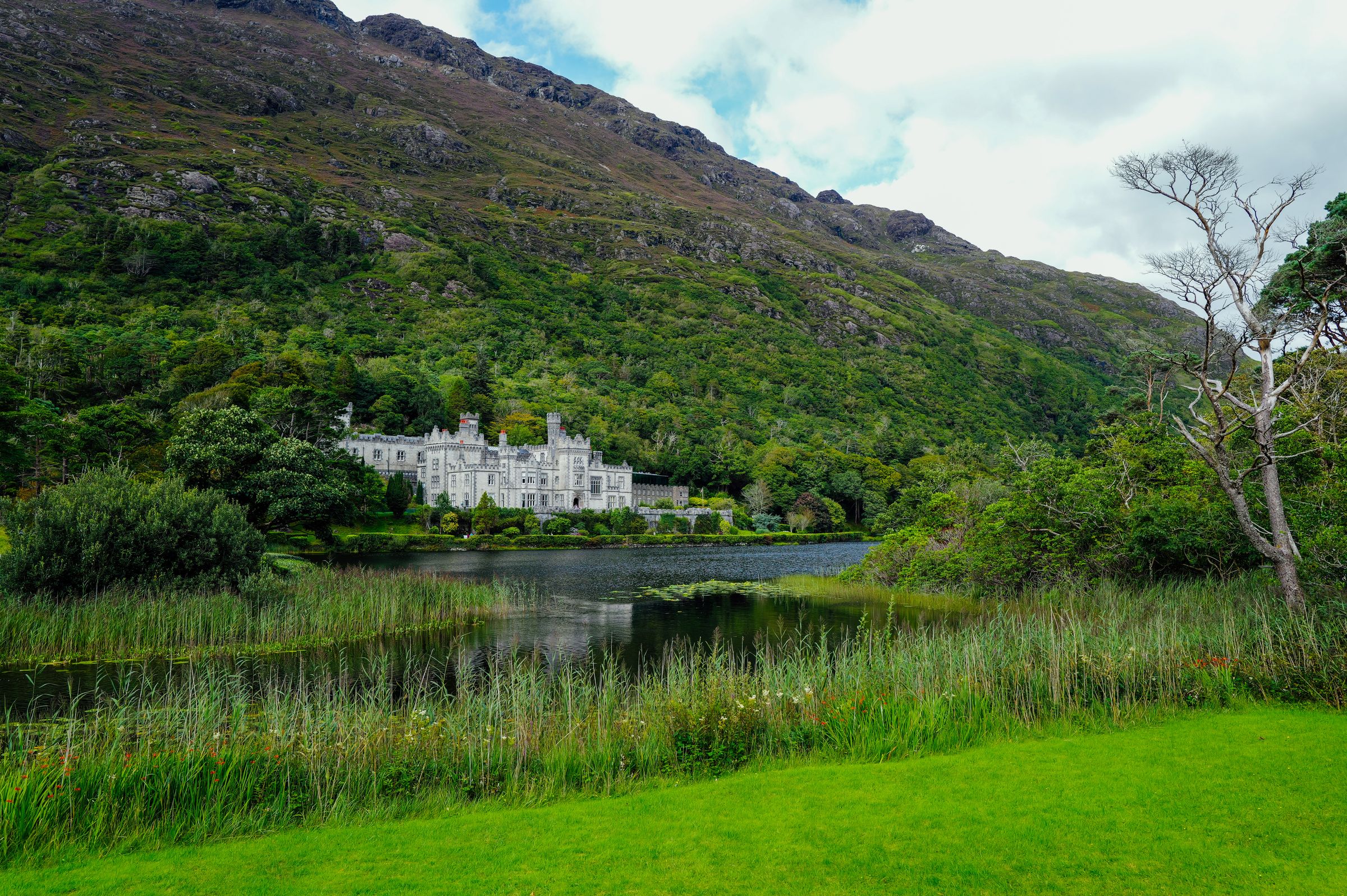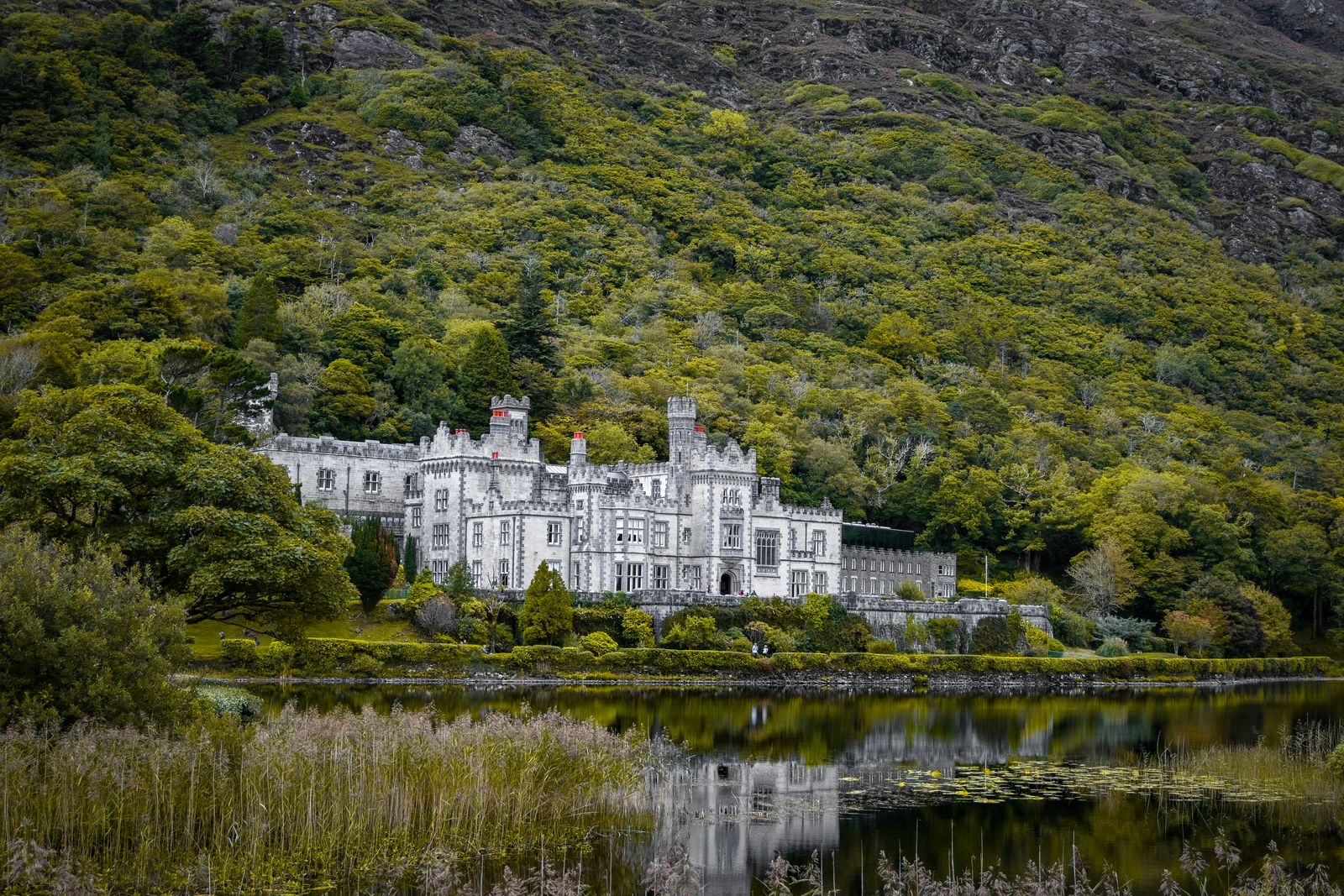
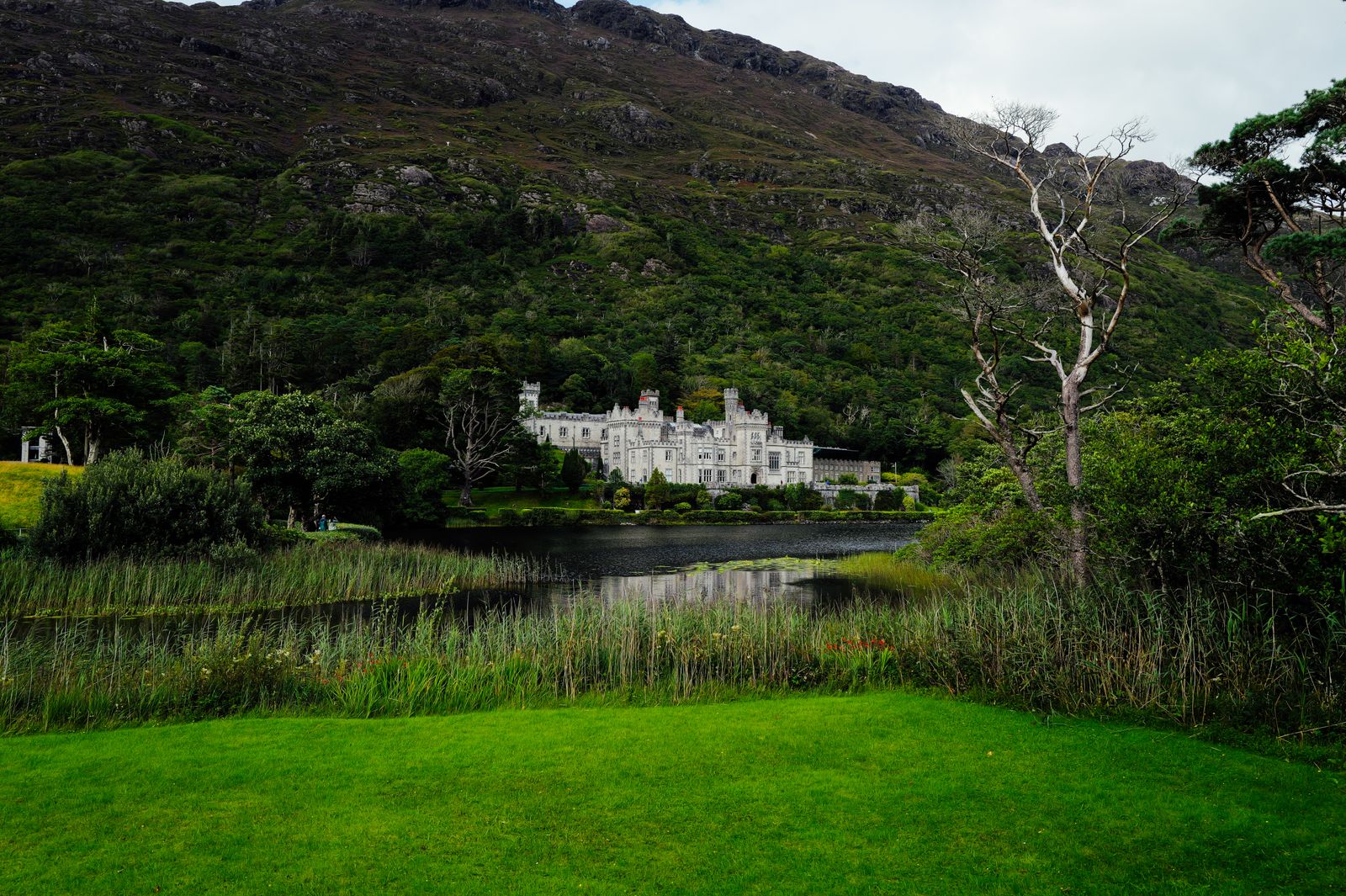
Kylemore Abbey stands above Pollacapall Lough in the Connemara hills, south of the village of Leenaun and east of Clifden. The house was built as a private residence in the nineteenth century and later became a Benedictine monastery and school. The grounds, the walled garden and the Gothic church are open to visitors.
The house itself
The house was built in the 1860s for a Manchester doctor, Mitchell Henry, as a home for his family on the estate he had bought in the Connemara hills. It is a large granite building in a romantic style, set above the lake so that it is reflected in the water on a still day.
After the Henry family left, the building passed through several hands before Benedictine nuns, displaced from Ypres in the First World War, took it on. It served as an abbey and a boarding school for girls for many decades. The school closed in 2010.
Part of the house is open to visitors, with rooms on the history of the building and the community. Other parts remain in use by the nuns, so access is limited to the rooms set aside for visitors. Entry to the house and grounds is ticketed.
Opening times change with the season and the house is sometimes closed for community use. Check the abbey's own website before travelling.
The Victorian walled garden
The walled garden lies a short walk or shuttle ride from the house, on the far side of the estate. It was laid out in the Victorian period with glasshouses, fruit walls and formal beds, and it has been restored in recent decades by the community and its gardeners.
The walls hold warmth and shelter plants that would struggle in open Connemara ground. Vegetables, fruit and flowers are grown, and the produce is used on the estate. The layout follows the original plan, with a kitchen garden, a flower garden and a range of glasshouses.
A shuttle runs between the house and the garden when the estate is busy. The walk through the woods takes longer but is level enough for most visitors. The garden is included in the main ticket.
The Gothic church
A short walk from the house, through the trees, stands a small Gothic church built by Mitchell Henry in memory of his wife, Margaret, who died on a trip to Egypt. It is often described as a cathedral in miniature, and the scale is intimate rather than grand.
The interior is carved stone, with columns of different marbles and a roof of stone ribs. The detailing is careful and the effect is quiet. It is a place to sit for a few minutes rather than to hurry through.
The church stands among trees on the lakeshore path. It is included in the grounds, and it is one of the stops on the walk between the house and the garden. The path is gravel and can be muddy after rain.
Woodland and lake shore
The estate covers a large area of hillside, woodland and lakeshore. Paths run from the house along the water and up through the trees, and there are waymarked walks of different lengths. Some are short and level, others climb the hill behind the house.
The woodland is a mix of native and planted trees, and the shelter makes it a reasonable walk even when the weather is poor. The lake shore path gives views back to the house and across to the far side of the valley.
Connemara weather changes quickly. Rain is possible in any month, and the hills behind the abbey catch more of it than the coast. Waterproofs and shoes with grip are worth carrying even on a bright morning.
The estate paths cross open ground and can flood after heavy rain. Ask at the reception desk which walks are open that day.
Getting there
Kylemore is on the R344, the road that runs south from Leenaun through the Inagh valley towards Recess and the N59. From Clifden the drive takes around twenty minutes on the N59 and then the R344. From Galway city the drive is longer, through Oughterard and Maam Cross.
Traffic drives on the left. The approach roads are narrow in places, with passing places and sheep on the road. Allow more time than a map suggests, particularly in summer when tour coaches use the same road.
Public transport to the abbey is limited. Bus services run along the N59 between Galway and Clifden, and some connect to the abbey in season. Timetables change, so check with Bus Éireann or Transport for Ireland before relying on a connection.
Coach tours arrive through the middle of the day. Early morning and late afternoon are quieter, subject to opening hours.
Where to base yourself
Clifden is the nearest town with a full range of places to stay, and it makes a good base for the abbey, the Sky Road and the beaches to the west. Letterfrack and Leenaun are smaller and closer to the mountains, with fewer places to stay.
Galway city is an hour or more away but has the widest choice of accommodation and transport links. Westport in County Mayo is another option for a wider tour of the west, though it adds distance to a Kylemore visit.
Connemara is a Gaeltacht area in parts, where Irish is the community language. Road signs in those areas are in Irish only, so a map or a satnav with place names in both languages helps.
Elsewhere in Connemara
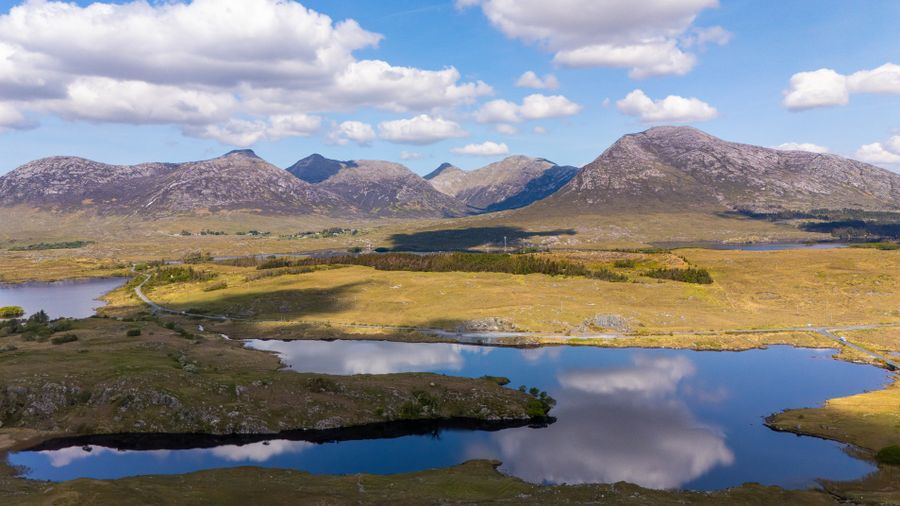
The Inagh valley road north of Kylemore leads towards Leenaun and the Delphi valley, with views of the Maumturk mountains. South of the abbey, the N59 runs through Recess and on towards Clifden and the coast.
Connemara National Park lies near Letterfrack, with waymarked walks on Diamond Hill and a visitor centre. The park is run by the National Parks and Wildlife Service, and entry to the park is free, though a charge applies for parking in some places.
The Sky Road west of Clifden, the beaches at Dog's Bay and Gurteen, and the villages of Roundstone and Cleggan are all within a day's drive. The Wild Atlantic Way is signed along this coast.
Practical notes
The abbey is a working community, so some areas are closed to visitors and the timetable can change at short notice. The house, church and garden are ticketed together, and the garden can be reached on foot or by shuttle.
There is a café and a shop on the estate. Toilets are near the reception area. The paths are not all suitable for wheelchairs or pushchairs, and the garden is the most accessible part of the visit.
Emergency number is 112 or 999. Plugs are the three-pin type G. The Republic uses the euro and kilometres. Northern Ireland, including County Antrim, is part of the UK and uses pounds and miles.