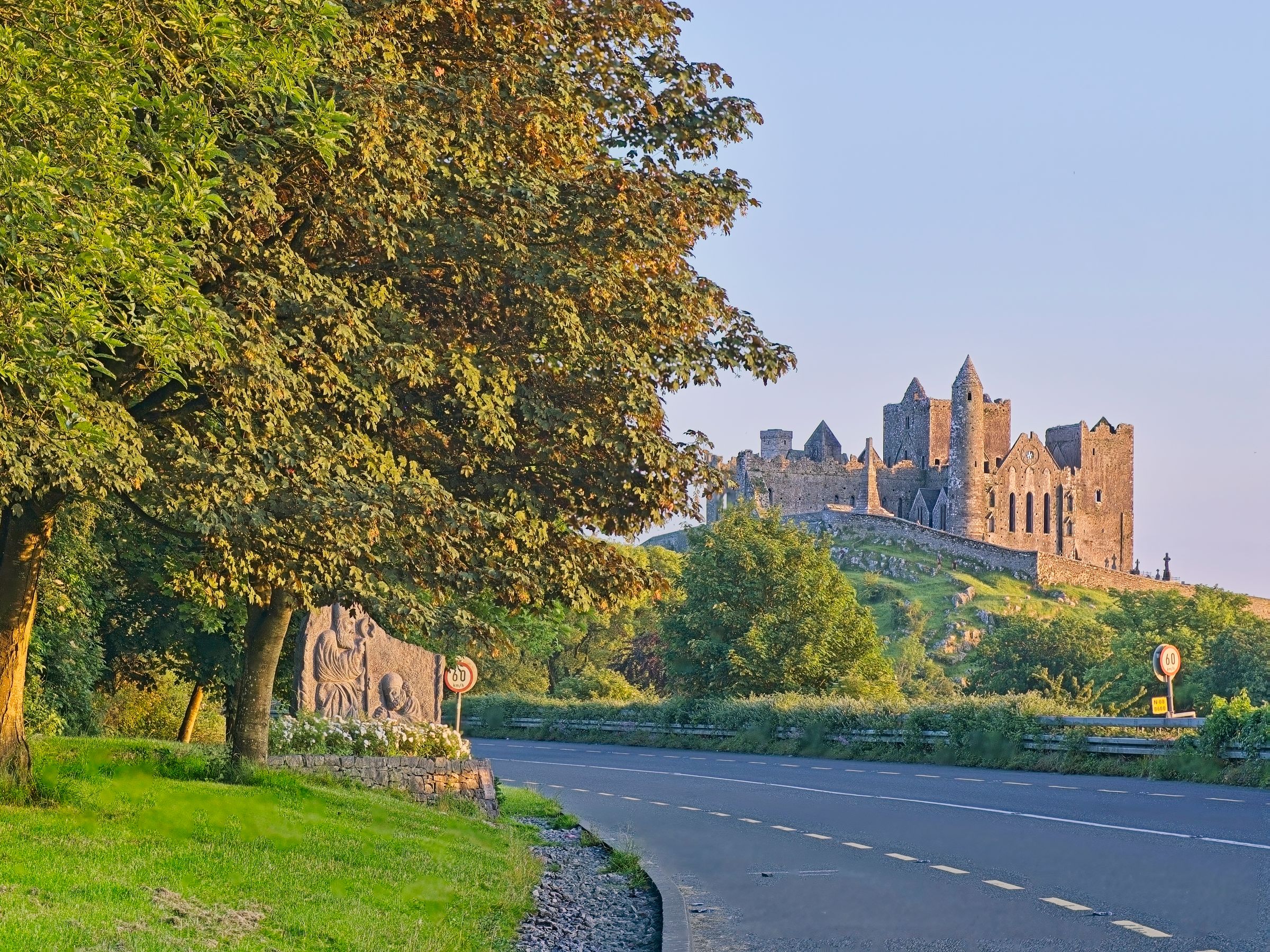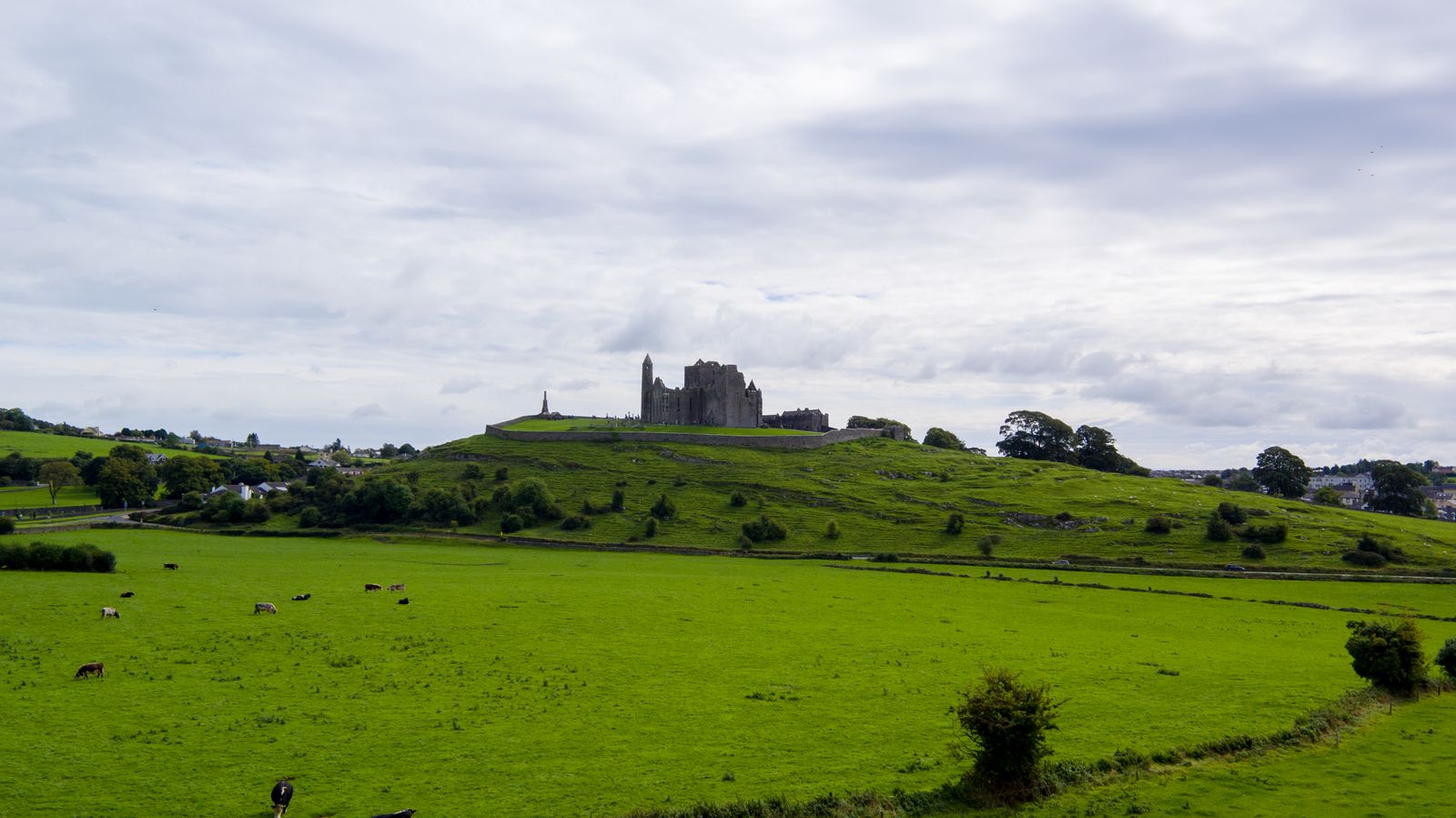
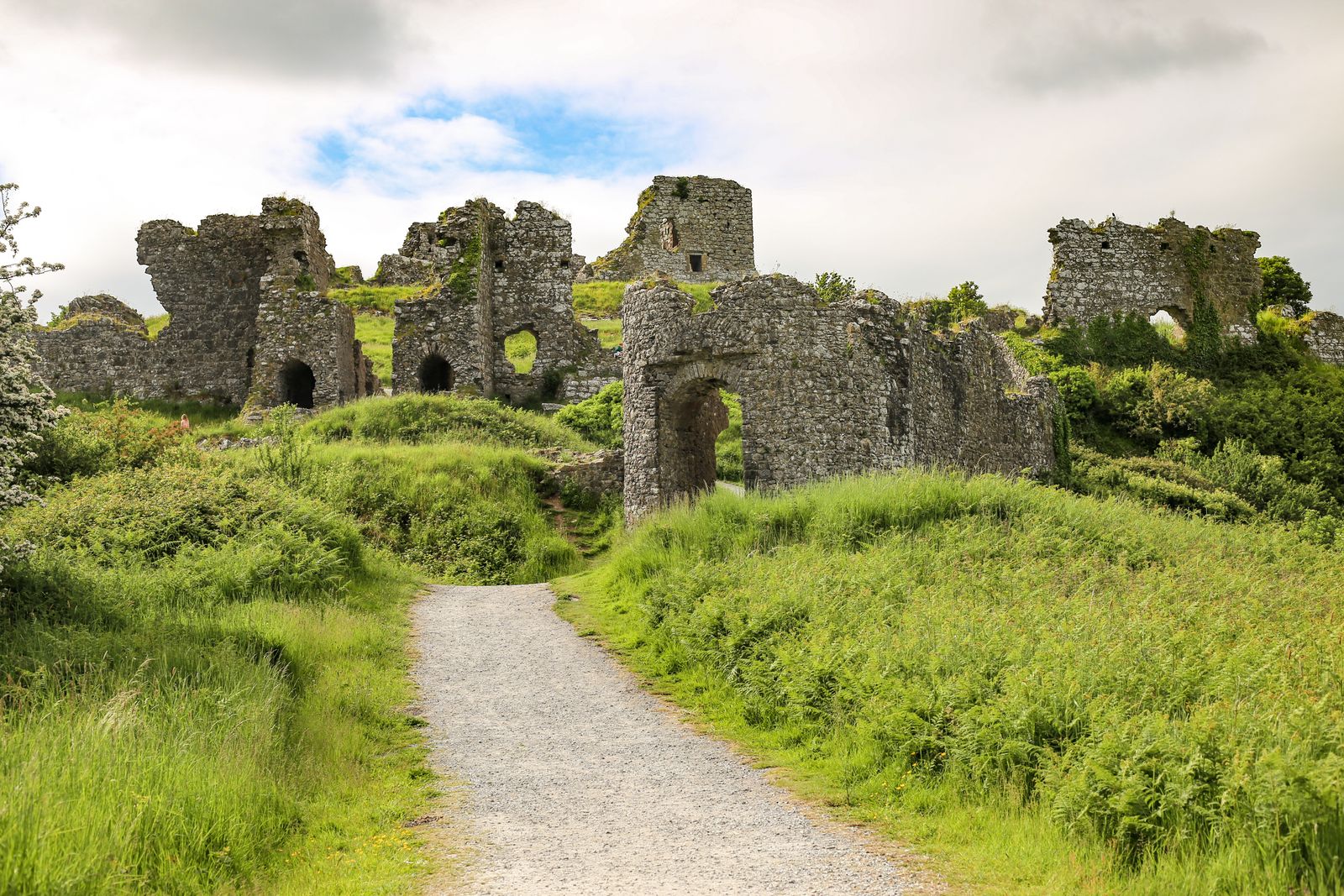
The Rock of Cashel is a limestone hill rising straight out of the Tipperary plain, crowned by a round tower, a Romanesque chapel, a Gothic cathedral and a choir. The buildings date from the twelfth and thirteenth centuries, on a site long associated with the kings of Munster.
What stands there
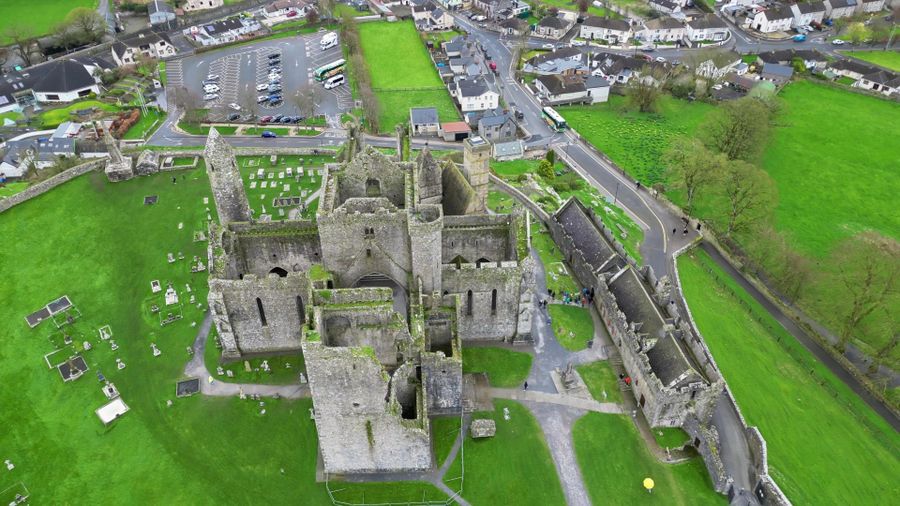
The group on the rock is compact and easy to walk round. A tall round tower stands near the entrance, and beside it is Cormac's Chapel, a small Romanesque church with carved stonework and a steep stone roof. The largest building is the cathedral, now roofless, with the choir attached at its east end.
The Hall of the Vicars Choral stands lower down, near the car park and the entrance building. The whole group sits inside a boundary wall, and the ground between the buildings is mostly grass and gravel paths.
The hill itself is a natural outcrop of limestone. It rises sharply above the town, and the walls at the edge drop away on most sides. The enclosure is not large, so a slow walk round the buildings takes a modest amount of time.
Kings and bishops
The rock was a seat of the kings of Munster before the church buildings were raised. In the twelfth century the site was granted to the church, and the bishopric of Cashel was established. The Romanesque chapel is named after Cormac Mac Cárthaigh, a king of Desmond.
The cathedral was built in the thirteenth century and added to over the following centuries. The choir and the surrounding buildings were part of the life of the cathedral clergy, who lived and worshipped on the rock.
The Reformation and later warfare brought change. The cathedral was abandoned for worship and fell into ruin, and the buildings passed into state care. Conservation work continues, and the site is managed by the Office of Public Works.
Check opening hours and any restrictions with the Office of Public Works before travelling, as times change through the year.
Cormac's Chapel
Cormac's Chapel is the oldest surviving building on the rock, a small church in the Romanesque style. It has a steep stone roof and carved arches, and it is the part of the site most often singled out by visitors.
The chapel has been the subject of conservation work for years, and access inside can be limited. When it is open, the interior shows carved stone and a decorated chancel arch.
Even when the chapel is closed, the exterior can be seen from the path around it. The stonework on the outside repays a slow look, particularly the doorway and the arcading on the walls.
The round tower
The round tower is the tallest structure on the rock and can be seen from much of the surrounding countryside. It is built of stone in the usual Irish form, tapering slightly towards the top, with a doorway raised above ground level.
Round towers served as bell towers and places of refuge, and this one follows the pattern. The doorway faces the main group of buildings, and the tower stands close to the cathedral.
The tower is not open for climbing, and the entrance is blocked. It is best seen from the ground, where its full height shows against the sky. The stonework near the base is worth a look.
The ground on the rock is uneven, with steps and gravel paths. Sturdy shoes help, and the exposed hilltop catches wind and rain.
The high crosses
A group of high crosses stands on the rock, carved stone crosses with rings around the arms. They carry panels of figure carving, though weathering has softened much of the detail.
One cross is traditionally associated with Saint Patrick, who is said to have preached on the hill. The association is old, and the site is linked to him in popular tradition rather than in documented history.
The crosses stand near the cathedral and the chapel, and they can be examined closely from the path. Look for the ringed heads and the carved panels on the shafts, which are clearer on some crosses than others.
Cashel town below
The town of Cashel sits directly below the rock, and the main street runs up towards the entrance. The town is small, with a few streets, a square and places to eat, and it makes a convenient stop before or after a visit.
The rock is visible from much of the town, and the walk up from the centre is short but steep in places. Paths and footways lead up towards the entrance, and the approach gives good views of the buildings above.
Cashel is in the heart of County Tipperary, surrounded by farmland. The wider area has other historic sites, including the ruined abbey at Hore Abbey in the fields below the rock, which is free to walk around.
Getting there and bases
Cashel is in County Tipperary, in the south midlands of the Republic of Ireland. The town is reached by road, and the main routes from Dublin, Cork and Limerick pass nearby. Driving is the simplest way to reach the site, and there is parking in the town.
Public transport is limited, with some bus services linking Cashel to nearby towns. Timetables change, so check with Bus Éireann and other operators for current times before relying on a service.
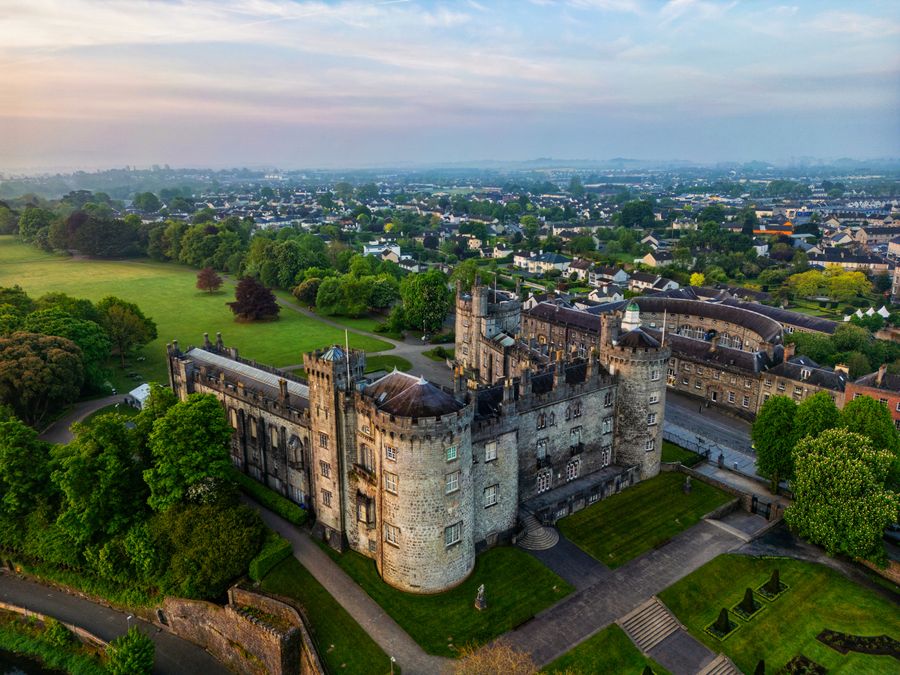
For a base, Cashel itself is the closest option, with places to stay in and around the town. Kilkenny, about half an hour to the east, has more choice and makes a good base for this part of the country. Cahir and Clonmel are also within reach.
Check current bus times with Bus Éireann or Transport for Ireland, as rural services are infrequent and timetables change.
Elsewhere in the area
The area around Cashel holds several historic sites within a short drive. Cahir Castle is a well preserved castle on the river Suir, and the Swiss Cottage nearby is a small ornamental building in state care.
Kilkenny city is within easy reach, with its castle, cathedral and medieval streets. The city makes a natural companion visit, and it is a common base for touring this part of the south east.
To the south, the Knockmealdown Mountains rise above the plain, and the Vee road crosses them with views over the surrounding country. The Galtee Mountains lie to the west of Cashel, with walking routes on the higher ground.