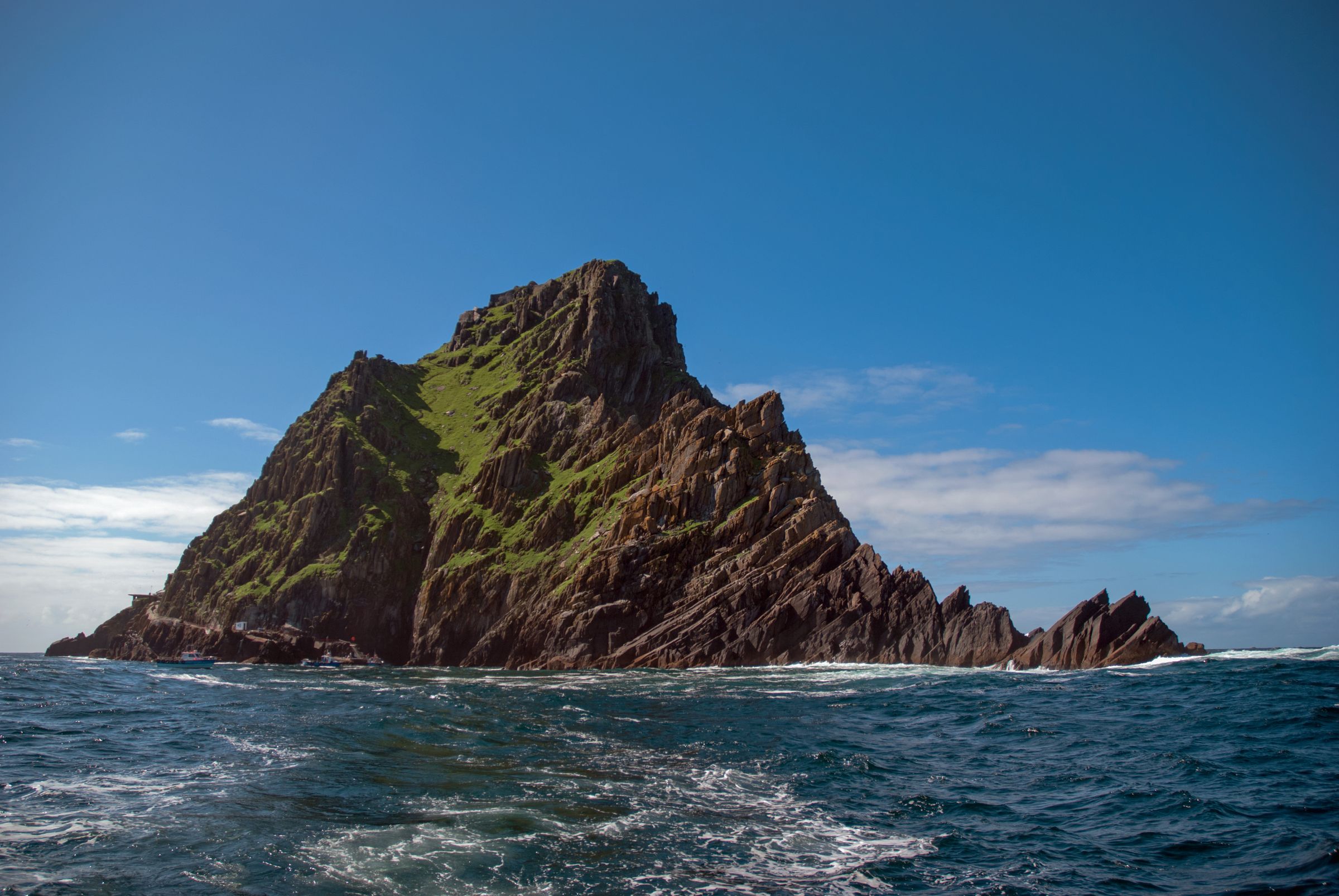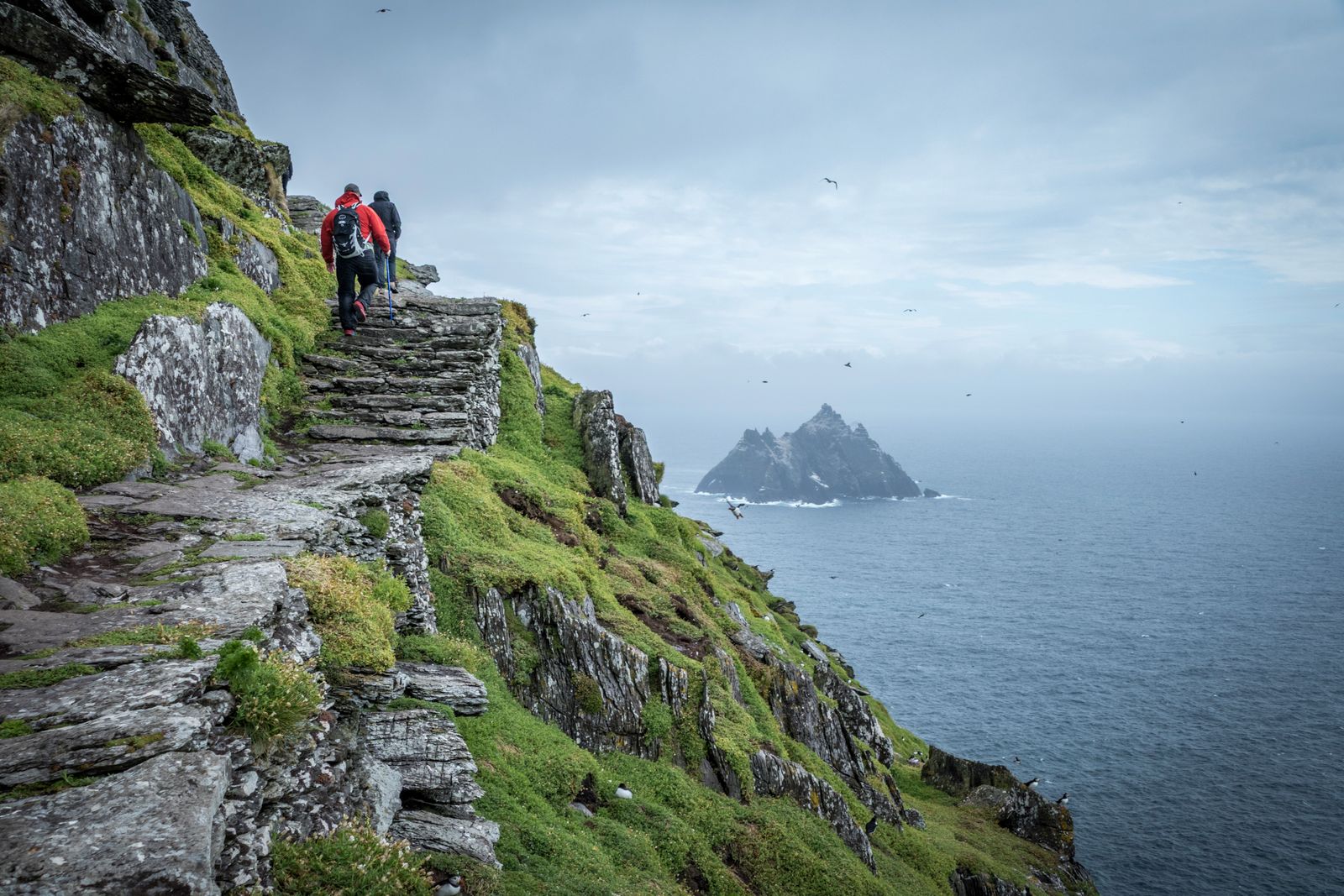
Skellig Michael rises out of the Atlantic about 12 km off the coast of the Iveragh Peninsula in County Kerry. Monks built a monastery near the summit in the early Christian period, and the stone huts and steps survive. Landings run in summer, weather permitting.
The island
Skellig Michael is the larger of two rocky islands, the Skelligs, lying southwest of the Iveragh Peninsula. The rock is steep on every side, with a lighthouse on a lower shelf and a small landing place on the sheltered side. The upper part holds the monastery, reached by a long flight of stone steps.
The island is a UNESCO World Heritage Site, listed for its early monastic remains. It is also a breeding site for seabirds, including puffins, Manx shearwaters and storm petrels. The smaller island nearby, Little Skellig, is thick with gannets in season.
The crossing is open sea and can be rough. Sailings are cancelled on many days through the summer because of swell and wind, so a booking is not a guarantee of landing.
Landings run only in the summer season and depend on sea conditions. Check with the Office of Public Works before planning a crossing.
The monastery
The monastery sits near the summit, on a terraced shelf about 180 m above the sea. It holds six stone beehive huts, two small oratories, a stone cross and a small garden plot. The monks lived here in small cells built of dry stone, corbelled so that each course overlaps the one below.
The community was founded at some point in the early Christian period, and the site was occupied for centuries. It was later used as a place of pilgrimage, and the monks moved to the mainland in the medieval period. The ruins that remain are the original stonework, conserved rather than rebuilt.
Visitors reach the monastery by climbing several hundred stone steps cut into the rock. The steps are uneven and worn, with a sheer drop alongside in places. The climb takes time and is not suitable for everyone.
Getting there
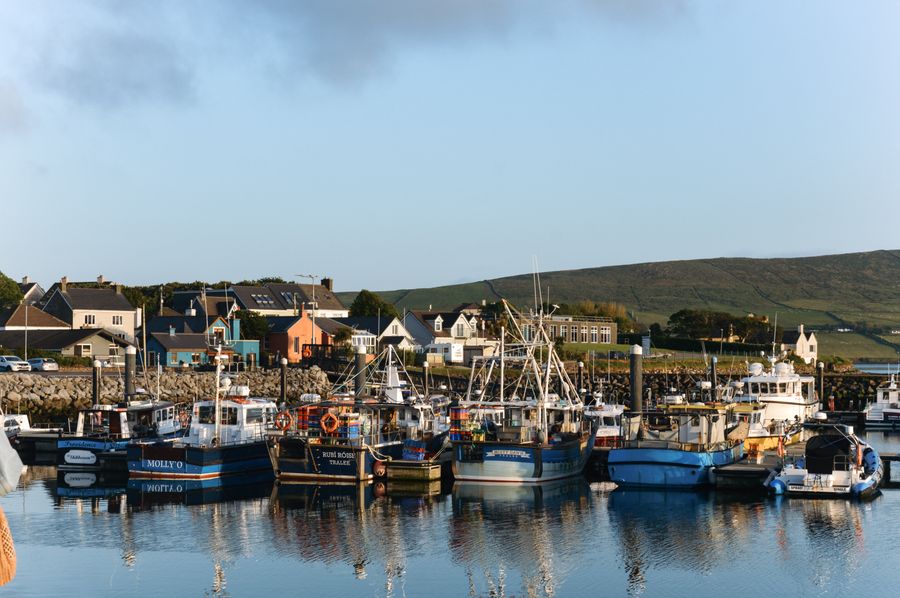
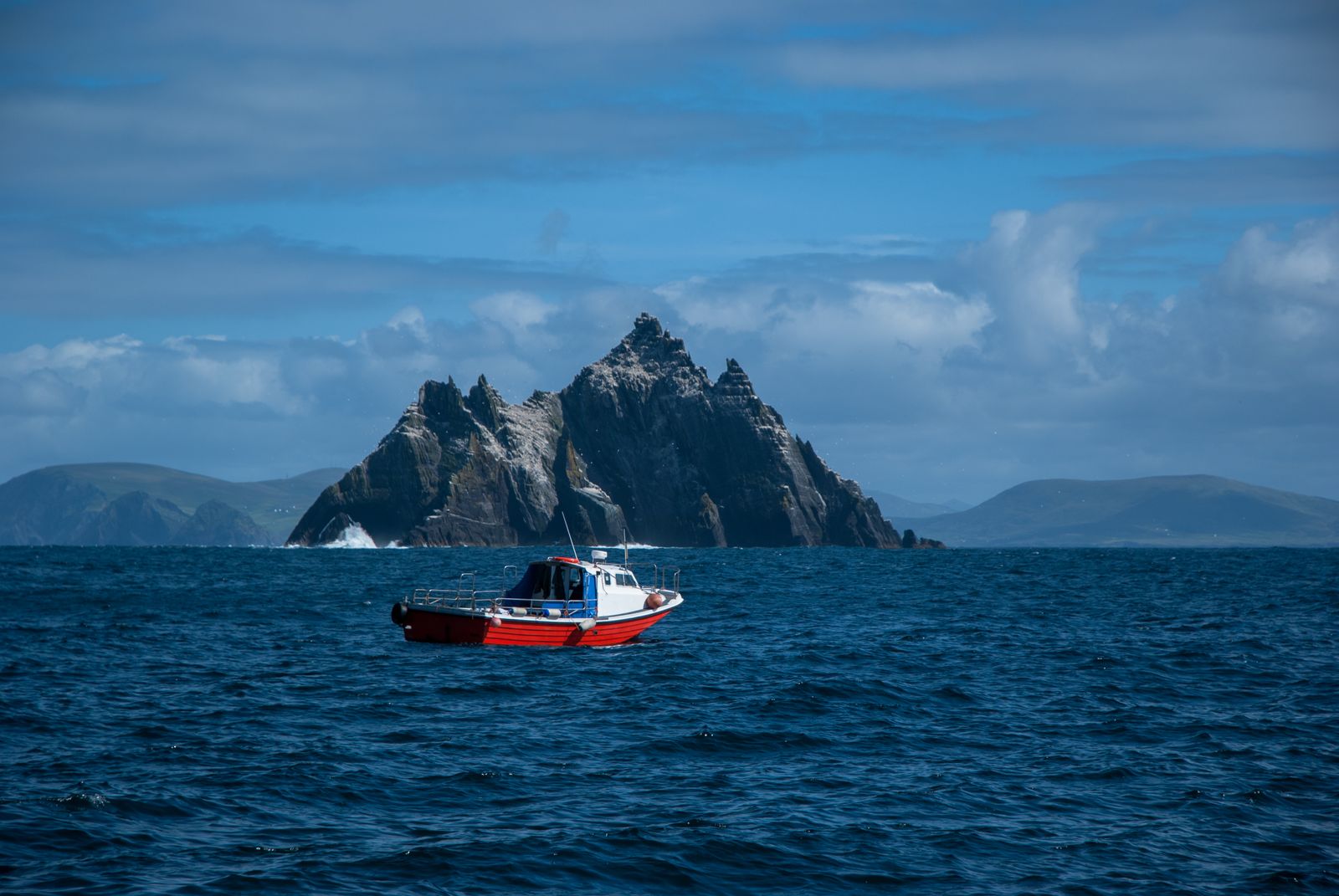
Boats leave from a small number of harbours on the Iveragh Peninsula, mainly around Portmagee and Ballinskelligs, in the summer season. Crossings are run by licensed operators, and the number of boats and visitors allowed to land each day is limited.
The crossing takes roughly an hour in calm weather and longer when the sea is up. Boats tie up at a small landing on the island, and passengers transfer by a short climb from the water. The return crossing is usually made in the afternoon.
Bookings are made well in advance for the summer, and many boats fill early. A booking does not guarantee a landing: the skipper decides on the day, and the boat may sail around the island without landing if conditions are unsuitable.
Book through a licensed operator and confirm the day before. The Office of Public Works sets the landing rules for the island.
The climb and the steps
From the landing place, a path climbs to the foot of the main flight of steps. The steps are original stonework, worn smooth in places and steep throughout. There is a handrail in parts but not everywhere, and the drop to one side is long.
The climb to the monastery takes most visitors around half an hour or more, depending on fitness and the number of people on the steps. The path is narrow, and groups pass each other with care. Sturdy footwear is needed, and the stone can be slippery after rain.
The island has no shelter beyond the stone structures, no café and no facilities at the monastery. Visitors carry what they need and take everything away again. The stay on the island is usually a couple of hours before the boat returns.
Seabirds and wildlife
The Skelligs are one of the important seabird colonies on the Irish coast. Puffins nest in burrows on the slopes in late spring and early summer, and are usually gone by midsummer. Manx shearwaters and storm petrels nest in crevices and return to their burrows after dark.
Gannets crowd Little Skellig in huge numbers through the breeding season, and the rock turns white with them. Grey seals are often seen around both islands, hauled out on rocks or in the water. Basking sharks pass through these waters in summer.
BirdWatch Ireland advises keeping to the paths and giving nesting birds space. The season and the numbers of birds change from year to year, so treat any dates as approximate.
Puffin numbers and nesting dates vary. Check BirdWatch Ireland for general guidance on seabird seasons.
Where to base yourself
Portmagee is the nearest village to the main departure point and has places to stay, a bridge to Valentia Island and a harbour. Ballinskelligs, to the south, is another departure point, with a beach and the ruins of a priory linked to the monks of Skellig Michael.
Cahersiveen, a market town to the east, has more choice of accommodation and services and is a short drive from the departure harbours. Waterville, further around the peninsula, is a quieter base with sea views and a golf course.
Killarney and Dingle are both within reach for a day trip, though the drive to Portmagee is long. Staying on the Iveragh Peninsula gives the best chance of a calm morning and an early crossing.
Book accommodation on the Iveragh Peninsula for the night before a crossing, in case the boat is rescheduled.
Practical points
The island is exposed and the weather changes quickly. Rain is possible in any month, and wind on the rock is stronger than on the mainland. Bring waterproofs, warm layers and water, and wear boots with grip.
There are no toilets on the island beyond basic provision at the landing, and no food or drink for sale. The steps and the monastery are not accessible to wheelchairs or to visitors with limited mobility, and the crossing is not advised for those with back or heart conditions.
The emergency number is 112 or 999. Mobile coverage around the islands is patchy. The Office of Public Works cares for the island, and the Irish Aviation Authority restricts drone use over it.