Derry's walls form a near-complete circuit of roughly one mile, built between 1613 and 1619 and never breached despite the 1689 siege. Start at Shipquay Gate near the Guildhall and walk clockwise past Magazine Gate, up toward Butcher's Gate overlooking the Bogside, then around to Ferryquay Gate and Bishop's Gate. At a relaxed pace, with stops to read the cannon plaques and look over the parapets, the full loop takes about 60 to 75 minutes. Add another hour if you detour down into the Craft Village or along Shipquay Street.
Walking the Walls: Route and Timing
May through September gives the longest daylight and driest footing, though the walls are walkable year-round since they're paved and well-lit. If your visit coincides with the Halloween festival in late October, the walls get busy and hotel rooms in the city centre book out weeks ahead, so reserve early. Guided walking tours depart regularly from the Tower Museum entrance and run about 90 minutes, useful if you want the siege history explained rather than pieced together from the information panels alone.
What to See From the Ramparts
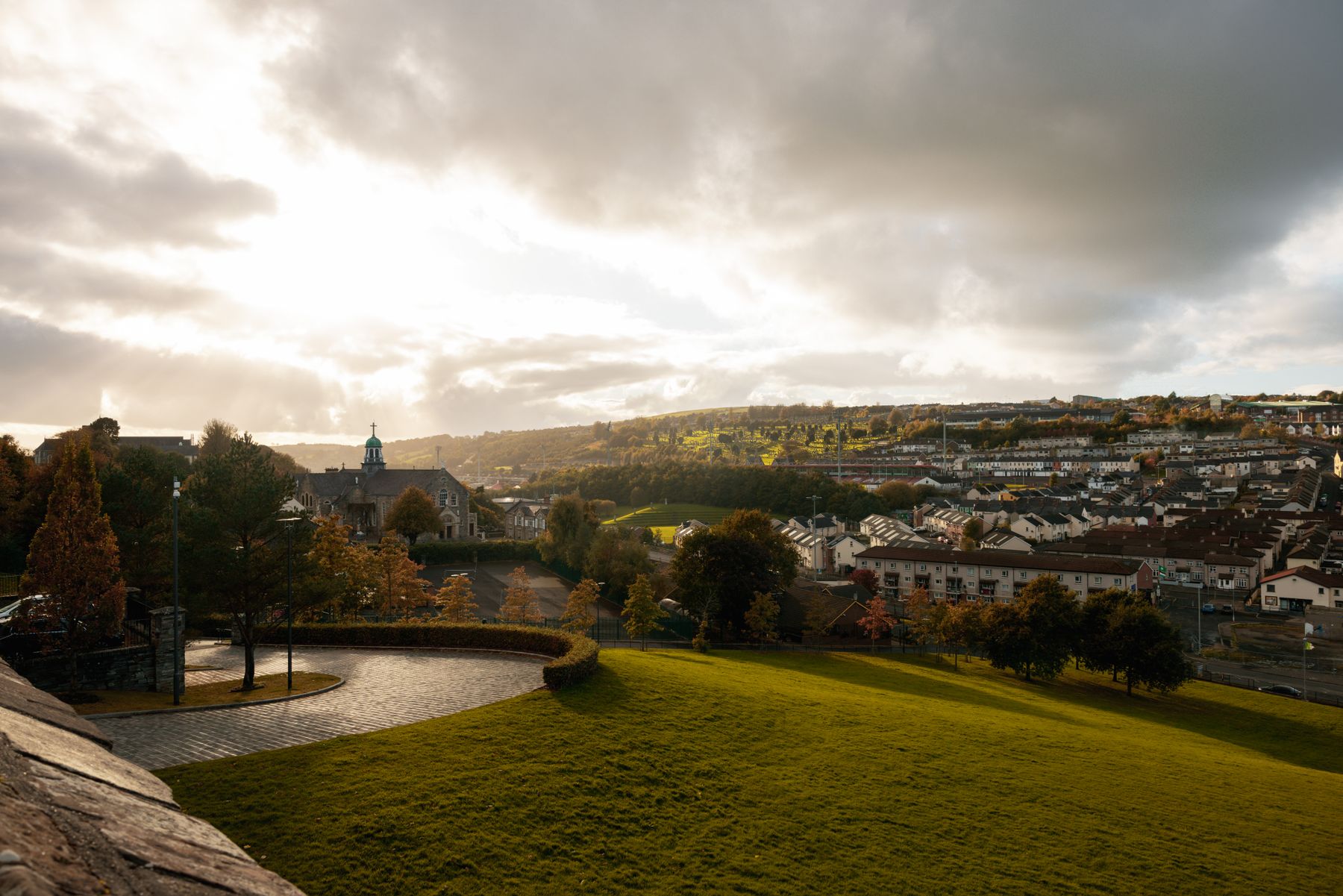
The stretch above the Bogside is the most striking section, where the wall looks straight down onto Free Derry Corner and the murals of the People's Gallery. The Museum of Free Derry on Glenfada Park sits just below and pairs naturally with this view if you want context on the Troubles-era history. Further along, Bishop's Gate opens onto Bishop Street and the approach to St Columb's Cathedral, a quieter detour worth the ten-minute walk if you're interested in Gothic architecture and the original siege-era cannonballs kept inside.
Back toward Shipquay Gate, the Guildhall's neo-Gothic clock tower and stained glass make a good finishing point, and it sits only a few minutes from the Peace Bridge over the River Foyle. Crossing into the Waterside gives a different angle on the walled city and the Ebrington Square area, now home to markets and events space. The Tower Museum, built into the old O'Doherty's Tower near Magazine Gate, covers both the Armada wreck story and the city's founding, and is worth an hour if you're pacing the day around the walls.
Where to Stay for Easy Access
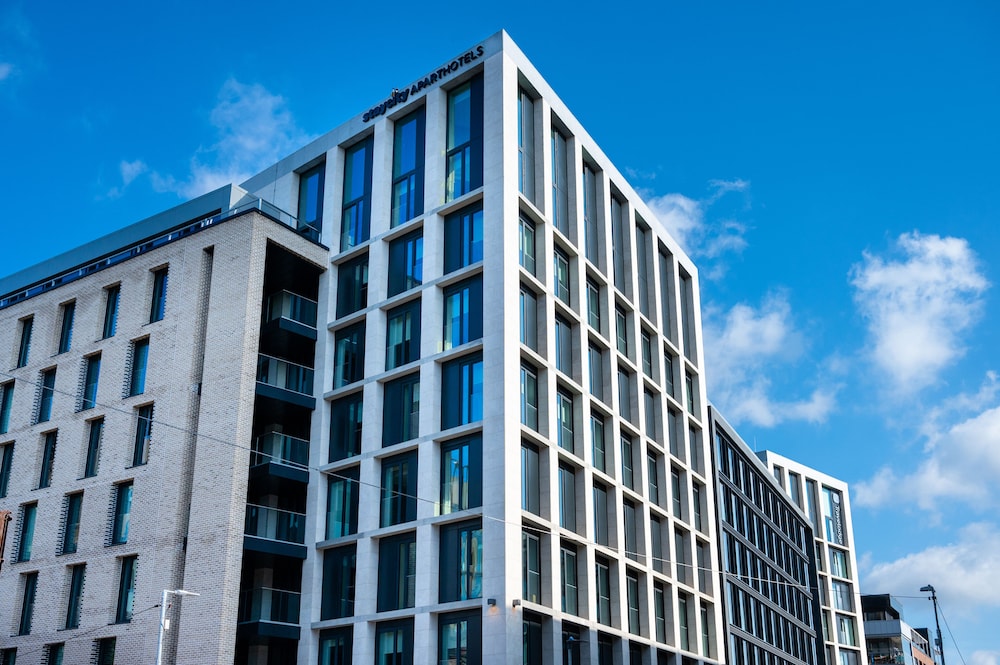
Staying inside or just outside the walls, around Shipquay Street, Ferryquay Street or Foyle Street, puts you within a five-minute walk of every gate and means you can do the loop at sunrise or after dinner without driving anywhere. This Cityside cluster suits travellers who want to walk everywhere and skip parking altogether. The Waterside, across the Peace Bridge, offers a quieter base with the same view back toward the walls and is a reasonable ten-minute walk via the bridge for those who don't mind the extra distance for a calmer night's sleep.
Derry is well placed for a wider Ireland itinerary: Belfast is about an hour and twenty minutes by car via the A6, Dublin is roughly two and a half to three hours via the M1 and A5, and Donegal town is under an hour across the border for a coastal day trip. Given the drive times, most visitors treat Derry as a one or two-night stop rather than a quick pass-through, which makes booking a centrally located hotel worthwhile rather than settling for something on the ring road with a car you'll barely use.