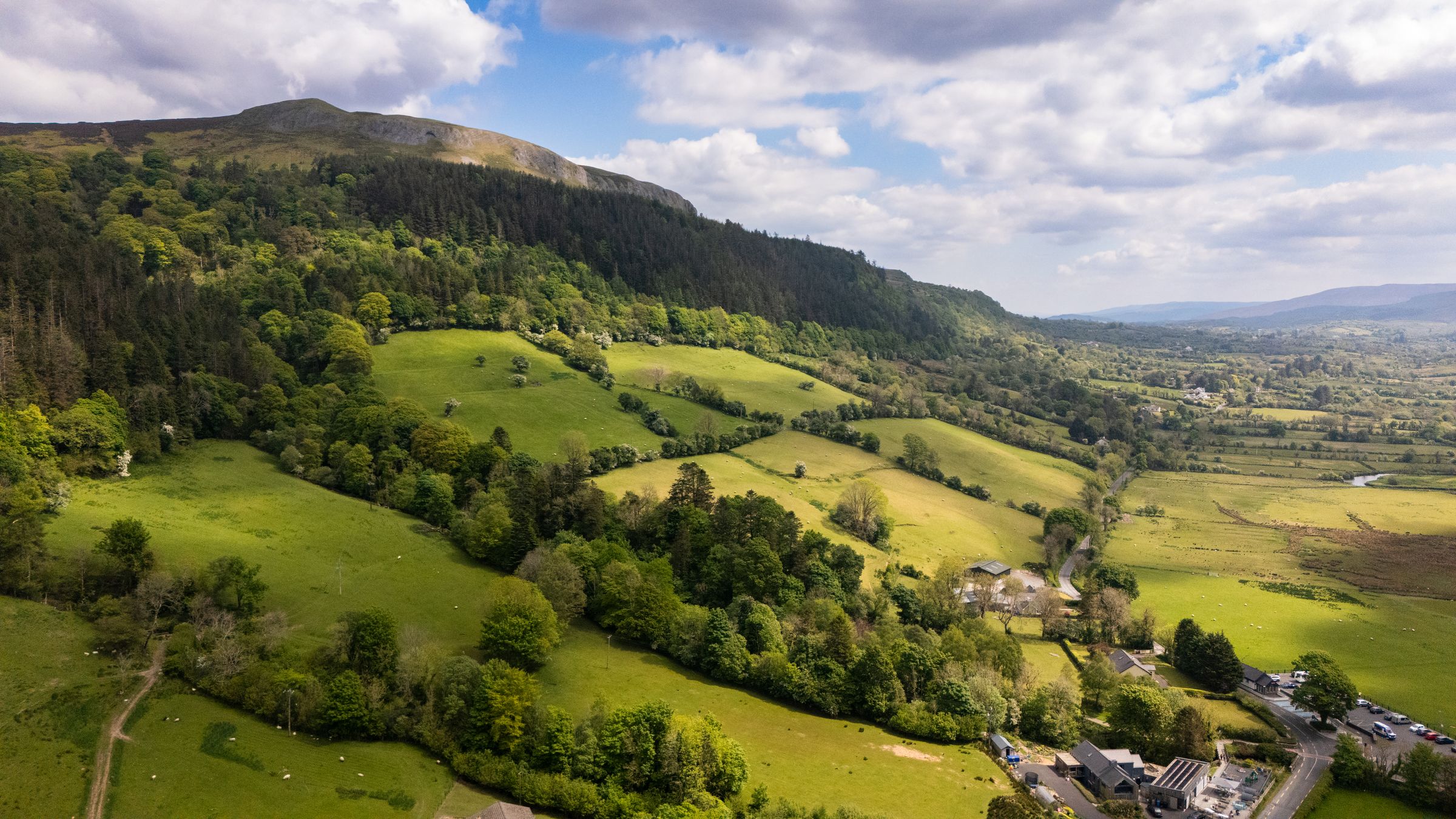
Ireland's walking is regional, not national. Trying to link the Wicklow Mountains, Connemara and the Kerry coast in seven days means most of the week is spent in a car. Pick one. The Wicklow Way runs 130 km from Marlay Park in south Dublin to Clonegal in Carlow, but most walkers do the middle section between Enniskerry and Glendalough over three or four days and stay in Laragh or Glendalough itself. The Kerry Way, at around 214 km, is the longest waymarked route in the country and loops the Iveragh Peninsula from Killarney.
Choose a region before you choose a route
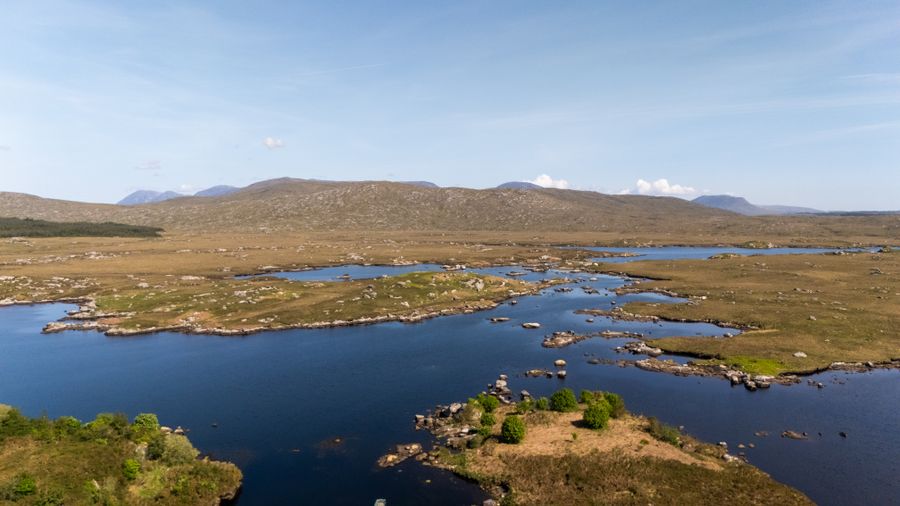
In the west, Connemara offers shorter, lower routes around Letterfrack, Roundstone and the Inagh Valley, with Connemara National Park's trails at Letterfrack as an easy anchor and Clifden as the natural base. For a first self-guided week, I would book Kerry over Wicklow: the villages are closer together, the scenery is more varied and Killarney has the best choice of accommodation and transport links. Wicklow suits anyone arriving into Dublin with limited time and no desire to drive far.
Match daily distances to the ground underfoot
Irish walking rarely gives you a steady gradient. A 15 km day on the Kerry Way out of Killarney towards Black Valley can take five hours because of wet bog, stiles and short steep pulls, while a 20 km day on a green road in Wicklow may take less. Plan on 3 km per hour rather than 4 and build in one rest day in the middle of the week. Distances between beds are the real constraint on a self-guided route, so work backwards from where you can actually sleep.
On the Kerry Way there are stretches of 20 km or more between accommodation in places such as Glencar and Glenbeigh, and much less choice around Cahersiveen. The practical approach is to walk point-to-point for three days and use a local taxi or minibus for the awkward link sections, which is common practice and not a failure of planning. In Connemara, circular routes from a single base at Clifden or Letterfrack remove the logistics problem entirely and suit a mixed-ability group.
Book beds early in the villages, later in the towns
Accommodation is the bottleneck on Irish walking routes, not transport. Villages along the Kerry Way such as Glenbeigh, Waterville and Cahersiveen have a small number of guesthouses and B&Bs, and summer weekends fill months ahead. Killarney and Kenmare have far more rooms, including hotels, so those are the places to be flexible. If you are walking in July or August, reserve the village nights first and build the rest of the itinerary around them; in April, May, September and October you have more room to improvise.
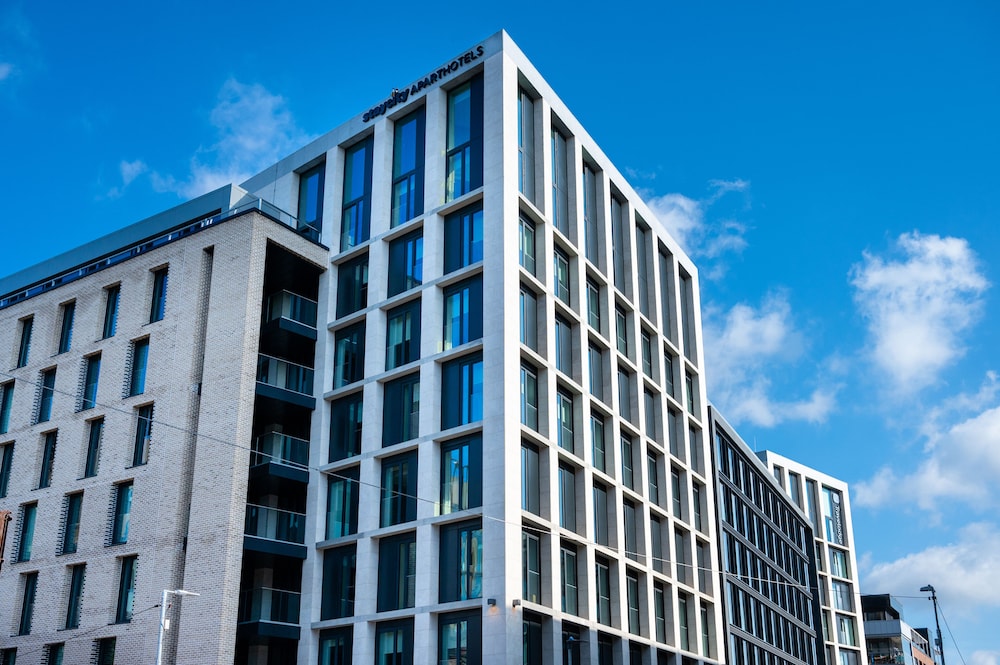
For a hotel-based week rather than a point-to-point one, Killarney is the obvious choice: it has the widest range of properties, a train station on the Mallow–Tralee line and direct buses to Kate Kearney's Cottage at the Gap of Dunloe and to Muckross. Kenmare works well for the southern half of the Kerry Way and for the Beara Peninsula. Clifden and Westport cover Connemara and the Great Western Greenway respectively. Book the hotel first, then the walks that leave from its door.
Weather, gear and getting around
Rain here is frequent and rarely heavy, and wind on exposed ground is the bigger issue. Waterproof jacket and trousers, boots with grip on wet rock and a paper map backed up by a phone are the minimum; the OSI Discovery Series sheets at 1:50,000 cover the waymarked routes and are sold in most town bookshops. May and June give the longest evenings, September gives quieter trails and still-workable daylight, and December to February limits you to low-level routes of four to five hours.
Public transport reaches the trailheads but thinly. Killarney is served by trains from Dublin Heuston via Mallow and by Bus Éireann routes to Kenmare, Sneem and Waterville, though some run only a few times daily. Clifden is about 80 minutes by bus from Galway city, and Westport has a train station on the Dublin–Westport line. A car widens your options considerably, particularly for the Iveragh and Beara peninsulas; without one, base yourself in a town and use local taxis for one-way transfers.